What is Shopware? Definition and overview
Shopware is an open-source ecommerce platform built by shopware AG in Schöppingen, Germany, used by mid-market and enterprise merchants who need deep customization, native B2B features, and full data ownership. As of 2026, 115 of Germany's top 1,000 online shops run on Shopware, making it the country's market leader for four consecutive years according to EHI.
The platform is built on PHP (Symfony framework) with a Vue.js administration interface and follows an API-first architecture. That means every function in Shopware is accessible through APIs, making it possible to connect the platform to virtually any external system, from ERP and PIM to custom frontends. Over 100,000 merchants worldwide run their shops on Shopware, generating a combined revenue of EUR 12 billion. The Official Shopware website provides the full product overview.
What sets Shopware apart from global competitors like Shopify or WooCommerce is its deep focus on the European market. DACH-specific requirements like EU VAT handling, GDPR compliance, German payment methods (Klarna, SEPA, invoice), and multi-language storefronts are native, not afterthoughts. According to Shopware's own data, over 100,000 merchants worldwide use the platform across B2C, D2C, and B2B industries as of Q2 2026.
The founding story matters for understanding the product. Stefan and Sebastian Hamann started Shopware in 2000 as teenagers in Schöppingen, a small town in North Rhine-Westphalia. The company was bootstrapped and profitable from inception until 2022, when it raised USD 100 million from Carlyle and PayPal. That 22-year bootstrapped history shaped the platform: features evolved from merchant feedback, not investor growth targets.
Who owns Shopware? Ownership history and PayPal stake
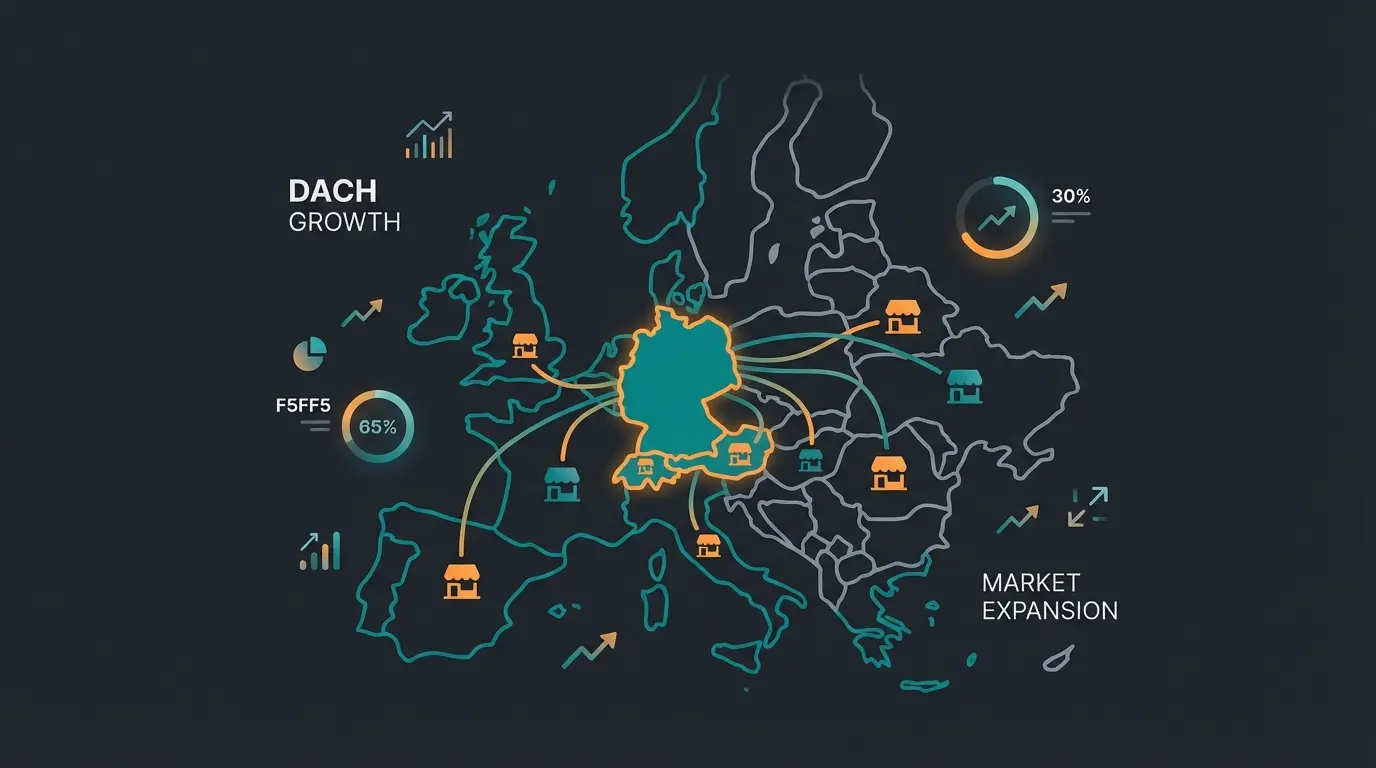
PayPal holds approximately 41% of Shopware AG since October 2025, after acquiring the stake previously held by Carlyle Group. The Hamann brothers, Stefan and Sebastian, retain a significant ownership position and continue as co-CEOs. No single external investor holds a majority.
The ownership timeline: from 2000 to 2022, Shopware was 100% founder-owned. In February 2022, Carlyle and PayPal jointly invested USD 100 million in growth capital. The founders retained a "significant majority stake" according to Carlyle's press release. Carlyle held roughly 30%, PayPal roughly 11%.
Then, in October 2025, PayPal acquired Carlyle's entire position, bringing its stake to approximately 41%. Bloomberg reported the deal without disclosing financial terms. PayPal stated they see Shopware as "a longtime and important partner in Europe," according to PYMNTS.
What does this mean for merchants? PayPal's deeper involvement signals continued investment in European payment infrastructure and checkout optimization within Shopware. The Hamann brothers still control product direction. The platform remains open source under MIT license. For practical purposes, the ownership change affects the investor cap table, not the merchant experience.
Shopware 6: Architecture and technology
Shopware 6 is a ground-up rewrite of the platform, released to replace the legacy Shopware 5 codebase. The architecture is API-first: every piece of data and functionality is exposed through REST APIs, enabling headless commerce, custom frontends, and deep integrations with external systems. As of version 6.7 (released June 2025), the platform runs on Symfony 7 with PHP 8.2+.
The technical stack is Symfony 6 (PHP 8.2+) for the backend, Vue.js 3 for the administration panel, and either the default Twig-based storefront or a fully decoupled headless frontend. Since version 6.7 (released late 2025), the admin uses Vite instead of Webpack, cutting build times significantly. The Shopware documentation covers the full API reference and developer guides.
| Model | Control | Maintenance | Best for |
|---|---|---|---|
| SaaS (Cloud) | Limited customization | Fully managed by Shopware | Small to mid-size merchants who want zero infrastructure overhead |
| PaaS (Platform) | Full code access, managed infrastructure | Shopware handles servers, you handle code | Growing merchants who need customization without DevOps |
| Self-Hosted | Complete control | You handle everything | Enterprise merchants with dedicated development teams |
Annual GMV across all Shopware shops
Bootstrapped and profitable until 2022
Three independent API services power the platform. The Admin API handles backend operations. The Sales Channel API serves storefront data. The Sync API enables bulk imports, processing up to 300 products per second. According to Shopware's documentation, the API-first design means third-party systems can automate virtually any workflow without touching the admin panel.
The 6.7 release in June 2025 brought the biggest technical overhaul since the platform launched: Vue 3 replaced Vue 2 in the admin, Vite replaced Webpack for build tooling, state management migrated from Vuex to Pinia, and European Accessibility Act (EAA) compliance improvements landed in the default storefront. Shopware has confirmed that version 7 is not a separate product but a continuation of the 6.x lineage, so merchants do not face another platform migration.
One practical detail that matters more than architecture diagrams: Shopware's headless capability is not an all-or-nothing decision. You can run the default Twig storefront for most of your shop and use the Sales Channel API to power specific custom experiences, like a product configurator or an embedded buying widget on a partner site. This hybrid approach is how most real-world implementations work, and it is significantly easier to maintain than a fully decoupled headless build.
Is Shopware free? Community Edition reality check
Yes, Shopware's Community Edition is free and open source under the MIT license. You can download it from GitHub, install it on any server, and run a production shop without paying Shopware AG a cent. That part is straightforward.
The catch: since 2025, a Fair Usage Policy caps free usage at EUR 1 million in annual gross merchandise value (GMV). Exceed that threshold, and you must upgrade to a paid edition. Below EUR 1M GMV, you can use the Shopware Store and Shopware Account features without restriction.
"Free" also does not mean "zero cost." You still pay for hosting (EUR 30-300/month depending on traffic), premium plugins (EUR 50-500+ per plugin license), SSL certificates, and potentially agency or developer time for customization. A realistic total cost of ownership for a Community Edition shop doing EUR 500K in annual revenue: EUR 200-600 per month in infrastructure and plugin costs alone. That is before any agency fees.
For a detailed cost breakdown including hidden fees, read our Shopware pricing and edition comparison.
Shopware editions and pricing 2026
Shopware offers four editions in 2026: Community (free, capped at EUR 1M GMV), Rise (from EUR 600/month), Evolve (from EUR 2,400/month with B2B Suite), and Beyond (from EUR 6,500/month for enterprise). Pricing for paid plans scales with your gross merchandise value, so the published starting prices are floors, not fixed rates.
The Fair Usage Policy was controversial in the community, but the reasoning is straightforward: Shopware needed a sustainable revenue model to fund continued development. Many successful shops were generating millions in revenue without contributing to the platform financially. The EUR 1 million GMV threshold is generous enough that genuinely small businesses are unaffected, while growing merchants now contribute to the ecosystem that supports them.
| Feature | Community (Free) | Rise | Evolve | Beyond |
|---|---|---|---|---|
| Price | EUR 0 | From EUR 600/mo | From EUR 2,400/mo | From EUR 6,500/mo |
| GMV limit | EUR 1M/year | Based on GMV | Based on GMV | Based on GMV |
| B2B Suite | No | No | Yes | Yes |
| AI Copilot | No | Basic | Full | Full + Agentic |
| Flow Builder | Basic | Full | Full | Full |
| Shopping Experiences (CMS) | Yes | Yes | Advanced | Advanced |
| Digital Sales Rooms | No | No | Yes | Yes |
| Support | Community only | 9-5, 8h response | 9-5, 4h response | 24/7, 1h response |
| Multi-inventory | No | No | No | Yes |
| Custom apps/themes | Yes | Yes | Yes | Yes + priority review |
One important detail: pricing for Rise, Evolve, and Beyond scales with your GMV and individual factors. The published prices are starting points, not fixed rates. A shop doing EUR 5 million in annual revenue will pay more than a shop doing EUR 500,000, even on the same edition. Shopware provides custom quotes, and negotiation is possible, especially on annual contracts. The Shopware official pricing page has the current base rates.
Building a Shopware store: from install to launch
Building a Shopware store takes six steps: choose your edition and hosting model, install the platform, set up the theme, structure the product catalog, configure payment and shipping, then test and launch. A standard B2C shop under 500 products goes live in about two weeks. A B2B build with ERP integration runs six to eight.
Shopware Cloud for managed infrastructure, self-hosted Community for full control. Under EUR 2M annual revenue, cloud is usually the simpler path.
Setup wizard handles the database connection, admin account, and basic settings. Composer for self-hosted, minutes for cloud.
Default Storefront theme is responsive but generic. Commercial themes or a custom Bootstrap-based build, then layouts in the visual editor.
Properties, variants, and custom fields structured for consultation, not just filtering. This is the phase most builds rush and regret.
Payment provider connected and tested with real transactions. Shipping rules by weight, cart value, destination, and customer group.
Impressum, Widerrufsrecht, privacy policy, cookie consent. Then full checkout testing on production before go-live.
Most failed Shopware projects share a single root cause, and it is never the platform. The shop went live before the product data was ready. A catalog of 800 items with missing dimensions, compatibility notes, and application instructions breaks everything downstream: filters return nonsense, internal search misses relevant products, and any AI you bolt on later has nothing useful to read. Across the Shopware deployments we have worked on, shops with complete attributes (name, description, EAN, manufacturer, weight, dimensions, plus niche-specific custom properties) get 40-60% better internal search relevance than shops carrying name and price alone.
Spend 40% of your setup time on data structure. The rest follows.
Payment configuration deserves more attention than most setup guides give it. Mollie is the default pick for DACH shops because it bundles cards, SEPA direct debit, Klarna, PayPal, and iDEAL into one integration. Stripe is the alternative when your main market sits outside DACH. The step merchants skip is the one that matters: testing every payment method with a real transaction before launch. A Klarna integration that works in staging and fails on live orders because of a misconfigured API key has cost shops we work with entire days of revenue, and nobody notices until the support inbox fills up.
Shipping rules are where the Rule Builder earns its keep. Free shipping above EUR 50 in Germany? One rule. Different carriers for domestic and international? Two rules. Surcharges on oversized items? Three. The setup takes an afternoon. Getting it wrong costs considerably more than an afternoon.
Try the demo before you commit
Shopware runs a free cloud demo with sample data preloaded. You get the admin panel, the Shopping Experiences editor, and the Flow Builder without installing anything or handing over a card number. Half an hour in that environment tells you more about whether the platform suits your team than any feature matrix will. Do that before you book the first agency call, not after.
Key Shopware features
Shopware's feature set is built around the idea that merchants should not need a developer for everyday tasks. The platform ships with a visual CMS, a no-code automation engine, and a flexible rule system that handles everything from pricing logic to content display conditions.
Shopping Experiences (CMS)
Shopping Experiences is Shopware's drag-and-drop page builder. You can create product pages, landing pages, category pages, and custom content pages without writing code. Each page is composed of sections, blocks, and elements that you arrange visually. The system supports dynamic product data, so a single template can power hundreds of product detail pages.
Flow Builder and Rule Builder
The Flow Builder is Shopware's no-code automation engine. It works on a trigger-action model: when a specific event happens (order placed, customer registered, stock depleted), the system executes a sequence of actions (send email, update tag, create task, generate document, notify staff via Slack). You can chain multiple actions and add conditional branching, building workflows that would otherwise require custom code or a separate automation tool like Zapier.
The Rule Builder works alongside the Flow Builder, defining conditions that control pricing, shipping costs, content visibility, and payment methods. Rules can be nested: for example, show a 10% discount banner only to customers in Germany who have placed more than 3 orders and are viewing products in a specific category. Non-technical staff can map these complex conditions without programming, which is a genuine competitive advantage over platforms that require developer involvement for conditional logic.
Product and customer management
Product management covers variants, properties, cross-selling, product streams (dynamic collections), and manufacturer management. Customer management includes customer groups, custom fields, tags, and a full order history. Both are accessible through the API, meaning external systems like PIM or CRM tools can sync data bidirectionally.
A feature that does not get enough attention: product streams. Instead of manually curating category pages, you define filter rules (price range, manufacturer, stock status, properties) and Shopware dynamically populates the product listing. When you add a new product that matches the criteria, it appears automatically. For shops with 5,000+ products, this eliminates hours of manual merchandising work every week.
One distinction trips up more merchants than any other part of the data model: properties and variants are not the same thing. Properties describe a product (colour, material, capacity) and drive the filters on your category pages. Variants are the actual buyable versions generated from those properties, each with its own product number, stock level, and price. Map it wrong and you end up with 300 standalone products where you wanted 12 products with 25 variants each, which breaks your filters and your ERP sync in the same afternoon.
Bulk work runs through CSV import profiles or the Sync API. Above roughly 5,000 SKUs, a dedicated PIM upstream of Shopware pays for itself inside the first year, almost entirely in time your team stops spending on manual corrections. Below that, the admin import handles it fine.
Digital Sales Rooms, available on Evolve and Beyond editions, deserve a mention for B2B merchants specifically. They let your sales team create personalized, interactive product presentations that customers can access via a shared link. Think of it as a curated mini-shop for a specific prospect, complete with custom pricing and product selections. It is the closest thing to a face-to-face sales meeting in a digital environment.
- Shopping Experiences: visual page builder for product, category, and landing pages
- Flow Builder: no-code automation for order processing, notifications, and workflows
- Rule Builder: conditional logic for pricing, shipping, content, and payment rules
- Product Streams: dynamic product collections based on filters and rules
- Digital Sales Rooms: interactive, personalized sales presentations (Evolve+)
- Custom Fields: extend any entity with additional data without code changes
- Multi-language and multi-currency: native support for international selling
For a deep dive into the plugin and extension ecosystem that extends these features, see our Best Shopware plugins guide.
Shopware for B2B and B2C
One of Shopware's strongest differentiators is native B2B support. While platforms like Shopify require third-party apps for even basic B2B features, Shopware offers company accounts, buyer roles, approval workflows, custom pricing per customer group, quick order forms, and budget management out of the box with the Evolve edition.
| Capability | B2C use | B2B use |
|---|---|---|
| Account structure | Individual customer accounts | Company accounts with employee hierarchy |
| Pricing | Standard retail pricing | Negotiated prices, volume discounts, tiered pricing |
| Ordering | Standard cart and checkout | Quick order forms, reorder from history, CSV upload |
| Approval | Not applicable | Multi-level approval workflows with budget limits |
| Payment | Credit card, PayPal, Klarna | Invoice, SEPA direct debit, purchase on account |
| Content | Same for all visitors | Role-based content and catalog visibility |
An important strategic shift to note: Shopware is migrating from the legacy B2B Suite to modular B2B Components built into the Shopware 6 core. Starting with Shopware 6.8, the old B2B Suite will no longer be supported. New implementations should build on B2B Components from the start. For the full B2B strategy guide, see our Shopware B2B Suite guide.
For B2C, Shopware competes directly with Shopify and WooCommerce. Its strengths here are the visual CMS (Shopping Experiences), native European payment and tax handling, and the Flow Builder for automating post-purchase workflows. Industries with consulting-intensive products, like home and garden, DIY, and specialty retail, benefit particularly from Shopware's flexibility in building guided selling experiences.
The B2B market in Germany specifically is where Shopware shines. According to Shopware's B2B Ecommerce Compass 2026 whitepaper, the DACH B2B ecommerce market is growing faster than B2C, driven by manufacturers and wholesalers digitizing their order processes. Traditional phone and fax ordering is giving way to self-service portals, and Shopware's B2B Components are built exactly for this transition: a buyer logs in, sees their negotiated prices, places a repeat order from history, and the approval workflow routes it through the right manager, all without a single phone call.
Shopware vs. Shopify vs. Magento vs. WooCommerce
No, Shopware is not the same as Shopify. They differ in three critical ways: architecture (Shopware is open source and self-hostable, Shopify is pure SaaS), pricing model (Shopware charges flat monthly fees scaled by GMV, Shopify takes transaction fees on every sale), and market focus (Shopware dominates DACH B2B commerce, Shopify leads global D2C).
| Dimension | Shopware | Shopify | Magento (Adobe Commerce) | WooCommerce |
|---|---|---|---|---|
| Starting price | Free (Community) | $39/mo (Basic) | From ~$22,000/year | Free (plugin) |
| Open source | Yes (Community Edition) | No | Yes (Magento Open Source) | Yes |
| Architecture | API-first, headless-ready | SaaS, headless via Hydrogen | Monolithic, headless possible | WordPress plugin |
| B2B native | Yes (Evolve+) | Limited (Shopify Plus) | Yes (Adobe Commerce) | No (requires plugins) |
| DACH market fit | Excellent, native EU compliance | Good, but US-centric defaults | Good, but complex setup | Depends on plugins |
| Technical skill needed | Medium to high | Low | High | Low to medium |
| Extension ecosystem | 3,000+ extensions | 13,000+ apps | 4,000+ extensions | 60,000+ plugins |
| Hosting | Self-hosted, PaaS, or SaaS | Fully managed SaaS | Self-hosted or Adobe Cloud | Self-hosted (WordPress) |
| Scalability | High (tested to 100k+ products) | High (managed) | Very high (enterprise) | Medium (hosting-dependent) |
| Best for | DACH mid-market, B2B, complex catalogs | Global DTC, small-mid merchants | Large enterprise, complex B2B | Small shops, WordPress users |
The key insight from working with dozens of merchants across these platforms: Shopware wins when the business is European, needs B2B capabilities, or requires deep customization without going enterprise-Magento-complex. Shopify wins for speed to market, global D2C, and merchants who want zero infrastructure management. WooCommerce wins for WordPress-native shops with small catalogs. Magento wins for large enterprises willing to invest heavily in development.
One nuance that comparison tables cannot capture: migration cost. Moving from WooCommerce or Magento to Shopware is a significant project, typically 3 to 6 months for a mid-size shop with custom integrations. Moving from Shopify is faster (2 to 4 months) because Shopify's simpler data model maps more cleanly to Shopware's structure. The LitExtension migration tool can handle basic product and customer data, but custom fields, SEO redirects, and integration logic require manual work.
For a more detailed head-to-head comparison with benchmarks, read our Shopware alternatives compared.
SEO with Shopware: Building rankings
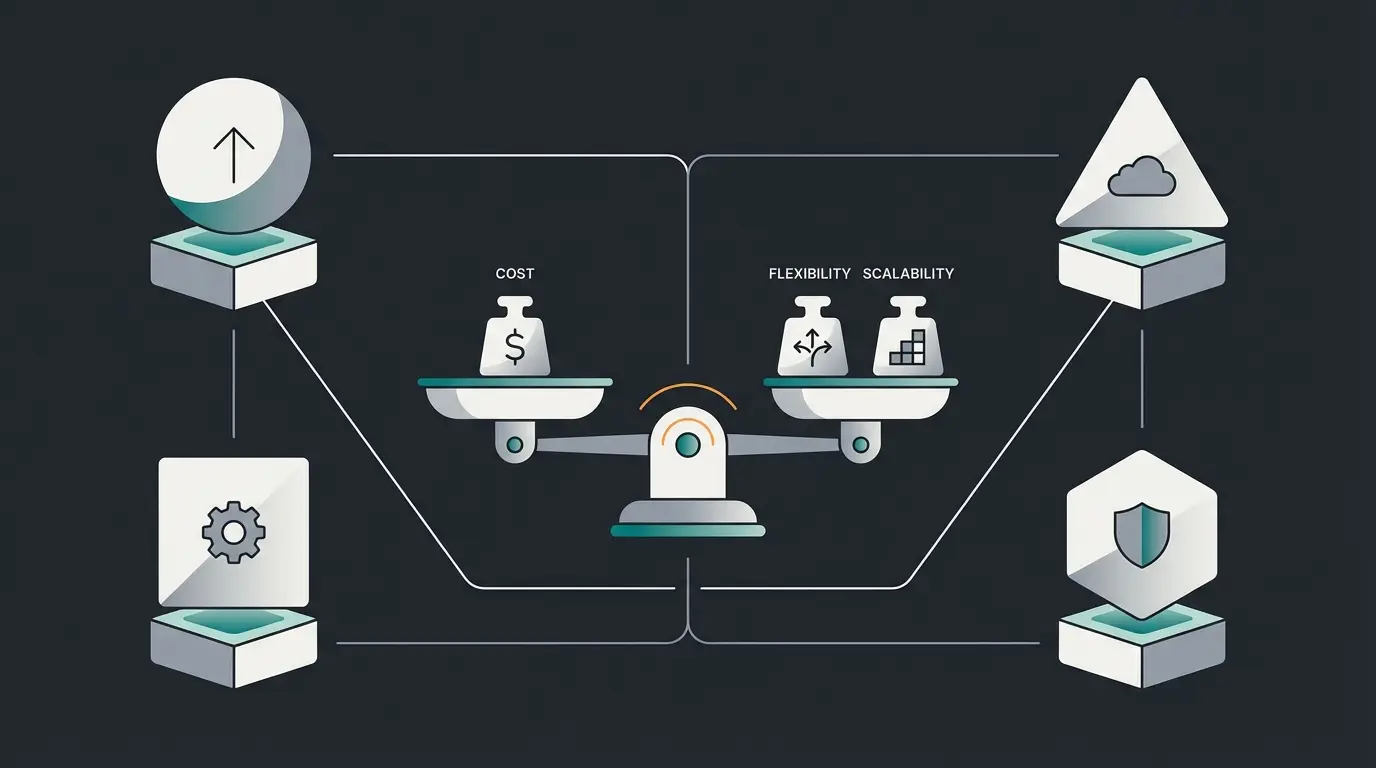
Shopware ships with solid SEO fundamentals out of the box. Clean URL structures, customizable meta titles and descriptions, automatic XML sitemaps, canonical tags, and hreflang support for multi-language shops are all native. Since version 6.5, structured data (JSON-LD) for products, breadcrumbs, and organization schema is generated automatically. For a complete walkthrough, see our Shopware SEO optimization guide.
Where Shopware falls short compared to dedicated SEO tools is in content flexibility. The Shopping Experiences CMS gives you control over page layout, but advanced SEO workflows like bulk meta tag editing, internal link suggestions, or content gap analysis require plugins or external tools. The URL structure is clean by default (/product-name/) but migrating from Shopware 5 to 6 can create redirect challenges if not planned carefully.
Core Web Vitals performance varies dramatically by implementation. In our experience, a Shopware 6.7 shop with Varnish cache, Redis, and a well-optimized theme scores 85-95 on Lighthouse Performance. Without caching, scores drop to 30-50. This is not a Shopware limitation per se, but a hosting and configuration issue that many merchants underestimate. The platform itself generates clean HTML, properly deferred scripts, and responsive images. The bottleneck is almost always server response time and unoptimized third-party plugins.
- URL structure: clean, customizable slugs for products, categories, and CMS pages
- Meta tags: title and description editable per page, with template variables for bulk generation
- Sitemap: automatic XML sitemap generation with configurable frequency and priority
- Structured data: JSON-LD for Product, BreadcrumbList, and Organization schema
- Hreflang: native support for multi-language and multi-domain setups
- Core Web Vitals: performance depends heavily on hosting and theme, not the platform itself
Shopware hosting and performance
Hosting is where many Shopware projects succeed or fail. The platform is resource-intensive compared to Shopify (which is fully managed) or WooCommerce (which runs on basic PHP hosting). Shopware 6.7 requires PHP 8.2+, MySQL 8.0+ or MariaDB 10.11+, and Node.js 20 as minimum requirements. For production shops, Varnish reverse proxy and Redis for session and cache handling are not optional, they are mandatory for acceptable performance.
The three deployment models correspond to different levels of control and responsibility. Shopware Cloud (SaaS mode) means Shopware AG handles everything: servers, updates, scaling, and security. You get a managed environment but limited ability to install custom plugins or modify server configuration. PaaS mode gives you full code access on managed infrastructure, the sweet spot for most growing merchants. Self-hosted gives you complete control but means you are responsible for uptime, security patches, and performance tuning.
| Option | Monthly cost range | Control level | Best for |
|---|---|---|---|
| Shopware Cloud (SaaS) | Included in paid editions | Limited | Merchants who want zero infrastructure management |
| Managed hosting | EUR 50-500/mo | Medium | Growing shops that need performance without DevOps staff |
| Self-hosted (dedicated) | EUR 100-2,000/mo | Full | Enterprise shops with development teams |
| Self-hosted (cloud, e.g. AWS) | Variable, EUR 200+/mo | Full | Shops needing auto-scaling for traffic spikes |
Minimum server specifications for a production Shopware 6 shop: 4 GB RAM (8 GB recommended), 2+ CPU cores, SSD storage, and PHP OPcache enabled. Shops with 10,000+ products or 500+ concurrent users should plan for dedicated database servers and load balancing.
A common mistake: choosing the cheapest shared hosting and then blaming Shopware for slow page loads. Shopware is more resource-hungry than WordPress or Shopify, by design. It does more processing server-side, which gives you more control but requires adequate infrastructure. The investment in proper hosting, typically EUR 100-300 per month for a mid-size shop, pays for itself through better Core Web Vitals scores and higher conversion rates. For the full hosting comparison with provider recommendations, see our Shopware hosting comparison.
GDPR, data privacy, and the EU AI Act
Shopware treats GDPR compliance as a design decision, not a plugin category. Native cookie consent, customer data export under Article 15, deletion under Article 17, double opt-in on newsletters, and configurable order data anonymization all ship in the core. For merchants selling into the EU that is not a feature. It is a legal requirement with a price attached.
The numbers set the stakes. European data protection authorities issued roughly EUR 1.2 billion in GDPR fines during 2025, and cumulative fines since May 2018 have passed EUR 7.1 billion, according to the DLA Piper GDPR Fines and Data Breach Survey published in January 2026. The same survey records that "the average number of breach notifications per day increased by 22%", from 363 to 443, the first time daily notifications have crossed 400 since the regulation took effect.
- Cookie consent banner in the core, configurable without a third-party plugin
- Customer data export and deletion for GDPR Articles 15 and 17, directly from the admin panel
- Double opt-in on newsletters and marketing consent by default
- Order data anonymization with retention periods you set yourself
- Data processing agreements available for the commercial editions
- EU hosting through Shopware Cloud or self-hosted on European infrastructure
The EU AI Act now applies to your storefront
Since 2 August 2026, the transparency obligations in Article 50 of the EU AI Act are enforceable, and the European Commission started enforcement on that date. The part that touches a shop is simple: when a customer interacts with an AI system, they have to be told at the latest at the moment of first contact, unless it is already obvious. The rules apply to systems already on the market, not only to new deployments, and penalties reach EUR 15 million or 3% of worldwide annual turnover (Article 50).
Shopware's own AI runs on European infrastructure and does not use merchant data for model training. If you add a third-party AI to the storefront, ask the same two questions before signing anything: where does it run, and what does it see? We get asked both in every enterprise procurement process now, which is a change from two years ago and a welcome one.
Plugins, themes, and the Shopware Store
The Shopware Extension Store contains over 3,000 extensions covering payment, shipping, marketing, SEO, analytics, and design. That is smaller than Shopify's 13,000+ app ecosystem or WooCommerce's 60,000+ plugins, but the quality bar is higher. Every extension in the Shopware Store goes through a manual review process before publication, reducing the risk of security vulnerabilities and compatibility issues that plague larger, less curated marketplaces.
Extensions come in two forms: plugins (traditional PHP extensions that run in the Shopware process) and apps (newer, API-based extensions that run externally and communicate through webhooks). Apps are Shopware's strategic direction, as they are more portable across SaaS, PaaS, and self-hosted deployments. The plugin system still works and is widely used, but new development is increasingly focused on the app model.
The main caution with extensions: paid plugins can add up quickly. A typical Shopware shop uses 10-25 extensions, and premium plugins range from EUR 50 to EUR 500+ for a one-time license, plus annual renewal fees. Budget for extensions as a recurring cost, not a one-time investment.
A practical tip from implementation experience: before buying a premium plugin, check whether the functionality already exists in your edition. Shopware has steadily moved features that used to require plugins into the core product, especially in the Evolve and Beyond editions. The Rule Builder alone eliminates the need for several plugins that handle pricing conditions, shipping rules, and content visibility. Our Best Shopware plugins guide covers must-have extensions by category with pricing.
ERP, payment, and fulfillment integration
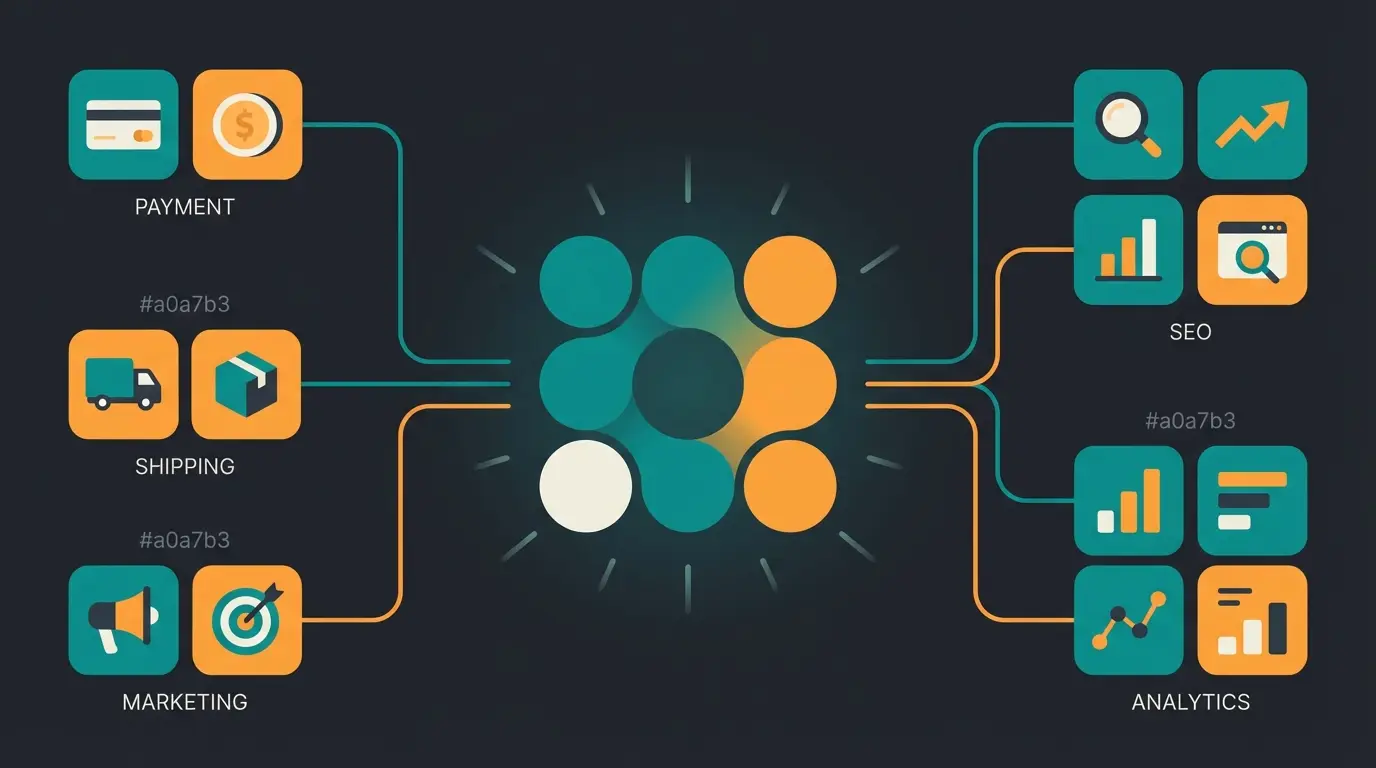
Shopware's API-first architecture makes integration with external systems straightforward compared to platforms that treat integrations as afterthoughts. The three most critical integration categories for any production shop are ERP (for inventory and order management), payment (for checkout conversion), and fulfillment (for delivery). Getting these right determines whether the shop runs smoothly or creates manual work for your team.
ERP integration
ERP connectivity is where Shopware's enterprise credentials show. Native and third-party connectors exist for SAP Business One, Microsoft Dynamics 365, WeClapp, Xentral, and Sage. The Sync API's ability to process 300 products per second makes bulk data synchronization practical even for catalogs with 100,000+ SKUs. Real-time stock synchronization, automated order forwarding, and bidirectional customer data sync are the baseline expectations, and Shopware delivers on all three without custom development for supported ERPs.
The most common pain point we see: merchants underestimate the complexity of ERP mapping. Product data structures in an ERP rarely match one-to-one with Shopware's product model. Variants, properties, pricing tiers, and custom fields all need explicit mapping rules. Plan for 2 to 4 weeks of integration work even with an established connector. For the full integration architecture guide, see our ERP integration for Shopware.
Payment gateways
Shopware supports all major European payment methods natively or through first-party plugins: PayPal, Klarna, Stripe, Mollie, Adyen, SEPA direct debit, invoice payment (Billie, Riverty), and Giropay. The payment abstraction layer means switching providers requires changing configuration, not rebuilding checkout logic.
For the German market specifically, offering Klarna (buy now, pay later), SEPA direct debit, and invoice payment is not optional, it is expected. German consumers have strong preferences for these payment methods, and shops that only offer credit card and PayPal leave significant revenue on the table. Shopware makes all three available through well-maintained first-party or certified plugins. Read our Payment and checkout setup guide for implementation details.
Shipping and fulfillment
Fulfillment integrations cover DHL, DPD, UPS, GLS, Hermes, and Amazon FBA through plugins. Shopware's shipping rules engine lets you create complex shipping cost calculations based on weight, price, destination, customer group, and product properties, all without code. For example, you can set free shipping for orders above EUR 50 in Germany, flat-rate shipping to Austria, and calculated rates for the rest of the EU, each with different delivery time estimates.
Multi-warehouse support is available in the Beyond edition, which is important for merchants with distribution centers in multiple locations. Stock is allocated per warehouse, and the system can route orders to the nearest fulfillment center automatically. For setup guidance and provider comparisons, see our Shipping and fulfillment guide.
Multi-channel selling
Shopware's Sales Channel concept natively supports selling across multiple storefronts, each with its own domain, language, currency, and product assortment. You can run a German B2C shop, an English B2B portal, and a wholesale channel all from the same Shopware instance, with shared inventory but separate pricing, content, and checkout flows.
Beyond individual storefronts, marketplace connectors for Amazon, eBay, Google Shopping, and social commerce channels are available through the extension ecosystem. The key advantage of managing multi-channel from Shopware rather than individual marketplace tools is centralized inventory: one stock update propagates everywhere. See our Shopware Multichannel guide for the complete setup.
AI and automation in Shopware
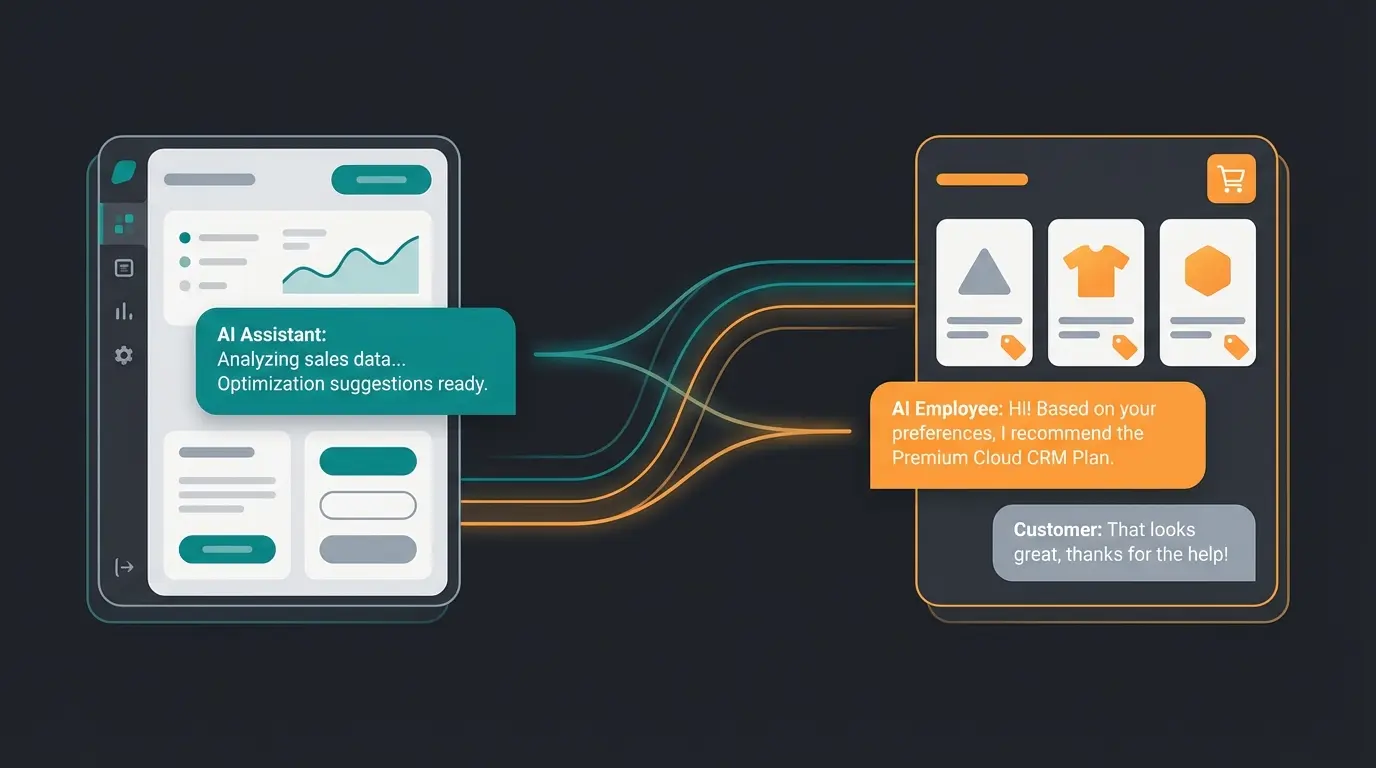
Two layers of AI exist in the Shopware ecosystem. The first is Shopware's own AI Copilot, built into the administration backend. The second is third-party AI integration on the storefront, where AI employees handle product consultation, customer service, and guided selling in real time.
Shopware AI Copilot
Shopware AI (formerly AI Copilot, renamed in June 2025) is a chat-based assistant embedded in the admin panel. It generates product descriptions, translates content, creates image backgrounds for Shopping Experiences pages, summarizes product reviews, suggests product properties, and generates custom checkout messages. The infrastructure is fully hosted in Europe, ensuring GDPR compliance. No merchant data is used for model training.
The roadmap for 2026 includes agentic capabilities, where the AI moves from answering questions about Shopware to taking actions on your data. Additional AI Skills will be purchasable as add-ons for commercial plan users.
AI employees on the storefront
Shopware's AI Copilot works in the backend. But the bigger revenue impact comes from AI on the storefront, where customers interact. This is where our experience at Qualimero comes in.
We deploy AI employees (KI-Mitarbeiter) that connect to Shopware's API, read the full product catalog, understand customer context, and provide real-time product consultation. These are not rule-based pop-ups. They understand product specifications, compare alternatives, handle objections, and guide customers to the right purchase. The results from our Shopware implementations: Rasendoktor achieved a 16x ROI with AI product consultation, Gartenfreunde saw 7x higher conversion rates during seasonal peaks.
Shopware Co-CEO Sebastian Hamann framed the direction at the company's June 2025 product event: "The future of digital commerce begins where AI meets real merchant needs." (Shopware press release). The gap between that sentence and what most shops actually run is still wide. Copilot writes your product descriptions. It does not talk to your customers.
The problem it leaves open is measurable. Baymard Institute puts the documented average cart abandonment rate at 70.22% across 50 studies. A meaningful share of those exits happen upstream of checkout, on product detail pages, where the shopper could not work out which of your four similar products fits their case. No amount of checkout optimization rescues a customer who never found the right product.
AI product consultation earns its place when four things are true at once: your products need explaining (specifications, compatibility, correct application), your catalog has passed roughly 200 items, your analytics show high exit rates on product pages, and your team is already answering pre-purchase questions by phone or email. A t-shirt shop does not need this. A garden supply shop with 400 plant protection products does, and the legal constraints on what may be recommended make the case stronger rather than weaker.
For the full deep dive into what is possible, read our guides on AI and automation in Shopware and Conversion optimization strategies.
Measuring success and ROI
Track a Shopware shop through four numbers: conversion rate, average order value, cart abandonment rate, and customer lifetime value. Shopware's admin dashboard covers orders, revenue, and top products. GA4 covers traffic, attribution, and behaviour flows. Together they show where customers drop out and whether anything you changed actually moved the number.
| Metric | Starting point | After AI product consultation |
|---|---|---|
| Cart abandonment | 70.22% documented average across 50 studies (Baymard Institute) | +60% checkout rate across our Shopware clients |
| Average cart value | Shop baseline | +35% on average |
| Conversion rate | Shop baseline | Up to 7x higher (Gartenfreunde, garden and wellness) |
| Support load | 2,000-3,000 consultation-heavy inquiries per season, handled manually | 100% webchat automation, 40% lower support cost (Rasendoktor) |
| Return on investment | Not measurable without channel attribution | 16x (Rasendoktor), 18x (Signed) |
Set the tracking up before you deploy anything, not after. The Signed Success Story is the cleanest example we have of this done in the right order: an AI employee running on Instagram and TikTok, 70% of customer inquiries automated, 30% more up- and cross-selling, 18x ROI, and every number attributable because channel-specific conversion tracking already existed. Without that baseline you get a good-looking dashboard and no way to prove what caused what.
One honest caveat on all of these figures. They come from consultation-intensive catalogs, where a customer genuinely cannot tell which of four similar products fits their case. Run the same setup on a shop selling three SKUs of phone cases and the lift disappears, because there was never a decision to guide. The ROI is in the complexity, not in the technology.
Is Shopware right for you? Checklist
Not every business needs Shopware, and not every Shopware project succeeds. After implementing AI solutions across dozens of Shopware shops, these are the criteria that predict whether the platform is the right fit.
- Your primary market is Germany, Austria, Switzerland, or the EU
- You sell 500+ products or have a complex catalog with variants
- You need B2B features (company accounts, approval workflows, custom pricing)
- You have access to a developer or agency for initial setup and customization
- You want full control over your data and infrastructure (not locked into SaaS)
- You need to integrate with a German or European ERP system (SAP, WeClapp, Xentral)
- You plan to sell across multiple channels (own shop + marketplaces + social)
- Your annual revenue exceeds EUR 500,000 or you are growing toward that range
Shopware is probably not the right choice if you are a solo entrepreneur launching your first shop (use Shopify), if you need to go live within days not weeks (use Shopify), or if your entire business runs on WordPress and you want to add a small shop (use WooCommerce). Honest assessment: Shopware's strength is also its complexity. The setup curve is steeper than Shopify, and ongoing maintenance requires more technical involvement.
One scenario we see regularly: a growing D2C brand on Shopify hits the ceiling on customization or B2B features and migrates to Shopware. The migration is worth it when the business has outgrown what a templated SaaS can offer. It is not worth it when the business is still validating product-market fit and needs to iterate quickly. Timing matters.
Finding the right Shopware agency
Most Shopware shops are built with an agency, not in-house. Shopware counts over 1,200 certified partners and agencies, concentrated in Germany, Austria, and the Netherlands. Initial builds quote between EUR 15,000 and EUR 80,000: a standard shop with 200 products sits at the low end, a B2B shop with custom pricing logic and ERP integration lands well past EUR 50,000.
Then budget 10-20% of the build cost every year for maintenance, plugin updates, and version upgrades. Agencies that leave this out of the proposal are not cheaper. They are quoting less of the work.
- Ask for two references in your vertical, not a logo wall. B2B wholesale and D2C fashion are different crafts, and the second one does not teach you the first.
- Establish who owns the ERP mapping. If the agency assumes your ERP vendor handles it and the ERP vendor assumes the agency does, you have already found the project's delay.
- Get the version upgrade path in writing. Shopware 6.7 changed enough (Vue 3, Vite, Pinia) that upgrade work is real work, and it will land on someone's invoice.
- Insist on a staging environment with production-like data. Payment methods that only fail on live orders are the most expensive class of bug in ecommerce.
The costliest mistake here is picking the lowest quote from the agency that asked the fewest questions. An agency that interrogates your product data model before quoting is worth 30% more than one that emails a number the same afternoon.
Shopware login and account access
If you searched "shopware login" and landed here, this is what you need. Shopware has four separate login portals, and confusing them is common:
- Shop admin panel: yourshop.com/admin - this is where you manage products, orders, and settings
- Shopware Account: account.shopware.com - license management, plugin purchases, shop registration
- Shopware Community Forum: forum.shopware.com - developer discussions, bug reports, community support
- Partner portal: partners.shopware.com - for certified Shopware agencies and technology partners
Your shop's admin login is always at your domain followed by /admin. There is no central Shopware login for accessing your own shop. Each Shopware installation has its own admin panel with its own credentials.
Frequently asked questions about Shopware
Shopware is used to build and run online shops, from single-brand D2C stores to complex B2B portals with company accounts, custom pricing, and approval workflows. Over 100,000 merchants use it worldwide, with the strongest adoption in Germany, Austria, and Switzerland. The platform handles product management, checkout, payment processing, and multi-channel selling.
No. Shopware is an open-source, self-hostable platform focused on the European market with native B2B features. Shopify is a fully managed SaaS platform optimized for global D2C selling. Shopware gives you full code access and data ownership; Shopify handles all infrastructure but limits customization. They compete in different segments.
The Community Edition is free and open source under MIT license. Since 2025, a Fair Usage Policy caps free usage at EUR 1 million annual GMV. Below that threshold, you pay nothing to Shopware AG. Above it, you must upgrade to Rise (from EUR 600/month). Hosting, plugins, and development are separate costs regardless of edition.
Nobody acquired Shopware outright. In February 2022, Carlyle Group and PayPal invested USD 100 million for minority stakes. In October 2025, PayPal purchased Carlyle's shares, bringing its total stake to approximately 41%. The founders Stefan and Sebastian Hamann retain significant ownership and continue as co-CEOs.
Shopware is led by co-CEOs Stefan and Sebastian Hamann, the brothers who founded the company in Schöppingen in 2000. Both still control product direction after PayPal raised its stake to roughly 41% in October 2025. The cap table changed. The leadership did not.
Shopware paid plans start at EUR 600/month for Rise, EUR 2,400/month for Evolve (includes B2B capabilities), and EUR 6,500/month for Beyond (enterprise with dedicated support). Actual pricing scales with your gross merchandise value. The Community Edition is free up to EUR 1M annual GMV.
A standard B2C shop with under 500 products and a stock theme goes live in about two weeks. Customized shops with 1,000+ products and several payment providers take three to four weeks. B2B builds with custom pricing logic and ERP integration run six to eight weeks. Product data preparation moves those numbers more than anything else.
Yes. Shopware provides migration assistants covering products, customers, orders, and categories. The data migration itself takes one to three weeks. Budget three to six months for a mid-size shop with custom integrations, because custom fields, SEO redirects, and integration logic almost always need manual work.
A Shopware developer builds and extends Shopware shops in PHP, since Shopware 6 plugins are Symfony bundles. The work covers plugin development, Twig theme customization, API integrations, and headless storefronts. Any experienced Symfony developer can pick up Shopware, which is why the DACH talent pool is deep and the international one is not.
Yes. shopware AG has operated since 2000, serves over 100,000 merchants, and has been Germany's market-leading shop system for four consecutive years according to EHI. Combined merchant revenue on the platform sits at roughly EUR 12 billion annually. PayPal holds a minority stake of about 41%.
Shopware holds ISO/IEC 27001 certification and runs regular security audits. Shopware Cloud adds DDoS protection, automated backups, and managed SSL. Self-hosted Community installations require you to apply security patches yourself, which is the single most common reason a Shopware shop gets compromised.
Shopware ships the tooling: native cookie consent, customer data export under Article 15, deletion under Article 17, double opt-in newsletters, and configurable order data anonymization. Compliance still depends on your configuration, your hosting location, and every third-party extension you install. The platform makes it possible, not automatic.
Neither is universally better. Shopware is the stronger choice for European merchants, B2B use cases, and businesses needing deep customization or data sovereignty. Shopify is better for merchants who want fast setup, global reach, and zero infrastructure management. The right platform depends on your market, business model, and technical resources.
Yes. Shopware supports USD, US tax rules, and English-language storefronts. The platform's ecosystem and agency network are strongest in the DACH region and EU. US-based payment providers and shipping integrations exist but have fewer options than for German merchants. If your primary market is North America, Shopify or BigCommerce may be more practical choices.
Over 100,000 merchants use Shopware, including 115 of Germany's top 1,000 B2C online shops according to the 2025 EHI study. The platform serves industries from fashion and home goods to automotive parts, garden supplies, and B2B wholesale. Notable verticals include manufacturing, consumer electronics, and specialty retail.
Conclusion: Is Shopware the right choice in 2026?
Shopware is the strongest ecommerce platform for European mid-market merchants who need flexibility, B2B capabilities, and full control over their tech stack. It is not the easiest platform to launch, and it is not the cheapest once you factor in hosting, plugins, and developer time. But for merchants who outgrow Shopify's SaaS constraints or need European compliance out of the box, no other platform covers as much ground.
The platform's trajectory is clear: deeper AI integration, continued B2B investment through the new Components model, and growing international adoption beyond the DACH region. The 6.7 release demonstrated that Shopware AG is willing to make breaking changes (Vue 2 to Vue 3, Webpack to Vite) to keep the technical foundation modern. That kind of investment in developer experience, even when it creates short-term migration work, is what separates platforms that last from those that stagnate.
The most underutilized advantage of Shopware in 2026 is its API-first architecture combined with AI. Backend automation through Shopware Copilot handles admin tasks. Storefront AI employees handle customer consultation and guided selling. Our clients running AI employees on Shopware shops see +35% higher cart values and 7x conversion rate improvements. If you are evaluating Shopware, factor in what AI can do on top of the platform, not just what the platform does alone. See our Rasendoktor success story for a real-world example.
Start with the checklist above. If Shopware fits, the cluster guides linked throughout this article go deep on every topic.
Our AI employees integrate directly with Shopware's product catalog and deliver real-time product consultation. 16x ROI. 35% higher cart values. Zero additional headcount.
Book your free demo
Lasse is CEO and co-founder of Qualimero. After completing his MBA at WHU and scaling a company to seven-figure revenue, he founded Qualimero to build AI-powered digital employees for e-commerce. His focus: helping businesses measurably improve customer interaction through intelligent automation.