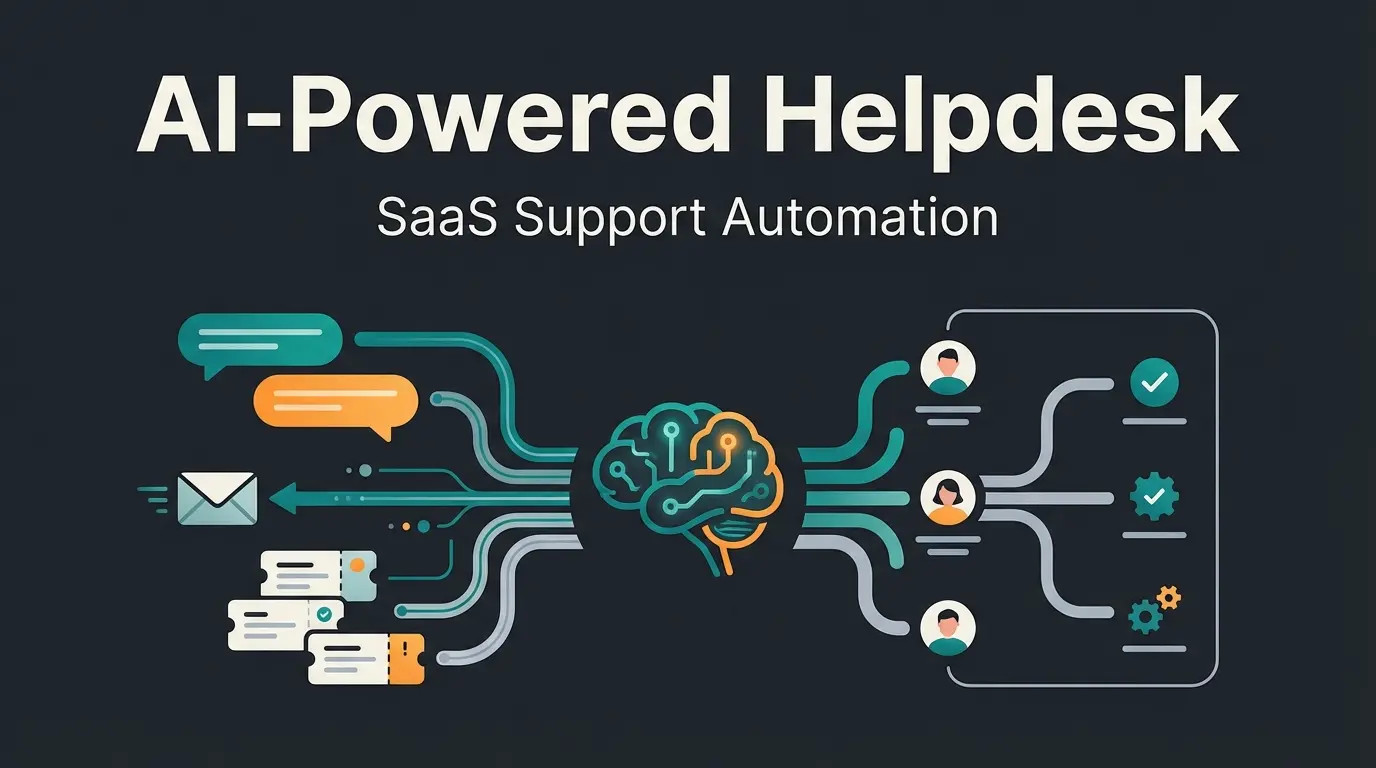
Why Your Ticket System Is Probably Burning Money
When you think of a ticket system, what image comes to mind? Probably a long list of complaints, frustrated support agents, and the constant battle against time to "close tickets." In most companies, the ticketing system is viewed as a necessary evil—a cost factor that needs to be minimized at all costs.
But this perspective is dangerously outdated. While traditional providers like Zendesk or Freshdesk primarily define ticket systems as tools for managing defects and complaints, a silent but massive transformation is taking place in the market.
We're now in 2025. The dividing line between "support" (costs) and "sales" (revenue) is dissolving rapidly. A customer asking: "Does replacement part X fit machine Y?" technically has a support question, but they're actually a lead who's moments away from making a purchase. If your support ticketsystem treats this inquiry only as "Ticket #1234" and responds with a standard auto-reply, you're losing revenue every single day.
Understanding what customer service means in today's landscape is crucial for this transformation. In this comprehensive article, we'll redefine the concept of the ticketing system. We'll show you how to shift from a pure "issue tracking" mentality to a "consultation management" approach, and how new AI technologies (Agentic AI) can help you not only reduce costs but actively drive sales.
What Is a Modern Ticket System? (Definition 2.0)
To understand the full potential, we must first clarify and expand the terminology that defines this space.
The Classic Definition (Status Quo)
Traditionally, a ticket system (also called helpdesk software or issue tracking system) is software that centralizes incoming inquiries from various channels (email, phone), converts them into "tickets," and tracks their processing status. According to industry resources from Alltena, the focus lies on organization, assignment, and compliance with Service Level Agreements (SLAs). Providers like OTRS or Jira are heavily focused on process compliance and IT Service Management (ITSM), as noted by Invgate.
The Modern Definition: The Customer Dialogue Hub
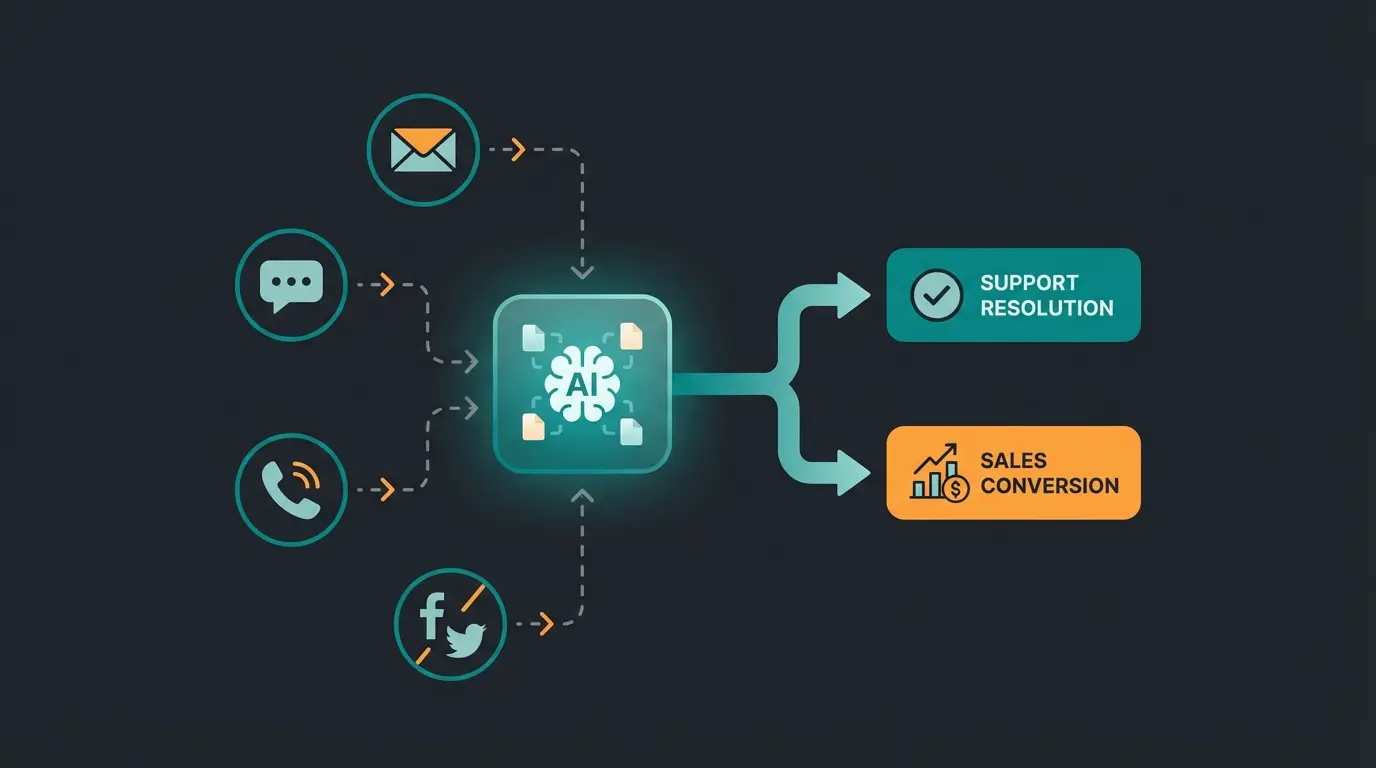
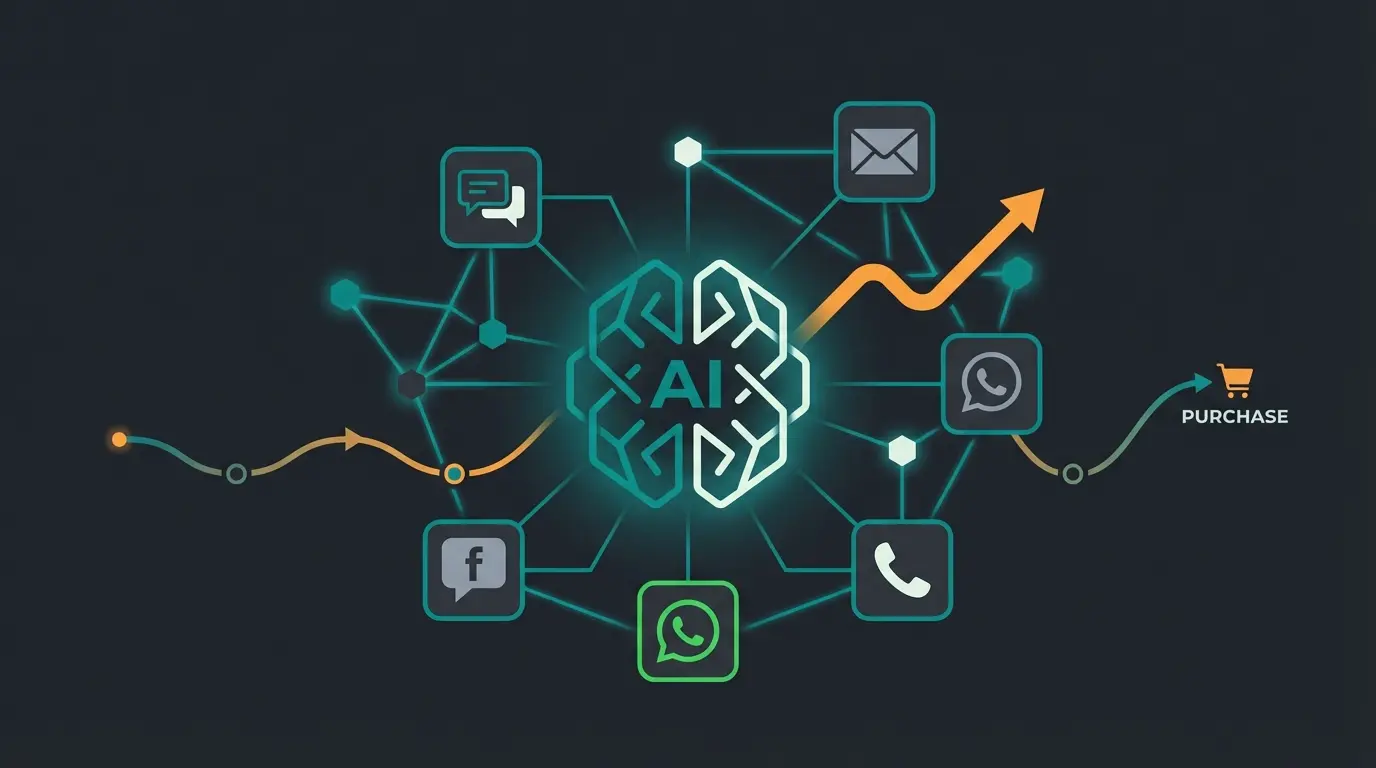
A modern ticket system in 2025 is far more than a digital mailbox for problems. It's a Customer Dialogue Hub that transforms every interaction into an opportunity.
It differs from the classic model in three essential ways:
- Context Understanding: It knows whether a ticket is a complaint (support) or a purchase intent (sales), enabling appropriate routing and response strategies.
- Omnichannel Real-Time: It seamlessly integrates synchronous channels like WhatsApp, live chat, and social media—not just asynchronous emails. As Freshworks emphasizes, modern customers expect instant responses across all platforms.
- Consultation Competence: It uses AI not just for deflection but for active consultation, turning questions into qualified leads.
This transformation is part of a broader trend where AI Chatbots transform how businesses interact with customers, moving from reactive support to proactive engagement.
The 5 Essential Functions: Basics Plus Innovation
When evaluating a ticket system today, the basics must be solid. But to compete effectively, you need the innovation layer that separates market leaders from followers.
1. Central Inbox (Omnichannel Aggregation)
The system must bundle emails, chat messages, WhatsApp inquiries, and social media comments into a single interface. According to Trengo, customers expect consistency across all touchpoints. An inquiry on Instagram must have the same context as the email from three days ago—anything less creates friction and frustration.
2. Intelligent Routing & Automation
Classic systems distribute tickets using the "round-robin principle" (everyone takes turns). Modern systems use Skill-Based Routing that matches inquiries with the right expertise.
Example: An inquiry containing "return" goes to junior support. An inquiry with "Which product fits my..." gets immediately routed to a top sales agent or a specialized consultation bot. This intelligent routing, as highlighted by Resolution, dramatically improves both efficiency and conversion rates.
3. Deep CRM Integration
An isolated ticket system is practically useless in today's connected ecosystem. It must be deeply linked with your CRM (e.g., Salesforce, HubSpot, Pipedrive). As Pipedrive explains, this integration provides crucial context for every interaction.
Added Value: The agent sees not just the problem but the Customer Lifetime Value (CLV). A ticket from a VIP customer gets prioritized differently than one from a first-time buyer. This contextual awareness transforms support interactions into relationship-building opportunities.
4. Reporting & Revenue Tracking
This is where the wheat separates from the chaff. Standard tools measure "Average Handling Time" (cost focus). Modern tools measure "Conversion Rate per Ticket" (revenue focus). According to research from Sobot, companies that strategically measure and leverage customer satisfaction see up to 40% more revenue growth than those focused purely on operational metrics.
5. INTELLIGENT AI (The Game Changer)
This is the most critical point for 2025 and beyond. We're not talking about simple auto-responders ("We have received your email and will respond within 24 hours"). We're talking about Agentic AI that fundamentally changes the support paradigm.
What is Agentic AI? Agentic AI acts autonomously. It can ask follow-up questions, connect information from multiple databases, and solve complex problems without human intervention. Salesforce projects that by 2027, approximately 50% of all service cases will be completely resolved by AI.
The history of chatbots shows us how far we've come—from simple rule-based systems to today's sophisticated AI agents capable of nuanced conversation and complex problem-solving.
Salesforce predicts half of all service requests will be handled autonomously by AI
AI-assisted conversations convert at four times the rate of unassisted visitors
Over a third of businesses have already adopted AI technology
Projected market size for AI-driven customer interactions
Ticket Systems Compared: Support vs. Consultation
The biggest gap in the current market landscape is the understanding that not every ticket is a "problem." Many tickets are hidden sales opportunities waiting to be captured. Here's a direct comparison between the classic approach (as typically practiced by Zendesk or Freshdesk in their standard configurations) and the new, consultation-oriented approach.
| Feature / Aspect | Classic Helpdesk Ticket System | Modern Consultation & Sales System |
|---|---|---|
| Primary Goal | Close ticket (Close Rate), reduce costs | Solve customer problem & complete sale (Conversion) |
| AI Role | Deflection: 'Read this FAQ so you don't bother us' | Consultation: 'I see you're looking for X. Do you also need Y?' |
| Key Metrics | Time to Resolution | Revenue per Contact, Customer Satisfaction (CSAT) |
| Workflow | Reactive: Wait for complaint → React | Proactive: Recognize purchase intent → Consult |
| Best For | Password resets, returns, defects | Product consultation, complex configurations, B2B sales |
| Example Flow | Customer reports error → Ticket ID → Wait | Customer inquires → AI qualifies lead → Handoff to Sales |
This is exactly where AI product consultation becomes invaluable—it recognizes buying intent and transforms support interactions into sales conversations seamlessly.
Why Standard Chatbots Fail (And Deep AI Wins)
Many companies fear automation in their support ticketsystem because they think of dumb chatbots that frustrate customers. This concern is justified—if you rely on outdated technology. Understanding the different types of chatbots guide helps clarify why Consultative AI increases customer satisfaction dramatically.
The Problem: Rule-Based Bots
Most systems (including many top-10 search results) use simple "if-then" logic that quickly reaches its limits in real-world conversations.
Scenario: Customer asks: "My printer is printing streaks."
- Bot: "Here's an article on resetting your printer."
- Customer: "I've already done that, it doesn't help."
- Bot: "I don't understand. Here's the main menu."
Result: Frustrated customer, ticket gets created anyway, human agent must calm down an already annoyed customer. The bot actually made things worse.
The Solution: Generative & Agentic AI
Modern AI (based on LLMs and Agentic Workflows) understands context and intent (purpose). This is fundamentally different from keyword matching.
Scenario: Customer asks: "Which printer is good for photos?"
Agentic AI: Recognizes this isn't a support question but a purchase consultation. It asks back: "How many photos do you print per month? Do you prefer matte or glossy finish?"
Result: The AI conducts a sales conversation. Data from Rep AI shows that AI-powered chats can increase conversion rates by up to four times compared to unassisted visitors.
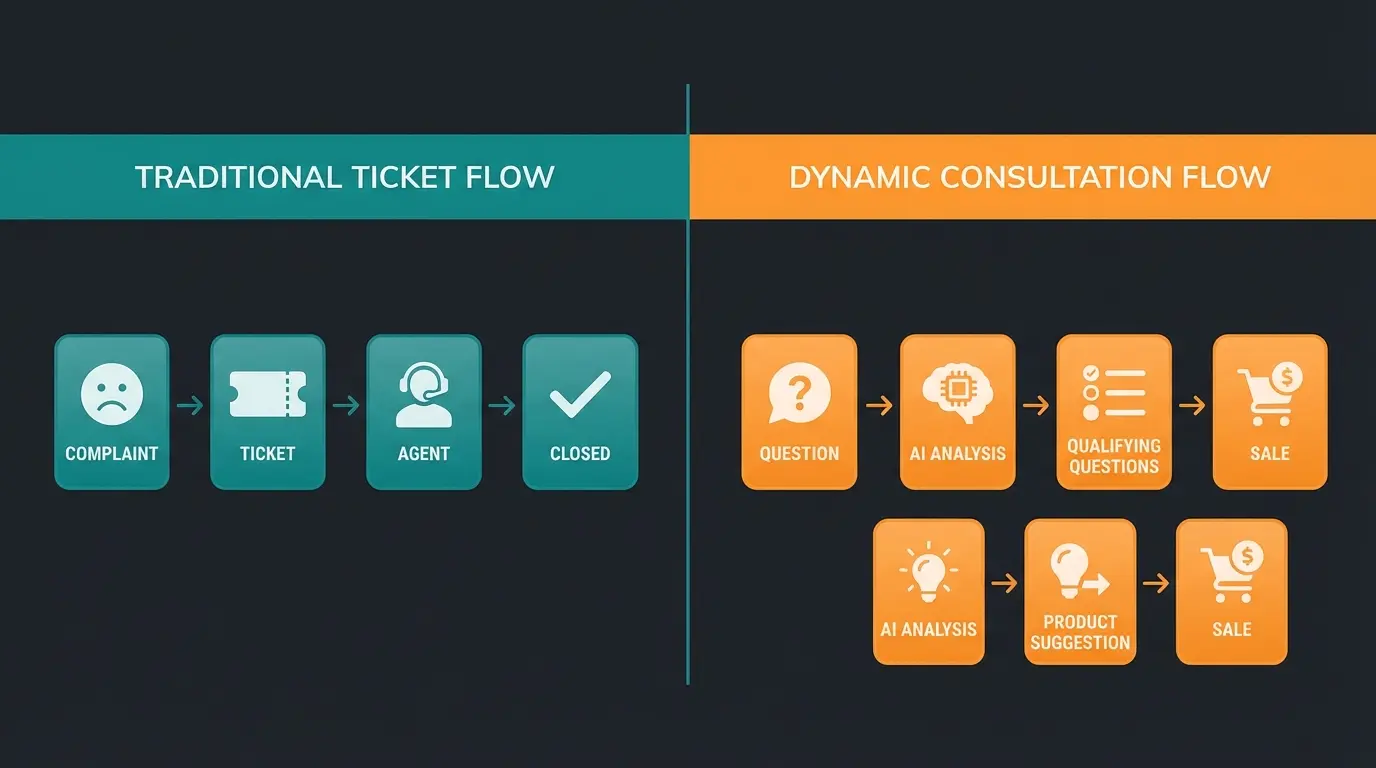
User complains → Ticket created → Agent fixes issue → Ticket closed (Cost center approach)
User asks question → AI analyzes intent → AI asks qualifying questions → Product suggested → Sale made (Revenue driver approach)
Path A treats every interaction as a problem to eliminate. Path B recognizes every interaction as an opportunity to create value.
Statistical Proof: A study from Rep AI shows that 12.3% of customers who interact with an AI make a purchase—compared to only 3.1% without interaction. This is concrete evidence that a ticket system with integrated consultation AI is a massive revenue driver, not just a cost center.
For e-commerce businesses, especially those running on platforms like Shopware, implementing Shopware 6 chatbots can dramatically transform customer interactions from support burden to sales opportunities.
See how AI-powered consultation can turn your support costs into sales opportunities. Our intelligent system understands customer intent and guides them to purchase—automatically.
Start Free TrialChecklist: How to Find the Right System
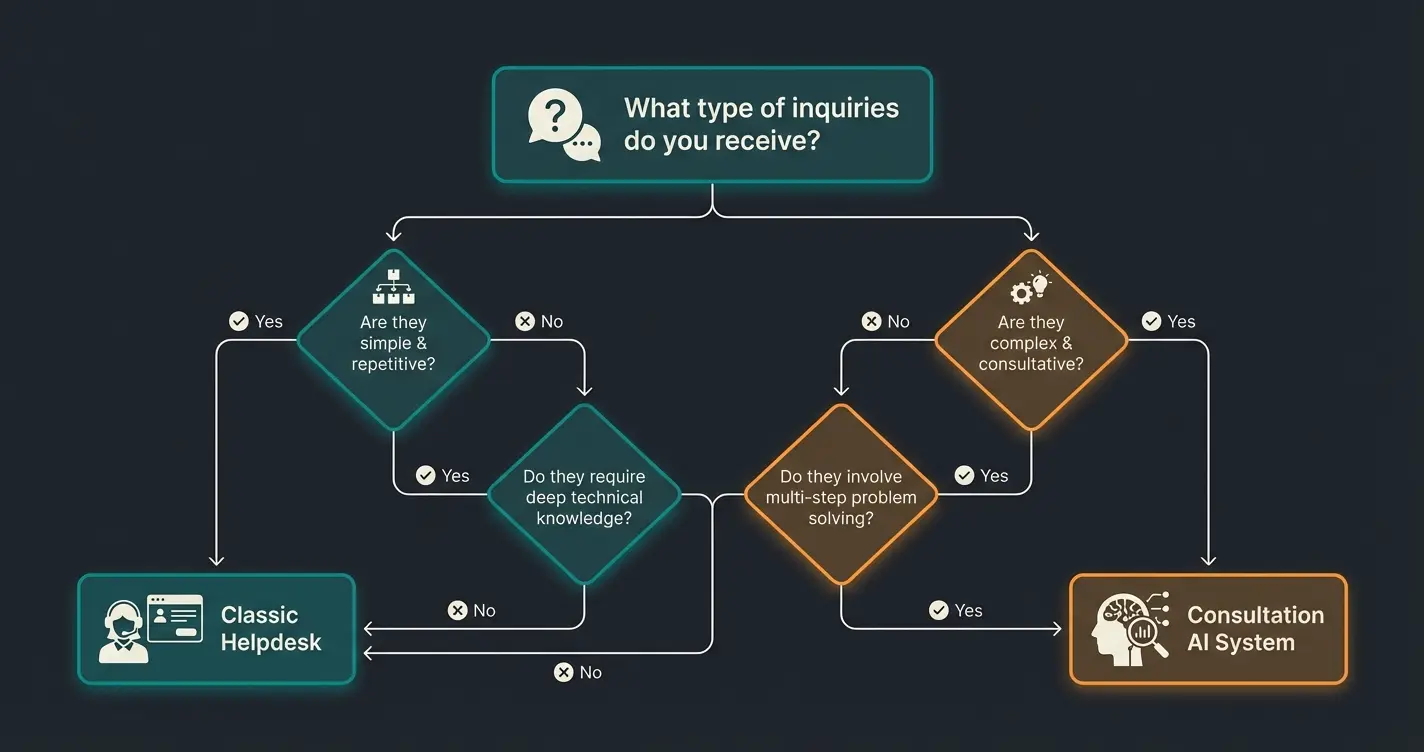
Before deciding on software, use this decision matrix. Most comparison portals only list features without strategic context, leaving you to guess what actually matters for your business.
Step 1: Analyze Your Inquiries
Type A: Are 80% of your inquiries status updates ("Where is my package?") or password resets?
- → Recommendation: A classic helpdesk system with strong automation (e.g., Zendesk, Freshdesk) will suffice for your needs.
Type B: Do you have products that require explanation? Do customers often ask "What's the difference between A and B?"
- → Recommendation: You need a Consultation System with Generative AI and CRM integration to maximize value.
Step 2: Pre-Sales vs. Post-Sales Focus
Do you want to use the system only for existing customers (support) or also on your website for new customers (sales)? This distinction fundamentally changes your requirements.
For sales scenarios, the ticket system must natively support live chat and WhatsApp and be able to push leads directly to your CRM. As iClosed and Jotform note, this integration capability is non-negotiable for revenue-focused implementations.
Step 3: Integration Capability Assessment
Ensure the system doesn't work in isolation. Can it read data from your shop system (Shopify, Magento, Shopware)? Does the AI know what the customer currently has in their cart?
Critical Point: Without this data, even the best AI cannot provide good consultation. According to DigWatch, data integration is the foundation of effective AI-powered customer service.
For Shopware users specifically, learning how to Automate Shopware support provides a comprehensive roadmap for implementation success.
Generative AI vs. Rule-Based Bots: A Direct Comparison
To make the right technology choice, you need to understand the fundamental differences between legacy chatbot technology and modern AI capabilities. This comparison table directly addresses the claims competitors make about their "AI" features.
| Capability | Rule-Based Bots (Legacy) | Generative/Consultative AI (Modern) |
|---|---|---|
| Understanding Context | Limited to predefined keywords and patterns | Deep comprehension of conversation history and intent |
| Handling Complex Queries | Fails or escalates to human agent | Navigates complexity, asks clarifying questions |
| Setup Time | Weeks to months of rule programming | Days to deploy with training on your data |
| Sales Focus | None—designed for deflection only | Built for conversion through consultation |
| Learning Ability | Static—requires manual updates | Continuous improvement from interactions |
| Personalization | Generic responses for all customers | Tailored responses based on customer history |
Understanding how AI in customer service enables personalization at scale is crucial for making the right technology investment.
Future Trends 2025-2026: Where the Market Is Heading
The market is developing rapidly. Based on current reports from Salesforce, Bitkom, and industry analysts, the following trends are emerging for 2025 and 2026:
1. Agentic AI Becomes the Standard
We're moving from "Assisted Intelligence" (AI suggests answer) to "Agentic AI" (AI executes action). According to Precedence Research, by 2028, an estimated 33% of e-commerce companies will use Agentic AI.
These agents can independently approve refunds, book appointments, or change complex configurations. As Intelegencia and Blue Prism explain, this autonomous capability dramatically reduces the need for human intervention in routine matters.
The emergence of AI digital consultants represents this shift toward truly autonomous AI workers that can handle complex tasks independently.
2. Hyper-Personalization Becomes Expected
Customers expect the ticket system to know their history instantly. "Hello Mr. Smith, is this about the printer you bought last week?" becomes the standard greeting, not the exception.
According to Experro, AI-powered personalization can increase e-commerce revenue by up to 15% while simultaneously improving customer satisfaction scores.
3. Conversational Commerce Dominates
Dialogue becomes the sales channel. Platforms like WhatsApp or Apple Business Chat are becoming more important than the classic webshop checkout. As the German Marketing Institute and Internet Weekly report, a ticket system that doesn't serve these channels will become obsolete within years.
This trend is fundamentally changing how businesses approach sales, as explored in our guide on how AI Selling revolutionizing transforms the customer journey from awareness to purchase.
One-third of online retailers will implement Agentic AI
AI-powered personalization boost for e-commerce
Businesses viewing AI as their most important future technology
Projected market value by 2035
Conclusion: Stop Managing Tickets—Start Winning Customers
The market for ticket systems is full of solutions that promise to reduce your support costs. That's important, but it's only half the truth. The real opportunity lies in moving the ticket system out of the "cost corner" and establishing it as a central instrument for customer retention and revenue growth.
Understanding what AI Customer Service can truly accomplish helps frame this transformation correctly. The companies winning today aren't just automating support—they're using every customer interaction as a revenue opportunity.
Strategic Summary for Your Implementation
- Mindset Shift: A ticket is not a disruption—it's an interaction with revenue potential. Train your team to see every inquiry as an opportunity.
- Technology Upgrade: Invest in systems that have Generative AI deeply integrated to scale consultation, not just deflection. The ROI justifies the investment.
- Data Integration: Connect support and sales systems completely. A problem solved today is the upsell of tomorrow.
Companies that complete this transformation now will not only work more efficiently but will significantly increase their customer loyalty and revenue. Success stories like Scaled with AI demonstrate the concrete results businesses are achieving through this approach.
Are you ready to rethink your ticket system?
Frequently Asked Questions About Modern Ticket Systems
While the terms are often used interchangeably, a modern ticket system goes beyond traditional helpdesk functionality. A helpdesk typically focuses on reactive issue resolution and ticket tracking. A modern ticket system serves as a Customer Dialogue Hub that includes sales consultation, omnichannel communication, AI-powered routing, and revenue tracking alongside support functions.
AI transforms ticket systems in several ways: it automatically classifies and routes tickets based on intent (not just keywords), provides intelligent response suggestions, handles routine inquiries autonomously through Agentic AI, identifies sales opportunities within support conversations, and offers hyper-personalized interactions based on customer history. Studies show AI-assisted conversations can increase conversion rates by up to 4x.
Consider switching when: your products require explanation and customers frequently ask comparison questions, you want to capture pre-sales opportunities (not just post-sales support), your team spends significant time on repetitive inquiries that could be automated, you need to scale customer interactions without proportionally increasing headcount, or your current system can't track revenue impact from customer service interactions.
ROI varies by implementation, but typical results include: 40% reduction in response times, 4x improvement in conversion rates for AI-assisted conversations, 15% revenue increase through personalization, 50% of inquiries resolved without human intervention (projected by 2027), and significant improvements in customer satisfaction scores. The key is choosing a system that measures revenue impact, not just cost reduction.
Unlike rule-based chatbots that require weeks or months of programming, modern generative AI systems can typically be deployed within days. However, full optimization—including CRM integration, team training, and workflow refinement—usually takes 4-8 weeks. The ongoing learning capability of AI means the system continues improving automatically after deployment.
Join forward-thinking businesses that have turned their ticket systems from cost centers into profit drivers. Our AI-powered platform handles consultation, qualification, and conversion—automatically.
Get Started Today