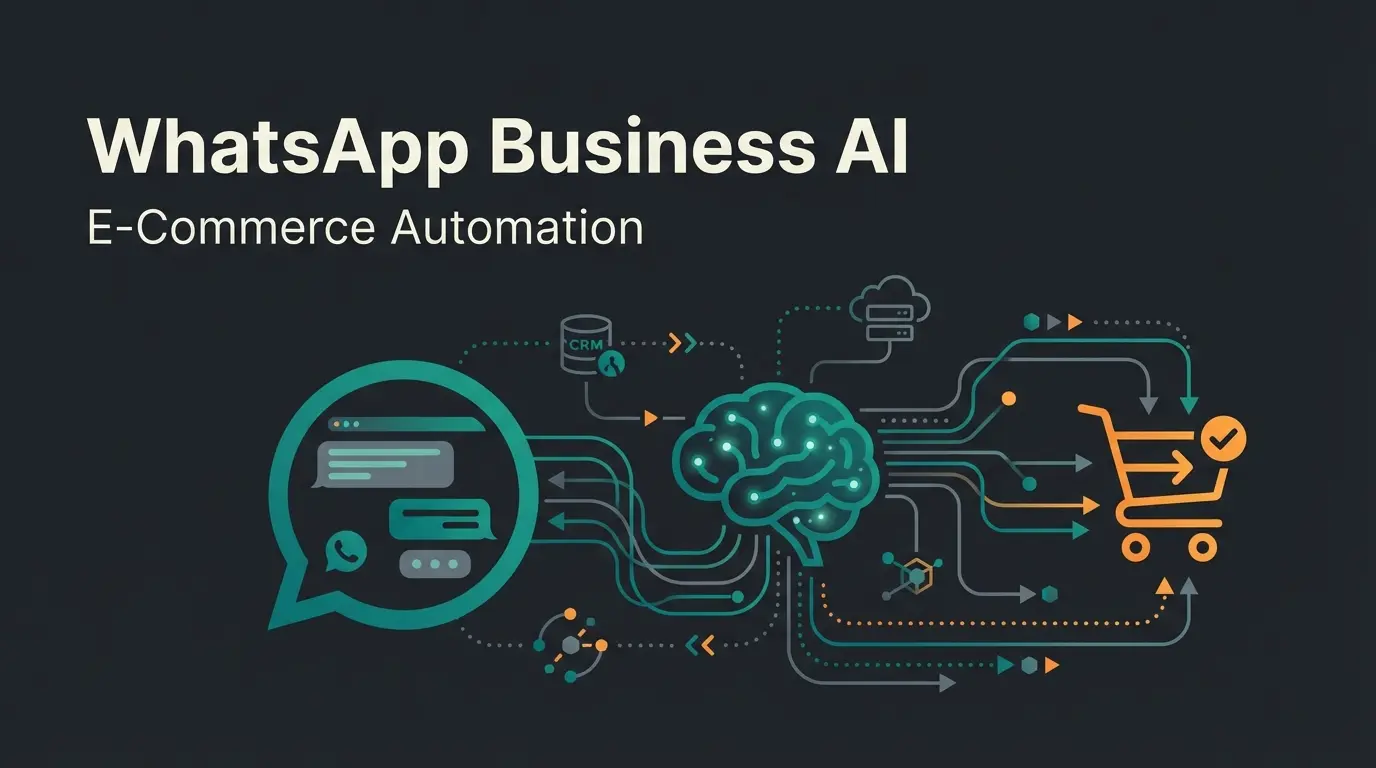
Why the Classic Newsletter Approach No Longer Works
It's 2025. Email inboxes are overflowing, email marketing click rates often stagnate below 3% according to Sendwo, and Customer Acquisition Costs (CAC) are rising relentlessly. In this climate, WhatsApp has established itself as the "Holy Grail" of marketing. With open rates of up to 98% and click rates that are often in double digits, as reported by BotPenguin and Bowaba, the channel seems unbeatable.
But a problem is brewing: The "Newsletterization" of WhatsApp.
Almost every WhatsApp marketing agency currently preaches the same mantra: "Collect opt-ins and send newsletters." The result? Users now receive clumsy advertising messages on their most private channel—between messages from mom and the football club. The consequence is a creeping "channel fatigue" and rising block rates. Understanding how Conversational AI evolves helps explain why this traditional approach is becoming obsolete.
Here lies the massive content and strategy gap that many companies overlook: The true value of WhatsApp lies not in broadcasting (one-to-many), but in conversational commerce (one-to-one).
This article is not an ordinary comparison. We analyze in depth why the classic WhatsApp marketing agency often falls short for certain business models (especially B2B and products requiring explanation) and why an AI Sales Consultant—an intelligent, consultative AI—represents the next evolutionary step. As AI Selling is revolutionizing the industry, we're seeing a fundamental shift in how businesses approach customer engagement.
We illuminate the cost structure of the WhatsApp Business API for 2025, the GDPR pitfalls, and show you how to transform from an annoying "market crier" into a valued "advisor."
What Does a Classic WhatsApp Marketing Agency Do?
To understand what you need, we must first define what the market currently offers. When you search Google for "WhatsApp marketing agency," you mostly encounter service providers who specialize in e-commerce retention.
The Standard Services
A typical agency or tool provider (like Chatarmin, Charles, or Werk von Morgen) focuses on the following pillars:
- Newsletter Campaigns (Push Marketing): Similar to Klaviyo or Mailchimp, campaigns are sent to large distribution lists. The focus is on "drops," discount promotions, and seasonal offers.
- Automated Flows (Retention): The classic is the "abandoned cart flow." A customer adds something to the cart, doesn't buy, and receives a WhatsApp reminder 30 minutes later.
- Support Relief (First-Level Support): Simple chatbots that answer FAQs ("Where is my package?", "What are the return conditions?"). Looking at the history of chatbots, we can see how these basic functions have evolved over time.
The Problem with the "Agency Model"
Classic agencies often work with high monthly retainers for the manual creation of campaigns and copy. The model is based on buying attention.
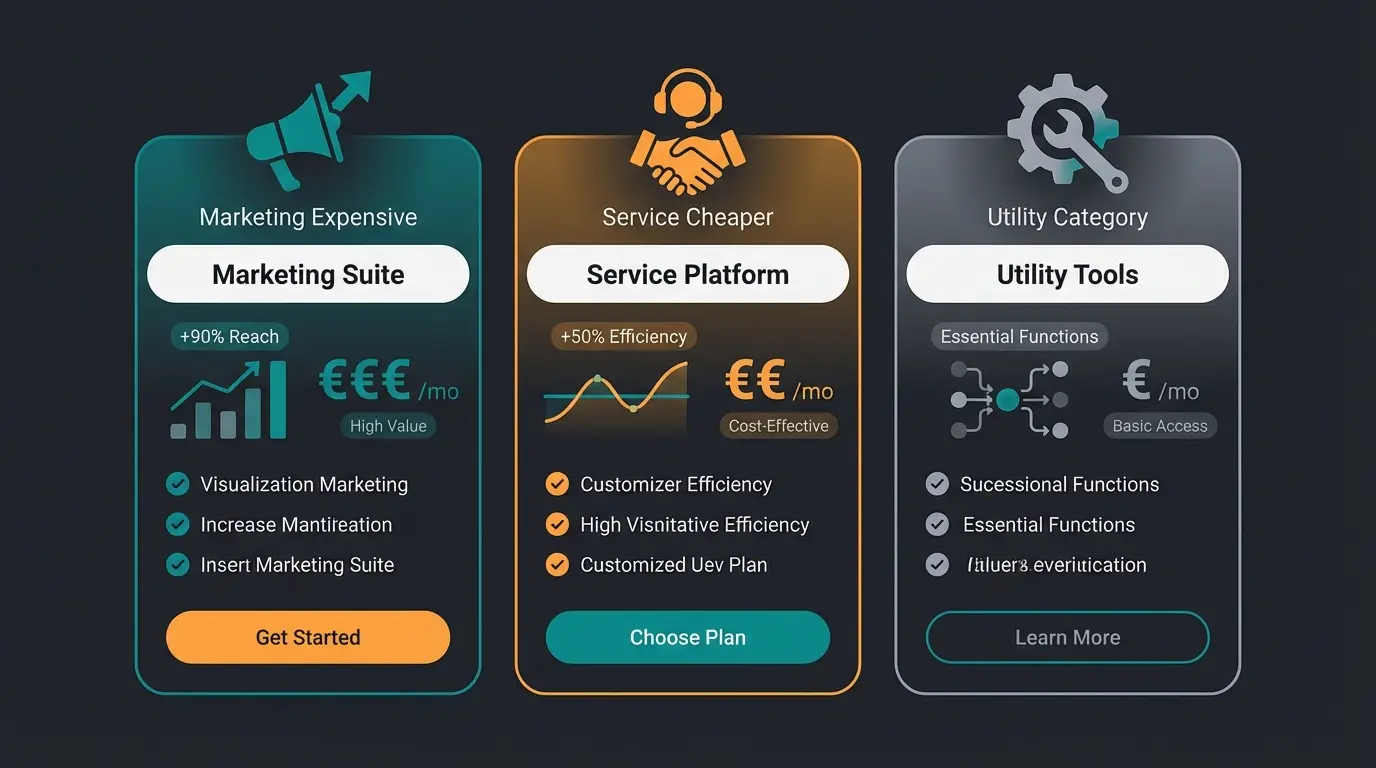
- Marketing Message Cost Trap: Since Meta's price changes (and adjustments for 2025), marketing templates are the most expensive category according to ControlHippo and Heltar. A "spray-and-pray" strategy, where you message 10,000 users to generate 50 sales, is becoming increasingly unprofitable.
- Lack of Consultation Depth: A classic agency can write great copywriting texts, but they can rarely simulate a complex sales process (e.g., for expensive bikes, B2B software, or skincare routines) in real-time.
The New Standard: AI-Driven Product Consultation
Here we enter "Blue Ocean" territory. While 90% of the market talks about newsletters, the true revolution is happening in the area of "Consultative AI". This shift represents how AI Chatbots transform customer interactions from simple support to revenue-generating conversations.
What Is an AI Sales Consultant?
Imagine entering a specialty store. A good salesperson doesn't immediately shout "20% OFF!" at you (that's what the newsletter does). Instead, they ask: "Are you looking for something specific? What would you like to use the product for?"
An AI Sales Consultant on WhatsApp replicates exactly this experience—scalable, 24/7, and in hundreds of languages simultaneously. The technology behind AI Product Consultation has advanced to the point where these systems can genuinely understand and respond to customer needs.
The Difference: Chatbot vs. AI Consultant
| Feature | Classic Chatbot (Agency Standard) | AI Sales Consultant (The Future) |
|---|---|---|
| Technology | Decision tree (If A, then B) | Large Language Models (LLM) / Generative AI |
| Goal | Reduce support tickets (cost cutting) | Generate revenue (Revenue Driver) |
| Interaction | "Press 1 for status" | "What skin type do you have? Dry or oily?" |
| Flexibility | Fails with unknown inputs | Understands context, irony, and complex questions |
| Data Usage | Static | Learns from product catalog & customer behavior |
Why Guided Selling Explodes Conversion Rates
Customers today are often overwhelmed by choice (Analysis Paralysis). WhatsApp marketing experts know: Whoever takes the customer by the hand wins. Research shows that conversational AI outperforms traditional marketing approaches when it comes to qualifying and converting leads.
- Real-Time Needs Analysis: The AI asks 2-3 qualifying questions.
- Hyper-Personalized Recommendation: Instead of a link to the homepage, the customer receives exactly the product that solves their problem.
- Objection Handling: If the customer asks "Is this also suitable for sensitive skin?", the AI responds based on the ingredients—without human intervention.
This is not "support." This is active sales. An AI Chatbot for E-Commerce functions as your tireless sales representative, engaging customers at the moment they're ready to buy.
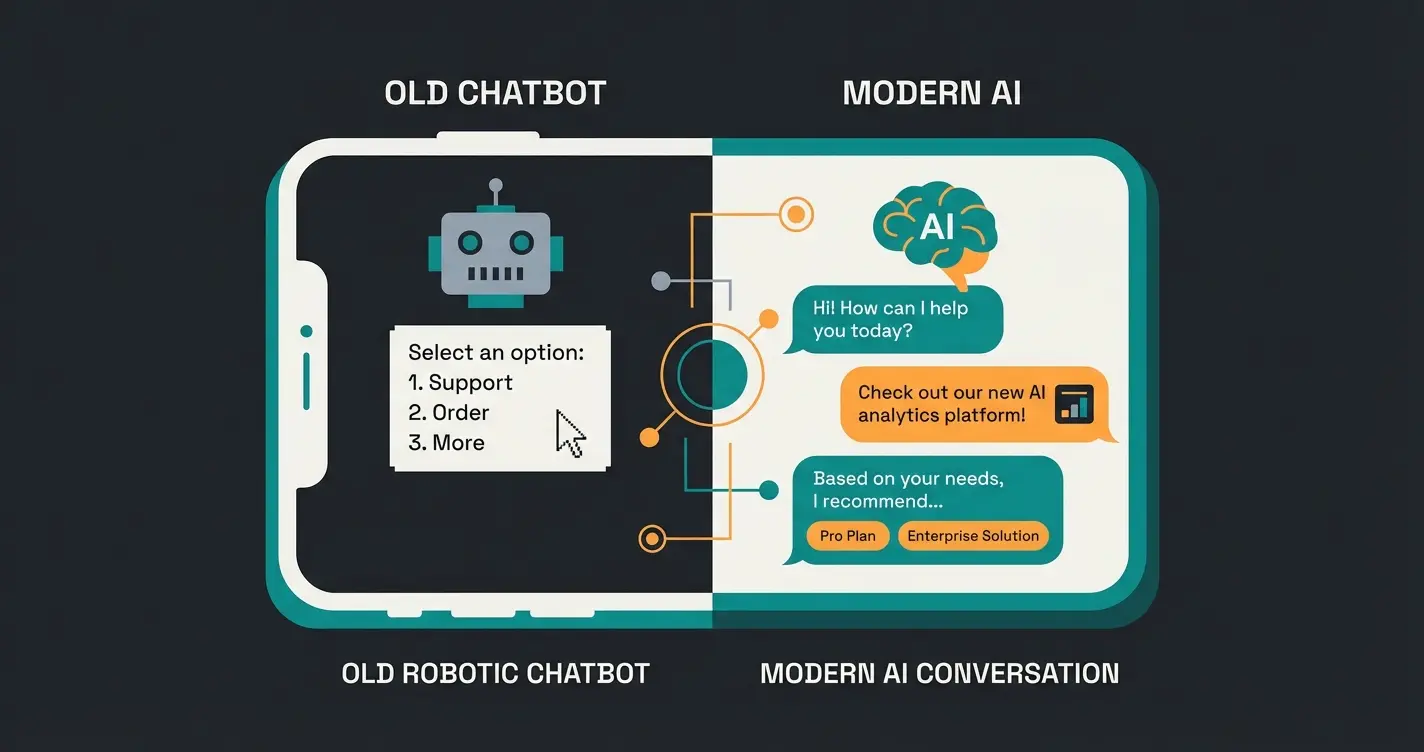
Basic customer support via WhatsApp Business App, one-on-one conversations, limited scalability
Mass messaging campaigns, automated flows, cart abandonment reminders, growing spam fatigue
Intelligent product consultation, personalized recommendations, conversational commerce 2.0
Top WhatsApp Marketing Solutions & Agencies Compared
To provide you with an objective decision-making foundation, we compare established market players with the new AI consultation approach. Understanding the full WhatsApp Business API landscape is essential before making your choice.
1. Chatarmin (The All-Rounder for E-Commerce)
Chatarmin has established itself as a robust solution for Shopify and Klaviyo users, as highlighted on Chatarmin's platform.
- Strength: Excellent integrations into the e-commerce tech stack. Very strong in newsletter marketing and flow builder according to their feature documentation.
- Focus: Retention Marketing (repeat buyers).
- Suited for: D2C brands (fashion, food) that want to mirror their email strategy on WhatsApp.
2. Werk von Morgen (The Data Protection Specialist)
This agency positions itself strongly on GDPR compliance and clean API setup.
- Strength: Security, legal frameworks, and strategic onboarding.
- Focus: Companies afraid of warnings who seek a safe start.
- Suited for: German mid-sized companies taking their first steps.
3. Charles (The Enterprise Solution)
One of the pioneers in "Conversational Commerce" in Germany.
- Strength: Very comprehensive suite, strong focus on fashion/lifestyle.
- Focus: High-end brands with large budgets.
- Suited for: Large brands seeking an all-in-one solution.
4. AI-Powered Solutions (The Game Changer)
This is where the approach of professional AI consulting comes into play, representing a fundamental shift in how WhatsApp marketing delivers results.
- Strength: Deep product consultation instead of just message delivery. The AI acts as a salesperson, not a mailman.
- Focus: Conversion increase through consultation (pre-sales) and automation of complex inquiries.
- Suited for: Products requiring explanation, B2B, high-ticket items, and companies that want to stand out from newsletter spam.
| Criteria | Traditional Agency | AI Sales Consultant |
|---|---|---|
| Monthly Cost | €2,000-10,000 retainer | Software license + API costs |
| Setup Time | 2-4 weeks | Days to 1 week |
| Scalability | Limited by team size | Unlimited conversations |
| 24/7 Availability | No (business hours) | Yes, always active |
| Sales Capability | Good copywriters | Instant knowledge of entire product catalog |
| Personalization | Segment-based | Individual 1:1 recommendations |
| Learning Ability | Manual optimization | Continuous AI improvement |
Stop broadcasting. Start conversations. Discover how AI-powered product consultation can revolutionize your customer engagement and drive sales 24/7.
Start Your Free TrialWho Needs What? (Strategic Decision Guide)
Not every company needs a highly complex AI, but also not every company should send newsletters. Here's a decision guide:
Scenario A: Fast Fashion & Impulse Purchases
- Product: T-shirts, socks, snacks (cart value < €50).
- Purchase Decision: Impulsive, visually driven.
- Recommendation: Classic WhatsApp marketing agency.
- Why: Discount codes ("Drop Alert: 20% today only") work excellently here. Deep consultation is rarely necessary.
Scenario B: Complex & High Ticket Items
- Product: E-bikes, B2B software, luxury cosmetics, furniture, machinery (cart value > €100).
- Purchase Decision: Rational, consultation-intensive, many follow-up questions.
- Recommendation: AI Sales Consultant.
- Why: A newsletter with "Here's a bike" doesn't sell a €3,000 e-bike. The customer wants to know: "What frame size do I need at 1.80m height?" or "Does the battery also hold up in winter?" An AI that immediately answers these questions closes the sale while the newsletter starves in "read" status.
Scenario C: B2B Lead Generation & Recruiting
- Goal: Qualified leads or applicants.
- Recommendation: Hybrid model (AI qualification).
- Why: Use WhatsApp for pre-qualification. The AI asks 5 questions (budget, timeline, skills). Only qualified leads are handed over to a human sales rep. This saves hundreds of hours of phone time.
The strategic use of AI chatbots in marketing allows businesses to automate the qualification process while maintaining a personal touch that customers expect from direct messaging channels.
WhatsApp messages vs. 20% for email
For well-targeted WhatsApp campaigns
Marketing-initiated messages in Germany
No business hours limitations
The Technology Behind It: WhatsApp Business API & Costs
Many companies still use the free "WhatsApp Business App" on a phone. This is not only a data protection nightmare (more on that shortly), but also a dead end for scaling. Understanding that WhatsApp Business is more than just an app is crucial for serious marketing efforts.
Why the API Is Indispensable
The WhatsApp Business API (Application Programming Interface) is the only official interface for professional marketing. It enables:
- Connection to CRM systems (HubSpot, Salesforce, Shopify).
- Use by multiple employees simultaneously.
- Deployment of chatbots and AI.
- GDPR-compliant data processing (no access to private phone book).
Cost Update 2025: What You Need to Know
Meta regularly adjusts prices. For 2025 and beyond, important changes apply that should influence your strategy according to Respond.io and Link Mobility:
- Template-Based Pricing: From mid-2025, the model will focus even more on categories. You pay per 24-hour conversation, depending on who initiates it and which category it belongs to.
- Marketing Is Expensive: A marketing conversation initiated by you (e.g., newsletter) costs approximately €0.11 to €0.14 in Germany. That quickly adds up to over €1,000 per campaign with 10,000 recipients.
- Service Is (Often) Free: When the customer writes to you (User-Initiated), the response window (Service Window) is often free or very cheap according to Webmaxy.
Data Protection & GDPR: The Elephant in the Room
In Germany, WhatsApp marketing consulting without data protection expertise is negligent. The fear of warnings is great—and justified if mistakes are made.
The 3 Pillars of GDPR Compliance on WhatsApp
- No Use of the App: The normal app and Business App access the phone's address book and send data to the USA. This is a GDPR violation according to TimelinesAI and Heydata. The API, however, only transfers data from contacts who write to you.
- Server Location: Make sure your provider (BSP - Business Solution Provider) uses servers in the EU (preferably Germany). Providers like Chatarmin or specialized German hosts guarantee this according to Superchat.
- Double Opt-in & Consent: You cannot simply contact anyone. The user must actively consent (e.g., checkbox at checkout or keyword "Start" in chat). Transparency is key: The privacy policy must explicitly mention WhatsApp usage.
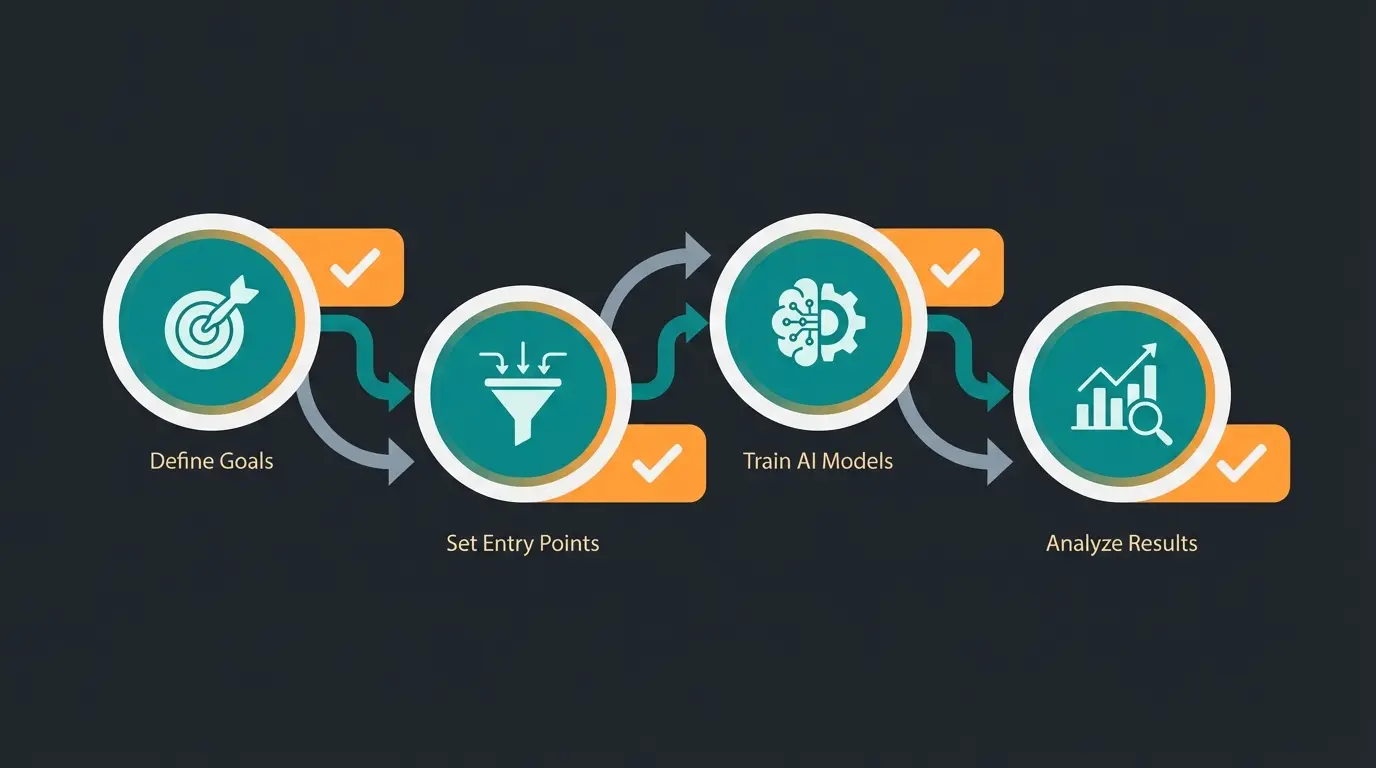
Practical Tips for Getting Started (Checklist)
You want to move from theory to practice? Here's your roadmap:
Step 1: Define Your Objectives
Do you want to reactivate existing customers (newsletter) or advise new customers (AI Sales)?
- Tip: Don't start with everything at once.
- Consider your product complexity and average order value.
- Analyze your current customer service bottlenecks.
Step 2: Choose the Right Entry Point
How do people get into your WhatsApp channel?
- QR Codes: On package inserts ("Scan for support & instructions").
- Chat Bubble: On the website ("Questions about the product? Chat with us").
- Ads: "Click-to-WhatsApp" ads on Facebook/Instagram (very effective for lead gen).
Step 3: Train the AI (Onboarding)
If you decide on an AI solution, you don't need to write complex code.
- Upload your product feeds (PDFs, website URLs).
- Define the "persona" (Should the AI be casual ("you") or formal ("Sie/you")?).
- Test the consultation competence thoroughly before going live.
Step 4: Measure and Optimize
Don't rely only on the open rate.
- Important KPIs: Conversion Rate (How many chats lead to purchases?), Response Time, Customer Satisfaction Score (CSAT).
- Track cost per acquisition through WhatsApp versus other channels.
- Monitor AI response quality and escalation rates.
Conclusion: The Future Belongs to Dialogue
The market for WhatsApp marketing agencies is changing rapidly. The era of the "Wild West," where you could simply send mass messages, is coming to an end—driven by price increases from Meta and rising user expectations.
The winners of tomorrow are not the brands that shout the loudest (newsletters), but those that listen and respond best (consultation). This fundamental shift is why understanding how the landscape is evolving matters so much for strategic planning.
Key Recommendations Summary
- Use agencies if you have simple products and are looking for quick sales through discounts.
- Rely on AI Sales Consultants if you sell high-quality products, want to reduce support costs, and want to offer your customers a genuine shopping experience.
- Pay meticulous attention to API usage and GDPR compliance.
Are you ready to automate your sales instead of just sending messages? It's time to stop seeing WhatsApp as a newsletter tool and start viewing it as your best sales representative who never sleeps.
Frequently Asked Questions
Traditional WhatsApp marketing agencies typically charge monthly retainers ranging from €2,000 to €10,000, depending on services included. This covers campaign creation, flow building, and creative design. Additionally, you'll pay Meta's per-conversation fees (€0.11-0.14 for marketing messages in Germany). AI-powered solutions often have lower monthly software costs but require the same API fees.
WhatsApp marketing can be fully GDPR compliant when done correctly. The key requirements are: use the official WhatsApp Business API (not the standard app), choose a provider with EU-based servers, obtain proper double opt-in consent, and clearly document WhatsApp usage in your privacy policy. Using the regular WhatsApp Business App for marketing is NOT GDPR compliant as it accesses your device's address book.
The WhatsApp Business App is free but limited—it's designed for small businesses with one user, cannot integrate with CRM systems, and accesses your phone's contacts (GDPR issue). The Business API is the professional solution that enables multiple users, chatbot/AI integration, CRM connections, and compliant data handling. For any serious marketing efforts, the API is mandatory.
AI Sales Consultants excel at handling routine product inquiries, qualification questions, and providing instant 24/7 responses. They can access your entire product catalog instantly and provide personalized recommendations. However, they work best in a hybrid model—handling the majority of conversations while escalating complex cases to human agents. For high-ticket B2B deals, AI typically qualifies leads before human handoff.
The most effective entry points include: QR codes on packaging and printed materials, website chat bubbles with product-specific prompts, Click-to-WhatsApp Facebook/Instagram ads (excellent for lead generation), post-purchase follow-up emails inviting support conversations, and in-store signage. The key is offering clear value—"Get personalized product advice" works better than just "Chat with us."
Transform your WhatsApp channel from a newsletter tool into your most effective sales consultant. Join innovative brands using AI-powered product consultation to increase conversions and customer satisfaction.
Get Started Free Today
Lasse is CEO and co-founder of Qualimero. After completing his MBA at WHU and scaling a company to seven-figure revenue, he founded Qualimero to build AI-powered digital employees for e-commerce. His focus: helping businesses measurably improve customer interaction through intelligent automation.