Introduction: The Myth of the "Free" Online Shop
"WooCommerce is free." This statement is technically correct, but economically dangerous. Yes, the plugin itself costs nothing. But anyone who believes they can build a legally compliant, high-revenue online shop in Germany for €0 will quickly learn otherwise.
The reality in 2025 looks quite different: Competition is fiercer, legal requirements (especially in the EU) are stricter, and customer expectations for speed and personalized advice have increased dramatically. According to Raidboxes, even basic managed WordPress hosting starts at €15-20 per month, highlighting the immediate gap between "free plugin" and actual operating costs.
In this comprehensive guide, we break down WooCommerce costs with brutal honesty. We're not just looking at hosting and themes - we're also analyzing the "hidden" cost drains like conversion losses and missing sales consultation. We'll show you why a "cheap" shop can ultimately cost you thousands of euros in lost revenue, and how intelligent investments in AI tools can maximize your profits. For a direct comparison with alternative platforms, check out our WooCommerce vs Shopify analysis.
The core WooCommerce plugin is completely free
Minimum annual cost for a professional setup
Monthly payment processing on €10,000 revenue
AI tools provide round-the-clock sales support
1. Basic Costs: Your Shop Foundation (Fixed Expenses)
Before we discuss design or marketing, we need to establish the technical foundation. Cutting corners here is like building a house on sand.
Hosting & Domain: Performance is Currency
A slow shop doesn't convert. Studies consistently show that every additional second of loading time drastically reduces revenue. For the German market, specialized WordPress hosts are essential.
- Shared Hosting (Low Budget): Providers like Strato or IONOS attract customers with prices starting at €1 in the first year. Acceptable for hobby projects, but often too slow for serious e-commerce (Time-to-First-Byte issues). Cost: approximately €5-10 per month.
- Managed WooCommerce Hosting (Recommended): Providers like Raidboxes or HostPress have their servers specifically optimized for WooCommerce (server-side caching, NGINX). According to Raidboxes, starter plans begin at approximately €15-20 per month, while HostPress offers premium support and high performance from approximately €25 per month.
- Domain & SSL: A .de domain costs approximately €10-20 per year. SSL certificates are now usually included (Let's Encrypt), with premium certificates costing extra.
Legal Compliance: The German Market Factor
In no other country is the risk of legal warnings (Abmahnung) as high as in Germany. A standard WooCommerce installation is not GDPR or legally compliant. You absolutely need extensions for base prices, checkout checkboxes, cancellation policies, and legally compliant invoices. According to Abilita, this is the most critical aspect of running a German shop.
There are two market leaders in this space:
- Germanized for WooCommerce (Pro): Offers PDF invoices, template text generator, and Trusted Shops integration. Cost: €69 per year (as of 2025).
- German Market (MarketPress): Very popular, including interfaces to accounting systems (lexoffice, sevDesk). According to AWEOS and WPTeam, costs range from approximately €75-87 per year.
Additionally: Cookie Consent (GDPR) - A simple "OK" banner is no longer sufficient. You need a genuine Consent Management Platform (CMP). Borlabs Cookie is the standard for WordPress, blocking scripts until the user consents. According to Lukas Fischer, the cost is approximately €49 per year.
2. Variable Costs: Design, Function & Marketing
This is where you decide whether your shop looks like a "template" or a professional brand.
Themes: The Face of Your Shop
- Free: The "Storefront" theme is solid but optically limited.
- Premium Themes: Themes like Flatsome, Divi, or Astra Pro offer drag-and-drop builders and conversion-optimized layouts. Cost: One-time approximately €60-90 or annually approximately €50 for updates.
Essential Plugins (The Standard Stack)
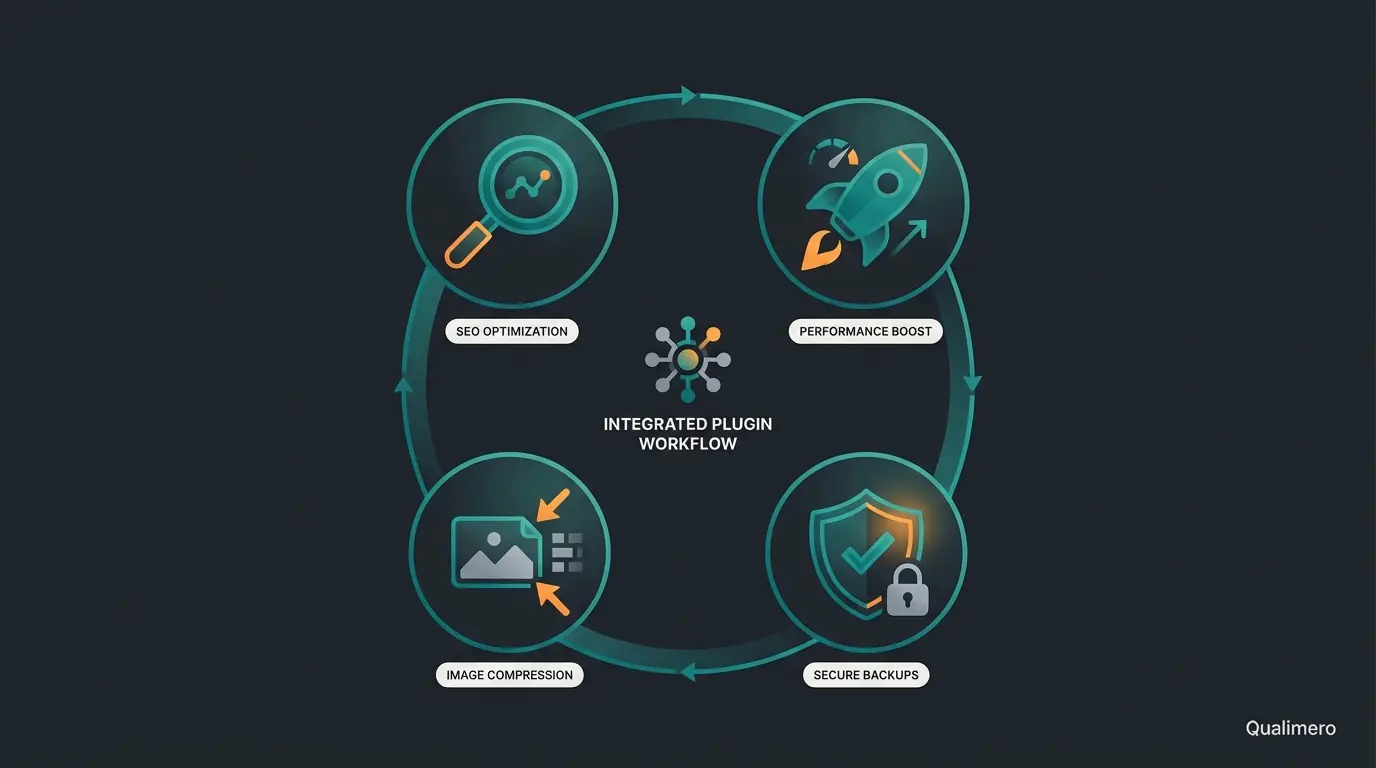
A bare WooCommerce installation can do very little. For a competitive shop, you need the following essential WooCommerce plugins:
| Category | Plugin Recommendation | Cost (approx.) | Purpose |
|---|---|---|---|
| SEO | RankMath Pro or Yoast SEO Premium | €60/year | Better rankings, Schema Markup for products |
| Performance | WP Rocket | €50/year | Faster loading times (Core Web Vitals) |
| Backups | UpdraftPlus Premium | €70/year | Life insurance for your data |
| Image Optimization | ShortPixel / Imagify | €10/month | Automatically compresses product images |
According to RankMath, proper SEO implementation can significantly improve your product visibility and organic traffic, making it one of the most valuable plugin investments you can make.
3. Transaction Costs: Payment Provider Fees
Often forgotten in calculations: Every time you sell something, PayPal & Co. earn along with you. These costs scale with your revenue. Understanding these fees is essential for proper WooCommerce Accounting guide.
- PayPal: Extremely important in Germany. According to Transaktionsgebuehren.com, fees are approximately 2.49% + €0.35 per transaction (may vary by volume).
- Stripe (Credit Cards/Apple Pay): Often cheaper than PayPal. Approximately 1.4% + €0.25 for European cards.
- Klarna / Invoice Payment: Fees often higher, but massively increases conversion rates in Germany.
4. The Hidden Growth Costs: Where You Really Lose Money
Up to this point, we've discussed static costs (hosting, plugins). That's the part of the iceberg everyone sees. But the biggest cost factor in e-commerce 2025 isn't the software - it's missing consultation and cart abandonment.
The Problem: The Silent Salesperson
In a physical store, a salesperson approaches the customer: "Are you looking for something specific? Do you need help with the size?" In an online shop, the customer is alone. If they can't find the product immediately or are uncertain, they leave. The "cost" of this is lost revenue.
This is where the true value of an AI sales strategy becomes apparent. The cost of customer confusion isn't listed on any invoice, but it's often the largest expense a shop owner faces.
The Solutions: A Cost Comparison
Option A: Human Support (Expensive)
You hire employees to answer questions via live chat.
- Cost: Minimum wage + payroll taxes. Even part-time quickly exceeds €1,500/month.
- Disadvantage: Not available 24/7, not scalable.
Option B: Basic Chatbots (Cheap but Risky)
Rule-based bots (e.g., Tidio, Chatfuel) that only recite FAQs ("What are the shipping costs?"). According to Quidget.ai and Lindy.ai, costs range from approximately €20-50 per month.
- Cost: Approximately €20-50/month.
- Disadvantage: They cannot provide real advice. When a customer asks: "Which oil fits my 2010 BMW?", the bot fails. This frustrates customers and damages your brand.
Option C: AI Product Consultation (The Game Changer)
This is where modern AI product consultation comes into play. This isn't a simple text generator, but a trained sales assistant that knows your product catalog. You can see real-world results in our AI Product Consultation case study.
- Function: The AI analyzes customer questions ("I'm looking for a gift for my wife, she likes hiking and the color blue") and suggests specific products from your shop - including reasoning.
- Cost: Modern SaaS solutions for AI consulting typically range between €50 and €200/month (depending on request volume).
- ROI Consideration: If the AI saves just 5 additional sales per month that would have otherwise been abandoned, the tool has already paid for itself. Unlike hosting costs (which just "exist"), this is an investment that actively earns money.
Visitor lands on your shop with a specific need
Customer is uncertain about product choice or compatibility
Intelligent assistant asks clarifying questions
AI suggests specific products with reasoning
Customer completes purchase with reduced cart abandonment
Stop losing sales to customer confusion. Our AI product consultation tool provides 24/7 intelligent sales support that pays for itself through increased conversions.
Start Your Free Trial5. Real-World Scenarios: What Does WooCommerce Really Cost?
To give you a realistic picture, we've calculated three scenarios. Prices are estimates based on 2025 market data. For a deeper dive into WooCommerce Pricing 2025, check out our detailed pricing guide.
Scenario 1: The DIY Starter (Low Budget)
Goal: Start as cheaply as possible with significant personal effort.
| Item | Cost (Year 1) | 3-Year Total | Notes |
|---|---|---|---|
| Hosting (Shared) | €80 | €240 | Strato/IONOS Basic |
| Domain | €15 | €45 | .de Domain |
| Theme | €0 | €0 | Storefront (Free) |
| Legal Compliance | €0 | €0 | Manual maintenance (Risk!) or Free versions |
| Plugins (Basic) | €0 | €0 | Only free versions |
| Total | €95 | €285 | Very cheap, but high risk & lots of work |
Scenario 2: The Professional Brand Shop
Goal: Legal compliance, performance, good design.
| Item | Cost (Year 1) | 3-Year Total | Notes |
|---|---|---|---|
| Hosting (Managed) | €300 | €900 | Raidboxes/HostPress |
| Theme (Premium) | €70 | €70 | Flatsome/Divi (one-time) |
| Legal (Germanized Pro) | €69 | €207 | Including invoice PDFs |
| Cookie Consent | €49 | €147 | Borlabs |
| SEO & Caching Pro | €110 | €330 | WP Rocket + RankMath |
| Total | €598 | €1,654 | Solid foundation for serious business |
Scenario 3: The High-Performance AI Shop
Goal: Maximum automation, conversion optimization, 24/7 sales capability.
| Item | Cost (Year 1) | 3-Year Total | Notes |
|---|---|---|---|
| Base (See Scenario 2) | €598 | €1,654 | Solid technical foundation |
| AI Sales Consultant | €1,200 | €3,600 | (~€100/month) Replaces support staff |
| Marketing Automation | €300 | €900 | Email Marketing (Klaviyo/Brevo) |
| Total | €2,098 | €6,154 | Focus on revenue growth & scaling |
For businesses looking to expand further, consider integrating WooCommerce email marketing tools and exploring WooCommerce Amazon integration for multi-channel selling.
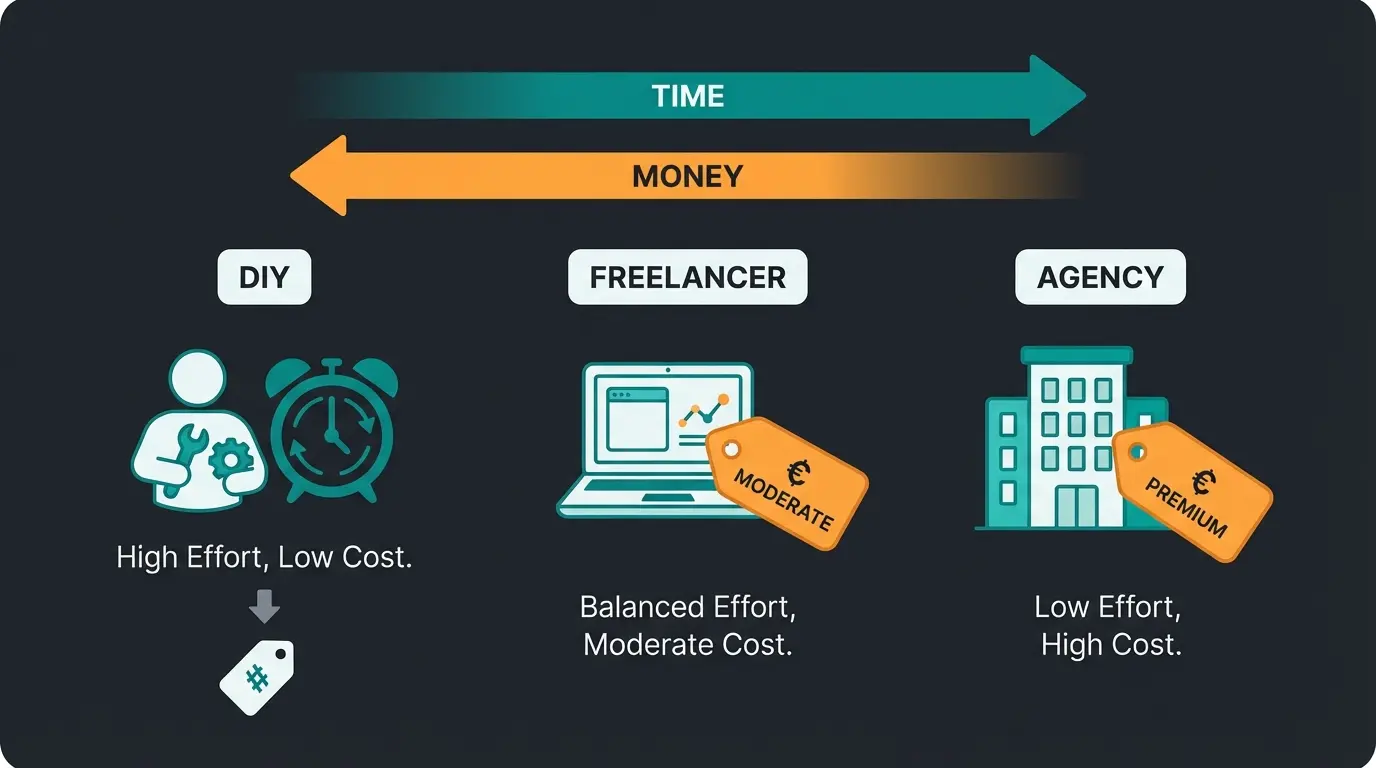
6. One-Time Setup Costs: Agency vs. DIY
The costs mentioned above are ongoing costs. But who builds the shop? For businesses considering WooCommerce B2B plugins or WooCommerce ERP integration, professional setup becomes even more critical.
Do It Yourself (DIY)
- Money: €0
- Time: 50-200 hours
- Risk: High. Beginner mistakes with permalinks, SSL, or tax settings can become expensive.
Freelancer
According to Freelancermap.de, current hourly rates in Germany are approximately €75 to €120. For a solid shop (setup, design, legal text integration), expect €1,500 to €5,000.
Professional Agency
Focus areas include custom design, interfaces to inventory management (ERP), and strategic consulting. According to Wolfgegenlicht.de, costs start at €10,000 and go up from there.
7. Visualization: The Iceberg Model of WooCommerce Costs
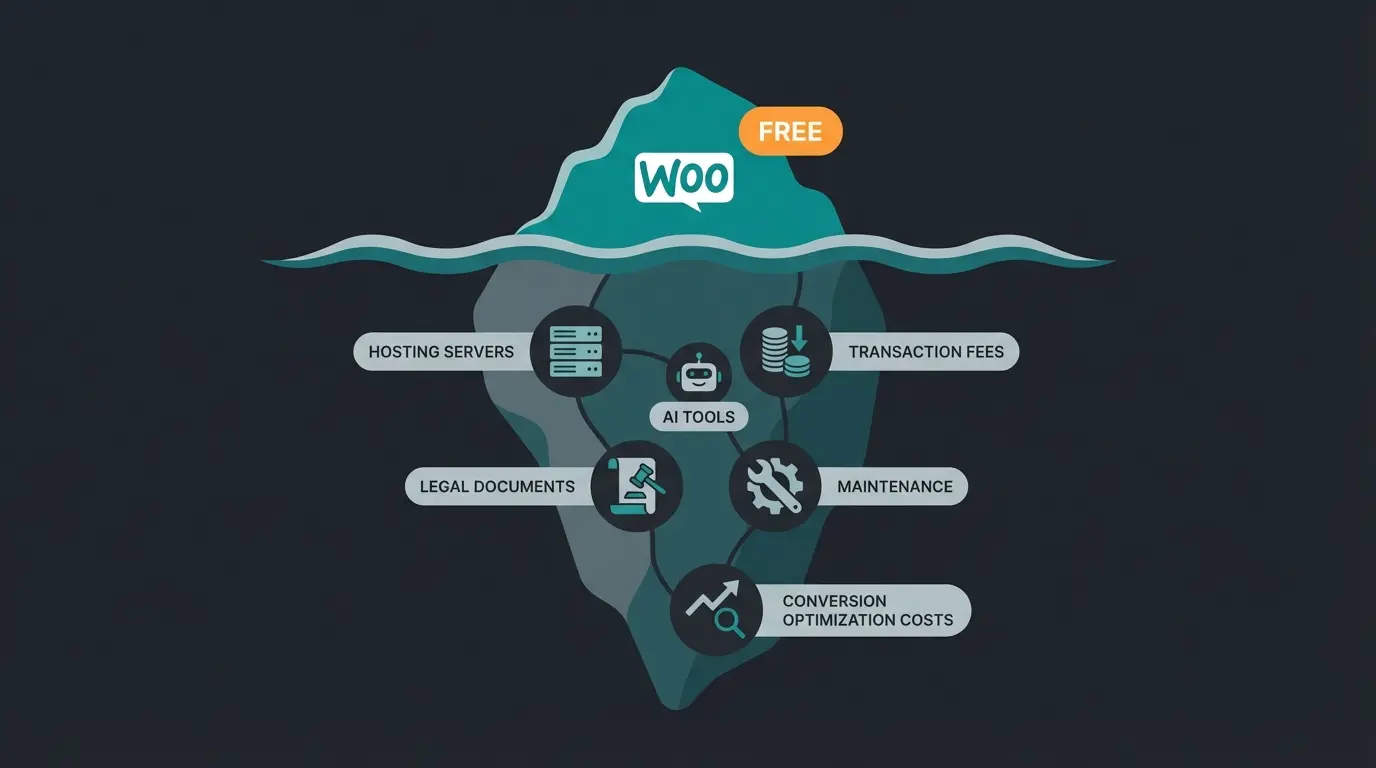
Imagine the costs like an iceberg:
Above the Waterline (Visible)
- WooCommerce Plugin (Free)
- Domain (Inexpensive)
Below the Waterline (The Reality)
- Premium Hosting (Performance)
- Legal Protection (Germanized/German Market)
- Maintenance & Updates (Time or service contract)
- Transaction Fees (PayPal/Stripe)
- Conversion Optimization (AI Tools, Sales Software)
Many beginners only see the tip and experience "shipwreck" when they ignore the costs below the waterline. The point Conversion Optimization is particularly often neglected - yet it's the engine that actually moves the iceberg forward.
For shops running subscription models, check out our WooCommerce subscriptions guide to understand the specific cost implications. Similarly, WooCommerce dropshipping guide covers unique considerations for dropshipping businesses.
8. Static Shop vs. Smart Shop: A Comparison
Understanding the difference between a traditional setup and an AI-enhanced shop reveals why modern tools justify their investment:
| Aspect | Static Shop | Smart Shop (with AI) |
|---|---|---|
| Setup Cost | €600-€2,000 | €2,000-€3,000 |
| Monthly Maintenance | €50-€100 | €150-€250 |
| Sales Support | None or manual FAQ | 24/7 AI consultation |
| Support Staff Needed | 1-2 people minimum | AI handles 80%+ of queries |
| Conversion Potential | Baseline | 15-30% improvement |
| Customer Satisfaction | Variable | Consistently high |
| Scalability | Limited by staff | Unlimited |
The smart shop approach integrates the right WooCommerce Plugins with AI-powered customer engagement to maximize return on every visitor.
FAQ: Common Questions About WooCommerce Pricing
The core plugin is open source and free. However, a functioning, legally compliant shop in Germany requires paid hosting, domains, and often premium plugins. A realistic starting budget is at least €300-500 per year for the absolute minimum, with professional setups ranging from €600-€2,000 annually.
Shopify starts at approximately €36/month (Basic), plus transaction fees (if not using Shopify Payments) and monthly app costs. Costs rise linearly with success. WooCommerce has higher initial setup costs/effort but often lower ongoing costs at high revenues since no revenue share goes to the platform itself (only to payment providers). WooCommerce often pays off more in the long term but requires more personal responsibility.
If you do it yourself: 2-5 hours per month. If you book a maintenance contract with an agency, expect €50 to €150 per month for updates, backups, and security checks.
For a professional shop, expect €50-100 for hosting and plugins, €50-100 for an AI consultation tool, plus transaction fees of 2-3% on revenue. A shop doing €10,000 monthly will typically spend €200-400 in ongoing costs.
Focus spending on what generates revenue. Use free plugins where premium versions offer no business value, but never skimp on hosting, legal compliance, or conversion tools. The cheapest shop that doesn't sell is infinitely more expensive than a well-invested one that converts.
Conclusion: Don't Save at the Wrong End
The question "What does WooCommerce cost?" can no longer be answered with a single number in 2025. It depends on whether you want to build a cost center or a sales machine.
- Save on unnecessary design gimmicks or overpriced agencies when you're just starting out.
- Invest in a solid foundation (hosting, legal compliance) and especially in technologies that sell.
A shop that costs €50 per month but sells nothing is expensive. A shop that costs €200 per month (including AI sales consultation and premium hosting) but generates €10,000 in revenue is cheap.
Our Advice: Start with the "Professional Brand" setup and integrate intelligent sales tools as early as possible. Because in e-commerce 2025, the winner isn't the shop with the lowest costs, but the one with the best user experience. The true WooCommerce pricing question isn't "how little can I spend?" but "where should I invest to maximize returns?"
Stop guessing about WooCommerce costs. Start with an AI-powered consultation tool that transforms browsers into buyers and pays for itself from day one.
Get Started Free
Lasse is CEO and co-founder of Qualimero. After completing his MBA at WHU and scaling a company to seven-figure revenue, he founded Qualimero to build AI-powered digital employees for e-commerce. His focus: helping businesses measurably improve customer interaction through intelligent automation.