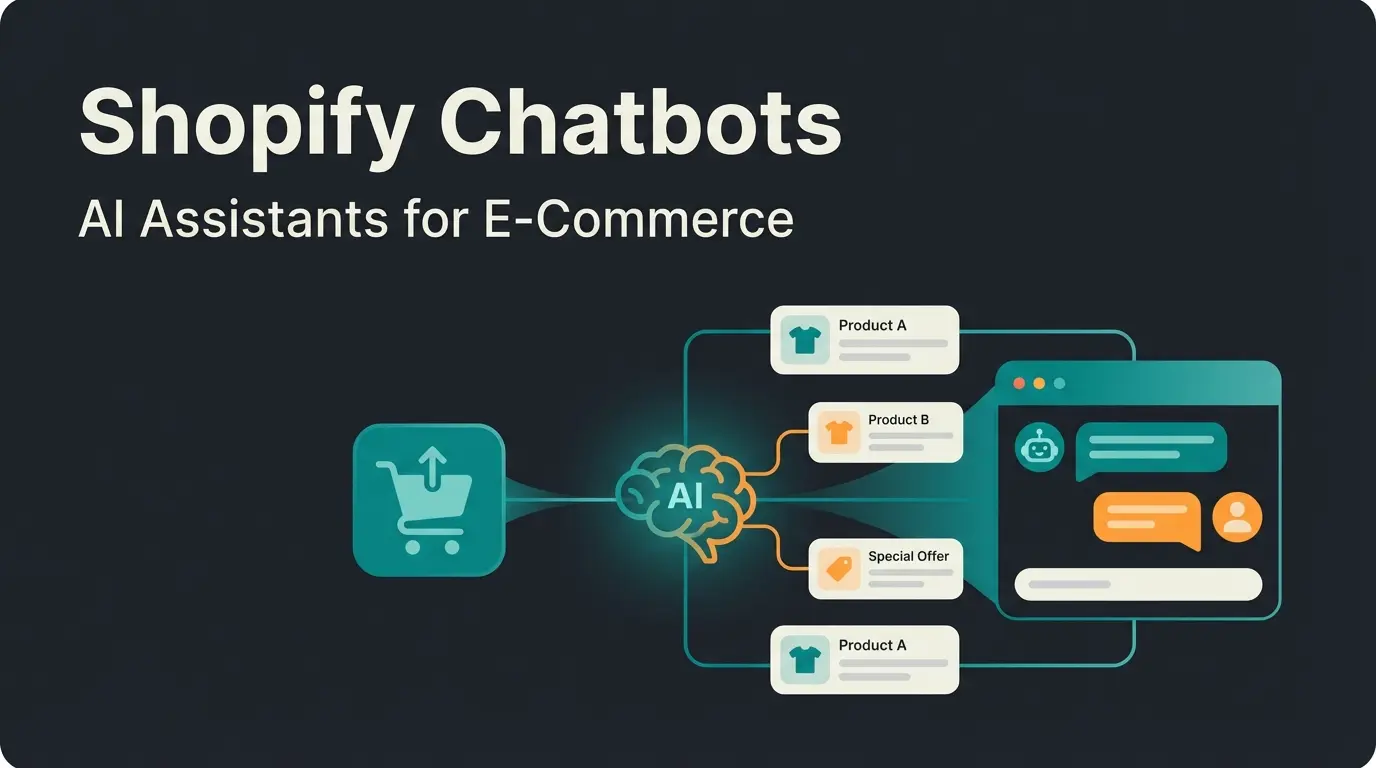
Key Takeaways at a Glance
- Market Leader in Support: The Intercom AI chatbot (Fin) leads technologically in customer support and ticket deflection, utilizing advanced RAG technology and models from OpenAI and Anthropic according to Intercom.
- The Resolution Cost Trap: The pricing model of $0.99 per resolution can be unpredictable since even "assumed resolutions" (when customers leave the chat) are charged as noted by eesel.ai and Intercom's pricing documentation.
- Support vs. Sales Divide: While Intercom is designed to prevent support tickets, it often lacks specialized features for active sales consultation and product recommendations based on structured data.
- GDPR Hurdles: For existing customers, moving to EU servers often involves significant manual effort since direct migration of existing workspaces is not possible according to eesel.ai's analysis.
- Language Nuances: Fin now supports formal and informal address modes ("Sie" vs. "Du") in German, which is essential for the DACH market as documented in Intercom's language settings.
Introduction: The Elephant in Customer Service
When discussing customer service automation in 2025, one name is impossible to ignore: Intercom. The company has established itself as the de-facto standard for SaaS companies and startups looking to modernize their customer communication. With the introduction of the Intercom Fin AI chatbot (often referred to as the Intercom Fin AI Agent), the company has launched a powerful tool that promises to drastically reduce human support workload.
However, for businesses in the DACH region (Germany, Austria, Switzerland) and especially for e-commerce operators, a crucial question arises that often gets buried in glossy brochures: Is a tool optimized to *end* conversations (support) really the right choice for *starting* sales (sales)? Understanding this distinction is fundamental when evaluating AI chatbots transforming the customer experience landscape.
In this comprehensive review, we analyze the Intercom AI chatbot not only from the perspective of support efficiency but also cast a critical eye on its suitability as a "product consultant." We illuminate the often misunderstood pricing structure, the pitfalls of GDPR compliance for German businesses, and show when you would be better served by a specialized alternative.
What Is the Intercom Fin AI Agent?
Before diving into criticism, we need to understand what lies under the hood. The Intercom Fin AI Agent is not a simple "if-then" machine like the chatbots we knew from the 2010s. Understanding the history of chatbots helps contextualize how far this technology has come.
The Technology: RAG and LLMs
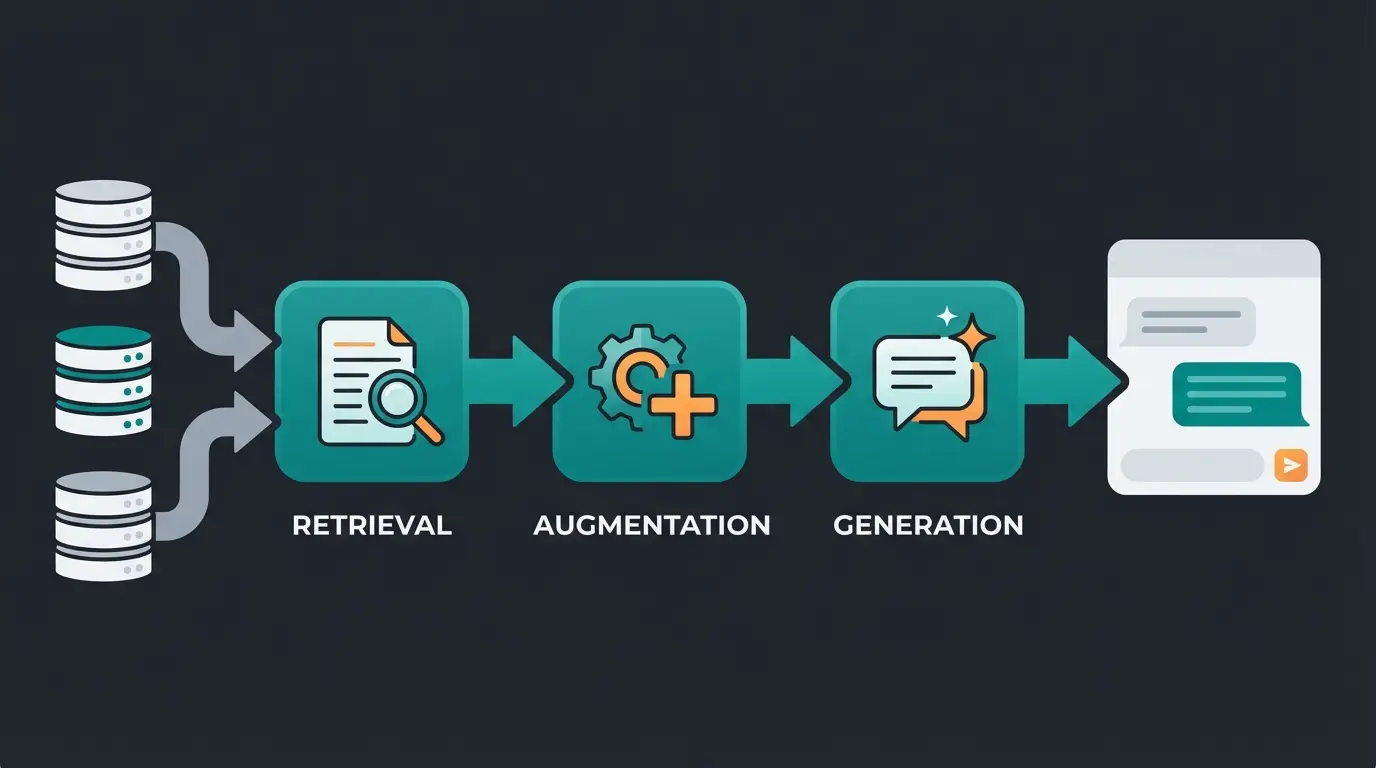
Fin is based on a technology called RAG (Retrieval-Augmented Generation) as explained by eesel.ai and Intercom's technical documentation. In simplified terms, it works like this:
- Retrieval: When a customer asks a question, Fin searches your existing knowledge base (Help Center articles, internal notes, PDFs).
- Augmentation: The found information is sent together with the customer question to a large language model (LLM).
- Generation: The LLM formulates a natural-sounding answer from this information.
Interestingly, the underlying models have evolved significantly. While Fin originally relied heavily on OpenAI's GPT-4, the update to Fin 2 in October 2024 announced that Claude from Anthropic is now used as the primary model according to Intercom's official announcement. This is intended to increase accuracy and further reduce "hallucinations" (incorrect answers). For a deeper understanding of how AI chatbots evolving, this represents a significant technological leap.
Core Features at a Glance
- Language Support: Fin now supports over 45 languages, including German, and can translate in real-time as documented in Intercom's multilingual capabilities.
- Integrations: The bot integrates deeply into the Intercom ecosystem but also works as a layer over Zendesk or Salesforce according to fin.ai integration documentation.
- Primary Objective: Fin's primary design goal is ticket deflection. The system is trained to find an answer that satisfies the customer so that no human agent needs to intervene.
The Hidden Costs: Analyzing the Pricing Model
Intercom's pricing model is the biggest friction point for many businesses. While the monthly base fees for "Seats" (licenses for human employees) are still comparable to other tools, the model for the Intercom Fin AI chatbot often causes accounting departments to gasp. Our detailed Intercom pricing analysis covers this extensively.
The $0.99 Per Resolution Model
Intercom charges $0.99 per Resolution as detailed in their pricing documentation and analyzed by eesel.ai. At first glance, this sounds fair: "I only pay when the bot is successful." But the devil is in the details of what Intercom considers a "Resolution."
What Counts as a Resolution?
According to official guidelines from Intercom and eesel.ai's analysis, a conversation counts as resolved (and thus billable) when:
- Confirmed Resolution: The customer clicks "thumbs up" or says "Thank you."
- Assumed Resolution: The bot gives an answer, and the customer no longer responds and leaves the chat.
The Cost Trap During Seasonal Spikes
For an online shop, this model can be fatal. Imagine you have 10,000 visitors on Black Friday asking simple questions ("Does the discount apply to sale items too?").
- Scenario: 5,000 users start a chat.
- Fin takes over: Fin answers 3,000 of these inquiries (or users abandon).
- Cost: 3,000 × $0.99 = $2,970 additional costs just for this period.
In comparison, many specialized AI solutions or alternatives offer flat-rate models where costs remain predictable regardless of how much traffic you have on your site.
Baseline cost for small businesses
Medium traffic during normal periods
High traffic or promotional periods
Black Friday or major sales events
Variable vs. Fixed Cost Comparison
| Feature | Intercom Fin AI Model | Flat-Rate / Seat Model (Alternatives) |
|---|---|---|
| Cost Basis | Per successful interaction ($0.99) | Fixed monthly / yearly price |
| Predictability | Low (depends on traffic) | High (fixed costs) |
| Scaling | Costs increase linearly with success | Costs remain stable with growth |
| Risk | High bill during traffic spikes | No risk during traffic spikes |
| Budget Planning | Difficult, requires traffic forecasting | Easy, predictable monthly expense |
The Great Divide: FAQ Bot vs. Product Consultation AI
Here lies the strategically most important point for your decision. Most businesses throw "support bots" and "sales bots" into the same pot. This is a mistake. Understanding the different chatbot types comparison is essential for making the right choice.
The FAQ Bot (Intercom Fin)
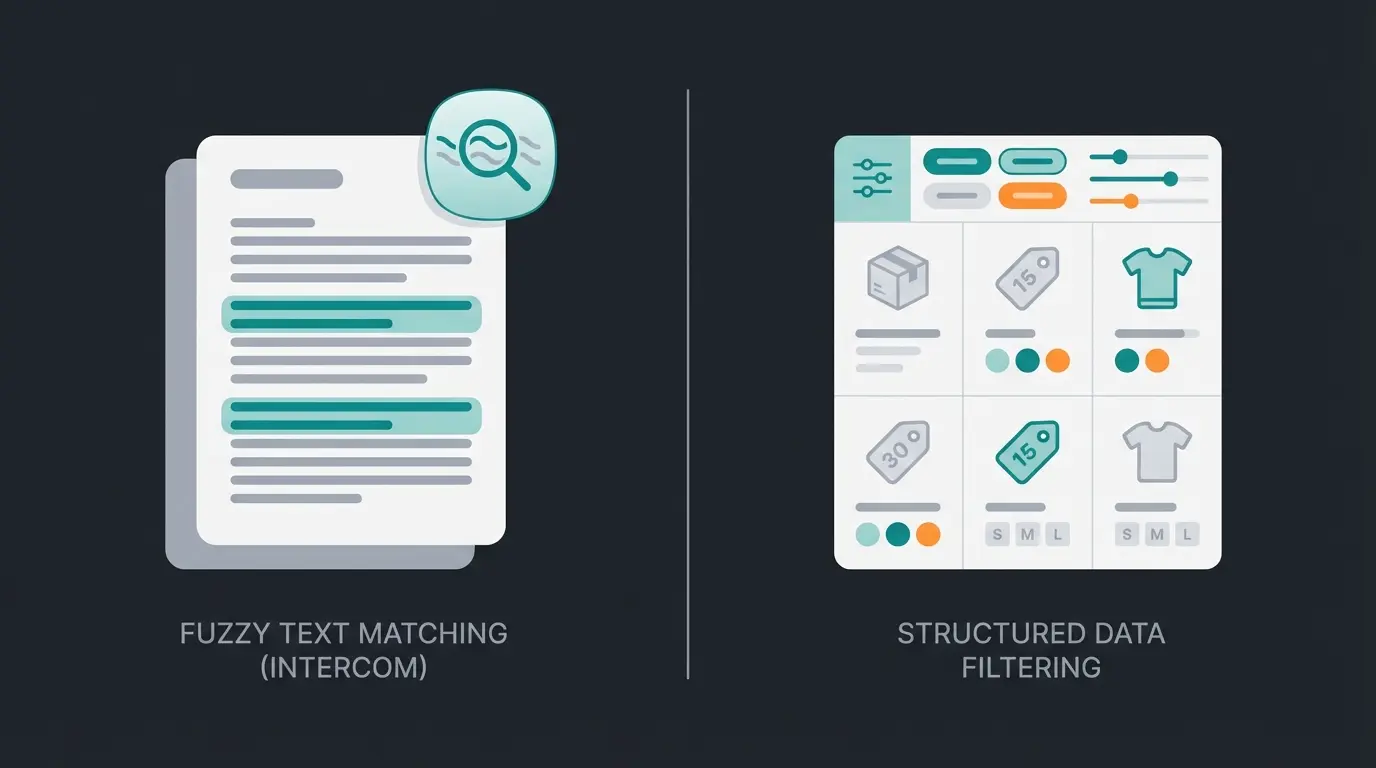
Intercom Fin is a master of unstructured data. It reads your help articles (text blocks).
- Typical Question: "What are your return policies?"
- How It Works: Fin searches the text for "return" and "policies," extracts the paragraph, and summarizes it.
- Perfect For: Post-purchase support (after the sale).
The Product Consultant (Sales AI)
A product consultant requires access to structured data (product databases, attributes, inventory). This is where AI Product Consultation solutions truly shine.
- Typical Question: "I'm looking for a waterproof jacket for skiing under €200, do you have something in red?"
- How It Works: A Sales AI must understand:
- Category: Ski jacket
- Attribute: Waterproof (Yes)
- Price: < €200
- Color: Red
- Status: In stock
What is your main objective with the AI chatbot?
Focus on ticket deflection and FAQ automation → Choose Intercom Fin
Focus on guiding buyers through product selection → Choose Product AI
Do you have structured product feeds or only text articles?
Variable per-resolution or predictable flat-rate pricing?
The Decision Framework
Ask yourself: Do you want the bot to deflect questions (support) or to guide customers through your product catalog (sales)? For the latter, a generic support bot like the Intercom AI chatbot is often the wrong choice. This is where AI Customer Service solutions differ significantly from sales-focused AI.
German Market Specifics (DACH Region)
Anyone deploying software in Germany must clear two hurdles: strict GDPR requirements and the cultural nuances of language.
GDPR & Server Location: The Migration Trap
Intercom now offers EU Data Hosting (in Dublin, AWS). That's good. But there's a massive catch that many existing customers discover too late.
The New Customer Rule
According to Intercom's own guidelines as analyzed by eesel.ai and Intercom's data residency documentation, EU hosting is only available for new workspaces.
- The Problem: You cannot simply migrate an existing US workspace (where your data likely resides if you've been using Intercom for a while) to the EU with a button click.
- The Consequence: You must create a completely new account, manually export/import all data, and—worst of all—your entire chat history and configurations (workflows, bots) are lost or must be manually rebuilt.
Language: Sie or Du?
An AI bot that suddenly addresses a conservative B2B customer with "Hey buddy, what's up?" is a no-go in the German market.
Intercom has improved here. In the settings for the Intercom Fin AI Agent, you can now set the formality level according to Intercom's tone settings and language customization documentation:
- Formal: Consistent use of "Sie" (formal address).
- Informal: Use of "Du" (informal address).
- Automatic: Fin attempts to adapt to the customer's tone.
Implementation: Knowledge Base vs. Product Feed
How much work does it take to get the bot ready? Understanding the chatbot definition functions helps clarify what's involved.
The Intercom Way: Write, Write, Write
For Fin to work, you must feed a Knowledge Base. Fin doesn't learn on its own how your product works—it only reads what you've written.
- Do you have 500 products? Then you theoretically need articles describing these products, or you must hope that Fin can crawl the product descriptions on your website (which is often inaccurate).
- Shopify Integration: Intercom offers a Shopify integration that synchronizes order data (status, tracking) according to eesel.ai's Shopify analysis. But: External content is often only synchronized weekly as noted in eesel.ai's sync documentation, which is problematic for rapidly changing assortments or prices.
The Specialized Sales Bot Way: Product Feed Ingestion
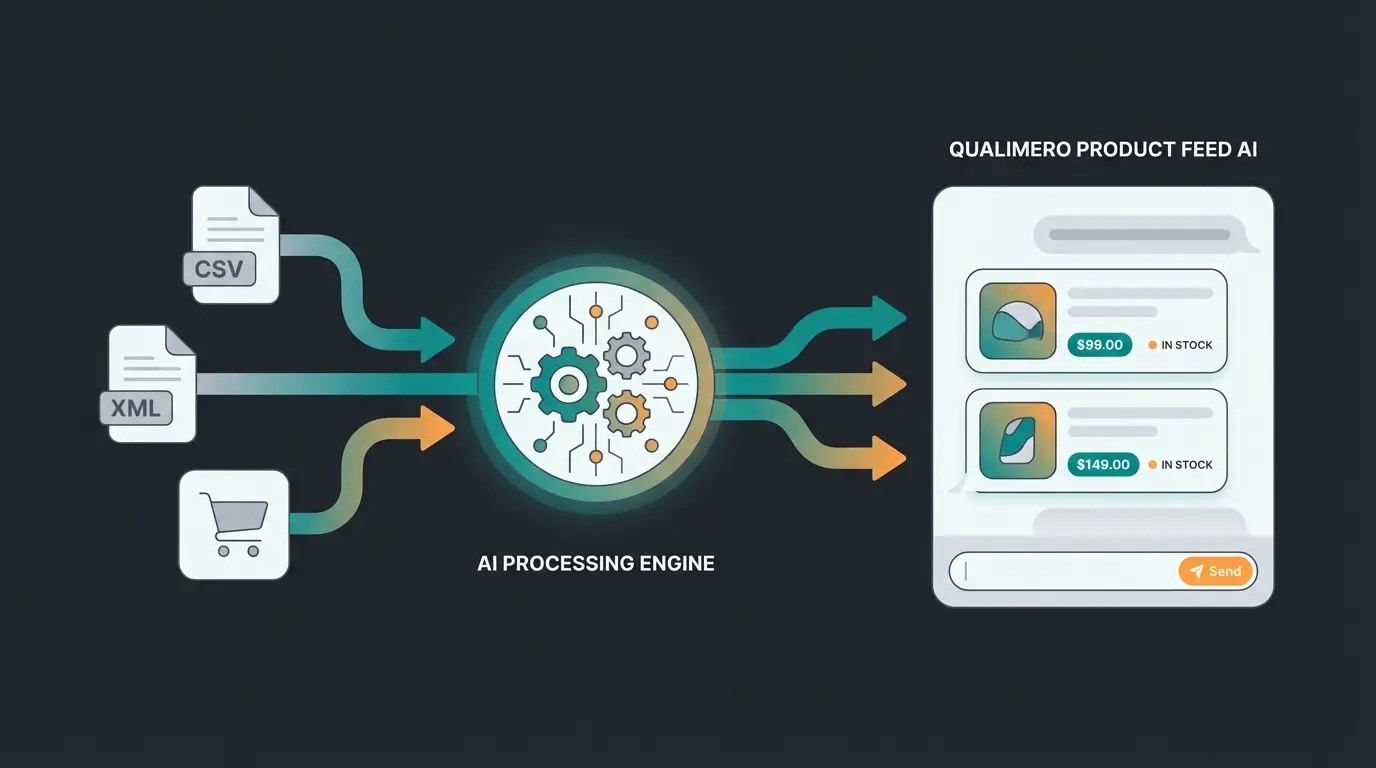
Specialized "product consultant" AIs take a different approach. They dock directly to your Product Feed (CSV, XML, Google Shopping Feed). This approach is detailed in our guide on digital product consultation.
- Advantage: The AI immediately knows every price, every size, and every stock level.
- Effort: Minimal. You don't need to write articles, just connect the feed.
- Currency: Changes in the shop (e.g., "Sold Out") are available in the bot immediately or hourly.
Stop paying per resolution for conversations that don't convert. Discover how a product consultation AI can transform your e-commerce performance with predictable flat-rate pricing.
Start Your Free TrialAlternative Solutions for Different Needs
If you find that Intercom isn't optimal for your purposes (e.g., pure sales focus or cost certainty), it's worth looking at alternatives. Understanding how AI Chatbots transform different industries helps identify the right solution.
For Pure Support (Ticket Systems)
- Zendesk / Freshdesk: The classic alternatives. Often cheaper in seat pricing, but technologically (still) a step behind Intercom's Fin in terms of AI.
- Help Scout: Good for smaller teams that want to maintain the "personal touch."
For Sales & Product Consultation
Here's where the crucial difference comes into play. If your goal is to increase conversion rates and not just close tickets, you need a solution that:
- Understands structured product data (not just text).
- Proactively sells (purchase consultation instead of troubleshooting).
- Offers calculable costs (no fear of traffic spikes).
This is exactly where specialized solutions come in. Unlike Intercom's focus on support deflection, AI product consultants are trained to act like an experienced salesperson in a store, guiding customers to the perfect product based on their specific needs and preferences.
Intercom AI Chatbot Decision Checklist
The Intercom AI chatbot is a technological masterpiece for support teams with large budgets that want to automate thousands of "Where is my package?" inquiries. For sales teams or businesses that need cost certainty and deep product integration, however, there are more suitable tools.
Use this decision aid to make the right choice:
| Criterion | Choose Intercom Fin if... | Seek an Alternative if... |
|---|---|---|
| Primary Goal | Reduce support tickets (deflection) | Increase revenue & explain products (conversion) |
| Data Basis | You have a maintained knowledge base (texts) | You have many products (structured data/feeds) |
| Budget | Variable (you can pay $0.99/resolution) | Fixed (you need predictable monthly costs) |
| GDPR | You're a new customer (start directly in EU) | You're an existing customer (migration too complex) |
| Traffic | Constant / Low | High / Seasonal (e.g., Black Friday) |
| User Intent | Post-purchase support questions | Pre-purchase product guidance |
Our Recommendation
Analyze your "Conversations." If 80% of them are support questions ("Invoice missing"), Intercom Fin is strong. But if customers ask "Which product is right for me?", you're paying Intercom a "Resolution Fee" for consultation that often doesn't lead to a purchase because the bot doesn't understand the product data deeply enough. In this case, a specialized Product Consultant AI is the more economical and effective choice.
Frequently Asked Questions About Intercom AI Chatbot
The Intercom Fin AI Agent uses advanced RAG (Retrieval-Augmented Generation) technology combined with large language models from OpenAI and Anthropic. Unlike rule-based chatbots from the 2010s, Fin can understand context, search through your knowledge base, and generate natural-sounding responses. However, it's primarily designed for support ticket deflection rather than sales-driven product consultation.
Intercom charges $0.99 per resolution on top of your base seat fees. This can become unpredictable: if you have 5,000 resolutions in a month, that's $4,950 in AI costs alone. During high-traffic periods like Black Friday, costs can spike dramatically. Many businesses prefer flat-rate alternatives for budget predictability.
Intercom offers EU data hosting in Dublin (AWS), but there's a significant catch: only new workspaces can use EU hosting. Existing customers cannot migrate their US-based workspaces to the EU—they must create entirely new accounts and manually rebuild everything, losing chat history and configurations in the process.
Intercom Fin excels at answering FAQ-type questions from your knowledge base but struggles with complex product recommendations. It reads unstructured text, not structured product databases. For queries like "Find me a waterproof jacket under €200 in red that's in stock," specialized product consultation AIs that connect directly to your product feed are significantly more effective.
For pure support, Zendesk and Freshdesk are solid alternatives. For sales and product consultation, look for solutions that ingest structured product feeds (CSV, XML, Google Shopping Feed), offer flat-rate pricing, and are specifically designed to guide purchasing decisions rather than deflect support tickets.
Move beyond basic support deflection. Our AI product consultation solution understands your entire product catalog and guides customers to purchase decisions—with predictable, flat-rate pricing.
Get Started Today
Lasse is CEO and co-founder of Qualimero. After completing his MBA at WHU and scaling a company to seven-figure revenue, he founded Qualimero to build AI-powered digital employees for e-commerce. His focus: helping businesses measurably improve customer interaction through intelligent automation.