What does a Shopify developer do
Last week I spoke with a DTC skincare brand running on Shopify. They had a beautiful theme, solid traffic, and a checkout flow that was leaking revenue at every step. Their founder could handle product uploads and basic settings. What she could not do was fix the custom Liquid code breaking her collection filters, integrate her subscription app with the checkout, or build the product quiz her customers kept asking for.
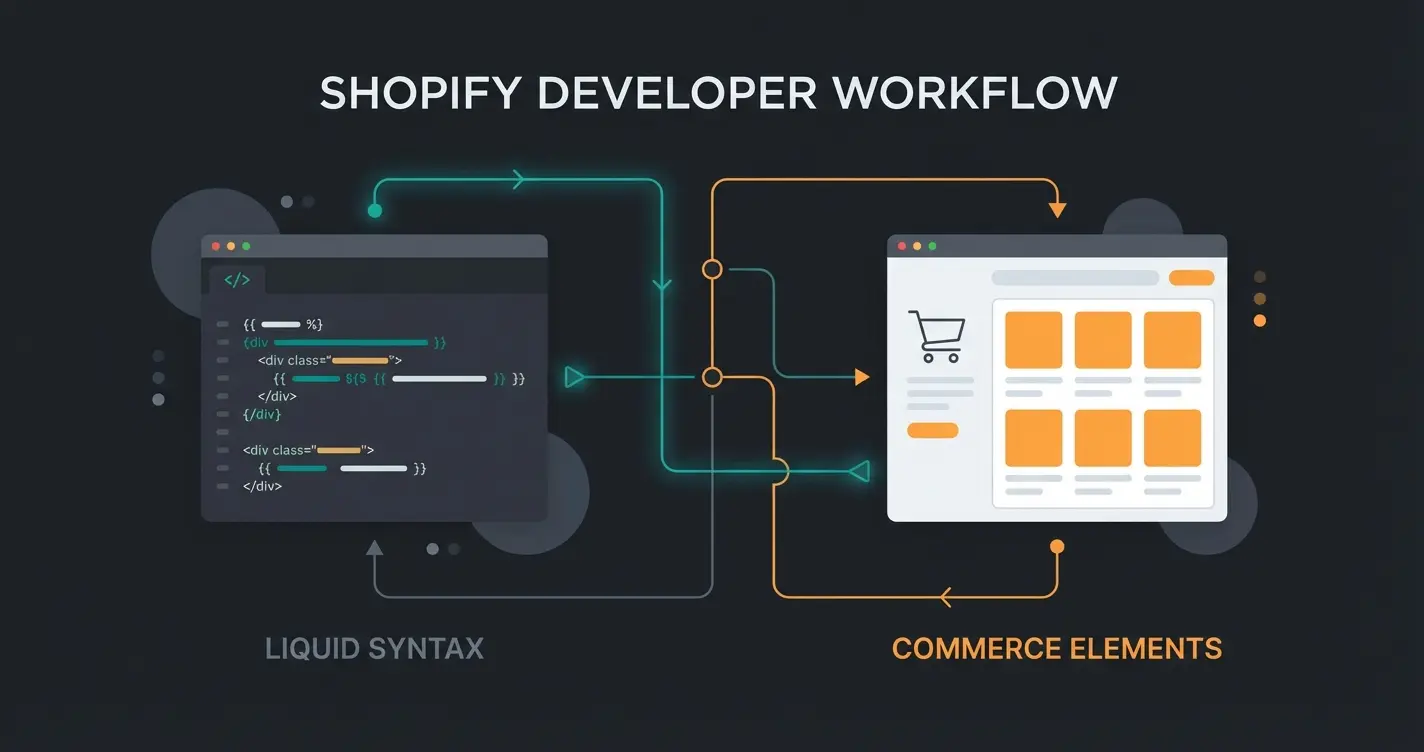
A Shopify developer is a specialist who builds, customizes, and maintains stores on the Shopify platform. Unlike a general web developer, they work within Shopify's specific ecosystem: Liquid templating, Shopify APIs (REST and GraphQL), theme architecture, app integrations, and the platform's checkout and admin systems. The official Shopify developer documentation covers three main tracks: apps, storefronts, and the newer agents framework for agentic commerce.
The scope ranges widely. On one end, a Shopify web developer might customize a pre-built theme, adjust CSS, and configure metafields. On the other, a Shopify app developer builds entirely new functionality: custom apps published to the Shopify App Store or private apps tailored to a single merchant's workflow. Between those extremes, there is checkout customization, third-party system integration, data migration, and performance optimization.
Shopify powers over 5.6 million live stores worldwide and processed $292.3 billion in transactions in 2024. The platform keeps expanding: Hydrogen for headless storefronts, Shopify Functions replacing legacy Scripts, and the Universal Commerce Platform for agentic shopping experiences. The developer role has evolved well beyond basic theme tweaks. Demand for Shopify-specific talent is growing alongside the platform, with Shopify Plus alone scaling to over 47,000 enterprise merchants.
Types of Shopify developers
Not all Shopify developers do the same work. The platform has grown complex enough that specialization matters. A theme developer and a Hydrogen developer share a platform but almost nothing else in their daily toolkit.
| Type | What They Do | Key Technologies | Typical Rate | Best For |
|---|---|---|---|---|
| Theme Developer | Customize and build Shopify themes, adjust layouts, optimize storefront UX | Liquid, CSS, JavaScript, Shopify CLI | $25-80/hr | Store redesigns, theme customization, mobile optimization |
| App Developer | Build custom Shopify apps (public or private), extend store functionality via the API | Node.js or Ruby, Shopify APIs (REST + GraphQL), React, Polaris | $50-120/hr | Custom features, third-party integrations, App Store publishing |
| Plus Developer | Enterprise-level customization: checkout UI extensions, Flow automations, B2B features | Liquid, Checkout UI Extensions, Shopify Functions, Plus APIs | $80-200/hr | Plus migrations, checkout customization, multi-store setups |
| Hydrogen Developer | Build headless commerce storefronts using React and Shopify's Storefront API | React, Remix, TypeScript, Storefront API, Oxygen hosting | $100-250/hr | Headless commerce, custom storefronts, high-performance UX |
Most stores start with a theme developer. These are the generalists of the Shopify world: they work with Liquid templates, adjust CSS, configure sections, and make pre-built themes match your brand. If your needs are primarily visual or layout-related, a theme developer is the right starting point and the most affordable option.
App developers operate one level deeper. They build functionality that does not exist in off-the-shelf apps, or they connect your store to external systems like ERPs, CRMs, or custom fulfillment workflows. A strong Shopify app developer is comfortable with Node.js or Ruby, understands Shopify's webhooks and API rate limits, and can build apps that scale with your store's growth.
Plus developers are the specialists you bring in when your store outgrows standard Shopify. They work with checkout extensibility, Shopify Functions (the replacement for legacy Scripts), and enterprise features like B2B pricing, multi-currency, and expansion stores. If you are running Shopify Plus or planning a migration to it, this is the tier you need. The investment is higher, but so is the revenue impact.
Hydrogen developers are the newest and most expensive category. They build headless storefronts using React, Remix, and Shopify's Storefront API, deployed on Oxygen. This is where Shopify development meets modern frontend engineering. The rates reflect the dual expertise required: deep Shopify knowledge combined with React fluency. Only consider this path if your storefront requirements genuinely exceed what Liquid themes can deliver.
Key skills to look for
The difference between a competent Shopify developer and an expensive mistake comes down to five areas. I have seen businesses burn $10,000 or more on developers who knew JavaScript but had never touched Liquid. Platform-specific knowledge matters more than general coding ability.
- Liquid proficiency. Shopify's templating language is non-negotiable. Ask candidates to walk you through a custom section they built. If they cannot explain how sections, blocks, and JSON templates work together, move on.
- Shopify API experience (REST and GraphQL). Any integration work requires API fluency. GraphQL is Shopify's preferred approach now, and the Admin API has been moving toward GraphQL-first for years. Familiarity with both is essential.
- JavaScript and TypeScript. Theme interactivity, app development, and Hydrogen storefronts all require strong JS skills. TypeScript is increasingly standard for serious Shopify projects, especially on the app side.
- Git and version control. Professional developers use Shopify CLI with Git-based workflows. If a developer edits themes directly in the admin editor, that is a red flag. It means no version history, no rollback capability, and no safe way to test changes.
- Responsive design and web performance. Core Web Vitals affect both SEO and conversion rates. A developer should understand lazy loading, critical CSS, and image optimization within Shopify's CDN infrastructure.
Beyond technical skills, look for Shopify Partner dashboard experience. Developers who work within the Partner ecosystem understand development stores, theme review guidelines, and app submission requirements. They also tend to stay current with platform changes, which Shopify ships at a pace that catches many developers off guard.
Red flags to watch for: no Shopify-specific portfolio (only generic web projects), unfamiliarity with Shopify CLI, inability to explain the difference between app proxies and app extensions, and no experience with theme architecture (sections, blocks, JSON templates). Any of these suggests the developer will be learning on your dime.
How much does a Shopify developer cost
This is the section most guides get wrong. They give ranges so broad they are useless, or they cite numbers from years ago that no longer reflect the market. Here is what we see across the projects we advise on, cross-referenced with marketplace data from early 2026.
| Project Type | Freelancer Range | Agency Range | Timeline |
|---|---|---|---|
| Theme customization | $500-5,000 | $5,000-10,000 | 1-3 weeks |
| Custom theme design | $3,000-8,000 | $10,000-25,000 | 4-8 weeks |
| Custom app development | $5,000-15,000 | $15,000-50,000 | 4-12 weeks |
| Full store build | $2,500-10,000 | $10,000-35,000 | 3-8 weeks |
| Shopify Plus migration | $10,000-25,000 | $25,000-100,000+ | 6-16 weeks |
| Headless (Hydrogen) build | $15,000-40,000 | $50,000-150,000+ | 8-20 weeks |
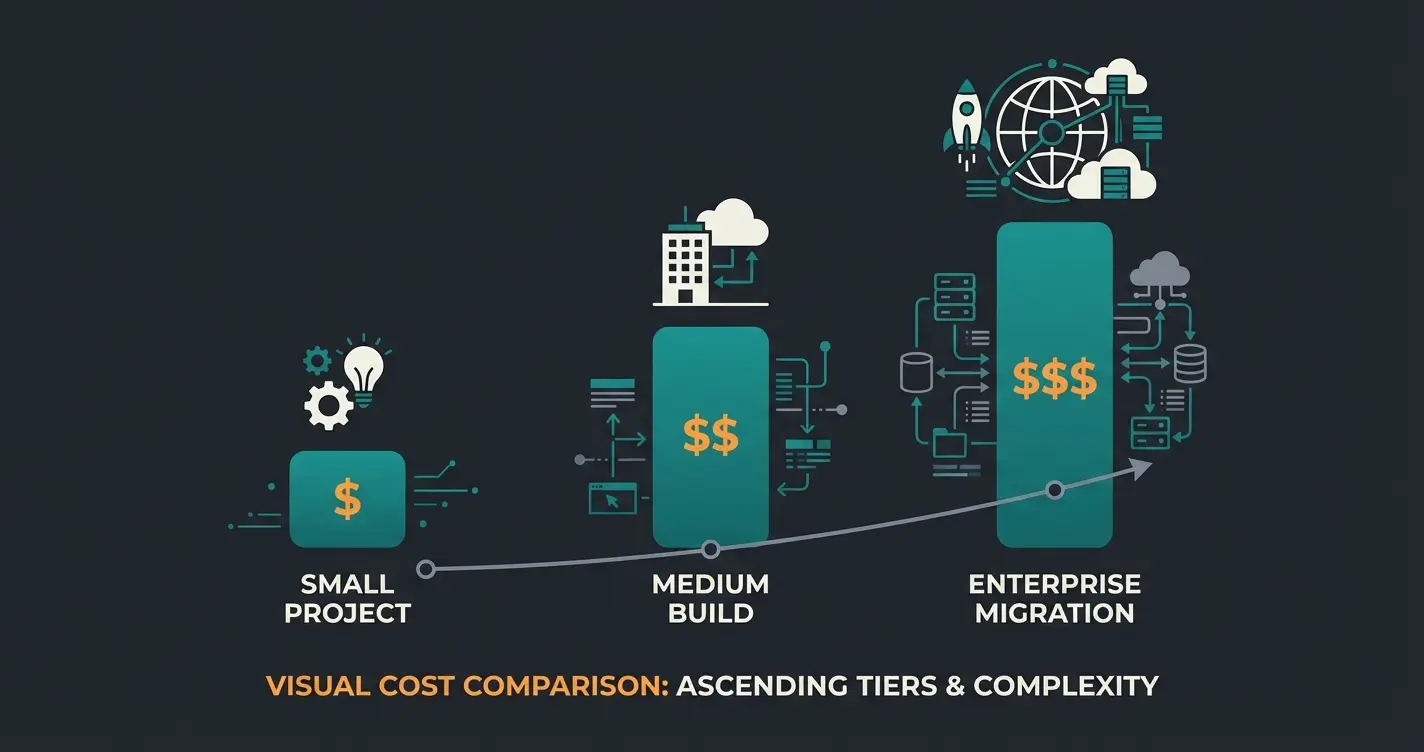
Hourly rates follow a predictable pattern. Freelancers range from $25-120/hr depending on experience and location: newer developers in South Asia typically charge $15-35/hr, mid-level developers in Eastern Europe $40-75/hr, and senior North American specialists $80-120+/hr. Agencies start at $90/hr for boutique shops and climb to $250+/hr for premium firms, according to Storetasker's 2025 rate analysis.
The hidden cost most merchants miss: post-launch maintenance. Budget $500-3,000/month for agency retainers or equivalent freelancer hours. Shopify ships platform updates constantly, third-party apps break after updates, and seasonal campaigns need technical support. A store without ongoing developer access accumulates technical debt fast.
For stores doing under $2 million in annual revenue, a well-vetted Shopify freelancer typically delivers better value than an agency. For Plus migrations, full redesigns, or projects requiring multiple specialists working in parallel, an agency earns its premium through project management, QA processes, and guaranteed SLAs.
Tripled from 2021 to 2025, showing enterprise demand growth
From junior freelancers to premium agency specialists
Source: Shopify annual report
Many Shopify stores invest thousands in custom development when an AI-powered product advisor could handle the same customer experience challenges. Qualimero clients see up to 18x ROI and 70% support automation, without writing a single line of code.
See how it worksWhere to find Shopify developers
Five channels dominate the Shopify developer hiring market. Each has trade-offs between cost, vetting quality, and project fit. The right channel depends on your budget, timeline, and how much screening you are willing to do yourself.
| Channel | Typical Cost | Vetting | Best For |
|---|---|---|---|
| Shopify Experts Marketplace | $50-200/hr | Shopify-vetted, reviews visible | Verified quality, store-specific tasks |
| Shopify Partner directory | Varies | Partner program membership required | Finding certified partners by region or specialty |
| Upwork Shopify developer marketplace | $25-150/hr | Platform reviews and work history | Budget-flexible projects, global talent pool |
| Specialized Shopify agencies | $100-300/hr | Portfolio and case study review | Complex builds, ongoing retainers, Plus projects |
| Referrals and networks | Varies | Trust-based | When someone you trust has shipped with this developer |
The Shopify Experts Marketplace is the safest starting point. Every expert listed has been reviewed by Shopify, and you can filter by specialty: store setup, design, development, marketing. The trade-off is that rates tend to be higher than open marketplaces because the vetting process filters out the cheapest options. For most merchants, the price premium is worth the reduced risk.
Freelance platforms like Upwork offer the widest range of talent and pricing. The challenge is filtering. Look for developers with Shopify-specific job history, a minimum 90% success score, and at least $10,000 in Shopify earnings on the platform. Below that threshold, you are taking a risk on someone still building their Shopify skills at your expense.
If you want to hire a Shopify developer through an agency, prioritize agencies that specialize in Shopify over general web agencies. A Shopify-focused Shopify developer agency understands the platform's constraints, has relationships with Shopify's partner support team, and keeps up with constant platform changes. General web agencies often underestimate the Shopify-specific complexity and budget accordingly.
The Shopify Partner program is worth understanding even if you are not a developer yourself. Partners get access to development stores, priority support, and revenue sharing on referred merchants. When evaluating a developer, ask if they are an active Partner. It signals ongoing investment in the ecosystem and access to tools that non-Partners do not have.
Shopify developer vs Expert vs agency
This is where the terminology gets confusing, and where most merchants make the wrong hiring decision. Four terms float around the Shopify ecosystem, and they overlap more than most people realize.
| Role | What It Means | Certification | Typical Scope | Cost Range |
|---|---|---|---|---|
| Developer | Technical builder who writes code for Shopify stores | None required | Theme, app, or storefront development | $25-250/hr |
| Shopify Expert | Shopify-certified specialist listed on the Experts Marketplace | Shopify review process | Full-service: design, development, marketing, store setup | $50-200/hr |
| Shopify Agency | Full-service team with multiple specialists working in coordination | None (but often Partners) | Complex projects, retainers, enterprise builds | $90-300/hr |
| Partner | Anyone enrolled in the Shopify Partner Program | Free enrollment | Dev stores, revenue sharing, referral commissions | N/A |
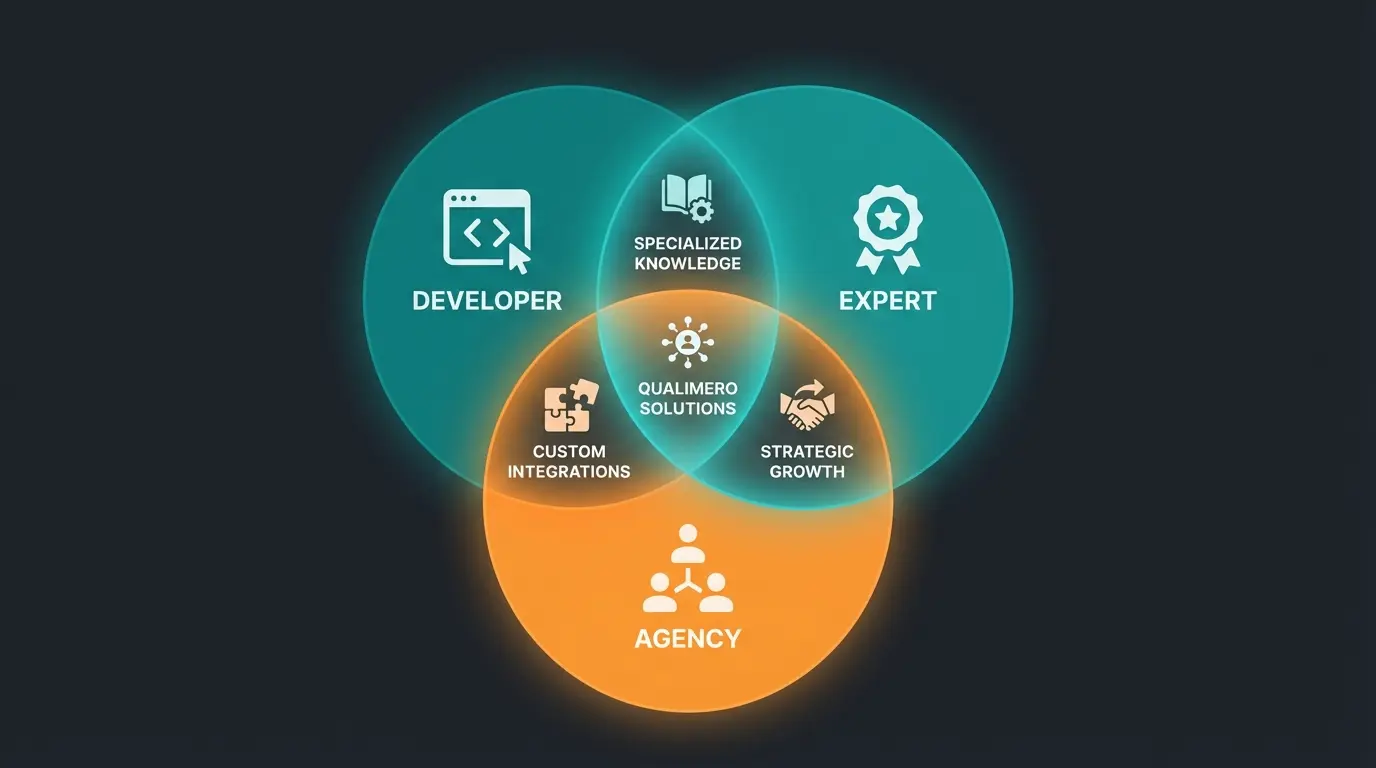
A developer is a role. An Expert is a certification. An agency is a business model. A Partner is a program membership. They overlap significantly, but the distinctions matter when you are deciding who to hire and what to pay for.
The practical difference: a certified Shopify Expert has been reviewed by Shopify and appears on the Experts Marketplace. That vetting provides a baseline of quality you can trust. But many excellent developers never pursue the Expert designation because they get enough work through referrals or platforms. Certification is a signal, not a guarantee.
If your project requires coordination across design, development, and marketing, a Shopify Agency makes sense because you get a team, not a single point of contact. If you need focused technical work on a defined scope, a freelance developer or Expert is more cost-effective. The worst outcome is hiring an agency for a task that a single developer could handle in a week. That is the kind of mismatch that costs five figures and delivers frustration.
When do you need a Shopify developer
You do not need a developer to launch a basic Shopify store. The platform was designed for non-technical merchants: theme installation, product uploads, payment configuration, shipping rules. All of this works out of the box without writing a single line of code.
You need a developer when the out-of-the-box stops being enough. Custom theme design that goes beyond rearranging sections. App integrations connecting your store to external systems like ERPs or CRMs. Checkout customization on Shopify Plus. Migration from another platform with complex data structures. Performance optimization when your store slows under traffic load.
But here is the question fewer merchants ask: does this problem actually require custom code? Some of the most expensive Shopify development projects I have seen were attempts to build product recommendation engines, guided selling flows, or customer service automation from scratch. The development took months, the results were mediocre, and the problem had already been solved by purpose-built tools.
See how Signed enhanced their Shopify store with AI. This retailer for custom decorative signs deployed Qualimero's AI employee instead of building a custom product advisor from scratch. The results: 18x ROI, 70% of customer inquiries automated, and 30% more upselling. AI-powered product consultation handled what would have taken a developer months to build, and it keeps learning from every customer conversation.
FAQ
Freelance Shopify developers charge $25-120/hr depending on experience and location. Agencies range from $90-250+/hr. Project-based pricing varies from $500 for simple theme customization to $100,000+ for enterprise Shopify Plus migrations.
Essential skills include Liquid (Shopify's templating language), JavaScript/TypeScript, Shopify APIs (REST and GraphQL), Git version control, and responsive design. App developers additionally need Node.js or Ruby. Hydrogen developers need React and Remix.
The Shopify Academy developer track provides structured learning from foundations to Plus-level development. It signals platform commitment but is not equivalent to formal certifications like AWS or Google Cloud. Treat it as a positive signal alongside portfolio evidence, not a standalone qualifier.
A Shopify developer is anyone who builds on the platform. A Shopify Expert has been reviewed by Shopify and is listed on the Experts Marketplace. All Experts are developers, but not all developers are Experts. The Expert designation provides a baseline of vetting for hiring decisions.
A basic store with theme customization takes 1-3 weeks. Custom theme design takes 4-8 weeks. A full build with app integrations takes 3-8 weeks. Shopify Plus migrations typically require 6-16 weeks depending on data complexity and customization scope.
Qualimero's AI employees handle product consultation, customer service, and guided selling on Shopify stores. No custom code, no maintenance overhead. Our clients achieve up to 18x ROI and 70% support automation.
Book a free demo
Lasse is CEO and co-founder of Qualimero. After completing his MBA at WHU and scaling a company to seven-figure revenue, he founded Qualimero to build AI-powered digital employees for e-commerce. His focus: helping businesses measurably improve customer interaction through intelligent automation.