What does a Shopware SEO agency do?
A Shopware SEO agency optimizes Shopware 6 online stores specifically for organic search visibility. Unlike generalist SEO firms, these agencies combine deep knowledge of Shopware's architecture, URL handling, canonical tag behavior, and category structure with proven SEO methodology to improve rankings, traffic, and revenue.
Generalist SEO agencies know Google. That is not enough for Shopware. The platform has its own URL routing logic, filter page handling, and pagination behavior that can silently destroy your indexation if configured wrong. I have seen stores lose 40% of their indexed pages because a single canonical tag setting was left on default.
A Shopware Agency that also does SEO is not the same as an agency that specializes in Shopware SEO. The distinction matters. Your Shopware agency services scope should explicitly include platform-specific technical SEO, not just generic on-page work.
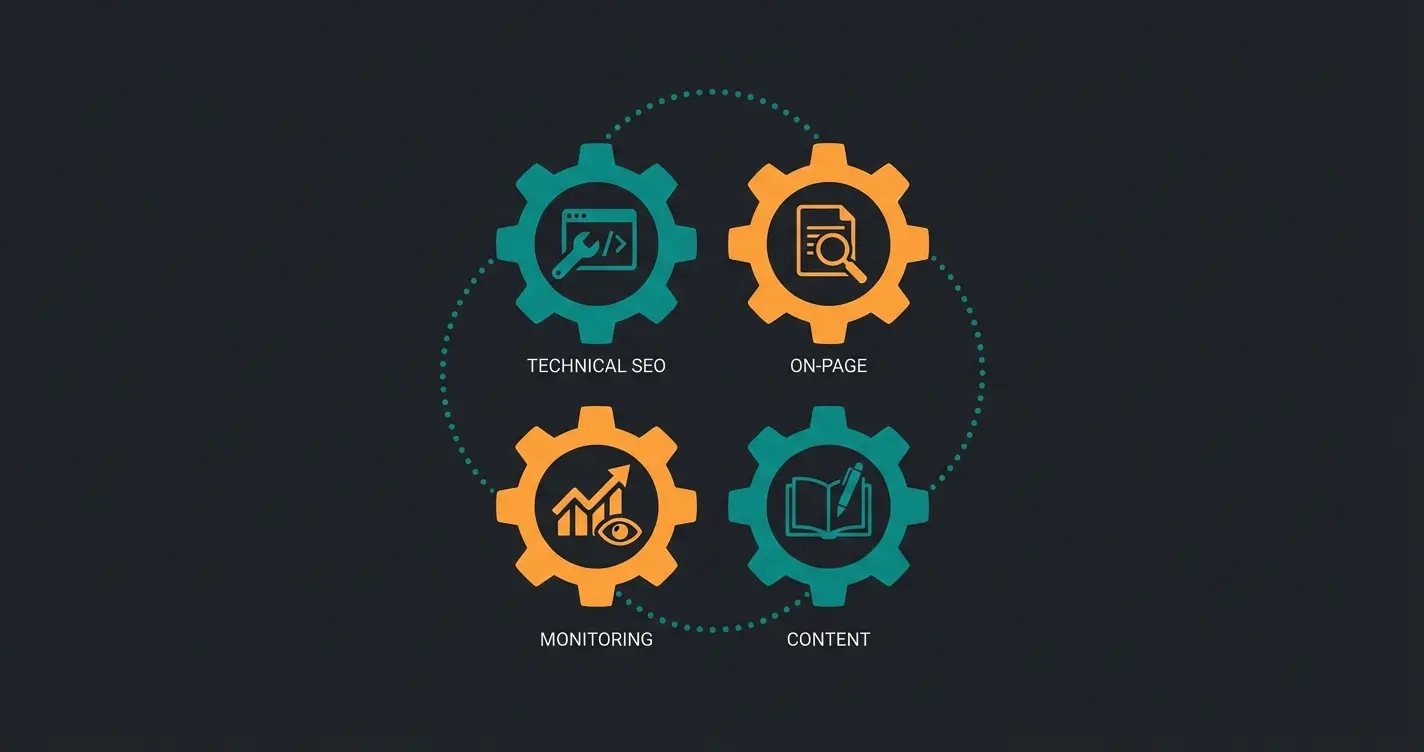
The core service categories break down into four areas.
- Technical SEO: URL structure cleanup, canonical tag management, hreflang for multilingual stores, crawl budget optimization, Core Web Vitals improvement
- On-page optimization: product page SEO, category page structure, meta titles and descriptions at scale, internal linking architecture
- Content strategy: blog content, topical authority building, landing pages for commercial keywords, FAQ optimization
- Monitoring and reporting: rank tracking, traffic analysis, conversion attribution, monthly performance reviews with actionable next steps
Top Shopware SEO agencies compared
The leading Shopware SEO agencies include specialized firms like Digitalike, Commerce Partner, and shop-studio.io. Each brings different strengths in technical SEO, content optimization, and ongoing support. Monthly retainers typically range from EUR 1,500 to EUR 5,000, with significant variation based on store complexity and the number of products indexed.
| Agency | Focus | Shopware Partner Tier | Est. Monthly Cost | Key Strength | Main Limitation |
|---|---|---|---|---|---|
| Digitalike | SEO + Performance | Gold Partner | EUR 2,500-5,000 | Data-driven, strong technical SEO, enterprise clients (BAUHAUS, A1) | Higher price point, longer onboarding |
| Commerce Partner | B2B Shopware SEO | Silver Partner | EUR 1,500-3,500 | B2B specialization, analysis-to-implementation pipeline | Limited to B2B segment, less content-focused |
| shop-studio.io | Dev + SEO + Hosting | Silver Partner | EUR 2,000-4,000 | Full-stack: development, performance, tracking, and SEO under one roof | SEO is one service among many, not the primary focus |
| Kantha Digital | Ecommerce SEO | Not listed | EUR 1,000-2,500 | Budget-friendly, standard SEO operations covered | Low domain authority, thin content, limited portfolio |
| WebiProg | Shopware Dev + SEO | Listed Partner | EUR 2,000-4,000 | Strong Shopware plugin development expertise | SEO as add-on to development, not a standalone offering |
Pricing estimates reflect industry benchmarks from BrightLocal research and publicly available information as of Q1 2026. None of these agencies publish fixed pricing. Expect a discovery call before any commitment.
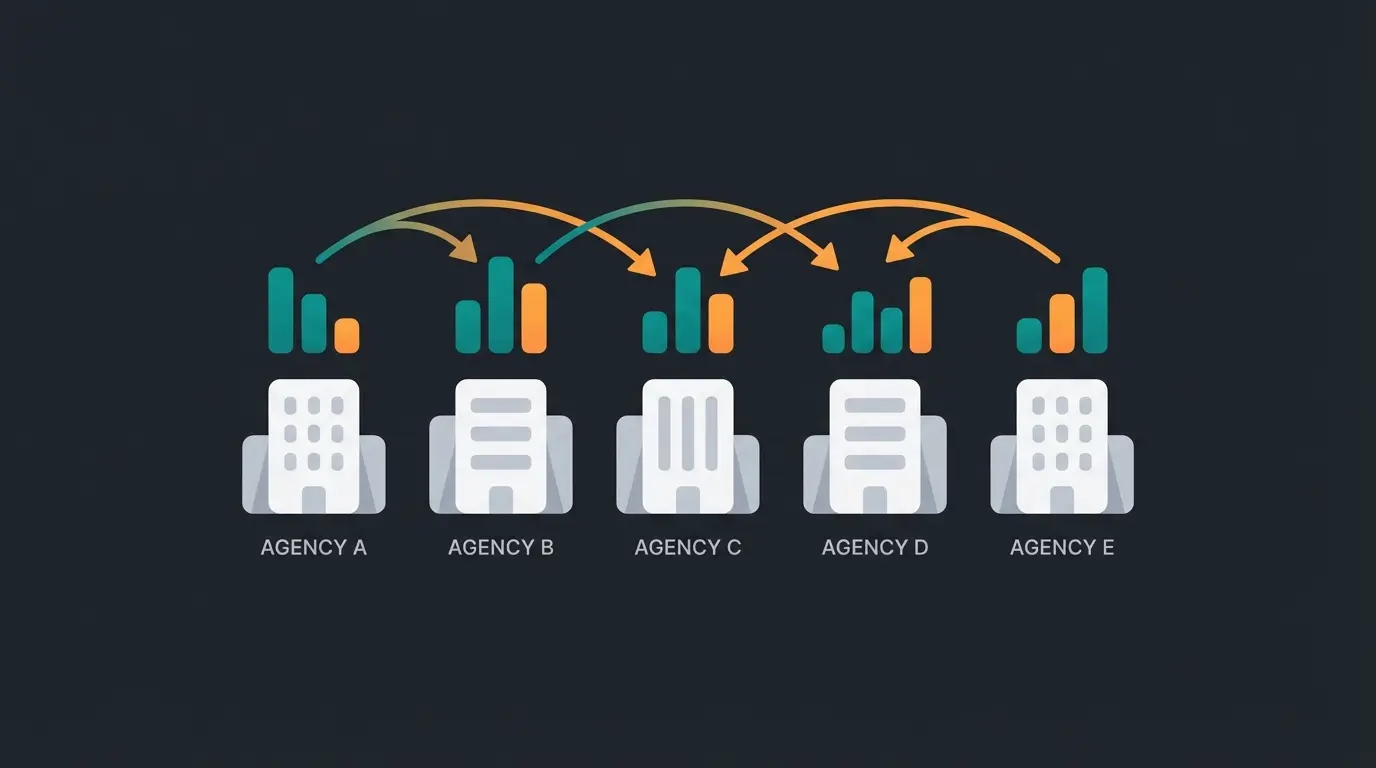
Digitalike leads on methodology and enterprise references. Commerce Partner owns the B2B niche. shop-studio.io appeals to merchants who want development and SEO from a single vendor. Kantha Digital is the budget option, though their own site (DR 16) raises questions about what they can deliver for yours.
If you are evaluating agencies beyond SEO specifically, our Shopware 6 Agency comparison covers the broader landscape of certified development partners.
Worth noting: SEO alone does not convert visitors into buyers. Rasendoktor, an online lawn care retailer, combined organic traffic growth with an AI employee for product consultation and achieved 16x ROI and full automation of customer inquiries. The two strategies compound each other. More traffic with better on-site conversion produces results that neither approach delivers alone.
What to look for when choosing a Shopware SEO agency
When selecting a Shopware SEO agency, prioritize three criteria above all others: proven Shopware 6 certification, documented case studies with measurable ranking improvements, and transparent reporting tied to clear KPIs like organic traffic growth, keyword positions, and revenue attribution from organic channels. Everything else is negotiable.
I have reviewed dozens of agency pitches over the years. The pattern is always the same: impressive slide decks, vague promises about first-page rankings, and zero specifics about how they handle Shopware's technical quirks. The agencies worth hiring talk about canonical tag audits, crawl budget allocation, and filter page indexation before they mention keywords.
Start with the Shopware Partner Directory to verify certification. As of 2026, Shopware has over 1,200 certified agencies globally across Platinum, Gold, and Silver tiers. Certification alone does not guarantee SEO competence, but it confirms the agency understands the platform architecture.
For a deeper framework on evaluating service providers, our Shopware Consulting guide covers the broader decision criteria.
10-point evaluation checklist
- Verified Shopware 6 certification (Silver, Gold, or Platinum)
- At least two Shopware SEO case studies with named clients and measurable results
- Technical audit included in the onboarding phase, not just keyword research
- Clear explanation of how they handle Shopware-specific issues: canonicals, filter pages, pagination
- Monthly reporting with defined KPIs: organic traffic, keyword rankings, revenue from organic
- No guaranteed rankings. Any agency promising #1 in 3 months is lying or using tactics that will get you penalized
- Transparent pricing model: retainer, project, or performance-based with clear deliverables
- Direct access to the team doing the work, not just an account manager
- Minimum 6-month contract horizon. SEO results take time, and 3-month contracts incentivize shortcuts
- Content strategy included, not outsourced to a third-party content mill
Shopware SEO services in detail
Core Shopware SEO services fall into four categories: technical SEO covering site speed, crawlability, and structured data; on-page optimization for product pages, category SEO, and meta tags; content marketing including blog strategy and topical authority; and ongoing monitoring with monthly reporting and conversion tracking.
The technical layer is where Shopware-specific expertise matters most. A generalist agency will audit your site speed and call it done. A Shopware SEO specialist will catch the filter page indexation leak that is creating thousands of thin pages Google cannot differentiate. For a complete walkthrough of these technical elements, our Shopware SEO Guide covers every configuration setting.
"A 0.1-second improvement in mobile load time increased retail conversion rates by 8.4%," found a Deloitte study commissioned by Google. For Shopware stores running 10,000 or more products, this is not a theoretical benchmark. Every unnecessary JavaScript module, unoptimized image format, and misconfigured caching layer compounds into lost revenue.
| Service Category | What It Includes | Shopware-Specific Element | Impact |
|---|---|---|---|
| Technical SEO | Site speed, crawl budget, structured data, HTTPS, Core Web Vitals | Filter page handling, Shopware URL routing, canonical tag configuration | Foundation: without it, nothing else works |
| On-page SEO | Product descriptions, category pages, meta titles, internal linking | Shopware Shopping Experiences, custom fields, manufacturer pages | Direct ranking improvement for commercial keywords |
| Content marketing | Blog strategy, topical authority, landing pages | Shopware blog module, SEO-friendly CMS pages, keyword mapping | Long-term traffic growth and topical authority |
| Monitoring | Rank tracking, Google Search Console, Analytics, conversion tracking | Shopware-specific conversion funnels, product performance attribution | Data-driven optimization cycle |
Organic search drives 43% of all ecommerce traffic according to First Page Sage. For Shopware stores competing in the DACH market, where paid advertising costs keep climbing, organic is the channel with compounding returns. Our Shopware SEO Optimization guide breaks down the specific tactics that move the needle.
One area most Shopware SEO agencies overlook entirely: what happens after a visitor lands on your store. Traffic without conversion is a vanity metric. AI-powered product consultation bridges that gap by turning organic visitors into buyers with personalized recommendations based on their actual needs.
For broader ecommerce SEO methodology beyond Shopware, Search Engine Journal and Semrush both maintain thorough reference guides worth reading alongside platform-specific content.
Shopware SEO agency vs. freelancer
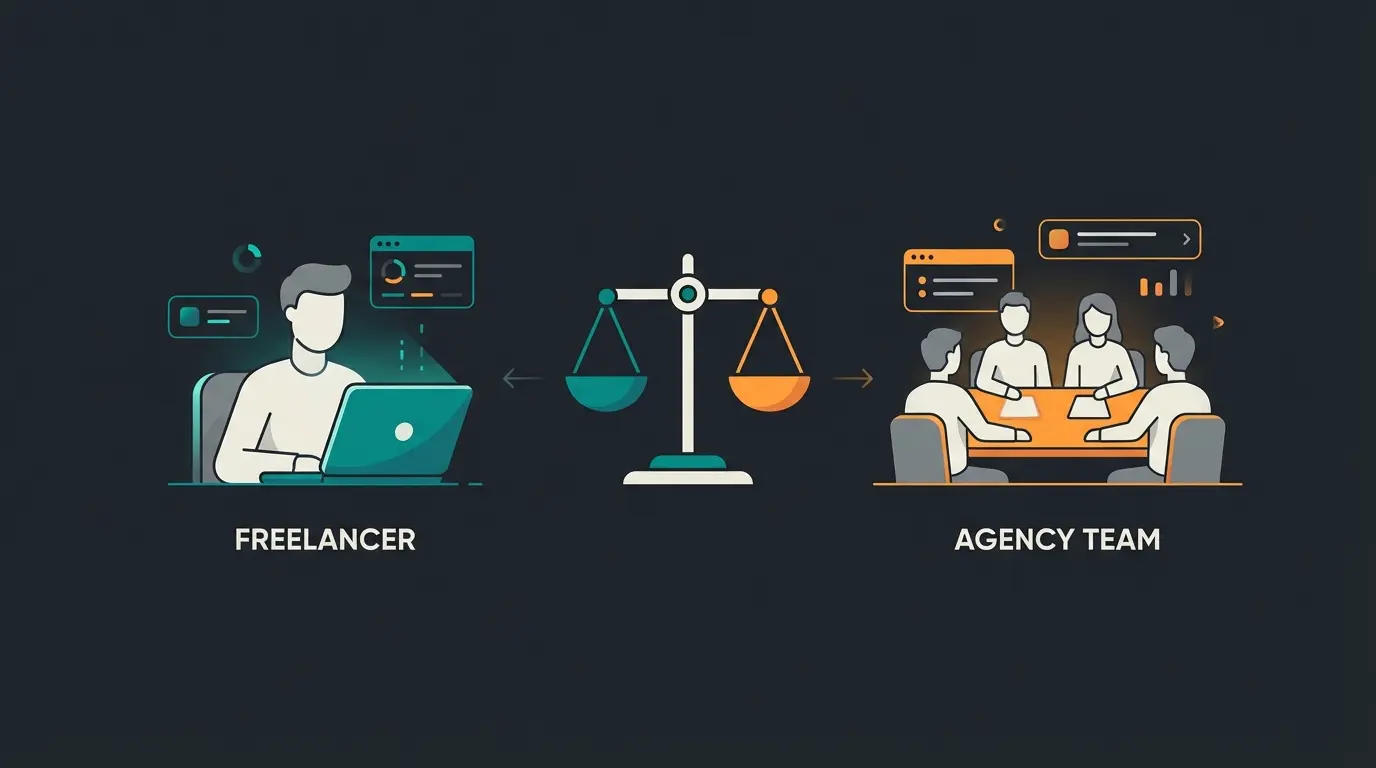
A Shopware SEO agency offers broader expertise, team redundancy, and scalability for larger stores. Freelancers provide lower costs and more personalized attention, making them a strong fit for smaller shops with budgets under EUR 1,500 per month. The right choice depends on your store's complexity, not just your budget.
"Agency SEOs earn $29 per hour on average, $6 more than freelancers, but clients pay approximately 30% more overall for the team structure and breadth of services," according to BrightLocal's 2025 research on SEO industry pricing.
| Dimension | Agency | Freelancer |
|---|---|---|
| Monthly cost | EUR 2,000-5,000 | EUR 500-1,500 |
| Expertise breadth | Full team: strategist, content, technical, account manager | Usually strong in 1-2 areas, rarely both technical and content |
| Availability | Business hours, defined SLAs, backup coverage | Flexible hours, but single point of failure |
| Scalability | Can increase scope without switching provider | Limited by individual capacity |
| Accountability | Contractual SLAs, structured reporting | Informal, relationship-based |
| Shopware depth | Varies widely. Verify Shopware certification | Varies widely. Ask for Shopware-specific portfolio |
For stores with fewer than 500 products and a monthly SEO budget under EUR 1,500, a skilled freelancer often delivers better value than an agency. The overhead of account management and reporting layers eats into the actual work done. For stores with 2,000 or more SKUs, multilingual setups, or complex category structures, an agency team is the safer bet.
Our Shopware Freelancer guide goes deeper on finding and vetting independent specialists for smaller-scope projects.
Shopware SEO agency costs
Shopware SEO agency costs typically range from EUR 1,000 to EUR 5,000 per month for ongoing retainers, with one-time SEO audits costing EUR 500 to EUR 2,500 depending on store complexity and the number of products indexed. Three pricing models dominate the market, each with different risk profiles.
Depends on store size and product count
80-client study across 5 verticals
| Model | How It Works | Best For | Risk |
|---|---|---|---|
| Monthly retainer | Fixed monthly fee, defined deliverables, 6-12 month commitment | Stores needing ongoing SEO with predictable budgets | Low if deliverables are clearly defined upfront |
| Project-based | One-time fee for a defined scope: audit, migration, or technical fix | Specific problems with clear start and end dates | Scope creep if requirements change mid-project |
| Performance-based | Base fee plus bonuses tied to ranking or traffic milestones | Established stores wanting to align agency incentives | Agencies may chase vanity metrics over actual revenue |
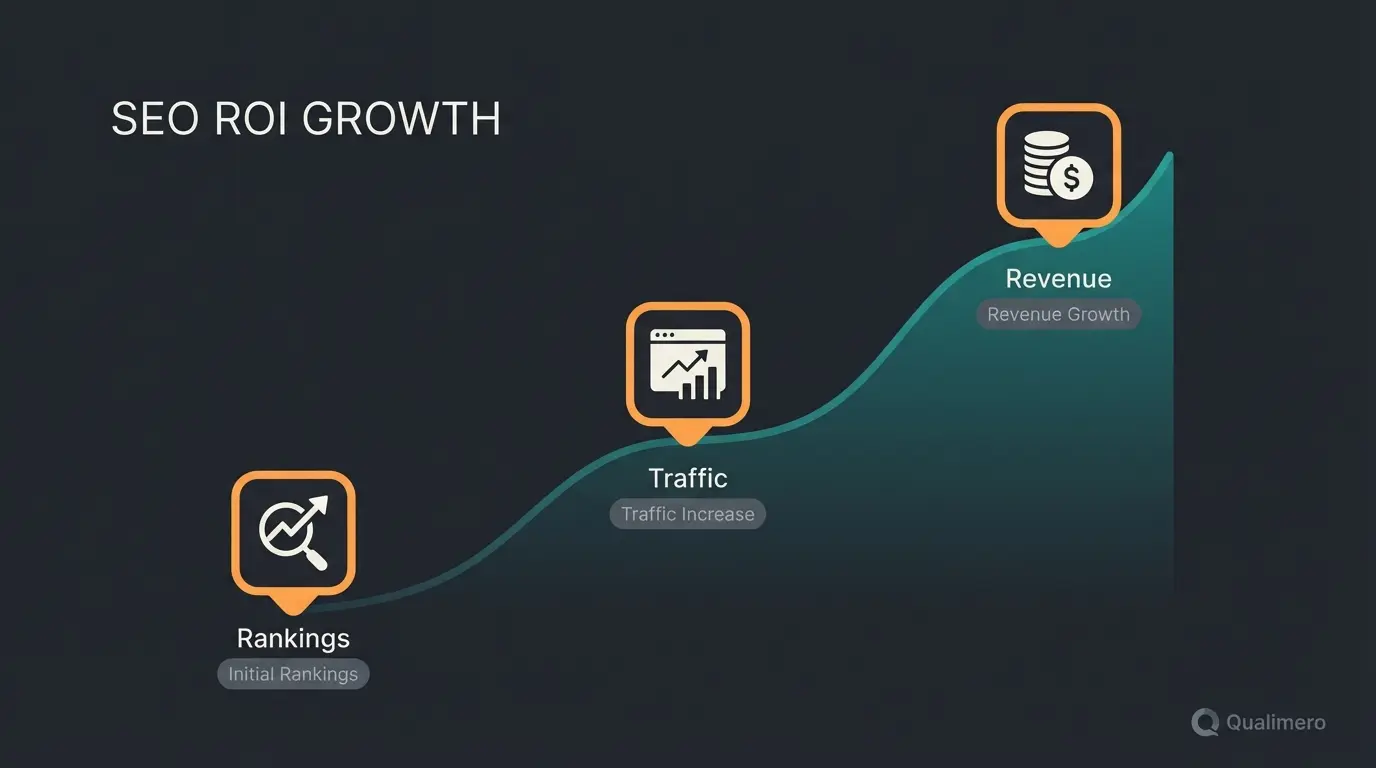
"Ecommerce SEO delivers a 317% ROI with a nine-month break-even window," concludes First Page Sage's 2026 E-Commerce SEO ROI Report, drawing on data from 80 clients across five verticals. At 12 months, the average return reaches 2.6x. By year three, it compounds to 5x or more. Monthly retainers provide predictability. Project-based pricing caps your risk on a defined scope.
The biggest factor affecting price: product count. A 200-product store needs a different scope than a 15,000-SKU catalog with six language versions. Competition level in your niche matters too. If your top three competitors are investing EUR 5,000 per month each, spending EUR 1,000 and expecting to outrank them is unrealistic.
Working successfully with a Shopware SEO agency
Successful agency partnerships require clear goal-setting from day one, monthly performance reviews with defined KPIs, and giving the agency full access to Google Search Console, Analytics, and your Shopware backend for technical implementations. Most failed engagements trace back to misaligned expectations, not incompetent agencies.
Set realistic timelines. SEO is not paid advertising. Results compound over months, not days. Expect the first meaningful traffic changes after three to four months. Revenue impact typically follows at month six to nine. If your agency promises faster results, they are either overselling or planning to use risky shortcuts.
Grant full backend access from the start. An agency that cannot change your robots.txt, update canonical tags, or modify meta descriptions directly in Shopware will move at half speed. Every change request that goes through your internal ticket queue adds weeks of delay. Pair SEO work with proper Shopware Maintenance to ensure technical updates do not undo optimization progress.
- Month 1-2: Technical audit, keyword research, strategy alignment, backend access setup
- Month 3-4: On-page optimization, content calendar, first technical fixes live
- Month 5-6: Content publishing begins, internal linking architecture built, first ranking movements visible
- Month 7-9: Traffic growth visible in Analytics, first revenue attribution possible
- Month 10-12: Compound effects kick in, expanding keyword targets, ROI calculation becomes meaningful
Review monthly reports critically. Good reports show keyword ranking changes, organic traffic trends, technical health scores, and revenue attributed to organic. Bad reports show vanity metrics like total impressions without context. If your report does not connect SEO activity to business outcomes, ask why.
Frequently asked questions
Monthly retainers range from EUR 1,000 to EUR 5,000 depending on store size, product count, and competition level. One-time audits cost EUR 500 to EUR 2,500. According to BrightLocal, the average agency retainer sits around EUR 3,200 per month.
Expect first ranking movements after 3-4 months and meaningful traffic growth by month 6. First Page Sage data from 80 ecommerce clients shows a break-even point at approximately 9 months, with ROI reaching 2.6x at 12 months.
For basic content optimization, any competent SEO agency can help. For technical SEO on Shopware 6, you need platform-specific expertise. Shopware's URL routing, canonical tag behavior, and filter page indexation differ significantly from WordPress or Magento. A generalist will miss these issues.
Basic on-page SEO is manageable with the right guidance. Our Shopware SEO guide covers the fundamentals. Technical SEO, content strategy at scale, and link building require specialized knowledge and tools that take years to develop. For stores above 500 products, professional help pays for itself.
A Shopware agency builds and maintains your store: design, development, hosting, plugin management. A Shopware SEO agency focuses on organic search visibility: keyword strategy, technical SEO, content, and link building. Some agencies offer both, but the skill sets differ. See our Shopware Agency Guide for the full breakdown.
Track three metrics monthly: organic traffic growth, keyword ranking positions for your target terms, and revenue attributed to organic search. If all three trend upward over a 6-month window, the agency is delivering. If traffic grows but revenue does not, they may be targeting the wrong keywords.
An AI employee turns your organic visitors into buyers with personalized product consultation in real time. Qualimero clients see up to 16x ROI and 7x higher conversion rates.
Book a free demo
Lasse is CEO and co-founder of Qualimero. After completing his MBA at WHU and scaling a company to seven-figure revenue, he founded Qualimero to build AI-powered digital employees for e-commerce. His focus: helping businesses measurably improve customer interaction through intelligent automation.