Best Shopify Themes in 2026: Speed, Design, and Conversions Compared
Compare the best Shopify themes for 2026. Premium vs free, speed scores, niche picks, and conversion data to help you choose the right theme for your store.

What makes a great Shopify theme?
I have reviewed hundreds of Shopify stores over the past three years. The pattern is always the same: store owners obsess over color palettes while ignoring the metrics that actually move revenue. A theme is not decoration. It is infrastructure.
Before we get into specific recommendations, you need to understand what separates a good theme from one that quietly kills your conversion rate. If you are still getting oriented on the platform itself, our Shopify guide covers the fundamentals. For a broader look at the theme landscape, check out our Shopify Themes Guide.
Speed and Core Web Vitals
Google confirmed that bounce rate increases 32% when page load goes from one to three seconds. Deloitte found that a 0.1-second speed improvement can drive an 8.4% lift in conversions. These are not abstract numbers. 40% of shoppers simply leave after three seconds of waiting.
Shopify themes already have an advantage here, with a 65% Core Web Vitals pass rate compared to WordPress at 44% (Shopify Performance Data). But within the Shopify ecosystem, theme choice still creates meaningful gaps in performance.
Mobile responsiveness
Over 70% of Shopify traffic comes from mobile devices. A theme that looks stunning on a 27-inch monitor but fumbles on a phone screen is a liability, not an asset. You want fluid layouts, touch-friendly navigation, and product images that load progressively without layout shift.
Customization depth
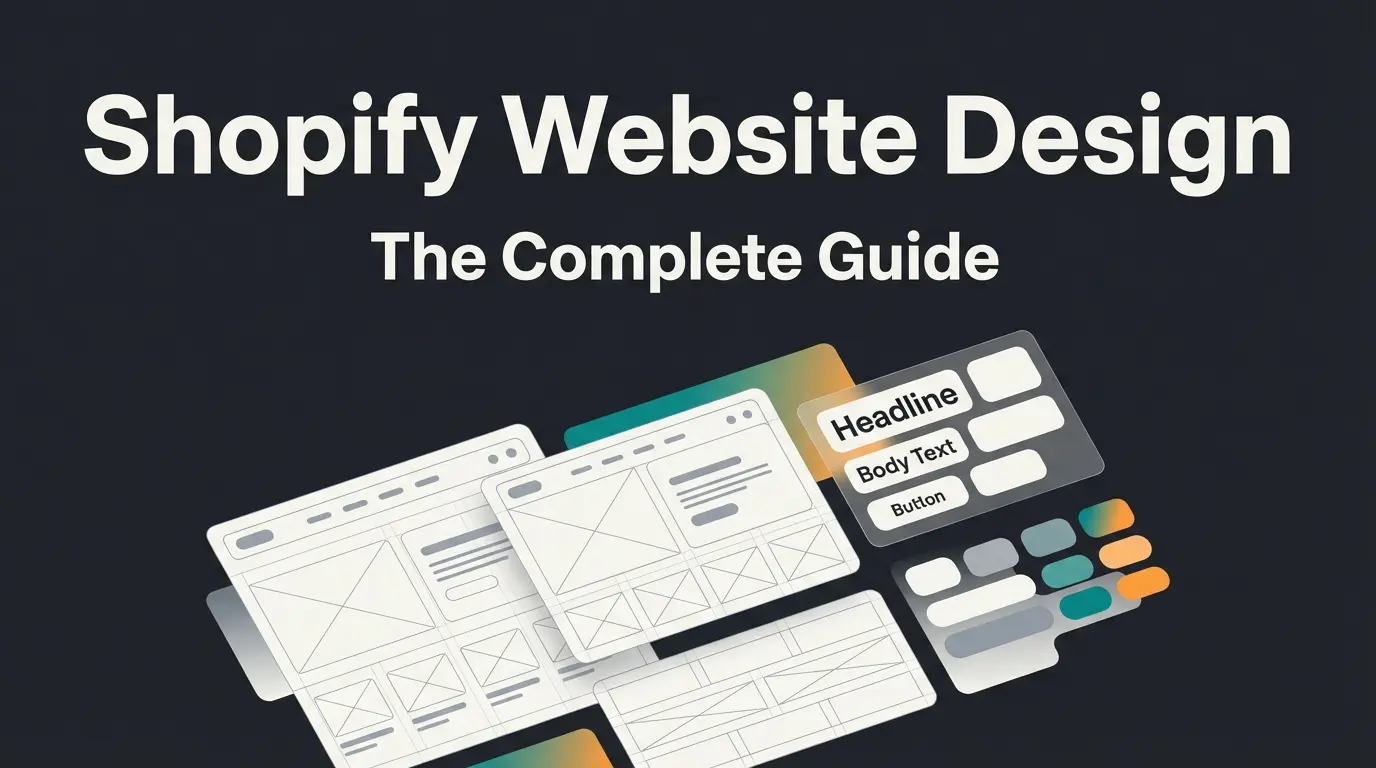
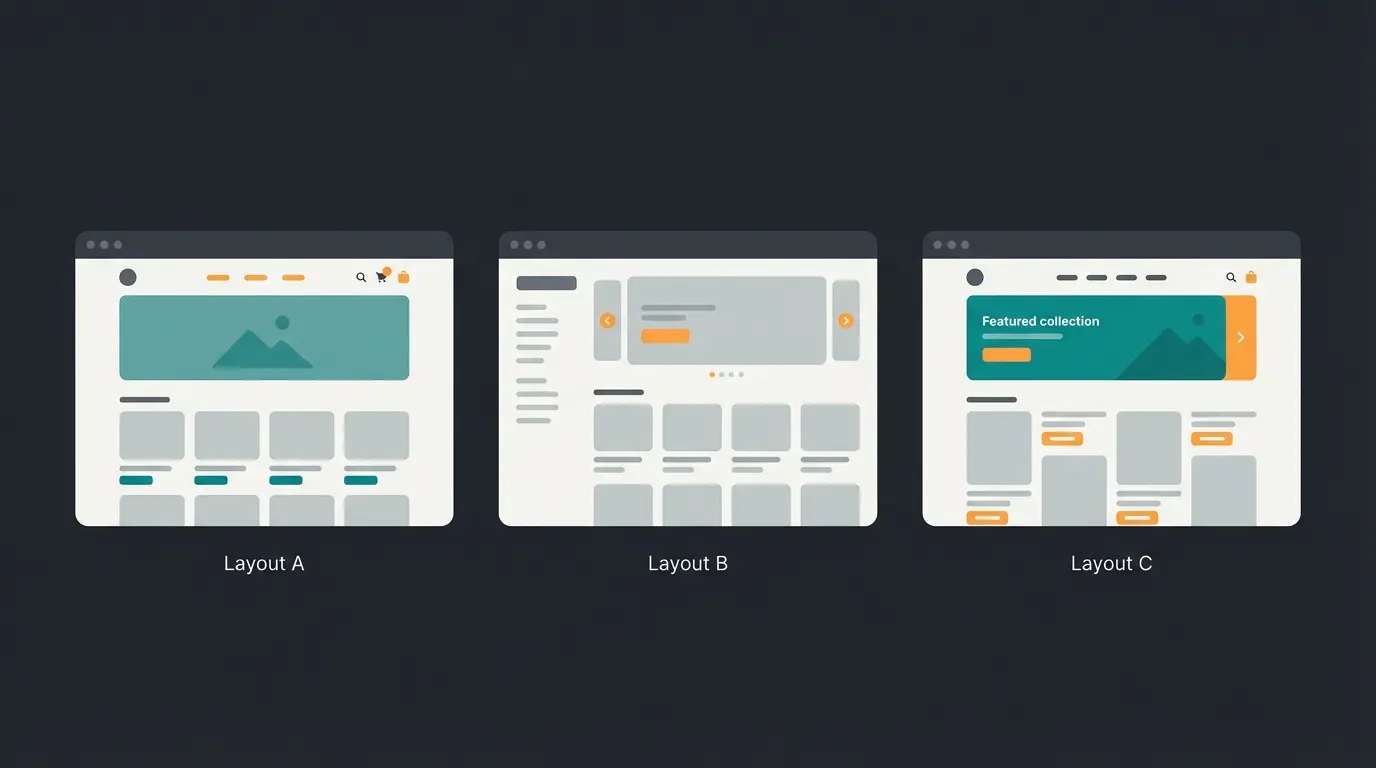
Shopify 2.0 themes use sections everywhere, meaning you can rearrange content blocks on any page without touching code. The best themes offer 15 to 25 unique sections. Fewer than that, and you will hit creative walls within a month. If you are planning the layout from scratch, our guide to Shopify Website Design walks through the structural decisions you should make before picking a theme.
Built-in conversion features
Sticky add-to-cart buttons, countdown timers, trust badges, quick-buy overlays. Premium themes often bundle features that would otherwise cost you three or more app subscriptions, saving roughly $45 to $180 per year. That matters when your margins are tight.
Niche fit
A jewelry store and a wholesale electronics shop have fundamentally different needs. The best theme for your store is the one built for your product type, your catalog size, and your customer's browsing behavior. One size does not fit all, despite what theme marketplaces want you to believe.
Best premium Shopify themes
Premium themes cost between $300 and $500 as a one-time purchase. That sounds like a lot until you realize the average Shopify conversion rate sits at 1.4% across all stores, while established stores hit 2.5 to 3% (Shopify Conversion Rate Benchmarks). The top 20% clear 3.2% or higher. A theme that moves you even half a percentage point is worth multiples of its price tag.
Here is how the leading premium themes compare. For more context on what Shopify themselves recommend, see the Shopify Blog: Best Themes.
| Theme | Price | Best for | Speed score | Sections | Rating |
|---|---|---|---|---|---|
| Impact | $400 | High-volume brands | 88/100 | 25+ | 4.8/5 |
| Impulse | $400 | Fashion and lifestyle | 86/100 | 22+ | 4.7/5 |
| Expanse | $360 | Large catalogs | 85/100 | 20+ | 4.6/5 |
| Be Yours | $320 | Multi-purpose stores | 87/100 | 24+ | 4.7/5 |
| Stiletto | $350 | Luxury and editorial | 84/100 | 18+ | 4.5/5 |
| Turbo | $425 | Speed-critical stores | 91/100 | 20+ | 4.8/5 |
| Flex | $485 | Maximum flexibility | 83/100 | 28+ | 4.6/5 |
| Dawn (free) | $0 | Baseline, startups | 92/100 | 15+ | 4.4/5 |
Impact
Impact is the theme I recommend most often to brands doing over $50k per month. It was built for storytelling at scale, with large hero sections, animated transitions, and product filtering that handles catalogs of 500 items or more without choking. Over 35 sections give you creative freedom without compromising performance, SEO, or accessibility. At $400, it pays for itself within the first month for most serious stores.
Impulse
Impulse leans into editorial design. If your brand relies on lookbooks, lifestyle imagery, and curated collections, this is your theme. The promotional pop-ups and slide-out cart are polished out of the box. Fashion brands in particular tend to see higher average order values with Impulse compared to generic alternatives.
Turbo
Turbo lives up to its name. With a PageSpeed score of 91, it sits just below Dawn in raw performance while offering significantly more built-in features. The predictive search and multi-column menus are especially strong for stores with complex navigation needs. At $425, it is the speed-focused premium choice. Not available in the Shopify Theme Store directly, only through Out of the Sandbox.
Flex
Flex is the most customizable theme on this list, with 28 sections and 13 pre-built layouts. The trade-off is a slightly lower speed score at 83, though that is still well within acceptable range. If you want creative control without hiring a developer, Flex gives you the most room to work with. The $485 price tag reflects that versatility.
A beautiful Shopify theme gets people in the door. An AI employee closes the sale. See how Qualimero turns passive browsing into guided purchasing, with results like +35% cart value and 16x ROI.
Book your demoBest free Shopify themes
Free does not mean inferior. Shopify has invested heavily in its free theme library, and several options compete directly with premium alternatives on speed and design quality. The catch is fewer built-in sections and less niche-specific functionality. Our walkthrough of the Shopify Theme Store shows how to filter the catalogue yourself, and our dedicated guide to Free Shopify Themes goes deeper on what you give up.
Dawn
Dawn is Shopify's reference theme and the benchmark everything else gets measured against. With a PageSpeed score around 92, it is the fastest theme in the entire ecosystem. It is minimal by design, which means fewer bells and whistles but a rock-solid foundation. If you are launching a new store and want to validate product-market fit before investing in a premium theme, Dawn is the right starting point.
Read our full analysis in the Shopify Dawn Theme deep dive.
Studio
Studio was designed for creative brands and artists. Bold typography, asymmetric layouts, and generous whitespace give it a gallery-like feel. It works best for stores with fewer than 50 products where visual storytelling matters more than catalog navigation.
Craft
Craft targets artisan and handmade product stores. The product pages emphasize material details, process imagery, and brand narrative. If your products have a story behind them, Craft gives you the layout to tell it without custom development.
Taste
Taste is purpose-built for food and beverage brands. It handles product variants well, supports recipe and ingredient sections, and includes a clean, appetizing visual style. For F&B startups on a budget, this is the obvious choice.
Ride
Ride caters to sports and outdoor brands with dynamic layouts, bold imagery sections, and activity-focused product filtering. It handles larger product images gracefully, which is critical for gear and equipment stores where customers need to see details before purchasing.
Best Shopify themes by niche
Choosing a theme by niche is often smarter than choosing by feature list. A theme built for your industry already solves the design problems specific to your product type. Here are the top picks by category.
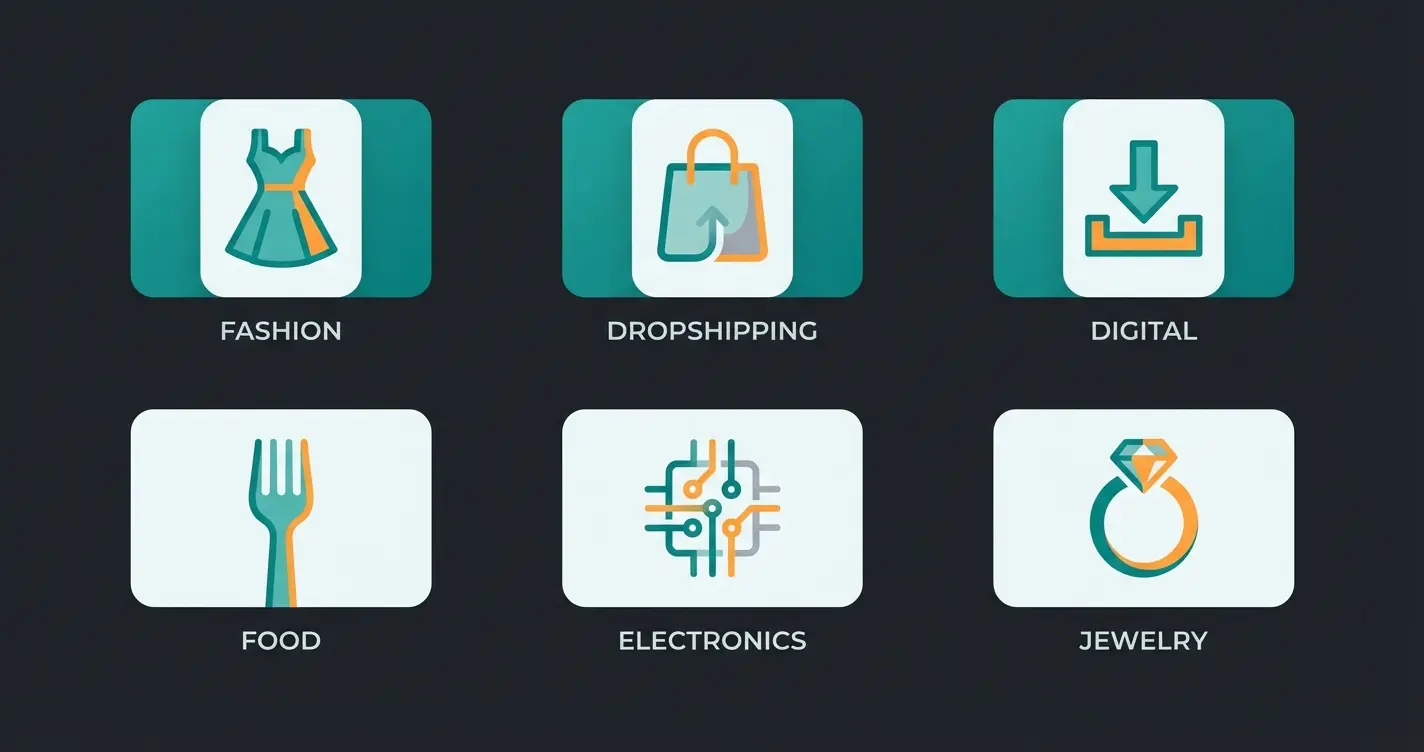
Clothing and fashion
Impulse, Stiletto, and Be Yours are the strongest options here. Fashion stores need lookbook layouts, size guides, color swatches, and quick-view functionality. Impulse leads for editorial brands, while Stiletto suits luxury positioning. Be Yours works well for mid-range fashion with diverse collections.
Dropshipping
Speed and trust signals matter most for dropshipping stores. Turbo and Dawn are the go-to choices. Turbo gives you built-in review sections and urgency features. Dawn keeps overhead minimal, which helps when you are testing products rapidly and need fast page loads across dozens of product pages.
Digital products
Studio and Craft work well for digital product stores, courses, and downloadable content. These themes emphasize content presentation over complex cart functionality. The clean layouts help communicate value for intangible products where customers cannot touch or try before buying.
Food and beverage
Taste is the obvious free choice, but Expanse handles larger F&B catalogs better. If you sell subscription boxes or bundles, Expanse's collection-focused layout and advanced filtering give you the flexibility that Taste lacks. Both themes support rich product imagery, which is non-negotiable for food brands.
Electronics and tech
Impact and Expanse dominate the electronics niche. These stores typically carry hundreds of SKUs with detailed spec sheets. Both themes handle large catalogs, comparison features, and technical product information cleanly. Impact edges ahead for brands that also want strong storytelling elements.
Jewelry and accessories
Stiletto and Impulse are the top picks. Jewelry photography needs space to breathe, and both themes provide generous image areas with minimal visual clutter. Stiletto's editorial approach feels more premium, which aligns with higher price points. For costume jewelry and accessories at lower price points, Be Yours offers a strong balance of style and functionality.
Shopify theme speed and performance comparison
Speed is not a nice-to-have. It is directly tied to revenue. Let me put real numbers on this: a store doing $100k per month that improves load time by 0.1 seconds could see an additional $8,400 per month based on Deloitte's conversion research. That is over $100k annually from a change most visitors would not consciously notice.
Here is how the major themes stack up on Google PageSpeed Insights, tested on clean installs with default content. Real-world scores will vary based on apps, images, and custom code, but relative rankings tend to hold.
Fastest theme in the Shopify ecosystem, minimal JavaScript footprint
Near-Dawn speed with full premium features included
Strong performance despite rich animation capabilities
Well-optimized multi-purpose theme
Solid speed for a feature-rich fashion theme
Shopify stores collectively pass Core Web Vitals at a 65% rate, compared to just 44% for WordPress sites (Shopify Performance Report). That baseline advantage is real, but theme choice still matters. The gap between Dawn at 92 and Flex at 83 translates to measurable differences in bounce rate and conversion.
One thing that speed alone cannot solve: product discovery. A fast-loading page means nothing if visitors cannot find the right product. This is where AI-powered product advisory becomes the multiplier. Speed gets the click, but guided selling gets the conversion.
Free vs paid Shopify themes: is it worth upgrading?
This is the question I hear most often. The honest answer: it depends on your revenue stage. If you are doing under $5k per month, a free theme is the right call. Every dollar should go toward product, marketing, and validation. Once you cross $10k monthly, the ROI math shifts dramatically.
Premium themes typically replace three or more app subscriptions by bundling features like advanced filtering, promotional pop-ups, and product badges. That alone saves $45 to $180 per year. But the real value is in conversion lift. Even a conservative 0.3% improvement in conversion rate on a $20k/month store adds $720 per year in revenue, far exceeding the one-time theme cost.
| Factor | Free theme (Dawn) | Premium theme (avg $380) |
|---|---|---|
| Upfront cost | $0 | $380 (one-time) |
| App replacement savings | $0/year | $45-180/year |
| Avg speed score | 92 | 83-91 |
| Built-in sections | 15+ | 18-28+ |
| Conversion features | Basic | Advanced (sticky cart, urgency, badges) |
| Estimated CVR lift | Baseline | +0.2-0.5% |
| Best for | New stores, validation | Established stores, scaling |
Here is the part most theme comparisons skip: neither free nor paid themes solve the customer engagement gap. A visitor lands on your beautifully themed page, browses three products, gets confused by sizing or compatibility, and leaves. That problem is not a theme problem. It is an advisory problem, and it is exactly what an AI employee solves.
How to choose the right Shopify theme
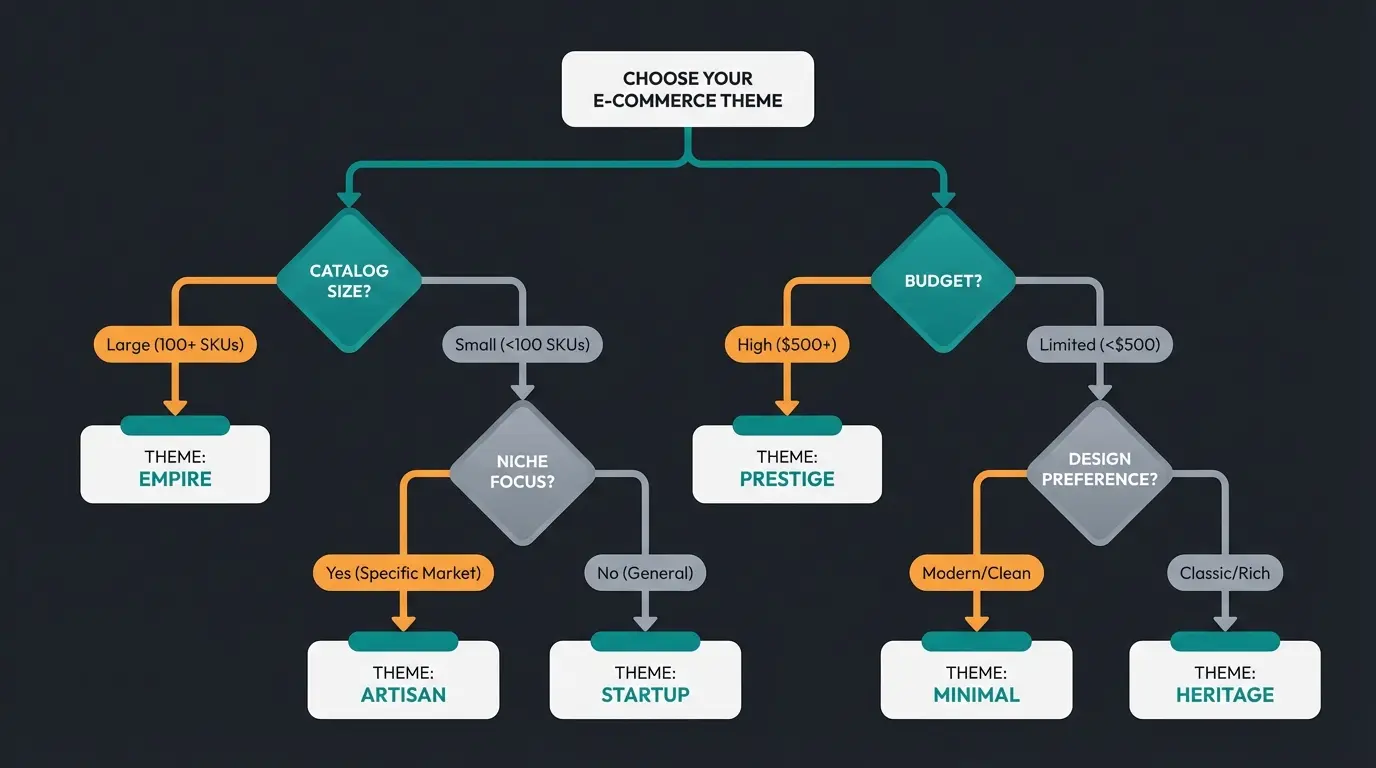
Start with your catalog size and product type. If you carry fewer than 50 products, a minimal theme like Dawn or Studio keeps things clean. Over 100 products, you need robust filtering and navigation, which points toward Impact, Expanse, or Turbo. Browse the Official Shopify Theme Store to preview options, and check our Shopify Templates guide for a structured walkthrough.
- Check your current PageSpeed score. If you are below 80, prioritize speed-focused themes before adding features.
- Audit your installed apps. If you are paying for features that a premium theme includes natively, the upgrade pays for itself through subscription savings alone.
- Match your catalog size. Under 50 products: Dawn or Studio. 50-200 products: Be Yours or Impulse. Over 200 products: Impact, Expanse, or Turbo.
- Consider your niche. Fashion and lifestyle stores benefit most from Impulse or Stiletto. Large-catalog stores need Expanse or Impact.
- Think beyond the theme. The best-performing Shopify stores in 2026 combine fast themes with intelligent customer engagement through AI employees.
FAQ
For most stores, Impact ($400) offers the best balance of speed, customization, and conversion features. If budget is a concern, Dawn is the top free option with a PageSpeed score of 92. The best choice depends on your niche, catalog size, and revenue stage.
Premium themes are worth it once your store generates consistent revenue above $10k per month. They replace multiple paid apps (saving $45-180/year) and typically deliver a 0.2-0.5% improvement in conversion rate. For new stores still validating product-market fit, free themes like Dawn are the smarter investment.
Dawn is the fastest Shopify theme with a PageSpeed score around 92. Among premium themes, Turbo comes closest at 91. Speed directly impacts conversions: Deloitte research shows a 0.1-second improvement can drive an 8.4% conversion boost.
Yes. Shopify separates your product data, pages, and blog posts from the theme. Switching themes changes the visual layout but does not delete your content. Theme-specific customizations like section arrangements will need to be reconfigured in the new theme.
An AI-ready theme supports clean DOM structure, fast load times, and flexible section placement for embedding AI tools like product advisory overlays. Themes with strong app integration capabilities, such as Impact and Be Yours, work best with AI employees that provide real-time product recommendations.
The right Shopify theme brings visitors in. An AI employee turns them into buyers. Qualimero clients see +35% cart value, +60% checkout rate, and 16x ROI. See what it looks like in your store.
Start your free trial
Lasse is CEO and co-founder of Qualimero. After completing his MBA at WHU and scaling a company to seven-figure revenue, he founded Qualimero to build AI-powered digital employees for e-commerce. His focus: helping businesses measurably improve customer interaction through intelligent automation.