Why Modern AI Can Do More Than Solve Support Tickets
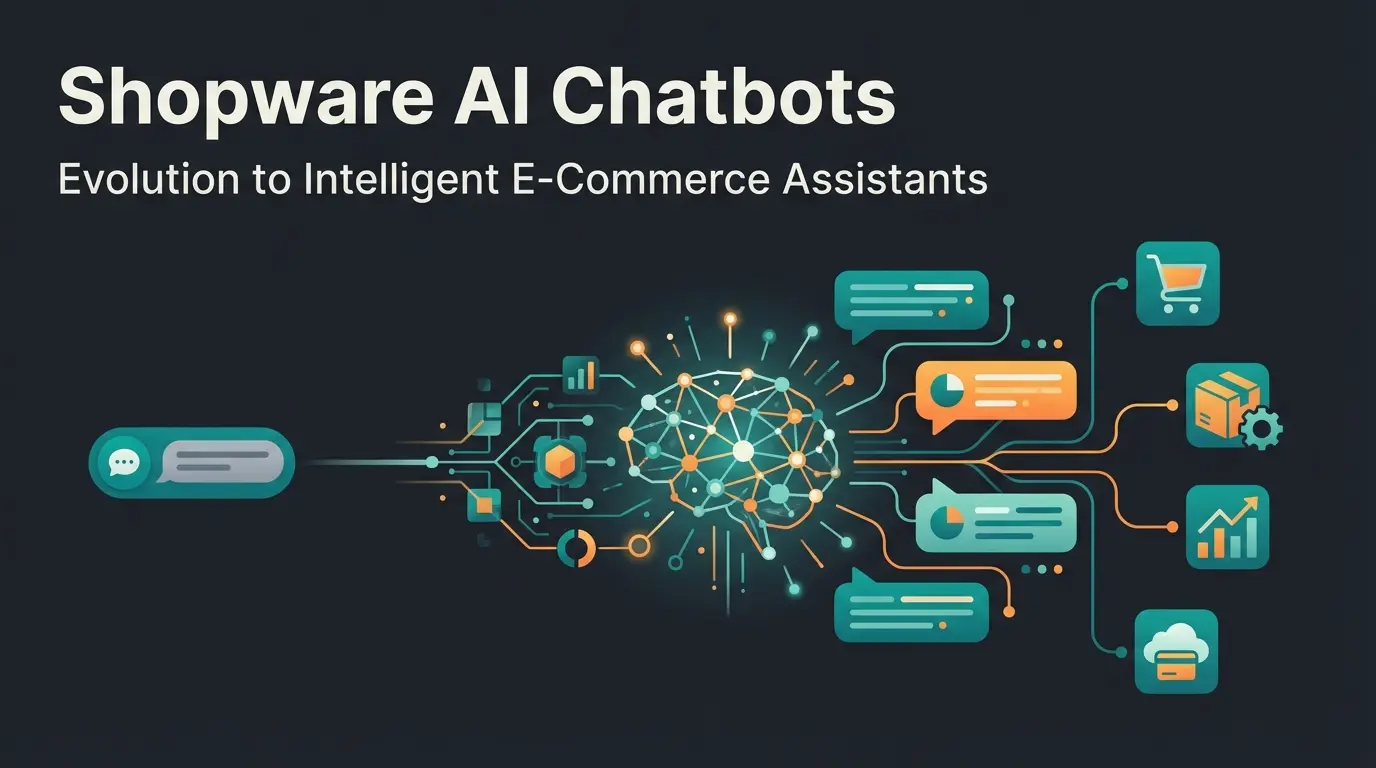
The digital landscape in Germany is transforming rapidly. While just a few years ago, a chatbot was often perceived as an annoying pop-up at the edge of the screen that could barely stammer more than "I don't understand you," 2025 marks a revolution. Powered by Generative AI (GenAI) and Large Language Models (LLMs), these systems have evolved into true digital employees. According to YouGov, 43% of Germans have already tried ChatGPT, fundamentally shifting customer expectations.
But for businesses, a crucial question arises: Are you just looking for a way to reduce support costs, or do you want to actively increase your revenue? Understanding Chatbot as a Service Fundamentals helps clarify this distinction, which separates AI solutions transforming the market from outdated automation tools.
The current search landscape for terms like "German chatbot" is divided into two camps. On one side are millions of private users using ChatGPT for homework or emails. On the other side are B2B decision-makers like yourself, searching for a software solution that is data protection compliant, masters the German language including cultural nuances, and integrates seamlessly with systems like Shopware or Salesforce.
This guide is written for the latter group. We'll illuminate why the German chatbot market operates differently in 2025, why "Made in Germany" is becoming a survival question for AI, and how you can transition from a pure support bot to a revenue-generating product consultant through Guided Selling.
What Is a Chatbot Today? Definition & Evolution
A chatbot is a software application that simulates human conversation (written or verbal) to automate tasks or provide information. But this definition falls short in 2025. To understand the possibilities for your business, we need to examine the evolution of the technology. For a comprehensive Chatbot definition guide, the key is understanding that we're currently transitioning from Phase 2 to Phase 3.
The Three Evolutionary Stages of Chatbot Technology
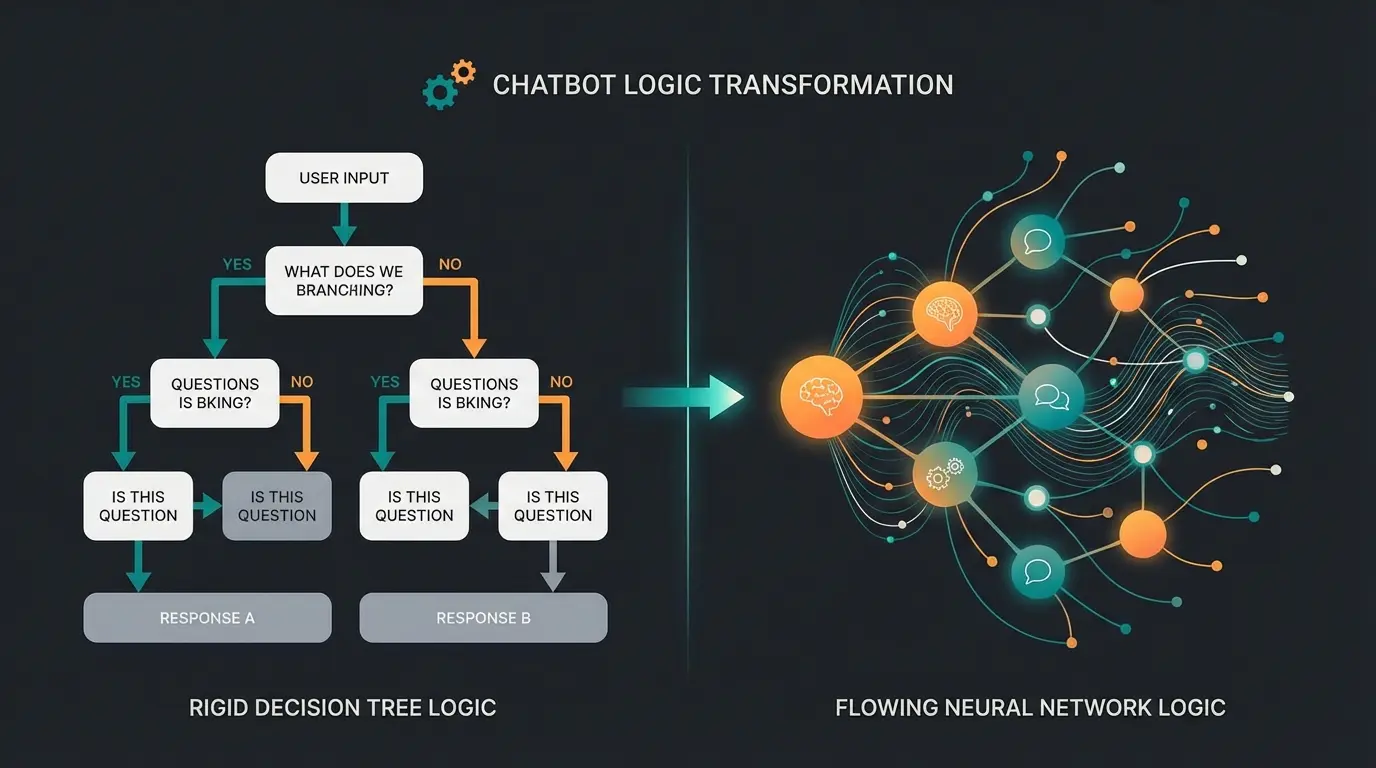
Understanding these stages helps you identify where your current solution sits and where it needs to go. The differences between rule-based click-bots and modern AI systems are fundamental.
Works like a decision tree. Users click predefined buttons. Cheap and controllable, but rigid—fails with unexpected questions.
Recognizes intents behind typed text. Understands that 'Where is my package?' and 'Delivery not here' mean the same thing. More flexible but often limited to FAQ responses.
Uses LLMs like GPT-4o or Claude to understand context, generate dynamic responses, and actively advise customers—like a sales associate in a retail store.
The Rule-Based Bot functions like a decision tree. The user clicks on predefined buttons ("Shipping Status," "Return"). The advantage is that it's cheap, controllable, and produces no "hallucinations." The disadvantage is that it's rigid. As soon as a customer asks a question not in the script ("Which cream helps with dry skin in winter?"), the bot fails completely.
The NLP Bot using Natural Language Processing recognizes intents behind typed text. It understands that "Where is my package?" and "Delivery not here" mean the same thing. This makes it more flexible than click bots, but it's often still limited to FAQ answers.
The Consultative AI represents the current evolution. It uses LLMs (like GPT-4o or Claude) to understand context, generate dynamic responses, and actively advise customers. The game-changer here is that these bots can read product catalogs and act like a salesperson in a physical store. This is where Conversational AI evolves beyond simple automation.
Chatbot Technologies Compared: Rule-Based vs. AI
Before deciding on software, you need to understand what's happening under the hood. For the German market, this is particularly relevant because the technology directly impacts GDPR compliance. The shift toward modern AI sales tools requires careful consideration of these technical foundations.
Rule-Based Systems: The Safe Bet?
Rule-based systems are deterministic. Input A always leads to Output B. They work best for simple service processes like appointment booking at a hair salon or status inquiries. However, their limitation is that they don't scale. For every new question, an answer must be manually entered.
Generative AI: Your Company's Brain
This is where it gets exciting. Modern German chatbot solutions from providers like moin.ai, Userlike, or OMQ integrate Generative AI to formulate answers "on the fly."
Why is this important? Imagine a customer asks: "I'm looking for a gift for my father, he likes technology, but it shouldn't be too complicated." A rule-based bot answers: "I didn't understand that. Please select from the menu." A Generative AI answers: "I understand. If he likes technology but it should be simple, I recommend our Smart Home starter sets or Tablet Model X with a simplified interface. Would you like me to show you the details?"
| Feature | Rule-Based Chatbot | Consultative AI Chatbot |
|---|---|---|
| Primary Goal | Cost reduction | Revenue generation |
| Interaction Style | Reactive (waits for specific inputs) | Proactive (guides conversation) |
| Knowledge Base | Static FAQs only | Deep product catalog integration |
| Handling Ambiguity | Fails with unexpected queries | Interprets context and intent |
| Personalization | None | Dynamic recommendations |
| Setup Complexity | Low (menu-based) | Medium (requires training) |
| Scalability | Limited by script | Unlimited knowledge expansion |
Use Cases: Support Is Silver, Consultation Is Gold
Here lies the biggest mistake German companies are currently making: they see the chatbot only as a cost brake in support. But the real potential lies in sales. Understanding the role of digital sales consultants transforms how you approach implementation.
The Classic: Customer Service (Support Automation)
Of course, support is important. Chatbots in Germany can automate up to 80% of standard inquiries (FAQs). Use cases include password resets, invoice copies, and opening hours. The added value is relieving employees who can then focus on complex cases and escalations. Solutions for 24/7 product consultation ensure customers always receive assistance.
The Differentiation: Product Consultation & Guided Selling
This is your opportunity to stand out from the competition. Most online shops are "self-service stores." The customer must know what they want. A Consultative Chatbot transforms your online shop into a specialty store. This approach to AI Product Consultation represents the future of e-commerce.
What is Guided Selling? Guided Selling means the bot guides the customer through the decision-making process. It asks questions, analyzes needs, and suggests suitable products. The power of AI-powered guided selling lies in its ability to replicate the in-store expert experience online.
A Practical Example: Running Shoes
A customer is looking for running shoes. Watch how a consultative AI handles this conversation:
- Bot: "What surface are you looking for shoes for? Asphalt or forest trails?"
- Customer: "Mostly forest trails, but sometimes roads too."
- Bot: "I understand. Do you have problems with ankle rolling?"
- Customer: "Yes, unfortunately."
- Bot: "Then I recommend Model X or Y. Both have reinforced outer soles for trail running but are cushioned enough for asphalt. Model X is also currently on sale."
This is how revenue-generating product consultants work—they don't just answer questions, they drive sales through intelligent recommendations.
German consumers now use GenAI chatbots to search for products instead of traditional search engines
Consumers willing to follow purchase recommendations from an AI assistant
Germans who have already tried ChatGPT, shifting customer expectations
Studies from Capgemini show that 59% of consumers in Germany now use GenAI chatbots to search for products instead of conventional search engines. Even more striking: 68% of consumers are willing to follow purchase recommendations from an AI. Those who sleep through this trend are leaving the field to Amazon and company. Implementing revenue-generating digital sales solutions is no longer optional.
See how AI-powered product consultation increases conversion rates while ensuring full GDPR compliance. Start your free trial today.
Start Free TrialGerman Chatbot Software: Why Origin Matters
When you search for "German chatbot," it's not just about the language. It's about legal certainty and culture. This is where AI consulting increases in importance for German businesses.
The Elephant in the Room: GDPR and Data Protection
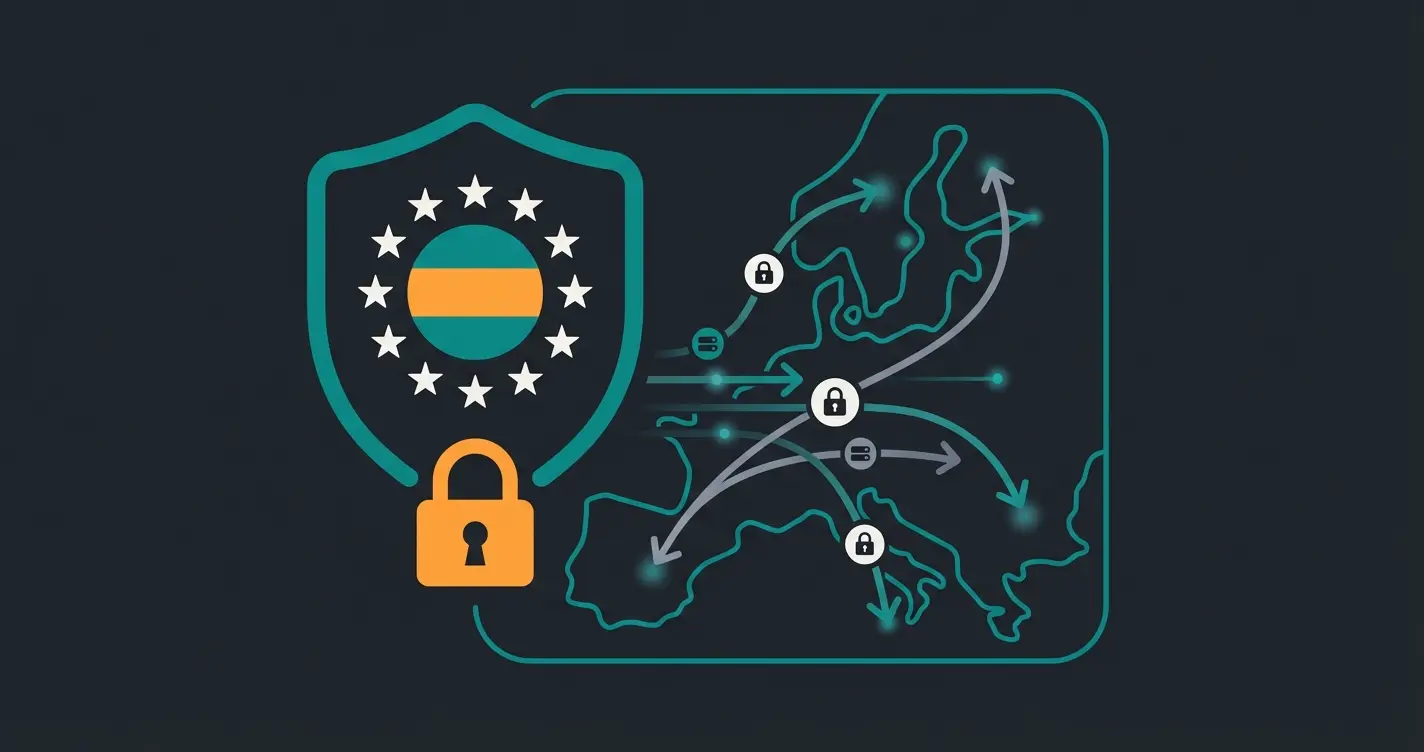
Germany has some of the strictest data protection laws in the world. A US-based bot that sends customer data unfiltered to overseas servers is a liability risk. According to Pexon Consulting and Assono, server location is a critical compliance factor.
- Server Location: A German chatbot provider (like Userlike or Botfriends) often guarantees server locations in Germany or the EU (e.g., Frankfurt)
- Data Processing Agreement: You need a DPA (Auftragsverarbeitungsvertrag). German providers offer this as standard and legally compliant pre-formulated
- EU AI Act: Starting 2025/2026, the rules of the EU AI Act take effect. Chatbots must be transparently labeled ('I am a bot'). German providers integrate these compliance features natively
As noted by Schieb.de and Software Improvement Group, the EU AI Act introduces mandatory transparency requirements that German providers are already preparing for, while international tools often neglect these requirements.
Cultural Nuances: "Du" or "Sie"?
A German chatbot is more than a translation. Understanding these nuances is essential for effective digital product consultants.
Formality: In B2B contexts (e.g., mechanical engineering), the formal "Sie" is often expected. In e-commerce (e.g., sneaker shops), the informal "Du" is preferred. Good German software allows switching the "persona" with a click.
Dialects & Semantics: German language is complex (compound words like "Donaudampfschifffahrt..."). Native German NLP engines often perform better than purely English-trained models that only translate.
Business Benefits (Beyond Cost Savings)
Position your chatbot internally not as a "cost-saving measure" but as a "growth driver." The distinction matters for stakeholder buy-in and implementation success.
1. Conversion Rate Optimization (CRO)
Through Guided Selling (see above), cart abandonment rates are reduced. When a customer is unsure ("Will this part fit in my car?"), they abandon without a bot. With a bot, they get the answer immediately and buy.
2. 24/7 Availability Amid Labor Shortages
Germany suffers from a skilled labor shortage. It's nearly impossible to find qualified support staff for night shifts or weekends. A chatbot fills this gap. It's the only employee who never sleeps, never gets sick, and always stays friendly.
3. Scalability During Peak Times
During Christmas shopping or marketing campaigns, inquiries explode. A call center becomes overwhelmed (hold queue frustration). A chatbot scales infinitely. Whether 10 or 10,000 inquiries simultaneously—response time stays in milliseconds.
4. Data Gold Mine
Every chat is a data point. What do customers struggle with? Which products are often requested together? Modern tools offer analytics dashboards showing you what your customers really think—more unfiltered than any market research.
Checklist: How to Find the Right Chatbot Provider
The market for chatbot software in Germany is large. Use these criteria for your shortlist. According to Shopstory and Shopware, integration capabilities are paramount.
Technical Requirements
- Integration: Are there ready-made plugins for your system (Shopware, Shopify, Salesforce, HubSpot)?
- No-Code: Can marketing employees train the bot, or do you need IT developers? (Look for visual flow builders)
- Hybrid Mode: Can the bot seamlessly hand over to a human employee (Human Handover) when it doesn't know the answer?
Data Protection & Legal
- Server Location: Is data stored in Germany/EU?
- GDPR Features: Are there functions for deleting user data and consent banners before chat starts? As Lime Technologies notes, these are essential compliance features
- EU AI Act Ready: Is the provider prepared for labeling requirements starting 2026?
Feature Set
- Generative AI: Does the bot use LLMs for flexible answers or only rigid scripts?
- Guided Selling: Are there modules for product consultation (carousels, product tiles in chat)?
- Language: Does it master German at a native speaker level (including typo tolerance)?
Strategic Outlook: What's Coming in 2026?
Anyone investing in a German chatbot today should know where the journey is heading. The developments outlined by moin.ai and Defacto point to significant advances.
- Agentic AI (Agent Systems): Bots will not only talk but act. They will independently change delivery addresses in the backend, create return labels, or book appointments in the sales rep's calendar—without human intervention
- Voicebots: Text chat is increasingly being supplemented by voice, especially in phone support. The technology (Speech-to-Text) is now so good that it understands German dialects
- Hyper-Personalization: The bot knows at the start of the conversation who the customer is, what they last bought, and what size they wear
FAQ: Common Questions About Chatbots in Germany
Prices vary significantly depending on feature scope. Starter solutions run from approximately €50-200 per month, suitable for small teams with basic functions. Mid-market/Growth solutions cost €350-800 per month and include multiple languages, CRM integrations, and AI features. Enterprise solutions start at €1,000-3,000+ per month (plus setup costs) for customized solutions, dedicated servers, SLAs, and custom development. According to Chatbot4You and Livestep.ai, watch for hidden costs like 'price per message' or setup fees.
No, modern 'No-Code' platforms have massively lowered the barrier. Simple FAQ bots can often go live within 1-2 days by simply importing your FAQ page URL (web scraping). For deeper integrations with Guided Selling processes connected to your inventory management system, plan for 4-8 weeks project duration.
Among the most well-known and established providers in the DACH region are: Userlike (strong in Unified Messaging and data protection with servers in Germany), moin.ai (specialized in AI automation with 'Dreaming' feature that suggests new topics), OMQ (focused on e-commerce and customer service automation as noted on GoGetGPT and omq.ai), and Kauz.ai (known for linguistic understanding).
Yes, when properly configured. A German chatbot isn't compliant just because it comes from Germany, but providers make it easier for you. Key requirements include: No data transfer to unsafe third countries, completion of a Data Processing Agreement, transparency toward users (link privacy policy in chat), and ability for users to have their data deleted ('right to be forgotten'). E-Recht24 provides detailed guidance on these requirements.
Quality German chatbot software allows you to configure the formality level of your bot's persona. B2B contexts typically require the formal 'Sie' address, while B2C e-commerce often uses the informal 'Du.' The best solutions let you switch this with a single click and maintain consistency throughout all conversations.
Conclusion: The German Chatbot Has Grown Up
The days when you had to choose between a dumb click-bot and a data-protection-questionable US tool are over. The market for chatbot software in Germany offers mature, powerful solutions in 2025 that master the balancing act between innovation (GenAI) and security (GDPR).
Companies that act now and understand their chatbot not as a "doorman" for support but as a "digital sales consultant" will win in the competition. Your customers are ready for it—are you?
Recommended Next Steps
- Test the competition: Chat with your competitors' bots. Where do they frustrate? Where do they delight?
- Start small: Use a free trial from a German provider, feed it your Top 10 FAQs, and test the response
- Measure value: Define KPIs before launch (e.g., 'Reduce ticket volume by 20%' or 'Increase checkout conversion by 5%')
Join leading German businesses using GDPR-compliant AI product consultants. See measurable results in conversion rates and customer satisfaction within weeks.
Schedule Your Demo
Lasse is CEO and co-founder of Qualimero. After completing his MBA at WHU and scaling a company to seven-figure revenue, he founded Qualimero to build AI-powered digital employees for e-commerce. His focus: helping businesses measurably improve customer interaction through intelligent automation.