
Introduction: Data Privacy as Competitive Advantage in 2025
The General Data Protection Regulation (GDPR) is still perceived by many online retailers as a tedious bureaucratic obstacle. However, in 2025, the tables have turned. Data privacy is no longer just a compliance issue—it has become a massive trust signal for customers. In an era where AI systems and algorithms dominate e-commerce, customers are asking more critically than ever: 'Where does my data end up?'
For Shopware users, there's good news: you start with a home advantage. According to Profihost, the platform 'Made in Germany' is architecturally designed to meet European standards. However, the software alone is no guarantee of legal security. The integration of third-party tools, tracking pixels, and—most recently—Artificial Intelligence (AI) creates new entry points for data protection violations.
This guide is not a dry legal summary of 2018 laws. It's a modern roadmap for 2025. We cover the necessary basics (cookies & Consent Mode V2) but focus primarily on new challenges: How do you deploy AI chatbots and product consultants without getting sued? How do you leverage zero-party data to free yourself from the shaky tracking market? For comprehensive GDPR-compliant consultation strategies, this guide provides the foundation you need.
The Foundation: Why Shopware Leads in GDPR Compliance
Before we dive into the complex world of AI regulations, let's examine the foundation. Why do privacy-conscious companies often choose Shopware over Shopify? The answer lies in data sovereignty and architectural advantages that make data privacy compliance significantly easier to achieve.
Server Location and Data Sovereignty
The physical location of data processing remains one of the most critical points under GDPR. While US cloud solutions often rely on Standard Contractual Clauses (SCCs) and the 'Data Privacy Framework' to justify data transfers to the USA, Shopware (especially in the self-hosted/on-premise variant) allows full control. As noted by iDGard, data localization is essential for compliance.
- Self-Hosting: You determine where the server is located. Hosting with a German provider (e.g., Profihost, Timme, Maxcluster) guarantees that personal data physically never leaves the EU legal jurisdiction. Learn more about Shopware cloud hosting options in Germany.
- Database Access: Unlike closed cloud systems, you have direct access to the database. This is crucial for complex deletion or information requests that go beyond the standard backend capabilities. According to Mioso, this flexibility is invaluable for GDPR compliance.
Privacy by Design in Shopware 6
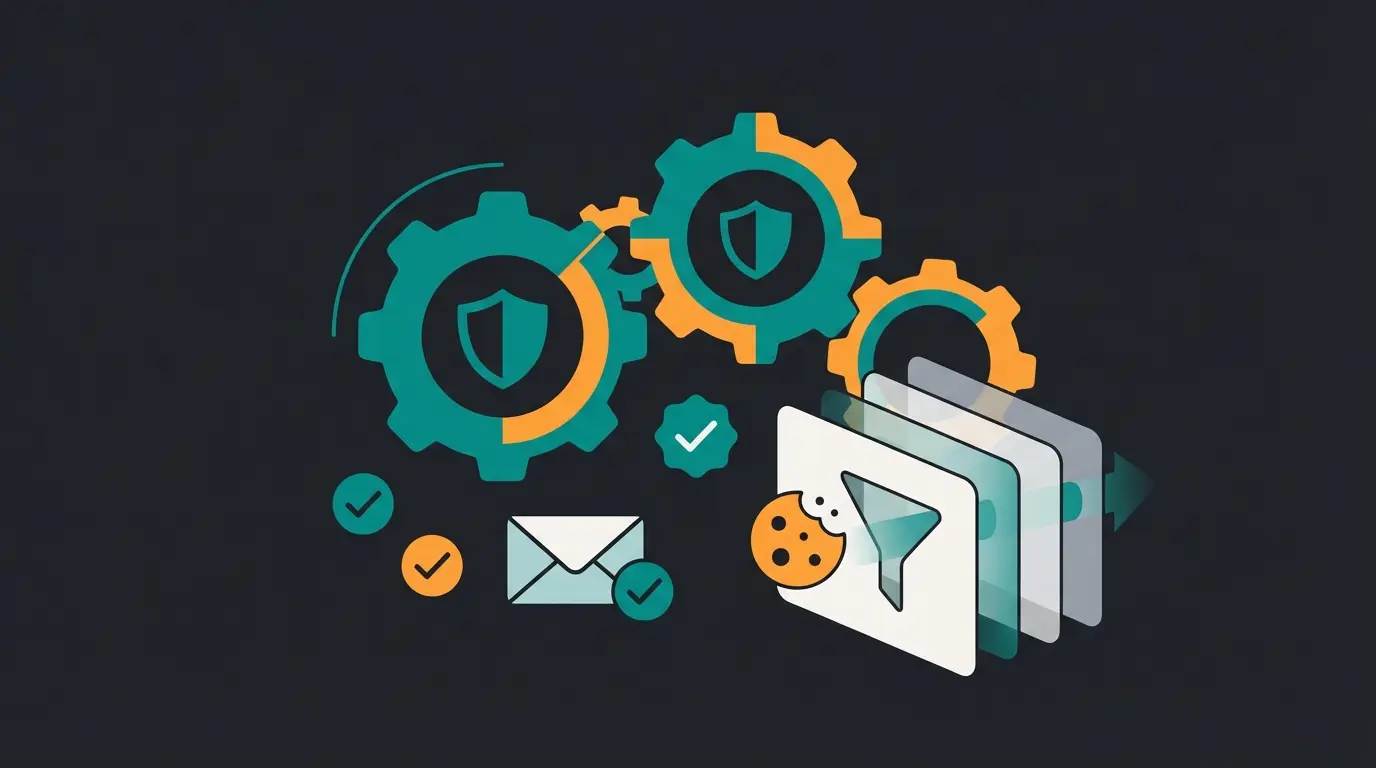
Shopware 6 was developed under the impression of GDPR. This is reflected in native features that don't require expensive add-on apps, as documented by Shopware's official documentation:
- Double Opt-in (DOI): Natively integrated for newsletters and customer registrations.
- System Cookies: Shopware cleanly separates technically necessary cookies (shopping cart, session, CSRF) from tracking cookies. In its default state, Shopware only sets IDs that are absolutely necessary for operation, as confirmed in the Shopware cookie documentation.
The Compliance Checklist: Standard Requirements for 2025
Even in 2025, many shops fail at the basics. Before you think about AI, this foundation must be solid. Here's the current state of the art. For a complete overview, refer to our Shopware DSGVO checklist which covers all essential requirements.
Google Consent Mode V2: The New Hurdle
Since March 2024, Google has tightened the reins. Anyone using Google Ads or Google Analytics must have implemented Google Consent Mode V2. Without this mode, remarketing lists will no longer be populated, and conversion tracking loses massive accuracy, as detailed by Codiverse.
What Shopware users need to know: According to Shopware's official release notes:
- Shopware Version: From Shopware version 6.5.8.6, support for Consent Mode V2 is partially prepared in the standard cookie banner but often still requires configuration.
- Older Versions: Those still on Shopware 6.4.x or older must use a plugin or manually patch. Shopware itself urgently recommends updating or using official extensions from ShopwareLabs, as shown in the GitHub documentation.
- Plugin vs. Standard: The native Shopware Consent Manager is solid but often too rigid for complex marketing. External CMPs (Consent Management Platforms) like Usercentrics or Cookiebot (integrated via plugin) often offer safer V2 integrations and legally compliant templates, as noted by eRock Marketing and Great2Gether.
SSL and Encryption Standards
It sounds basic, but SSL is not just SSL. Make sure that not only the checkout but the entire shop (including landing pages and magazine) is delivered via HTTPS. Shopware enforces this by default in newer versions, but gaps often arise during server migrations.
Transactional Emails Compliance
A common reason for legal warnings: advertising in order confirmations.
- The Rule: Transactional emails (order confirmation, shipping status) may not contain advertising for other products unless there is explicit consent (double opt-in for newsletter).
- Shopware Setting: Check your email templates in the backend. Remove cross-selling elements ('Customers also bought') from the `order_confirmation_mail` if there is no consent.
of consumers say data privacy practices influence their purchasing decisions
or 4% of annual turnover for serious GDPR violations
of users abandon checkout when they don't trust a site's privacy practices
of users decline non-essential cookies when given a clear choice
The New Frontier: AI, Chatbots and the EU AI Act
This is where 2025 separates the wheat from the chaff. Many shop operators hastily integrate AI tools ('ChatGPT for support') without considering the legal consequences. The EU AI Act (AI Regulation), which has been gradually coming into force since August 2024, creates clear rules for e-commerce. Understanding the EU AI Act is now essential for any online retailer using AI tools.
Classification: Chatbots are 'Limited Risk'
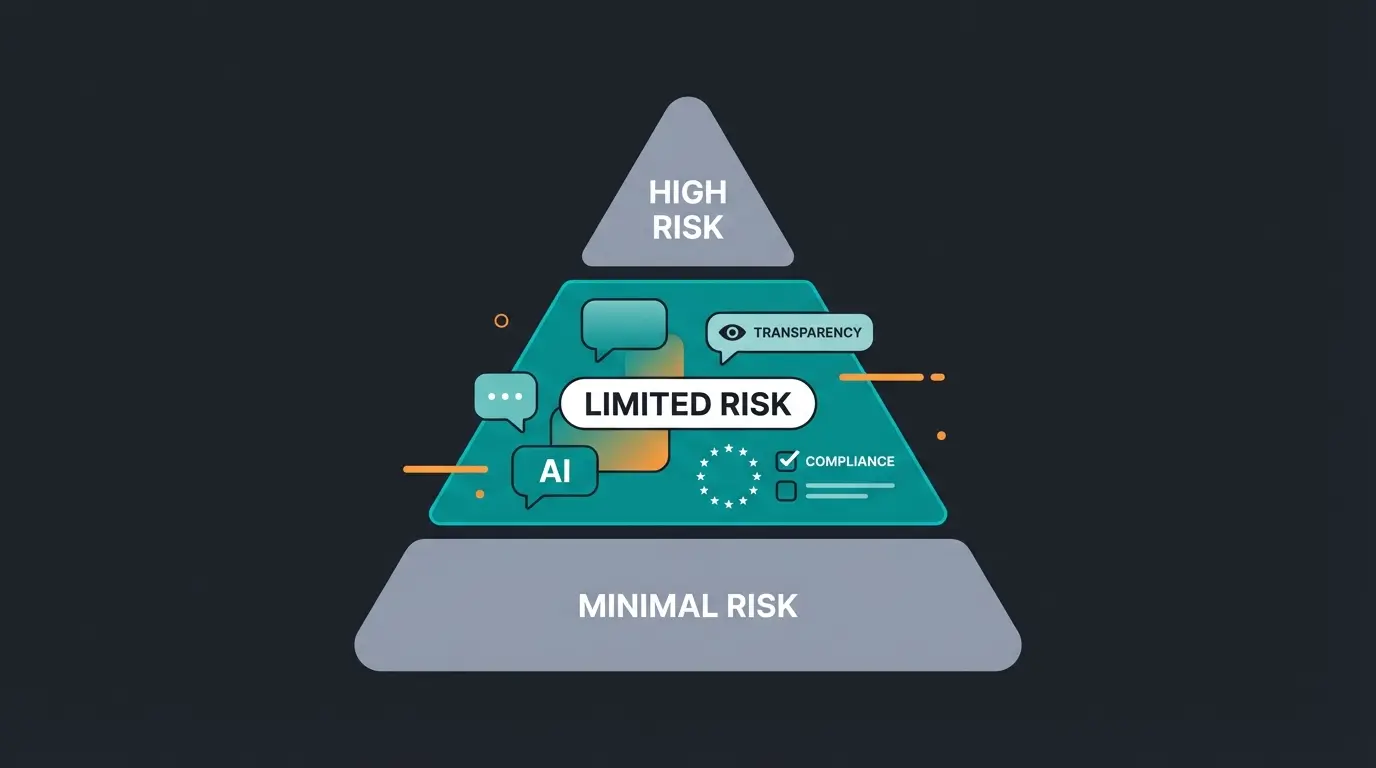
The EU AI Act divides AI systems into risk classes. Most e-commerce applications (product consultants, support bots, recommendation engines) fall into the 'Limited Risk' category, as explained by Amio and Carbon6.
This means: They are not prohibited but are subject to transparency obligations. According to Ecovis:
- Labeling Requirement: The user must know they are interacting with a machine. A chatbot pretending to be human ('Hello, I'm Sarah, your advisor') is actionable.
- Implementation in Shopware: Use clear designations in the chat window such as 'AI Assistant' or 'Digital Advisor'. A note in the chat footer ('Powered by AI') is mandatory, as confirmed by Netz98.
The Liability Trap: AI Giving Wrong Advice
An often overlooked risk is product liability. If your AI bot falsely assures a customer: 'Yes, this bike rack fits your carbon roof,' and the roof breaks, you as the retailer are liable. Ensuring your AI consultation closes deals correctly is just as important as ensuring it advises correctly.
- Problem: Generative AI (like ChatGPT) can 'hallucinate' and invent facts.
- Solution: For product consultation, use specialized AI systems based on RAG (Retrieval-Augmented Generation). These systems only access your actual product data in Shopware and don't invent facts, as detailed by Qualimero.
Data Flow with AI Tools
Be careful with 'wrapper' plugins that simply provide an interface to OpenAI (USA). If customer data (name, inquiry, shopping cart) is sent unencrypted to US servers, you need a legal basis for this (usually consent) and a Data Processing Agreement (DPA) with the provider. Understanding how GDPR compliance differs between platforms is crucial when selecting AI tools.
Strategy Shift: Zero-Party Data Instead of Tracking Cookies
GDPR is often seen as a restriction ('I can't track anymore'). Turn the tables. Instead of trying to secretly observe users (third-party data), ask them openly about their wishes (zero-party data). This approach helps build competence trust with your customers.
What is Zero-Party Data?
Zero-party data is data that a customer intentionally and proactively shares with a brand. Unlike first-party data (implicit behavior like clicks) or third-party data (purchased data), the customer provides this information voluntarily to receive a better shopping experience. According to Syrenis and GetForma, this represents the future of privacy-first marketing. Collecting zero-party data through AI consultants is the compliant path forward.
| Feature | Third-Party Data (Tracking) | Zero-Party Data (Consulting) |
|---|---|---|
| Source | Aggregators, cross-site tracking | Direct user input (quiz, chat) |
| GDPR Risk | High (Consent Mode, banner fatigue) | Low (Legitimate interest / Contract) |
| Quality | Assumed / Inferred | Precise / Explicit |
| Trust | Low ('They're spying on me') | High ('They're advising me') |
Implementation in Shopware: The AI Product Consultant
An AI-powered product consultant (Guided Selling) is the perfect tool for this strategy. As explained by Emotive and Revenue Hunt, here's how it works:
- Scenario: A customer is looking for running shoes.
- Tracking Approach (Old): You track that they clicked on 3 Nike shoes and show them Nike ads. But you don't know why (are they looking for cushioning or speed?).
- Zero-Party Approach (New): The AI consultant asks: 'Where do you usually run? Asphalt or trail?' The customer answers 'Trail'.
- Result: You have the explicit information 'Preference: Trail running'. You may use this data to personalize the offer since it's necessary for contract fulfillment (consultation).
Advantage: You become independent of cookie blockers and browser restrictions (like ITP in Safari) since the data is collected directly in the dialogue. Bloomreach confirms this as a leading strategy for privacy-first personalization.
Discover how our AI product consultant collects zero-party data while ensuring full GDPR and EU AI Act compliance. No tracking cookies, just genuine customer conversations.
Start Your Free TrialUser arrives on your Shopware store looking for products
Data flows to Google Analytics (US), unqualified chatbot (US), Hotjar (US) - requires complex consent, high legal risk
Data stays on Shopware server (DE), AI Product Consultant (EU), analytics anonymized - minimal consent requirements
AI asks preferences directly, user voluntarily shares needs - legitimate interest basis, high-quality data
Personalized recommendations without invasive tracking, customer trusts your brand
Handling Third-Party Tools & Plugins Safely
The Shopware Store is full of plugins. Every plugin is a potential data leak. Before you install a plugin, you should conduct a brief audit to ensure GDPR compliance across your entire tech stack.
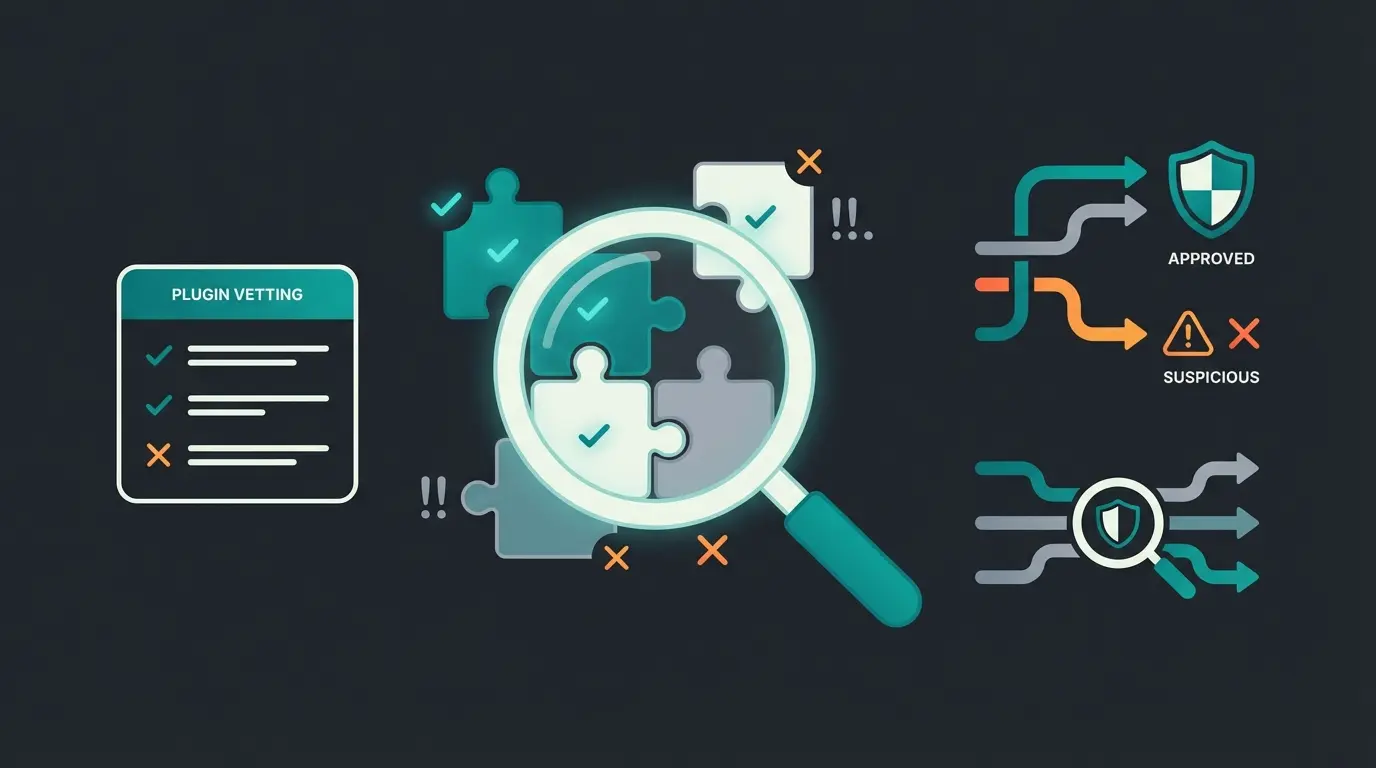
The Vetting Process for Shopware Plugins
Ask yourself the following questions before clicking 'Install':
- Where does the data flow? Check the plugin manufacturer's privacy policy. Is data processed on the manufacturer's servers, or does the plugin run purely locally in your Shopware PHP code?
- Is there a DPA? As soon as a plugin sends personal data (IP, email, shopping cart) to the manufacturer (e.g., with shipping service providers or newsletter tools), you must conclude a Data Processing Agreement (DPA). Reputable providers make this available in their account area.
- Does the plugin load external scripts? Many plugins load JavaScripts from external sources (Google Fonts, CDNs) without asking. This can be a violation without consent in the cookie banner. Use the browser console (F12 -> Network) to check what is loaded after installation, as recommended by eRock Marketing.
Practical Guide: Implementing Data Subject Rights in Shopware
A customer writes to you: 'Please delete all my data according to GDPR.' How do you respond in Shopware 6? This is where understanding your obligations becomes critical.
The Dilemma: Deletion vs. Retention Obligation
You cannot simply delete the customer completely. The tax office requires (in Germany) that invoices and orders be retained for 10 years (GoBD). If you completely delete the data record in Shopware, the orders also disappear from the sales statistics, which ruins your accounting. According to Shop-Ware, this is one of the most common compliance challenges.
The Solution: Anonymization Instead of Deletion
Instead of deleting, you must anonymize. Personal fields (name, address, email) are replaced by placeholders (e.g., 'Anonymous', 'X') or random values. The order data (product, price, date) remains for statistics but can no longer be attributed to any person. As documented by Shopware, this is the recommended approach.
Ways to anonymize in Shopware:
- Native Functions: Shopware does not offer 'one-click anonymization' for customers with orders as standard. Manual data modification is tedious and error-prone.
- SQL Commands (Experts Only): It is possible to clean data directly in the database via SQL. Warning: This is extremely risky. Due to 'Foreign Key Constraints' (links between tables), a wrong command can crash the entire shop.
- Plugins (Recommended): Use specialized plugins like 'Customer and Order Data Anonymization' (e.g., from scope01 or AlmCode). According to Scope01 and Shopware Store, these add a button in the backend that anonymizes customer data in a GDPR-compliant way but preserves the statistical relevance of the order.
Right to Access (Data Export)
If a customer wants to know what you have stored about them, you can view the data in Shopware 6 in the customer module. For a complete export (including log files and history), it is also advisable to use compliance extensions, as the standard export often only includes master data.
The Complete GDPR & AI Compliance Checklist
Use this audit checklist to ensure your Shopware store meets all 2025 requirements:
| Category | Requirement | Status Check |
|---|---|---|
| Consent | Google Consent Mode V2 active | Check Google Ads Goals section |
| Consent | CMP installed (Usercentrics/Cookiebot) | Verify cookie banner functionality |
| AI Compliance | All chatbots labeled as AI | Review chat widget text |
| AI Compliance | AI provider DPA in place | Check vendor contracts |
| Data Strategy | Zero-party data collection active | Implement AI product consultant |
| Server | EU-based hosting provider | Confirm server location |
| Retention | Anonymization plugin installed | Test customer deletion process |
| Legal Texts | Privacy policy current (2025) | Include AI processing details |
| Legal Texts | Imprint includes AI disclosures | Add AI transparency section |
| Emails | Transactional emails ad-free | Review email templates |
Conclusion: Compliance as Opportunity
The GDPR landscape for Shopware retailers has changed in 2025. It's no longer enough to just install a cookie banner. The integration of Google Consent Mode V2 is a technical requirement, and compliance with the EU AI Act is the new strategic hurdle. The E-commerce Europe confirms these requirements are here to stay.
But those who overcome these hurdles win. By relying on zero-party data and intelligent AI consultation instead of following users with tracking pixels, you build a more honest and valuable customer relationship. Shopware provides you with the perfect foundation for this with its architecture—use it. As SW-Backend notes, German-built solutions offer inherent compliance advantages.
Summary of To-Dos for Shopware Operators
- Check Consent Mode V2: Is it active in the CMP?
- AI Audit: Are all chatbots labeled as AI?
- Data Strategy: Are you actively collecting preferences (zero-party) instead of just clicks?
- Deletion Concept: Do you have a plugin installed for anonymization to save statistics?
- Server: Are you hosting with a specialized German Shopware hoster?
Shopware offers significant GDPR advantages due to its German origin and self-hosting capabilities. Unlike US-based platforms like Shopify that rely on Standard Contractual Clauses for data transfers, Shopware allows you to host data entirely within the EU, giving you complete data sovereignty. This eliminates complex legal justifications for international data transfers and reduces compliance risk.
Yes, if you use Google Ads or Analytics. Google Consent Mode V2 became mandatory in March 2024. Shopware version 6.5.8.6 or higher includes partial support, but you may still need configuration or external CMP plugins like Usercentrics or Cookiebot for full compliance. Without proper implementation, your remarketing lists won't populate and conversion tracking accuracy drops significantly.
Most e-commerce AI applications fall under 'Limited Risk' classification in the EU AI Act. This means you must clearly label AI interactions—users must know they're talking to a machine, not a human. Add visible indicators like 'AI Assistant' or 'Powered by AI' to your chat interfaces. Failure to disclose AI interaction can result in legal action.
Deletion removes all customer data but also destroys order history needed for tax retention (10 years in Germany). Anonymization replaces personal identifiers (name, email, address) with placeholders while preserving order statistics. Use anonymization plugins from providers like scope01 or AlmCode to comply with 'right to be forgotten' requests without losing business data.
Zero-party data is information customers voluntarily and explicitly share, like preferences stated in an AI product consultation. Unlike third-party tracking data that requires complex consent mechanisms, zero-party data collection can often proceed under 'legitimate interest' or 'contract fulfillment' legal bases. It's higher quality, more accurate, and builds customer trust rather than eroding it.
Our AI product consultant helps you collect valuable zero-party data while maintaining full GDPR and EU AI Act compliance. Built for European standards, hosted in Germany.
Get Started Now