Ecommerce platform comparison 2026: 8 systems scored across 10 criteria
Compare Shopware, Shopify, WooCommerce, Magento, Gambio, JTL, OXID and PrestaShop across 10 criteria including AI readiness, cost, and Europe readiness.

What is an ecommerce platform?
An ecommerce platform is the software layer between your products and your customers. It handles product catalogues, checkout, payments, shipping rules, and, increasingly, the entire post-purchase experience. The platform you choose dictates what you can build, how fast you can grow, and how much it will cost you to change direction later.
Three categories dominate the market in 2026. SaaS/Cloud platforms like Shopify and Shopware Cloud handle hosting, security, and updates for you. Open-source self-hosted platforms like WooCommerce, Magento Open Source, and Shopware Community Edition give you full control but require you to manage infrastructure. Enterprise/licensed platforms like Adobe Commerce, Shopware Beyond, and Spryker target complex business models with dedicated support and SLA guarantees.
The distinction matters more than it sounds. A SaaS platform gets you live in hours but limits what you can customise. A self-hosted open-source platform gives you complete freedom but makes you responsible for uptime, security patches, and performance. Most merchants underestimate the operational overhead of self-hosting until the first security incident or the first Black Friday traffic spike.
Best ecommerce platforms compared 2026
The global ecommerce platform market reached USD 13.92 billion in 2026 and is projected to grow at a CAGR of 20.49% through 2034, according to Fortune Business Insights. With global ecommerce sales hitting USD 6.88 trillion this year, representing 21.1% of total retail, the platform decision carries more weight than ever.
I scored eight platforms across ten criteria on a 1-5 scale. The criteria reflect what actually matters when you run an online shop in Europe: not just features on paper, but real-world performance in areas like GDPR compliance, local payment method support, and API quality for AI integrations. Every score is based on hands-on implementation experience and documented platform capabilities.
| Criterion | Shopware | Shopify | WooCommerce | Magento | Gambio | JTL-Shop | OXID | PrestaShop |
|---|---|---|---|---|---|---|---|---|
| Ease of setup | 3 | 5 | 3 | 2 | 4 | 3 | 2 | 3 |
| Scalability | 5 | 5 | 3 | 5 | 2 | 3 | 3 | 3 |
| B2B capabilities | 5 | 3 | 2 | 5 | 2 | 3 | 4 | 2 |
| SEO features | 4 | 4 | 5 | 4 | 3 | 3 | 3 | 4 |
| Payment and checkout | 4 | 5 | 4 | 4 | 4 | 3 | 3 | 3 |
| Europe readiness | 5 | 3 | 3 | 4 | 5 | 5 | 5 | 4 |
| AI and automation readiness | 5 | 4 | 3 | 3 | 1 | 2 | 2 | 2 |
| Plugin ecosystem | 4 | 5 | 5 | 4 | 2 | 3 | 2 | 4 |
| Total cost of ownership (Year 1) | 3 | 4 | 4 | 1 | 5 | 4 | 3 | 4 |
| Community and support | 4 | 5 | 4 | 3 | 3 | 4 | 3 | 3 |
| Total (out of 50) | 42 | 43 | 36 | 35 | 31 | 33 | 30 | 32 |
Growing steadily year over year
Of total online retail sales globally
Shopify and Shopware lead the overall scoring, but for very different reasons. Shopify wins on ease of setup, ecosystem breadth, and checkout experience. Shopware wins on B2B, Europe readiness, and AI/automation capabilities. The right choice depends on where your business sits and where it is headed.
One pattern stands out: the platforms that invested in open API architectures early (Shopware, Shopify) now score highest on AI readiness. This is not a coincidence. A well-documented, complete REST or GraphQL API makes it possible to integrate AI-powered product recommendations, automated customer service, and intelligent search without waiting for the platform vendor to build these features natively. Platforms with closed architectures or partial APIs (Gambio, OXID, JTL) fall behind here, regardless of how strong their other features are.
The sections below break each platform down individually with pricing, pros and cons, and a clear best-for recommendation.
Shopware
Shopware is the platform I have spent the most time inside, and it is also the one that has changed the most in the last three years. Built in Germany, API-first from version 6 onward, and designed with European commerce regulations in mind from day one. If you sell in the DACH region or across EU markets, Shopware removes friction that other platforms bolt on after the fact.
The B2B Suite and B2B Components set Shopware apart from every other platform on this list except Magento. Custom price lists, role-based purchasing, quote management, and multi-currency support come as native features, not third-party plugins. For a deeper look at the platform fundamentals, see our guide on What is Shopware?.
Shopware offers four editions. The Community Edition is free and open source. Rise starts at EUR 600 per month, Evolve at EUR 2,400 per month, and Beyond at EUR 6,500 per month, all scaled by GMV, and our Shopware comparison sets the editions side by side. The Flow Builder for automation and a growing AI ecosystem (including native integration points for tools like Qualimero) make it the strongest choice for merchants who want to layer AI-powered product advisory onto their shop.
| Strengths | Weaknesses |
|---|---|
| API-first architecture, ideal for headless and AI integrations | Smaller global app ecosystem compared to Shopify |
| Native B2B Suite with role-based access and quote management | Steeper learning curve than pure SaaS platforms |
| GDPR-ready, multi-language, multi-currency out of the box | Community Edition lacks enterprise features (no Flow Builder) |
| Strong DACH community and certified agency network | Less international brand recognition outside Europe |
| Flow Builder enables no-code automation workflows | Rise/Evolve pricing scales with GMV, which can surprise growing merchants |
Shopify
Shopify is the fastest path from idea to live shop. No other platform matches its speed to market. The admin interface is intuitive, the app ecosystem is massive (over 8,000 apps), and Shopify Payments eliminates the need for a separate payment gateway in most markets.
Pricing starts at USD 39 per month for Basic, USD 105 for Grow, and USD 399 for Advanced. Annual billing saves 25%. Transaction fees apply when using third-party payment providers: 2% on Basic, 1% on Grow, 0.6% on Advanced. Shopify Plus, the enterprise tier, starts around USD 2,300 per month.
Where Shopify trails: European compliance features require workarounds. Multi-language support has improved but still relies on apps like Langify or Weglot for full control. German-specific requirements such as Grundpreis display, Widerrufsbelehrung, and Trusted Shops integration need third-party solutions, which is why most DACH merchants comparing Shopify alternatives end up on a European platform. If your primary market is the DACH region, you will spend time patching gaps that Shopware handles natively.
Shopify holds 29% of the US ecommerce market, according to Coalition Technologies, and its checkout conversion rate is consistently among the highest in the industry. For merchants selling primarily to North American customers, it is hard to argue against Shopify. For European merchants, the calculation is different. For a head-to-head breakdown, see Shopware vs Shopify in detail.
| Strengths | Weaknesses |
|---|---|
| Fastest setup of any platform on this list | Limited customisation without Liquid/Hydrogen knowledge |
| 8,000+ apps covering every use case | European compliance requires third-party apps |
| Shopify Payments with built-in fraud detection | Transaction fees on third-party payment gateways |
| Hydrogen framework for headless builds | B2B features only available on Shopify Plus |
| 29% US ecommerce market share, massive community | Less control over hosting, performance, and data residency |
WooCommerce
WooCommerce powers roughly 37% of all ecommerce stores worldwide, according to Store Leads. The reason is simple: it is free, it runs on WordPress, and millions of developers already know how to work with it. For content-driven shops where SEO is the primary acquisition channel, WooCommerce offers the best native foundation, and that content control is the deciding factor in most Shopify vs WooCommerce evaluations. Full URL control, Yoast SEO integration, and an unmatched blogging engine.
The catch is total cost of ownership. The core plugin is free, but a serious store needs quality hosting (EUR 20-250 per month), a professional theme (EUR 50-200), essential plugins for security, backup, and performance (EUR 200-500 per year), and ongoing maintenance. A realistic Year 1 budget for a professional WooCommerce store sits between EUR 500 and EUR 1,500. At scale, costs climb further with managed hosting, CDN, and developer time for plugin conflicts.
WooCommerce scores weakest on scalability and B2B. Once you cross 5,000 products or hit significant traffic, performance tuning becomes a recurring project. Plugin conflicts add another layer: with 60,000+ available plugins, version incompatibilities after updates are a regular support ticket. For a detailed comparison of the trade-offs, read Shopware vs WooCommerce in detail.
| Strengths | Weaknesses |
|---|---|
| Free core plugin with no license fees | Performance degrades at scale without ongoing optimisation |
| Best native SEO foundation (WordPress + Yoast) | Security is your responsibility (updates, patches, monitoring) |
| 60,000+ plugins for every conceivable feature | Plugin conflicts are common after version updates |
| Massive developer community worldwide | No native B2B features, limited multi-currency support |
| Full control over hosting, data, and customisation | Total cost of ownership rises quickly with managed hosting and premium plugins |
Magento and Adobe Commerce
Adobe Commerce (Magento) remains the benchmark for enterprise customisation. If your business model involves complex catalogue logic, multi-store setups across regions, or deep ERP integration, Magento can handle it. The B2B module rivals Shopware's, and the Adobe ecosystem (Analytics, Target, Experience Manager) provides a complete enterprise stack.
The price reflects this positioning. Magento Open Source is free but requires significant development investment. Adobe Commerce on-premise starts at approximately USD 22,000 per year, and the cloud edition begins around USD 40,000 per year, both scaling with GMV. Total cost of ownership for a mid-sized enterprise ranges from USD 50,000 to USD 200,000 annually when you include hosting, development, and maintenance.
I have seen Magento work brilliantly for businesses with dedicated development teams and complex requirements. I have also seen it drain budgets for merchants who would have been better served by a simpler platform. The honest assessment: if you need to ask whether you need Magento, you probably do not. For the direct comparison, see Shopware vs Magento in detail.
| Strengths | Weaknesses |
|---|---|
| Unlimited customisation for complex business logic | Highest total cost of ownership on this list |
| Strong native B2B with customer-specific pricing | Requires dedicated development team for ongoing maintenance |
| Adobe ecosystem integration (Analytics, Target) | Setup takes months, not weeks |
| Proven at scale for high-volume enterprise merchants | Magento Open Source community is shrinking |
| Multi-store and multi-region from a single backend | AI/automation features lag behind Shopware and Shopify |
Gambio, JTL-Shop, OXID and other German alternatives
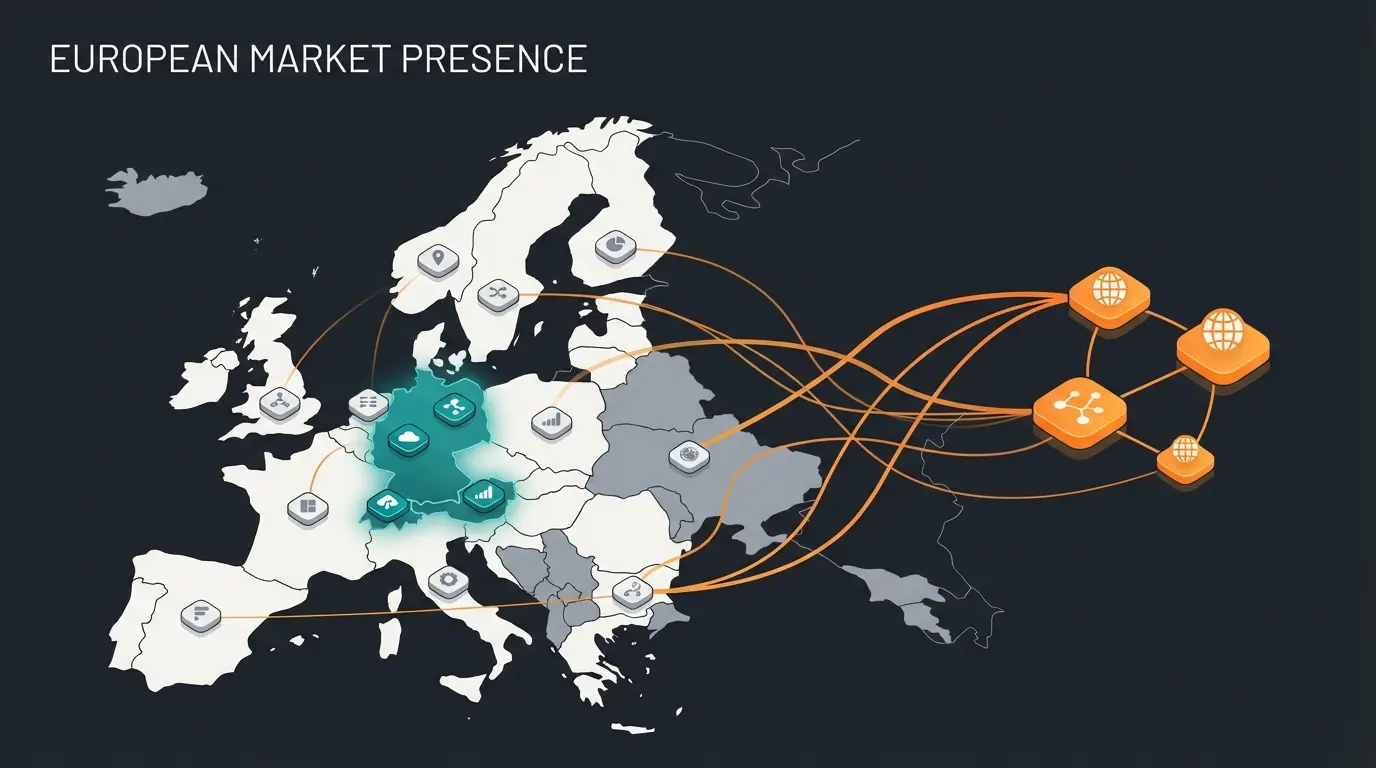
The DACH ecommerce market has produced several platforms that rarely appear in English-language comparisons but serve a specific segment extremely well. If you run a small to mid-sized shop in Germany, Austria, or Switzerland, these are worth a serious look. Western Europe's ecommerce market is growing at roughly 4% annually and is on track to surpass USD 800 billion by the end of the decade. The platforms built for this market understand its specific requirements: strict consumer protection laws, mandatory legal texts, local payment preferences, and multi-currency needs.
Gambio is the all-in-one platform for small shops that want German compliance out of the box. Pricing starts at approximately EUR 22 per month, including legal texts, Trusted Shops integration, and all essential features without requiring plugins. Best for: merchants with fewer than 1,000 products who need to launch quickly with minimal technical effort. The trade-off is limited scalability: once you outgrow Gambio, migration becomes necessary.
JTL-Shop stands out for its deep integration with JTL-Wawi, the inventory and warehouse management system used by thousands of German merchants. If your operations live in JTL-Wawi, JTL-Shop is the natural frontend. Entry-level versions are free, with advanced editions adding features for multi-channel selling and marketing automation. Best for: merchants whose primary challenge is inventory and fulfilment, not storefront design. Read Shopware vs JTL in detail.
OXID eSales targets B2B merchants with complex product configurations and customer-specific pricing. The Community Edition is free. Professional and Enterprise editions add features for guided selling, customer segmentation, and ERP connectivity. OXID has a smaller ecosystem than Shopware but a loyal following in industrial B2B. See Shopware vs OXID in detail.
PrestaShop is popular in Southern Europe and increasingly visible in Germany. The hosted version starts at EUR 24 per month with built-in hosting, GDPR tools, and support. It offers a solid plugin marketplace but lacks the B2B depth and AI integration points of Shopware or Shopify. For a comparison, see Shopware vs PrestaShop in detail.
Cost comparison
Monthly subscription fees are the number every vendor leads with. They are also the least useful number for making a decision. What matters is total cost of ownership in Year 1 and ongoing annual cost, including hosting, development, plugins, agency support, and transaction fees. License cost typically accounts for just 15-25% of the total, according to Shopware cost analysis by Tobias Schaefer.
I have put together cost ranges for a typical European SME with 500-5,000 products, moderate traffic, and standard design requirements. Enterprise setups, custom integrations, and multi-store configurations will push costs significantly higher. All figures include VAT where applicable and are converted to EUR at current exchange rates.
| Platform | License/subscription Year 1 | Hosting Year 1 | Plugins/extensions Year 1 | Typical agency/setup | Total Year 1 estimate |
|---|---|---|---|---|---|
| Shopware Community | Free | EUR 600-3,000 | EUR 500-2,000 | EUR 5,000-15,000 | EUR 6,100-20,000 |
| Shopware Rise | EUR 7,200 | Included (Cloud) | EUR 500-1,500 | EUR 3,000-10,000 | EUR 10,700-18,700 |
| Shopify Basic | EUR 430 (annual) | Included | EUR 200-1,200 | EUR 1,000-5,000 | EUR 1,630-6,630 |
| Shopify Advanced | EUR 4,400 (annual) | Included | EUR 500-2,000 | EUR 3,000-10,000 | EUR 7,900-16,400 |
| WooCommerce | Free | EUR 240-3,000 | EUR 200-1,500 | EUR 2,000-8,000 | EUR 2,440-12,500 |
| Adobe Commerce Cloud | EUR 37,000+ | Included | EUR 2,000-10,000 | EUR 15,000-50,000 | EUR 54,000-97,000+ |
| Gambio | EUR 264 | Included | EUR 0-300 | EUR 500-2,000 | EUR 764-2,564 |
| JTL-Shop | Free-EUR 1,200 | EUR 300-1,500 | EUR 200-800 | EUR 1,000-5,000 | EUR 1,500-8,500 |
| PrestaShop Hosted | EUR 288 | Included | EUR 200-1,000 | EUR 1,000-5,000 | EUR 1,488-6,288 |
For a detailed breakdown of Shopware's pricing tiers and what each edition includes, see our guide on Shopware license costs. If you are exploring the free tier specifically, read Shopware free edition.
Which ecommerce platform is right for your business?
After implementing AI-powered product advisory across shops running on most of these platforms, one pattern keeps repeating: the merchants who chose based on where they are headed, not where they are today, spend less time and money in the long run. A shop owner selling garden products on Shopware told me recently that switching from WooCommerce saved him 15 hours per month in platform maintenance alone, time he now spends on actual business growth. If you are new to Shopware and want to understand the platform fundamentals first, start with our What is Shopware? guide.
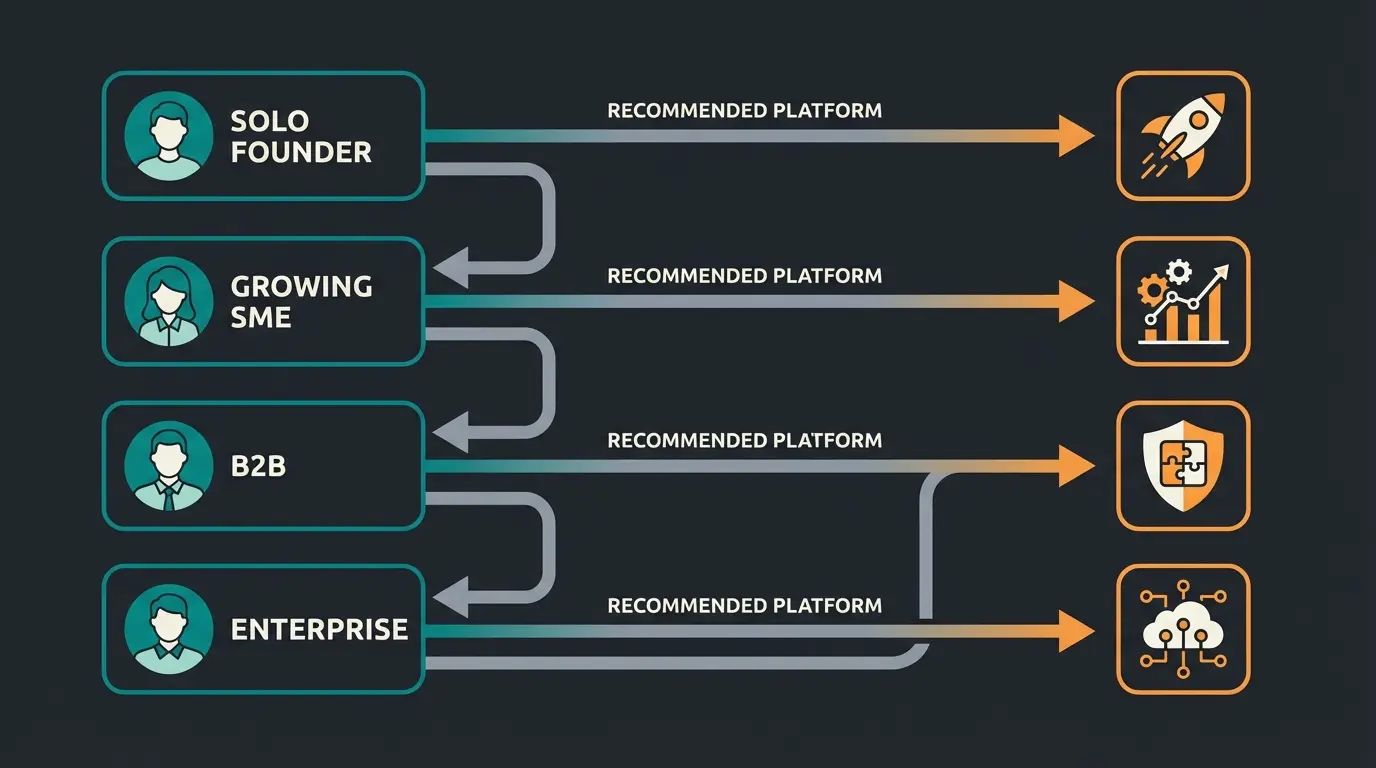
Here is a decision framework based on five common business profiles.
- Solo founder or side project (under EUR 500k revenue): Start with Shopify Basic or WooCommerce. Both get you live fast for under EUR 500 in Year 1. Shopify if you value simplicity. WooCommerce if you are already on WordPress and want full SEO control.
- Growing SME in Europe (10-50 employees, EUR 1-10M revenue): Shopware Rise or Evolve. Native multi-language, GDPR compliance, and B2B capabilities without enterprise pricing. The API-first architecture means you can add AI-powered product advisory, personalised recommendations, and automated customer service as you grow.
- B2B with complex requirements (custom pricing, role-based access, quote workflows): Shopware B2B Suite or Adobe Commerce. Both offer deep B2B features. Shopware at a fraction of Magento's cost. Adobe Commerce if you need the full Adobe ecosystem.
- Enterprise with multi-channel and multi-region: Shopware Beyond or Adobe Commerce Cloud. Both handle complex catalogue logic, multi-store setups, and high-volume traffic. Budget EUR 50,000+ per year.
- Budget-first with strong inventory management: JTL-Shop if you already use JTL-Wawi. Gambio if you want compliance-ready simplicity under EUR 3,000 per year.
A note on platform migration: many merchants start on Shopify or WooCommerce and migrate to Shopware once they scale into the EUR 1-5M revenue range and need B2B features, deeper European compliance, or API-first flexibility. This is a well-trodden path. If you are starting out, do not over-invest in a platform you might outgrow, but also do not choose one that makes migration unnecessarily painful. Platforms with clean data export and standard data formats (Shopify, Shopware, WooCommerce) make future migrations manageable. Platforms with proprietary data structures make them expensive.
The right platform brings visitors. An AI employee converts them. Qualimero's AI-powered product advisory delivers 7x higher conversion rates and +35% cart value for European ecommerce merchants. See it in action.
Book a free demoFrequently asked questions
For small businesses, Shopify Basic (USD 39/month) offers the fastest path to a live shop with minimal technical knowledge. WooCommerce is the best free alternative if you already use WordPress. For small businesses based in Germany, Austria, or Switzerland, Gambio (from EUR 22/month) provides legal compliance out of the box.
Total Year 1 costs range from EUR 764 (Gambio, self-managed) to over EUR 97,000 (Adobe Commerce Cloud with agency support). A typical European SME running Shopware Rise should budget EUR 10,000-19,000 for Year 1 including setup. Shopify Basic stores can launch for EUR 1,600-6,600. Monthly subscription is typically only 15-25% of the total cost.
WooCommerce has the strongest native SEO foundation because of WordPress: full URL control, Yoast SEO, and a built-in blogging engine. Shopware and Shopify both offer solid SEO capabilities with clean URLs, meta tag management, and structured data. For content-driven strategies, WooCommerce leads. For product-focused SEO, Shopware's category management and SEO URLs perform well.
It depends on your primary market. Shopify is better for global D2C brands that prioritise speed to market and simplicity. Shopware is better for European merchants needing native GDPR compliance, multi-language support, B2B features, and API-first flexibility for AI integrations. See our full Shopware vs Shopify comparison for a detailed breakdown.
Yes, but migration costs range from EUR 5,000 to EUR 50,000+ depending on catalogue size, customisation complexity, and SEO redirect requirements. Tools like LitExtension and Cart2Cart handle basic migrations. For complex shops with custom features, budget for agency support and expect 4-12 weeks of project time.
Shopware (with B2B Suite) and Adobe Commerce lead for B2B. Both offer customer-specific pricing, role-based purchasing, quote management, and complex catalogue logic. Shopware delivers these features at a significantly lower total cost. OXID eSales is a strong B2B contender for industrial use cases in the DACH region.
Shopware scores highest for AI readiness because of its API-first architecture, native Flow Builder automation, and growing integration ecosystem for AI-powered product advisory and customer service. Shopify follows with AI-generated product descriptions, Shopify Magic, and an extensive app ecosystem for AI tools. Both platforms support integration with AI employees like Qualimero for automated product consultation.
Whether you run Shopware, Shopify, or WooCommerce, Qualimero integrates in days. Our AI employees advise customers, increase cart values, and handle service inquiries around the clock.
Book a demo
Lasse is CEO and co-founder of Qualimero. After completing his MBA at WHU and scaling a company to seven-figure revenue, he founded Qualimero to build AI-powered digital employees for e-commerce. His focus: helping businesses measurably improve customer interaction through intelligent automation.