Shopware License: Models, Costs & What You Actually Pay
Shopware license models explained: Community Edition, Rise, Evolve, Beyond. Rental plugins, Fair Use Policy, TCO breakdown. Find the right plan for your shop.

Shopware licensing is one of those topics where the official documentation tells you the price but not the full picture. The license fee is just the entry ticket. What you pay for plugins, hosting, development, and compliance with the Fair Use Policy is where the real numbers live.
This article breaks down every layer of the Shopware license model so you can make an informed decision before you commit. If you want a side-by-side feature comparison of the editions, see our Shopware Editions comparison in detail. And if you are still asking what Shopware is at a fundamental level, start with What is Shopware first.
Shopware license models at a glance
Shopware operates on a subscription model for commercial plans and an open-source model for its Community Edition. There is no perpetual license option. You pay monthly or annually for access to the software and its connected services, or you self-host the open-source code for free under the MIT license.
| Edition | License Type | Monthly Cost | Target Use Case | GMV Threshold |
|---|---|---|---|---|
| Community Edition | MIT (Open Source) | Free | Early-stage, dev, small shops | Up to EUR 1M GMV |
| Rise | Commercial Subscription | EUR 600/month | Growing B2C shops | No upper limit |
| Evolve | Commercial Subscription | EUR 2,400/month | Scaling B2B and multi-channel | No upper limit |
| Beyond | Commercial Subscription | EUR 6,500/month | Complex enterprise operations | No upper limit |
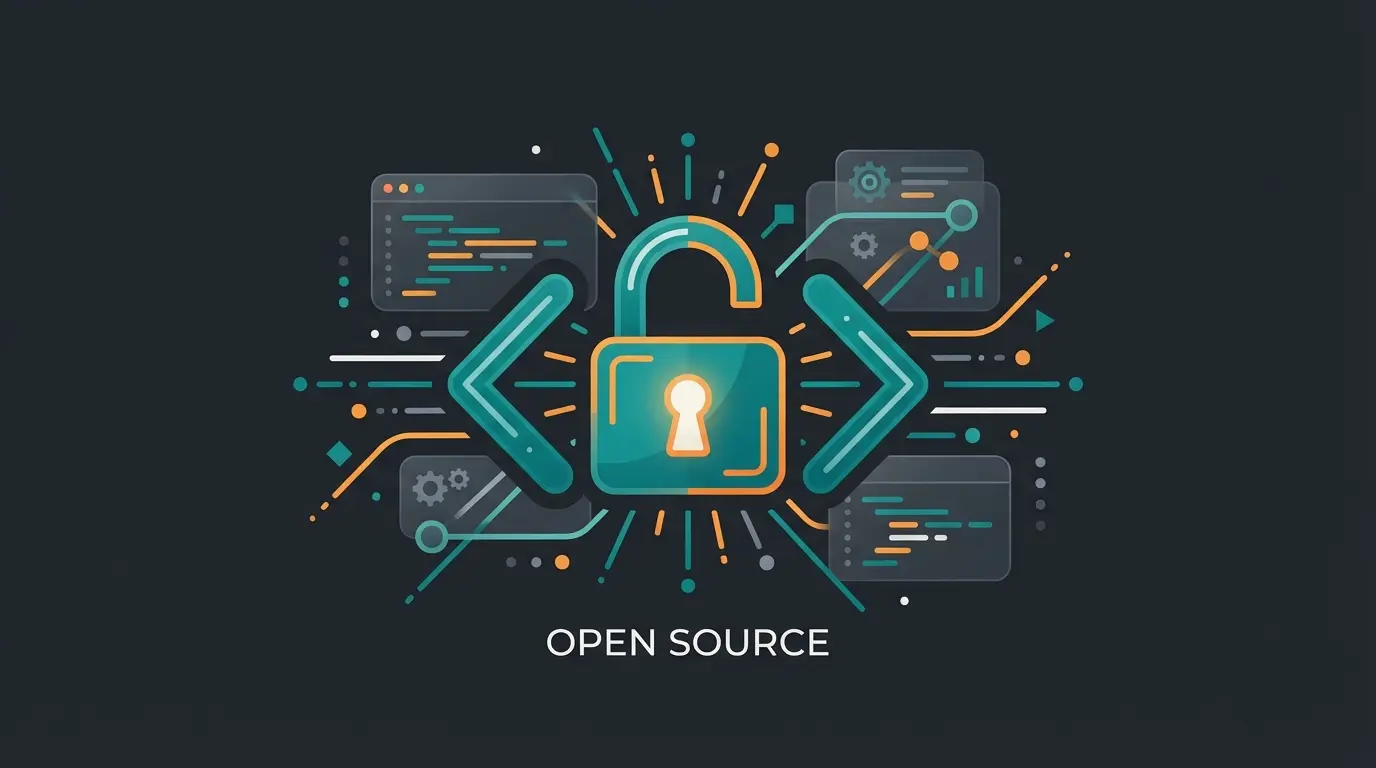
The open-source principle is real. Shopware publishes its core code on Shopware Open Source on GitHub under the MIT license, which means you can download, modify, and deploy it without paying anything. The catch is what you lose without a paid account: access to the Shopware Store, automatic plugin license management, official support, and certain SaaS features built on top of the core.
All four tiers run on the same Shopware 6 codebase. The differences are in entitlements, support levels, and access to Shopware's hosted services, not in fundamentally different software versions.
Community Edition: using Shopware for free
The Community Edition is a fully functional e-commerce platform available at no cost. It covers product management, order processing, basic CMS, and a standard checkout flow. For small shops and developers building or evaluating Shopware, it covers a lot of ground without spending a cent.
What the Community Edition does not give you: access to the Shopware Account and the Shopware Store if you exceed EUR 1M in annual Gross Merchandise Value (we cover this under the Fair Use Policy in the next section). You also miss out on official Shopware support, the staging domain feature, and certain cloud-native capabilities included in paid tiers.
- Developers building, testing, or learning Shopware
- Early-stage shops with genuine low transaction volumes (under EUR 1M GMV)
- Businesses that have in-house development capacity and can self-manage without Shopware support
- Shops that do not depend on Shopware Store plugins for critical functionality
The honest friction point: most shops that start on Community Edition eventually need plugins from the Shopware Store. The moment you want SEO tools, payment integrations, or shipping connectors from the marketplace, you are dependent on the Shopware Account ecosystem. That is where the free model starts to show its edges. For more detail, see our article on how to Use Shopware for free.
Rise, Evolve, Beyond: commercial licenses
The three commercial editions are all subscription-based. Rise replaced the old Professional Edition. Evolve replaced Enterprise Basic. Beyond is the top tier, designed for complex business models, VIP support, and maximum flexibility. You pay monthly or annually, and there is no option to purchase a perpetual license.
| Feature | Rise | Evolve | Beyond |
|---|---|---|---|
| Monthly Price | EUR 600 | EUR 2,400 | EUR 6,500 |
| Primary Focus | B2C growth | B2B and scaling | Enterprise, complex models |
| Shopware Support | Standard | Priority | VIP / dedicated |
| Staging Domain | Included | Included | Included |
| B2B Features | Limited | Full | Full |
| Multi-store / Sales Channels | Yes | Yes | Yes |
| Contract Term | Monthly/Annual | Monthly/Annual | Contact Sales |
Evolve is widely regarded as Shopware's bestseller in the commercial range. It hits the sweet spot for shops that have moved past the startup phase and need B2B capabilities, scalable architecture, and reliable support without paying for the full Beyond package. See the Official Shopware Pricing Page for current feature details per tier.
The Fair Use Policy: what changed in March 2025
Effective March 24, 2025, Shopware introduced a Fair Use Policy that changed the rules for Community Edition shops generating more than EUR 1M in annual Gross Merchandise Value. GMV means total transaction value processed through the platform, before any deductions for returns, discounts, or fees.
Shops above the EUR 1M GMV threshold must upgrade to a paid plan or lose access to Shopware Account and the Shopware Store. This means no plugin management, no store purchases, and no official support. The MIT license itself is unaffected: the code remains free to use. You just lose the connected services.
Shops under EUR 1M GMV are unaffected. Nothing changes for them. And shops above the threshold that genuinely do not need Account or Store access can continue using the Community Edition codebase indefinitely under the MIT license. This is an edge case, but it exists.
Plugin and extension licensing
Since December 28, 2023, all Shopware Store extensions operate on a rental-only model. There are no perpetual licenses available for purchase. You pay a monthly or yearly rental fee, and the right to use the extension exists only as long as the rental is active.
The practical implication is significant. If you stop paying the rental fee, your right to use the extension lapses immediately. The plugin may continue to function temporarily if it is already installed, but you are operating outside the license terms. Updates and support also stop.
Monthly rental for typical marketplace extensions
Monthly rental for industry-specific or complex plugins
Basic functionality free, premium features require rental
The Shopware License FAQ covers specific scenarios, including what happens to installed plugins when a license expires and how transfers between accounts work. If you are managing a plugin-heavy setup, read it before you plan your budget.
A practical scenario: a mid-size fashion retailer running Evolve with twelve marketplace plugins could easily pay EUR 600-800 per month in plugin rentals alone, on top of the EUR 2,400 platform fee. That is not a reason to avoid plugins, but it is a number that belongs in your budget from day one.
Staging, dev, and test environments: license rules
Shopware's approach to staging environments is tiered by plan. Paid plan subscribers (Rise, Evolve, Beyond) can register a staging domain directly in their Shopware Account. Once marked as staging, the domain automatically inherits all active extension licenses from the production account. This makes it straightforward to test plugin updates before pushing to live.
- Rise, Evolve, Beyond: Mark staging domain in Shopware Account, extension licenses apply automatically
- Community Edition: Staging domain feature is not available
- Community workaround: If staging runs in a subfolder of the licensed production domain, plugins may continue to function
- Third-party tools: Solutions like StageWare exist for setups that need more flexibility
The Community Edition exclusion from staging is one of the more overlooked restrictions. Development teams working on Community Edition shops often discover this limitation mid-project. Planning for it in advance saves significant pain later.
License upgrade and downgrade
Upgrading from Community Edition to Rise is a self-service process inside Shopware Account. You select the plan, enter billing details, and the upgrade activates without requiring a sales conversation. It is one of the cleaner upgrade flows in the platform market.
Moving from Rise to Evolve or Beyond requires contacting Shopware sales directly. This is not a self-service action. Expect a conversation, a contract amendment, and a billing adjustment rather than a one-click upgrade button.
Free, MIT license. Self-host and build.
Self-service upgrade via Shopware Account.
Contact Shopware sales. Contract required.
Sales conversation. Custom SLA and terms.
Timing matters for upgrades triggered by the Fair Use Policy. If your GMV is approaching EUR 1M and you are on Community Edition, plan the upgrade before you cross the threshold, not after. Reactivating a suspended account is more complicated than a proactive upgrade.
Total cost of ownership: what Shopware really costs
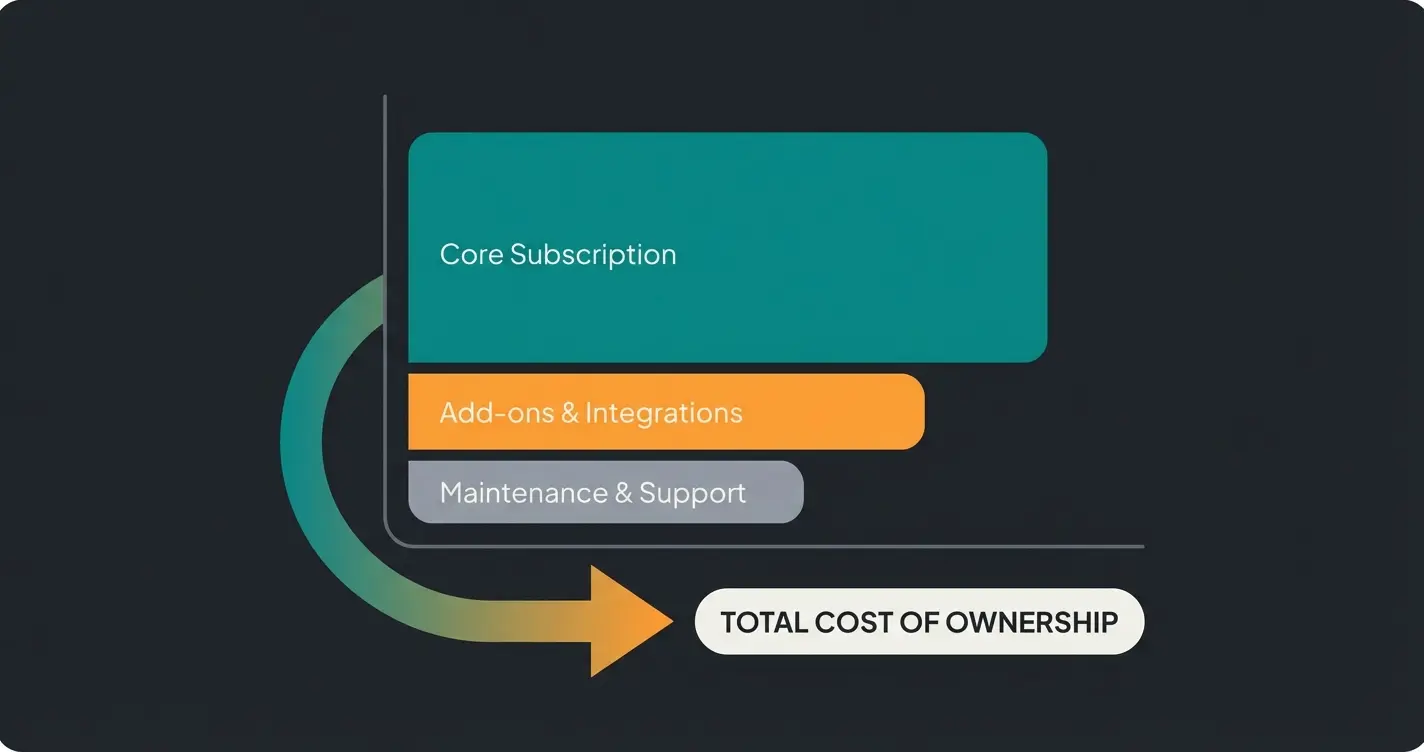
The platform license fee is the most visible number, but it rarely represents more than 15-25% of what a Shopware operation actually costs. Infrastructure, development, plugins, and ongoing maintenance are where the budget goes. Understanding the full TCO picture before selecting a license tier is the difference between a sustainable choice and an expensive surprise.
| Cost Category | Community | Rise | Evolve | Beyond |
|---|---|---|---|---|
| Platform License | EUR 0 | EUR 7,200/yr | EUR 28,800/yr | EUR 78,000/yr |
| Hosting | EUR 1,200-6,000/yr | EUR 3,600-12,000/yr | EUR 6,000-24,000/yr | EUR 18,000+/yr |
| Plugin Rentals | EUR 0-3,600/yr | EUR 2,400-9,600/yr | EUR 4,800-12,000/yr | EUR 6,000-18,000/yr |
| Development / Agency | EUR 6,000-24,000/yr | EUR 6,000-18,000/yr | EUR 12,000-36,000/yr | EUR 30,000+/yr |
| Estimated Total | EUR 7,200-33,600/yr | EUR 19,200-46,800/yr | EUR 51,600-100,800/yr | EUR 132,000+/yr |
These are indicative ranges, not fixed prices. Your actual numbers depend on your hosting setup, the specific plugins you use, and whether you have in-house development or rely on an agency. For a more detailed breakdown, see our article on Shopware total costs and the companion piece on Shopware pricing details.
Which Shopware license is right for you?
The right license is the one that matches your current operation, not the one you aspire to grow into. Overpaying for capacity you will not use in the next twelve months is a real risk. Underpaying and hitting the Fair Use Policy wall is an equally real risk on the other side.
- Annual GMV under EUR 1M, building or evaluating, no dependency on Shopware Store plugins: Community Edition
- Growing B2C shop, GMV crossing EUR 1M, need marketplace plugins and standard support: Rise
- B2B operations, multiple sales channels, need priority support and full feature access: Evolve
- Complex business model, VIP support requirements, custom SLAs, enterprise-scale: Beyond
If you are comparing Shopware against other platforms at the license and total cost level, our E-commerce platform comparison covers the major options side by side.
An AI employee turns visitors into buyers. Qualimero's KI-Mitarbeiter handles real-time product queries, recommends the right items, and converts browsing into revenue. Our Shopware clients see up to +35% higher cart values. Book a session to see it in action.
Book a Free DemoFrequently asked questions
The Community Edition is free under the MIT license. Commercial plans start at EUR 600/month for Rise, EUR 2,400/month for Evolve, and EUR 6,500/month for Beyond. All commercial plans are subscriptions with no perpetual license option.
Yes. The Community Edition is free and open source. Shops generating more than EUR 1M in annual GMV must upgrade to a paid plan or lose access to Shopware Account and the plugin marketplace, though the code itself remains free to self-host.
Rise (EUR 600/month) targets growing B2C shops with standard support and limited B2B features. Evolve (EUR 2,400/month) is designed for scaling B2B operations with full feature access and priority support. Evolve is positioned as Shopware's bestseller for mid-size merchants.
Paid plans (Rise, Evolve, Beyond) include a staging domain feature that automatically inherits extension licenses. Community Edition users are excluded from this feature and must use workarounds like subfolder staging or third-party tools.
Yes. Upgrading from Community Edition to Rise is self-service in Shopware Account. Moving to Evolve or Beyond requires contacting Shopware sales. There is no documented self-service downgrade path.
Since December 2023, all marketplace extensions use rental licensing. If you stop paying, your right to use the extension lapses. The plugin may remain installed, but you lose update access and official support, and you are operating outside the license terms.
The platform license (EUR 600-6,500/month) is only 15-25% of the true cost. Hosting, plugin rentals, and development or agency fees make up the rest. A mid-size shop on Evolve with plugins can easily exceed EUR 50,000 per year in total operating costs. Compare against your revenue and conversion gains to evaluate ROI.

Lasse is CEO and co-founder of Qualimero. After completing his MBA at WHU and scaling a company to seven-figure revenue, he founded Qualimero to build AI-powered digital employees for e-commerce. His focus: helping businesses measurably improve customer interaction through intelligent automation.