Which Shopware edition fits your business in 2026?
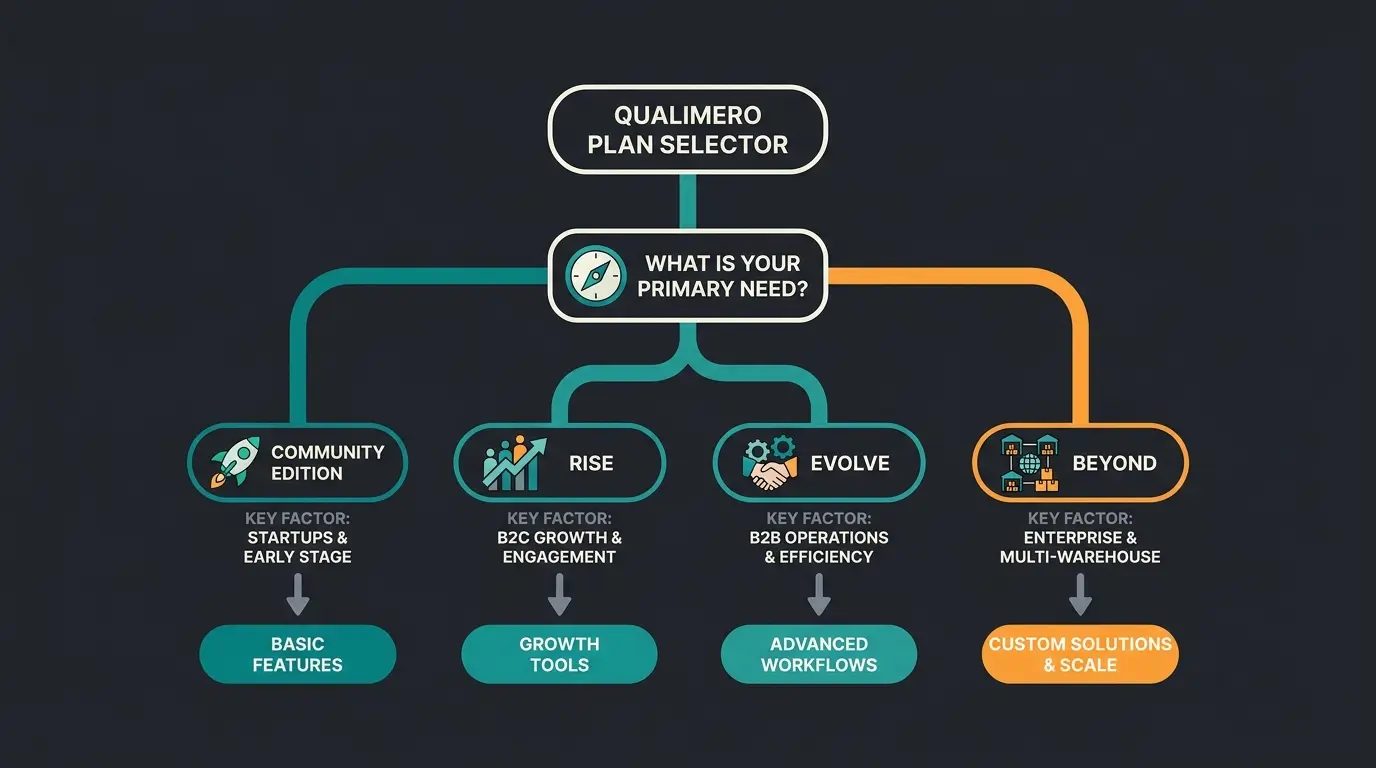
Shopware offers four distinct tiers: the free Community Edition, Rise at EUR 600/month, Evolve at EUR 2,400/month, and Beyond starting from EUR 6,500/month (all Q3 2026, excluding VAT). The right choice depends on three variables: your annual GMV, whether you sell B2B or B2C, and how much of your customer consultation you want to automate.
I've seen merchants overspend on Beyond when Rise plus a specialized tool would have saved them EUR 60,000 per year. I've also seen shops stuck on the Community Edition hit the EUR 1M GMV wall and scramble. Both mistakes come from the same root: comparing feature lists without understanding what actually drives revenue in your specific setup.
This comparison covers every edition with Q3 2026 pricing, walks through the B2B and AI features tier by tier, and shows where all four editions fall short on customer-facing consultation. For the broader platform landscape, see the full Shopware comparison guide.
From Professional to Rise: how Shopware changed its licensing
Shopware replaced the old Community/Professional/Enterprise model with subscription plans in late 2022. The transition accelerated through 2024 and 2025. By Q3 2026, with version 6.7.13.0 shipping monthly updates, the subscription model is fully mature. Plans bundle software features, support tiers, and GMV limits into a single monthly fee.
The shift from Shopware 5 to 6 rebuilt the architecture. These subscription tiers represent the commercial layer on top of that technical foundation. Three factors separate the plans: feature scope (especially B2B and AI), support level (response times from 8 hours down to 1 hour), and GMV thresholds that determine when you outgrow a tier.
Community (free), Professional (ca. EUR 2,500 one-time), Enterprise (project-based)
Rise, Evolve, Beyond introduced. Old editions phased out over 18 months
EUR 1M GMV cap on Community Edition. Mandatory upgrade for larger shops
Version 6.7.13.0 with AI product feeds, Copilot chat history, and agentic capabilities
Shopware Community Edition: what is included?
The Community Edition remains the technological foundation of the entire Shopware ecosystem. It is open source under MIT license, uses the same Symfony 7.4 core as Beyond, and provides a fully functional e-commerce platform. Product management, orders, customers, Shopping Experiences, the basic Flow Builder and Rule Builder all ship with CE.
What ships with the free Community Edition
Community Edition covers everything a functioning B2C shop needs: product, order and customer management, Shopping Experiences for drag-and-drop landing pages, the basic Rule Builder and Flow Builder, multi-currency and multi-language, and the full API-first core. The paid editions add features on top of that core. They do not unlock a different one.
- Shopping Experiences: the drag-and-drop editor for category and landing pages, so content and commerce live in the same tool
- Rule Builder (basic): conditional logic without code, for example free shipping above EUR 50 but only for returning DACH customers
- Flow Builder (basic): event-driven automation such as order status to email. Webhook actions stay behind Evolve
- API-first core: the same Store API and Admin API that Beyond runs on, so ERP, PIM or a headless frontend connect identically
That last point is the one merchants underrate. The API surface does not shrink because the licence costs nothing. Whatever Shopware will not sell you as a feature, you can usually connect from outside.
For developers and small teams with technical depth, CE was the default for years. That changed.
The EUR 1M GMV wall: Fair Usage Policy
On March 24, 2025, Shopware introduced the Fair Usage Policy. Community Edition shops exceeding EUR 1 million annual GMV lose access to the Shopware Store and their Shopware Account unless they upgrade to a paid plan (minimum Rise). The transition period ran until June 30, 2025. Since Q3 2025, enforcement is active.
GMV reporting is mandatory for all CE users via the "Shopware GMV Reporting" extension. According to Shopware, the threshold was set to ensure higher-revenue businesses fund platform development while keeping CE free for smaller merchants.
Free licence, paid infrastructure: what CE actually costs
The Community Edition costs nothing in licence fees and between EUR 150 and EUR 300 per month in hosting once the shop carries real traffic. Shopware 6.7 needs PHP 8.2 or higher with a 512 MB memory limit, MariaDB 10.11.6+ or MySQL 8.0.22+, and Node 20+ to build the storefront theme. Shared hosting installs it and then buckles.
According to Shopware's hosting guide, the recommended production stack is PHP 8.4, MariaDB 11.4 or MySQL 8.4, Redis 7+ or Valkey 8 for caching and sessions, and OpenSearch 2.17.1 once the catalogue outgrows SQL-based search. None of that is optional at scale.
Managed Shopware hosting at realistic specs runs EUR 150 to 300 per month, with Timme Hosting at EUR 149 for 16 cores and 64 GB, and Maxcluster landing near EUR 300 once you add RAM and a support SLA. Agency retainer or in-house DevOps time comes on top of that.
Which reframes the Rise question. CE and Rise both sit on infrastructure you pay for yourself, so the licence line is the only figure that genuinely differs. For EUR 600 you buy Store access above the GMV cap, the full AI Copilot, and an 8-hour support response instead of a forum thread. I have watched merchants defend a free licence while paying an agency EUR 900 a month to keep the shop patched.
Data sovereignty: the CE advantage nobody prices in
Self-hosted Community Edition gives you full control over where customer data lives. The database sits on your server, in your data centre, under your jurisdiction. For merchants in regulated segments, or anyone selling into German public procurement, that is a line on the tender sheet rather than a nice-to-have.
The compliance burden behind that is real. A Bitkom survey of 603 German companies published in December 2025 found 97% rate their GDPR effort as high or very high, and 77% say data protection slows their digitalisation, up from 70% in 2024. Self-hosting does not remove the obligation. It removes the guesswork about who processes what, and where.
A merchant on a US-based SaaS platform cannot answer a data protection audit with a server address. A self-hosted Shopware merchant can. That difference is worth nothing on most days and everything on one of them.
Who benefits from CE in 2026? Startups under EUR 1M revenue. Pure development or staging environments. Tech teams that build everything custom and never touch the Store. For everyone else, the licensing cost is a planning variable, not an optional expense.
Shopware Rise: the professional entry point
Rise costs EUR 600/month (Q3 2026) and targets merchants who have outgrown the Community Edition's limitations. It unlocks the full AI Copilot, premium themes, Social Shopping integrations, and structured support with 8-hour response times Monday through Friday.
The Flow Builder and Rule Builder are available in CE, but Rise adds Flow sharing (export flows between test and production) and the Rule Builder Preview (test rules against real orders before activating). For shops running complex promotions or multi-step automations, these features prevent costly mistakes in production.
The AI Copilot in Rise handles backend tasks: product text generation, image keyword extraction, review summarization, personalized checkout messages, and context-based search. According to Shopware, the May 2026 release (6.7.13.0) added chat history for Copilot and the first agentic capabilities under the Shopware Intelligence+ umbrella.
Shopware Evolve: B2B unlocked
Evolve at EUR 2,400/month is where Shopware gets serious about B2B. The B2B Components suite, successor to the old B2B Suite (end of support from Shopware 6.8 onwards), bundles Quick Orders, Quote Management, Employee Management with role-based access, Approval Rules, Shopping Lists, and Organisation Units into a modular framework.
The March 2026 release (6.7.8.0) added Individual Pricing to B2B Components, allowing customer-specific price books with percentage-based, total, or tiered discounts. According to Shopware, this addresses a top request from mid-market B2B merchants who previously needed expensive custom development.
Beyond B2B, Evolve includes Advanced Search powered by Elasticsearch/OpenSearch, essential for catalogs above 5,000 SKUs. The Flow Builder Professional with webhook actions enables deeper ERP integrations. CMS Rules allow content personalization based on customer segments. Support improves to 4-hour response times with phone access.
Shopware Beyond: enterprise features in detail
Beyond starts from EUR 6,500/month with custom pricing based on GMV and requirements. It adds three capabilities that no lower tier offers: Digital Sales Rooms, Multi-Inventory, and Subscription Commerce. Support reaches 24/7 availability, 1-hour response times, and a dedicated account manager.
Digital Sales Rooms (DSR) enable interactive video sales sessions where sales reps and customers co-browse the shop in real time. According to Shopware, DSR integrates natively with video conferencing tools and can be operational within days. For B2B large-order scenarios (industrial equipment, custom configurations), DSR transforms the sales process.
Multi-Inventory manages stock across multiple warehouses, branches, or country locations directly in the core. No third-party plugin. Subscription Commerce enables recurring delivery models (consumables, magazines, replenishment products) with full Flow Builder and Rule Builder compatibility. The April 2026 release added mandatory withdrawal button support for German compliance.
One limitation to acknowledge: DSR requires a human sales rep on the call. It is perfect for high-value B2B deals. It does not scale for B2C shops handling thousands of concurrent visitors who each need product advice.
Complete feature comparison table
This table reflects Q3 2026 status (Shopware 6.7.13.0). For platform-level comparisons with other systems, see Shopware vs Shopify, Magento vs Shopware, Shopware vs WooCommerce, and Shopware vs JTL.
| Feature | Community (free) | Rise (EUR 600/mo) | Evolve (EUR 2,400/mo) | Beyond (from EUR 6,500/mo) |
|---|---|---|---|---|
| Flow Builder (basic) | Yes | Yes | Yes | Yes |
| Rule Builder (basic) | Yes | Yes | Yes | Yes |
| Shopping Experiences | Yes | Yes | Yes | Yes |
| Rule Builder Preview | No | Yes | Yes | Yes |
| AI Copilot (full) | No | Yes | Yes | Yes |
| Social Shopping | No | Yes | Yes | Yes |
| Premium Themes | No | Yes | Yes | Yes |
| 3D Product Visualization | No | Yes | Yes | Yes |
| Blog Module (native) | No | Yes | Yes | Yes |
| B2B Components | No | No | Yes | Yes |
| Individual Pricing (B2B) | No | No | Yes | Yes |
| Advanced Search (ES/OS) | No | No | Yes | Yes |
| Flow Builder Professional | No | No | Yes | Yes |
| CMS Rules | No | No | Yes | Yes |
| Quick View | No | No | Yes | Yes |
| Digital Sales Rooms | No | No | No | Yes |
| Multi-Inventory | No | No | No | Yes |
| Subscription Commerce | No | No | No | Yes |
| Flow Builder Delayed Actions | No | No | No | Yes |
| Support Response Time | Community only | 8 hours (Mon-Fri) | 4 hours (incl. phone) | 1 hour (24/7 + account manager) |
| GMV Limit | EUR 1M | Tier-based | Tier-based | Custom |
| 24/7 AI Customer Advice | No | No | No | No |
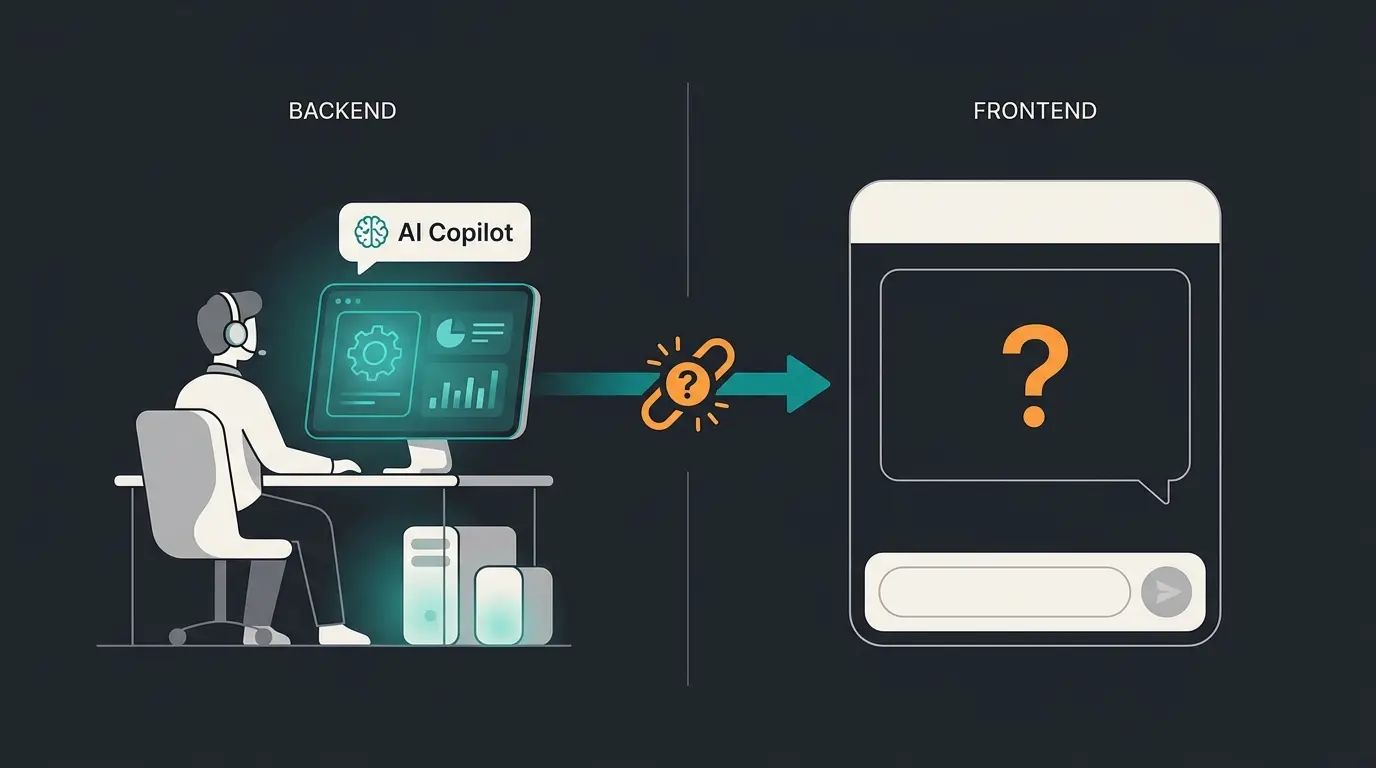
The last row matters most for conversion. None of the four editions include automated, 24/7 AI product consultation for end customers. The AI Copilot helps merchants backstage. Digital Sales Rooms require a human. The customer browsing your shop at 11 PM gets no advice from Shopware alone.
Shopware Rise vs Evolve: when does the upgrade pay off?
The EUR 1,800/month gap between Rise and Evolve (EUR 21,600/year) buys you exactly four things: B2B Components, Advanced Search, Flow Builder Professional with webhooks, and CMS Rules. Everything else is identical.
If you sell B2B, the answer is simple. Quote Management, Employee Roles with approval workflows, and Individual Pricing are non-negotiable for professional B2B operations. No plugin replaces what B2B Components deliver natively. The EUR 21,600 is table stakes.
If you sell B2C only, the calculation shifts. Advanced Search matters for catalogs above 5,000 products. Below that threshold, the standard search handles most queries. CMS Rules enable content personalization, but external tools like AI-powered product advisors often achieve the same outcome at lower cost. Flow Builder webhooks are valuable for ERP integration, but many ERPs offer their own Shopware connectors.
Rise to Evolve upgrade premium per year
Catalog size where Advanced Search becomes critical
Shopware Beyond vs Rise + AI: the TCO comparison
Many merchants face this question: upgrade to Beyond for better customer service, or stay on Rise and add specialized AI consultation? We have run this calculation with dozens of clients. The answer depends on what you actually need.
| Cost factor | Beyond setup | Rise + AI setup |
|---|---|---|
| License | from EUR 78,000/year | EUR 7,200/year |
| AI consultation tool | Not included (DSR needs human) | ca. EUR 3,600-6,000/year |
| Additional plugins | Fewer needed (more native) | 2-4 plugins (ca. EUR 2,000/year) |
| Agency/setup | Higher (complex config) | Lower (simpler tier) |
| Total estimate | EUR 90,000-110,000/year | EUR 15,000-22,000/year |
| 24/7 AI customer advice | No (DSR = human only) | Yes (automated) |
The gap is stark. According to Digital Commerce 360, AI-driven traffic converts 42% more often than non-AI traffic as of March 2026. A merchant on Rise with an integrated AI product advisor captures that uplift. A merchant on Beyond without one does not, despite paying five times more in licensing.
At Rasendoktor, an e-commerce lawn care retailer, an AI product advisor named Hektor achieved a 16x ROI with 100% automation of product consultations. That is not a Beyond feature. That is Rise plus external AI tooling, delivering what no Shopware edition offers natively.
Shopware vs Shopify Plus vs Magento: cross-platform edition comparison
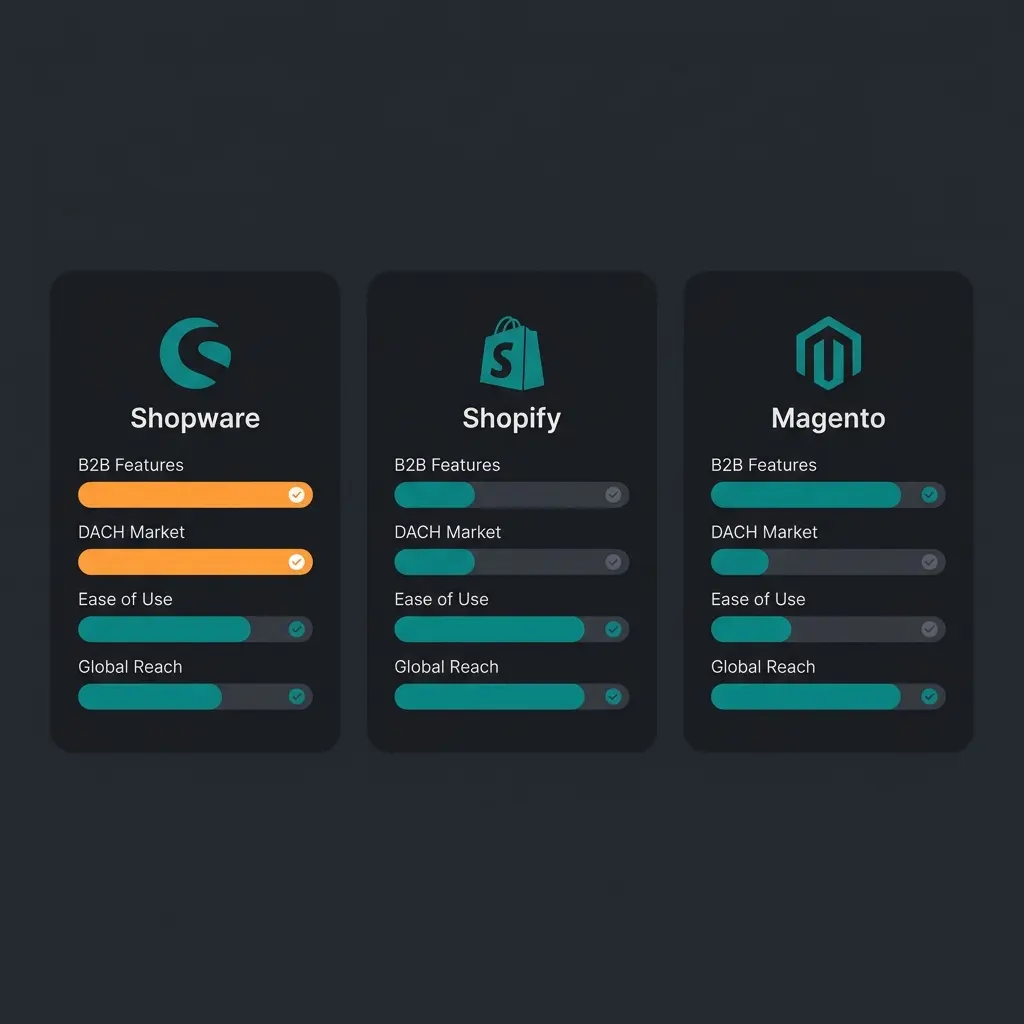
Shopware does not exist in a vacuum. Merchants choosing an edition often compare against Shopify Plus (from USD 2,300/month) and Adobe Commerce (Magento, project-based pricing from ca. USD 22,000/year). The comparison matters because upgrading from Shopware Rise to Beyond sometimes costs more than switching platforms entirely.
| Capability | Shopware Evolve | Shopify Plus | Adobe Commerce |
|---|---|---|---|
| Monthly cost | EUR 2,400 | ca. USD 2,300 | From ca. USD 1,800 |
| B2B native | Yes (B2B Components) | Limited (B2B on Shopify) | Yes (extensive) |
| AI backend tools | AI Copilot | Shopify Magic | Adobe Sensei |
| AI customer consultation | Not included | Not included | Not included |
| Self-hosted option | Yes | No (SaaS only) | Yes |
| DACH market strength | Dominant (12% of top 1K) | Growing | Declining |
| Open source | Community Edition | No | Yes (Open Source version) |
| Headless/API-first | Yes | Yes (Hydrogen) | Yes (PWA Studio) |
The pattern is consistent: no platform includes 24/7 AI product consultation in its native feature set. Shopify Magic and Adobe Sensei mirror Shopware's AI Copilot, focusing on merchant productivity rather than customer-facing advice. The consultation gap is an industry-wide blind spot, not a Shopware-specific weakness. For deeper platform comparisons, see Shopware vs Shopify, Magento vs Shopware, and Shopware alternatives.
The gap in every edition: AI helps merchants, not customers
Shopware's AI Copilot writes product texts, summarizes reviews, generates image keywords, and, since the May 2026 release, can execute administrative tasks autonomously via agentic capabilities. These are backend efficiency tools. They save the merchant time. They do not help the end customer find the right product at 11 PM on a Tuesday.
Digital Sales Rooms in Beyond solve the consultation problem, but only with a human sales rep co-browsing alongside the customer. Perfect for B2B orders worth EUR 50,000. Not scalable for B2C shops where every visitor buying a EUR 200 garden tool deserves advice.
According to Envive.ai, AI-powered product recommendations improve conversion rates by 15-30% and contribute 25-35% of total e-commerce revenue. The product recommendation engine market reached USD 7.42 billion in 2024 with a 36.5% CAGR. This is not a niche. It is the core commercial lever that Shopware's native feature set does not address.
What is missing across all tiers: a solution available 24/7 that advises like a human (as in Digital Sales Rooms) without incurring personnel costs. A customer asking "Is this garden shed suitable for tools and a lawn mower, and does it handle Scottish weather?" gets no answer from any Shopware edition. Neither Evolve nor Beyond offer a native frontend AI that intelligently answers product questions based on product data.
Strategy: the right edition for your business
After years of implementing Shopware across DACH e-commerce businesses, the pattern is clear. The edition decision is not about buying the most features. It is about matching the tier to your actual operations and filling the consultation gap externally.
Recommendations by business type
- B2C under EUR 1M GMV: Community Edition + external AI product advisor. Budget for Rise when you approach the GMV threshold
- B2C above EUR 1M GMV: Rise (EUR 600/month) + AI consultation tool. This covers 80% of B2C merchants' needs
- B2B mid-market: Evolve (EUR 2,400/month). B2B Components are non-negotiable for professional operations. Add external AI for customer-facing consultation
- B2B enterprise with field sales or multi-warehouse: Beyond. Digital Sales Rooms, Multi-Inventory, and Subscriptions justify the premium
- Undecided between Shopware and other platforms: See Shopware vs OXID, Shopware vs PrestaShop, and Shopware vs Spryker
The art is not buying the most expensive license. It is combining the right license with the right external tools. At Signed, a retail e-commerce company, an AI product advisor achieved 18x ROI and 30% more up- and cross-selling. That result came from Rise-level infrastructure plus specialized AI, not from upgrading to Beyond.
Shopware holds 12% market share among Germany's top 1,000 stores and dominates DACH e-commerce. The platform is powerful. The licensing model is fair. The missing piece is not in any edition. It is the automated, 24/7 product consultation layer that turns browsers into buyers.
For the full breakdown of Shopware license costs, including contract terms and migration paths, see our dedicated guide.
Frequently asked questions
Rise (EUR 600/month) covers B2C needs: AI Copilot, Flow Builder, Social Shopping, 8h support. Evolve (EUR 2,400/month) adds B2B Components (quote management, employee roles, approval workflows), Advanced Search with Elasticsearch, Flow Builder Professional with webhooks, and 4h support with phone access. The upgrade is essential for B2B operations.
Yes, but with conditions. Since March 2025, shops exceeding EUR 1 million annual GMV must upgrade to a paid plan (minimum Rise at EUR 600/month) or lose access to the Shopware Store and Account. According to Shopware, GMV reporting is mandatory for all CE users.
Beyond starts from EUR 6,500/month with custom pricing negotiated based on GMV and specific requirements. It includes Digital Sales Rooms, Multi-Inventory, Subscription Commerce, and 24/7 premium support with 1-hour response times and a dedicated account manager.
Shopware's AI Copilot (Rise and above) handles backend tasks: product text generation, review summaries, image keywords, and since May 2026, agentic task execution. It does not advise end customers in the storefront. Digital Sales Rooms (Beyond only) enable live video consultation but require a human sales rep. For automated 24/7 customer advice, external AI solutions are required.
For most merchants focused on conversion and customer consultation, Rise plus an external AI product advisor costs EUR 15,000-22,000/year versus EUR 90,000+ for Beyond. Choose Beyond only if you need Multi-Inventory, Subscription Commerce, or Digital Sales Rooms. According to Digital Commerce 360, AI-driven traffic converts 42% more often than non-AI traffic.
Introduced March 2025, the Fair Usage Policy caps the Community Edition at EUR 1 million annual GMV. Shops exceeding this threshold lose Shopware Store and Account access unless they upgrade to Rise, Evolve, or Beyond. Enforcement has been active since Q3 2025 after a transition period.
Partly. Community Edition handles net prices, customer groups and customer-specific discounts, which covers simple B2B setups. Quote Management, Employee Roles with approval workflows and Individual Pricing belong to B2B Components and require Evolve at EUR 2,400/month or higher.
Yes, and self-hosting makes compliance easier to evidence than a US-based SaaS platform. You control the database location, the backup strategy and the list of sub-processors. Shopware ships the technical basics such as consent handling, data export and deletion, but the operator responsibility stays with you.
Shopware 6.7 requires PHP 8.2 or higher with a 512 MB memory limit, MariaDB 10.11.6+ or MySQL 8.0.22+, and Node 20+ for theme builds, according to Shopware's hosting guide. Budget EUR 150 to 300 per month for managed hosting at production specs. Shared hosting is not viable.
No Shopware edition includes 24/7 AI product consultation. Our AI employees advise customers in real time, know your entire product catalog, and deliver results like 16x ROI at Rasendoktor and 18x ROI at Signed. Works with Rise, Evolve, and Beyond.
Book a free demo
Lasse is CEO and co-founder of Qualimero. After completing his MBA at WHU and scaling a company to seven-figure revenue, he founded Qualimero to build AI-powered digital employees for e-commerce. His focus: helping businesses measurably improve customer interaction through intelligent automation.