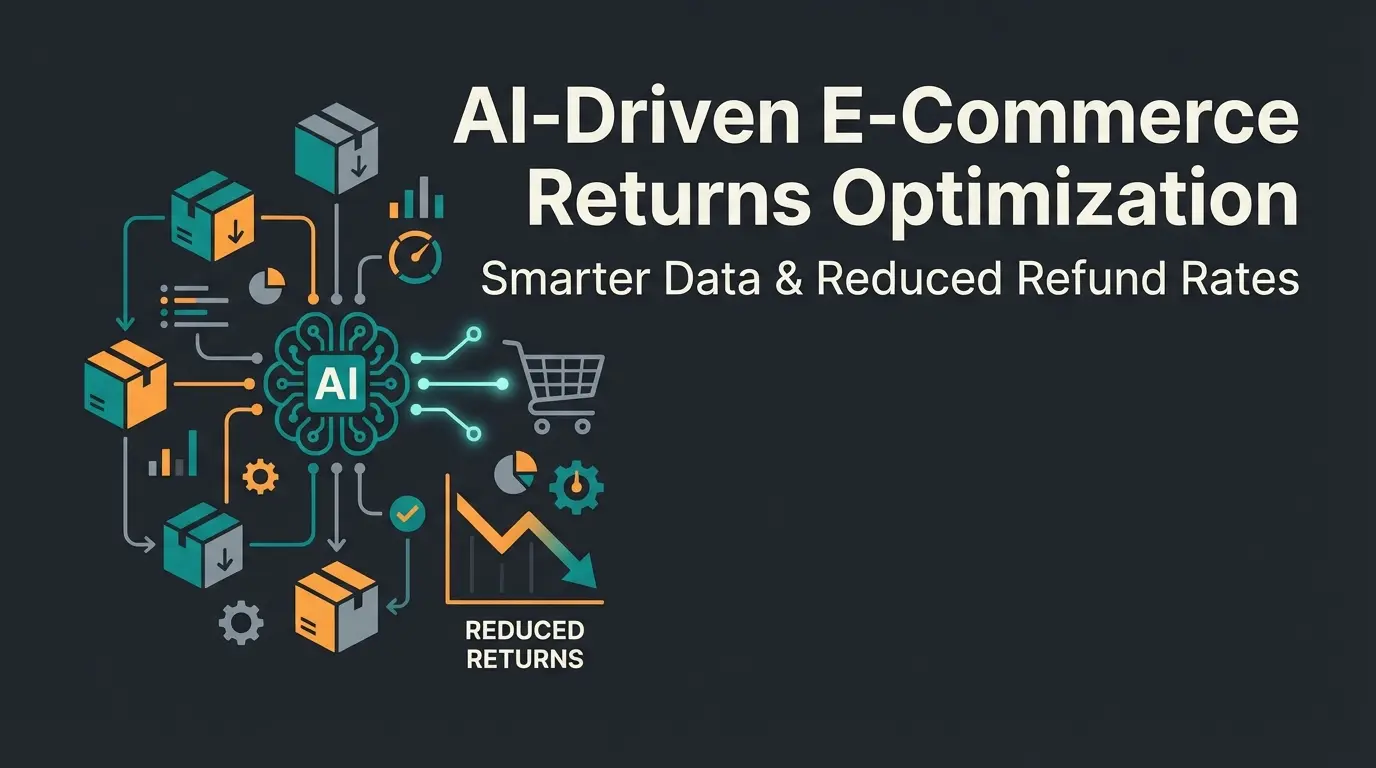
Introduction: The End of Guesswork in E-Commerce
Imagine walking into a specialized outdoor equipment store. You're looking for hiking boots. The salesperson says nothing but silently sticks a picture of socks on your forehead. Annoying, right? Yet this exact scenario plays out daily in thousands of online shops.
Most Shopify merchants leave massive revenue potential untapped because they treat Shopify cross-selling as a pure guessing game. They install an app, activate the 'Frequently Bought Together' widget, and hope for the best. The result? Generic recommendations that confuse customers rather than support them.
In an era where the German e-commerce market is growing again after stagnation—according to bevh.org, 2024 marked the first revenue increase of 1.1% to 80.6 billion euros—simply making products available is no longer enough. Customers expect relevance.
This article isn't another 'Top 10 Apps' listicle. We go deeper. We'll show you why the era of static widgets is ending and why Shopify product recommendations based on genuine, AI-powered consultation will be the biggest lever for your revenue in the coming years. We bridge the gap between technical feasibility and psychological sales strategy.
The Basics: Upselling vs. Cross-Selling Explained
Before diving into advanced strategies, we need to sharpen our terminology. Shopify upselling and cross-selling are often used interchangeably, but the psychological triggers behind them are fundamentally different.
Definitions and Key Differences
- Upselling (The Upgrade): Convincing customers to buy a more expensive, better version of the product they're already considering. Example: A customer views an iPhone 14 with 128 GB, and you offer them the iPhone 14 Pro or the 256 GB variant. Goal: Maximize the value of the main product.
- Cross-Selling (The Complement): Offering a product that complements or necessitates the main product. This is the classic cross-selling online shop approach. Example: The customer buys the iPhone, and you offer them a protective case or AirPods. Goal: Complete the need and increase cart value.
Why This Matters: The Numbers Don't Lie
The statistics are clear. Research from stackedmarketer.com shows that cross-selling and upselling can account for 10% to 30% of e-commerce revenue. Even more impressive: according to envisionhorizons.com and firney.com, Amazon reportedly generates up to 35% of its total revenue through recommendation mechanisms.
But beware: What works for Amazon doesn't automatically work for your Shopify store. And this is where the problem begins.
Percentage of e-commerce revenue attributed to cross-selling and upselling
Share of Amazon's revenue generated through recommendation systems
Potential conversion rate improvement with conversational AI cross-selling
The Problem with Traditional Static Recommendations
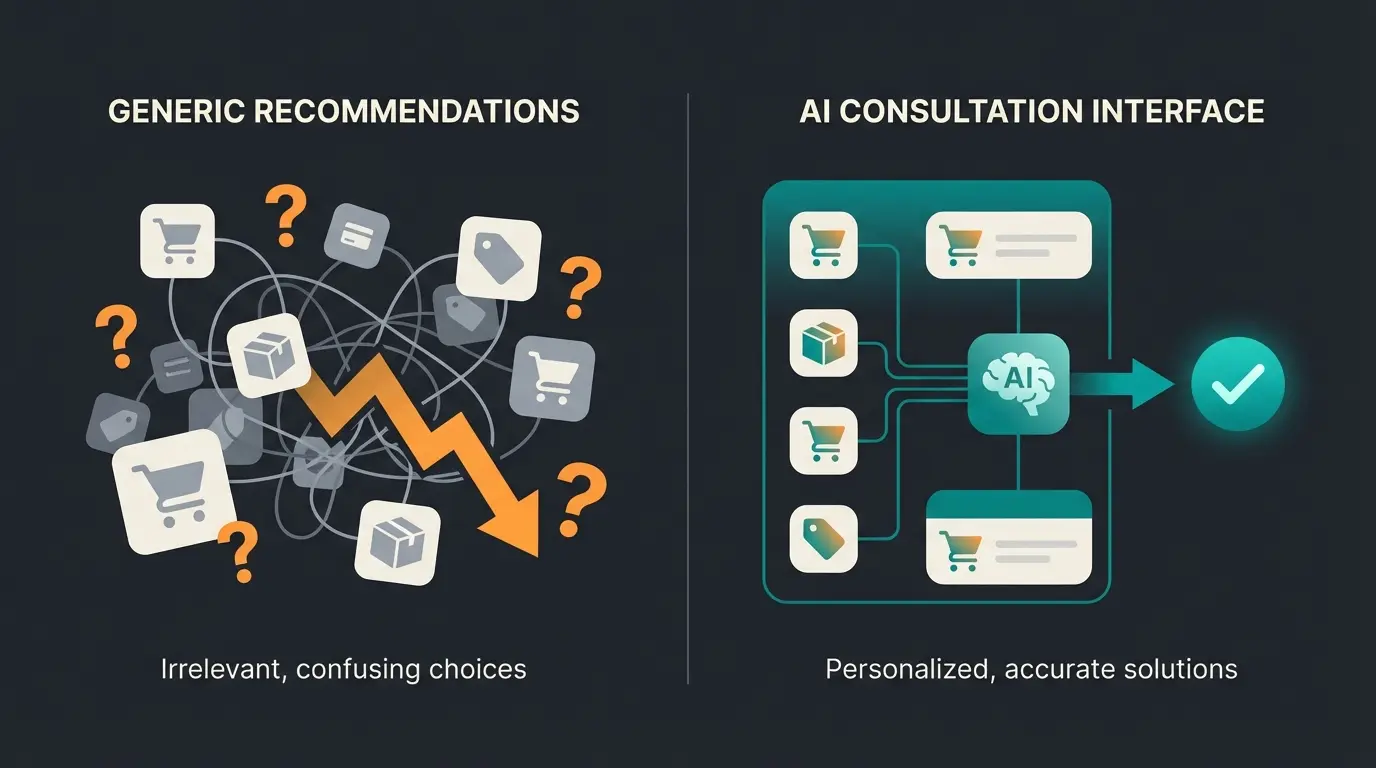
Most Shopify themes and standard apps rely on static widgets. These often operate on simple logic: 'Customer A bought X and Y, so we'll show Customer B Y as well when they view X.' This worked for years but is now hitting its limits.
The Amazon Trap
Amazon has billions of data points at its disposal. When Amazon recommends something, there's a high probability it fits. A typical Shopify store, however, often lacks enough historical data to recognize statistically significant patterns for every product. The result is frequently absurd recommendations—for example, a winter jacket recommended with swimwear just because one customer once bought them together.
The Annoyance Factor of Pop-ups
Many merchants try to compensate for missing relevance through aggression. Pop-ups that appear when clicking 'Add to Cart' are widespread. But user tolerance is declining. According to marketingcharts.com, studies show that up to 73% of consumers find pop-up advertising the most frustrating form of online interaction.
When a customer has just made a purchase decision (added a product to cart), an aggressive pop-up with irrelevant matching accessories isn't service—it's disruption. It interrupts the 'buying flow.'
The Context Problem
Static widgets don't understand context. Consider this scenario: A customer buys a high-end camera. Static cross-selling shows any random lens. The problem? The algorithm doesn't know whether the customer wants to photograph portraits or landscapes. It doesn't know if the customer is a beginner or professional.
This is where you're leaving money on the table. Without context, Shopify cross-selling is mere gambling. Understanding the difference between passive and active approaches is essential for implementing effective AI Cross-Selling strategies.
The New Era: Conversational Cross-Selling
Here lies your opportunity for differentiation. Instead of 'throwing' products at customers, we use automated product consultation. We move away from 'Customers who bought this...' toward 'Based on what you're planning, you need...'
The Concept: AI as a Digital Sales Consultant
Conversational commerce is no longer just a buzzword. With modern AI solutions like ChatGPT integrations in Shopify, we can simulate the in-store dialogue. This approach to AI product recommendations transforms how customers discover complementary products.
| Feature | Static Widget (Old) | AI Consultant (New) |
|---|---|---|
| Trigger | Page load (Passive) | User intent / Question (Active) |
| Personalization | Based on historical mass data | Based on current context |
| Relevance | 'Others also bought...' | 'For your purpose, you need...' |
| User Experience | Advertising / Push | Consultation / Help |
| Conversion Rate | Average (~1-3%) | High (up to 4x higher) |
Scenario: The Difference in Practice
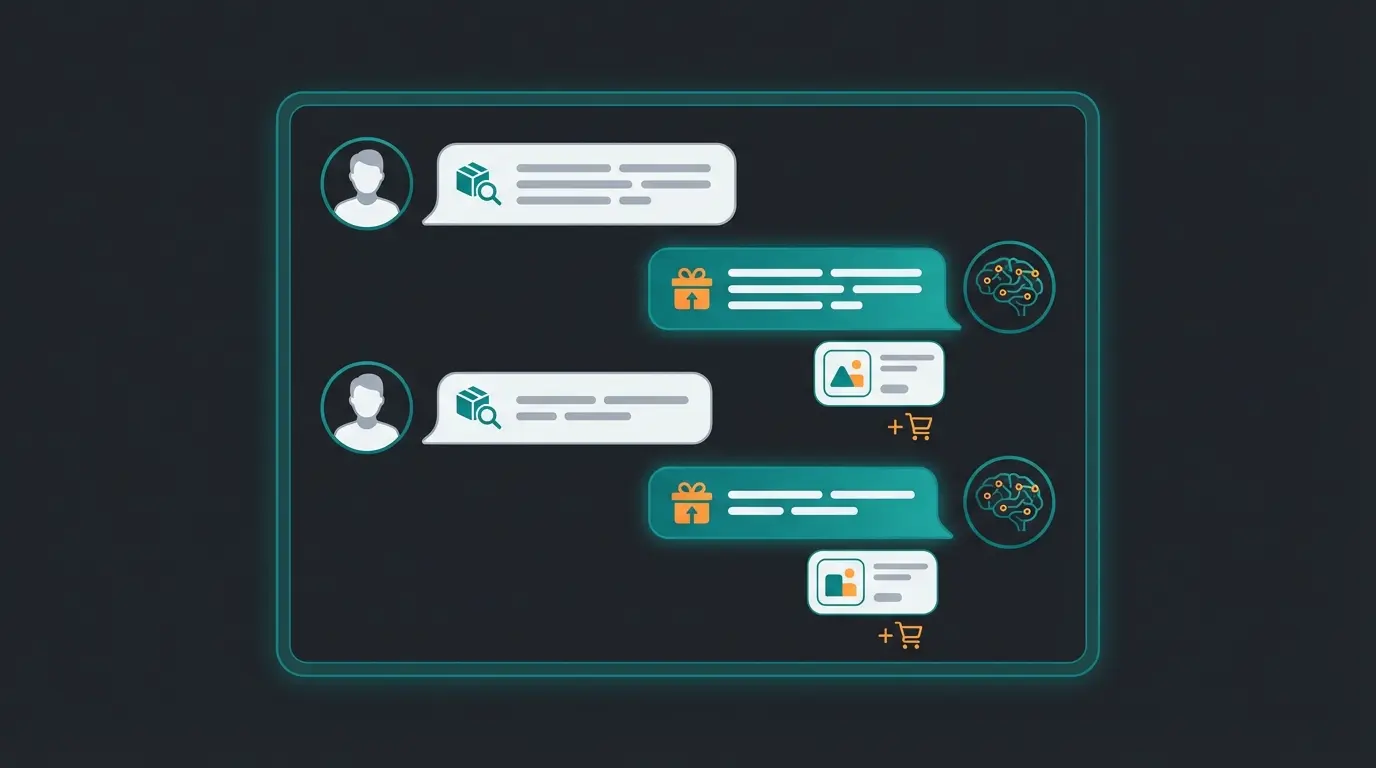
Imagine a home improvement store. The old way: The customer adds a cordless drill to the cart. A widget shows 'Drill bit set.' The customer ignores it because they already have drill bits. The new way (Conversational): An AI chatbot or interactive quiz asks: 'Are you planning to drill in concrete or wood?'
Customer: 'Concrete.' AI: 'For concrete, the standard drill bits in the set often aren't sufficient. I recommend these special hammer drill attachments so you don't get stuck. Should I add them?'
This isn't a sales trick—it's service. And service sells. According to vlinkinfo.com, data shows that conversational commerce can increase conversion rates by up to 30-40%. The key is implementing AI guided selling that genuinely helps customers make better decisions.
Strategic Placements for AI-Driven Cross-Selling
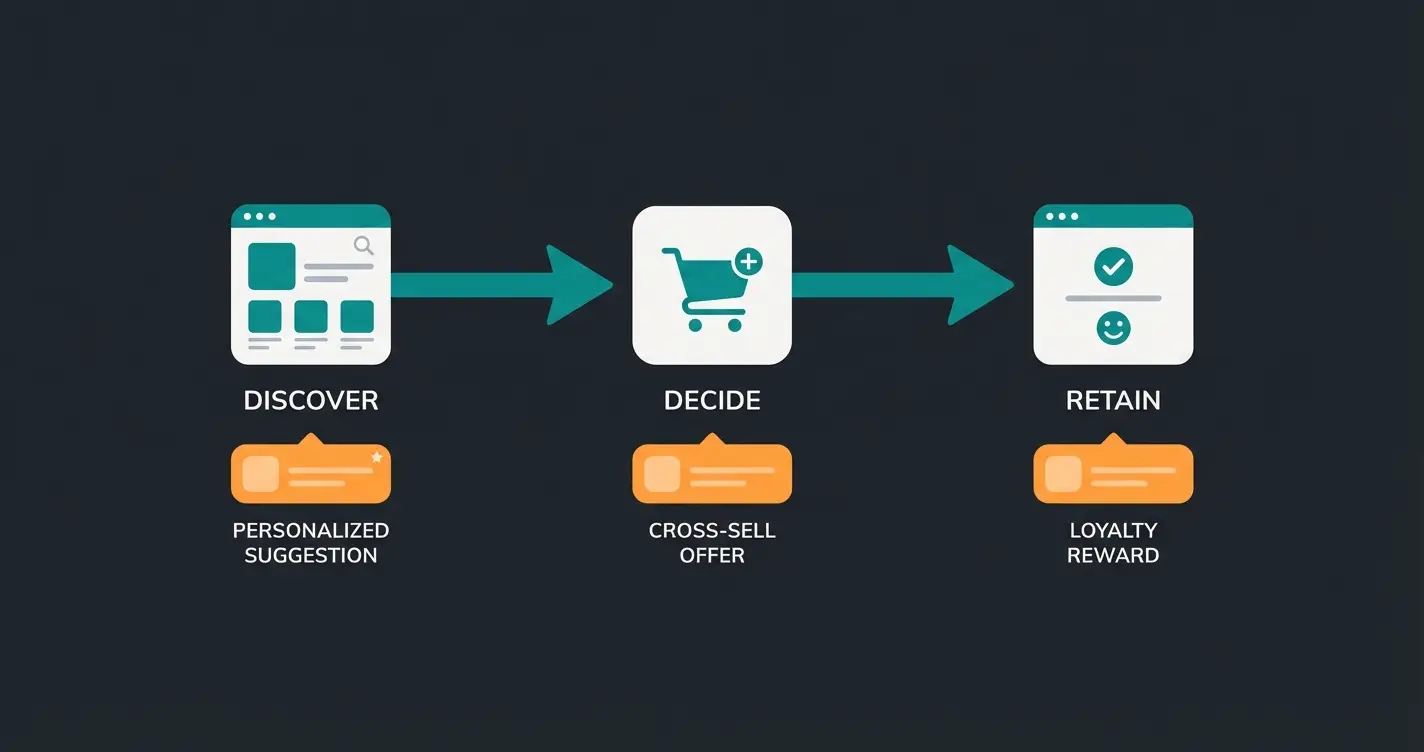
Where do we integrate this new type of Shopify cross-selling? There are three critical phases we need to optimize.
Pre-Purchase (Product Page): Need Generation
Instead of banishing the widget below the product description (where hardly anyone sees it), use 'Conversational Nudges.' The strategy involves a small 'Need help choosing?' button or a chat window that proactively opens when the customer dwells on the page for more than 30 seconds.
Tools like Rep AI and Tidio with Lyro AI can effectively implement this approach. They scan the product catalog and can answer compatibility questions. For example: 'Unsure which size fits? Tell me your height and I'll recommend the right fit.' When the AI recommends the size, it can simultaneously suggest the matching belt. This is where digital product advice truly shines.
In-Cart (Shopping Cart): The Logic Check
The shopping cart is the moment of truth. Here it's not about inspiration but about completeness. The strategy uses AI to find gaps—the 'Missing Link.' When someone buys a flashlight but no batteries, the system should recognize this.
According to ecommercefastlane.com, apps like ReConvert or AfterSell offer strong functionality here. But the trick is in the wording. Instead of 'This goes with it:', write: 'Don't forget the batteries—this model requires 3x AAA.' The goal is to increase cart value by preventing post-purchase frustration from missing accessories.
Post-Purchase: The Psychological Sweet Spot
This is the most underestimated area in the cross-selling online shop strategy. The customer has already bought. Trust is at its maximum, and the barrier (pulling out the credit card) has been overcome.
Why does this work? The customer is in the dopamine rush of the purchase. The strategy involves making a time-limited offer on the 'Thank You Page': 'Since you chose the grill: Here's our bestselling spice set with 20% off if you add it in the next 5 minutes.' Since Shopify Plus and modern apps can edit the checkout, this product can often be added to the existing order with one click ('One Click Upsell') without re-entering payment details. Post-purchase upsells often have conversion rates over 5-10% because the purchase barrier is gone.
Does the product fit technically and thematically? No winter jacket with swimwear.
Is the customer ready? Consultation before purchase, accessories in cart, impulse after purchase.
Does it solve a problem? Batteries for the toy, care products for the shoes.
Stop guessing what your customers need. Let AI-powered product consultation increase your average order value while reducing returns through better recommendations.
Start Your Free TrialImplementation Guide: From Algorithms to Agents
How do you implement this in your Shopify store? Here's a step-by-step plan that goes beyond 'Install App X.'
Step 1: Create a Clean Data Foundation
No AI can provide consultation if your product data is poor. Use Shopify Metafields to logically connect products. Tag products not just with 'Pants' but with attributes like 'Summer,' 'Linen,' 'Casual.' Create lists of products that technically belong together (e.g., Camera A only fits with Lens B). This foundational work enables effective AI product consultation to function properly.
Step 2: Choose the Right Tech Stack
Based on our research, there are clear winners for different approaches:
- For Conversational AI (The Consultant): Recommendation: Rep AI or Tidio (with Lyro AI). These tools integrate deeply into Shopify, scan your catalog, and can proactively start chats to recommend products. Advantage: They learn from your FAQ and product descriptions.
- For Post-Purchase & Funnels (The Optimizer): Recommendation: ReConvert or AfterSell. These are market leaders for optimizing the thank-you page and one-click upsells. Advantage: Simple drag-and-drop editors and deep integration into the Shopify checkout.
- For Bundles (The Classic): Recommendation: Bundles.app or native Shopify Bundles. Strategy: Create 'problem-solver packages' (e.g., 'The Starter Kit for Coffee Lovers') instead of just discounting individual items.
Understanding how AI Chatbots E-Commerce solutions work can help you choose the right technology for your specific needs. For stores operating internationally, consider multilingual AI chatbots to serve customers across different markets.
Step 3: Consider Data Privacy (DACH Special)
In Germany, data privacy isn't a nice-to-have but an existential requirement. According to mstage.at, pay attention to server location—ensure apps are GDPR-compliant. Shopify itself hosts data for European merchants primarily in Ireland, but third-party apps often send data to the USA. Use consent management tools like Pandectes or HulkApps to ensure AI chats and tracking only load after consent. Transparency builds trust.
Step 4: Test and Optimize with A/B Testing
Don't rely on gut feeling. Test 'Static Widget' vs. 'AI Chatbot Recommendation.' Measure not just revenue but also the return rate. Good consultation should reduce returns. Similar strategies work across platforms—if you're also using Shopware, check out our guide on Shopware cross-selling implementation.
Practical Tips for Maximum Impact
Here are three concrete tactics you can implement today to improve your Shopify product recommendations:
Tactic 1: The Sniper Method Instead of Shotgun
Don't show cross-sells to everyone. Use rules: If cart > $100 and product category = 'Electronics' -> then offer warranty extension. If customer = returning visitor -> then show 'New arrivals that match your last purchase.' This approach aligns with best practices for active AI consultation that responds to individual customer behavior.
Tactic 2: Use Social Proof in Cross-Sells
Combine the cross-sell offer with a review. Wrong: 'Here's a belt.' Right: '95% of customers who bought these pants also chose this belt. "Perfect fit," says Max M.'
Tactic 3: Don't Forget Downselling
Sometimes the upsell is too expensive. If the customer rejects the offer, present a cheaper alternative (downsell). This often saves the additional revenue. Understanding the full spectrum of AI consulting e-commerce strategies helps you implement a complete recommendation system.
Platform Comparison: Shopify vs. Alternative Solutions
While Shopify offers robust cross-selling capabilities, it's worth understanding how different platforms approach this challenge. For merchants evaluating their options, our guide on Shopware product recommendations provides valuable comparison points.
The key differentiator isn't the platform itself but how you implement AI product consultation strategies. Whether you're on Shopify, Shopware, or another system, the principles of contextual, conversational cross-selling remain consistent.
Frequently Asked Questions
Upselling encourages customers to buy a more expensive version of their chosen product (iPhone 14 → iPhone 14 Pro), while cross-selling suggests complementary products (iPhone → protective case). Both increase average order value but use different psychological triggers—upselling appeals to the desire for better quality, while cross-selling addresses completeness of need.
AI-powered cross-selling understands context and intent rather than relying solely on historical purchase patterns. While static widgets might show irrelevant recommendations based on limited data, AI can ask clarifying questions, understand customer needs, and suggest truly relevant products—leading to conversion rates up to 4x higher than traditional methods.
Focus on three strategic points: Pre-purchase on product pages with 'help me choose' prompts, in-cart with logical gap-filling suggestions (like batteries for electronics), and post-purchase on thank-you pages where purchase barriers are eliminated and customers are in a buying mindset.
Use consent management tools to ensure AI features only load after user approval. Choose apps that store data within the EU (Shopify hosts European data in Ireland). Always be transparent about data usage, and consider working with GDPR-compliant AI providers specifically designed for European markets.
Clean, structured product data is essential. Use Shopify Metafields to add detailed attributes beyond basic categories—include compatibility information, use cases, and customer segments. The more context your AI has about product relationships, the better its recommendations will be.
Conclusion: Help Instead of Hype
E-commerce is transforming. Customers are immune to crude advertising but hungry for guidance. Shopify cross-selling in 2025 is no longer an advertising measure—it's a service.
By switching from static pop-ups to intelligent, context-based consultation, you achieve three things: First, you significantly increase cart value. Second, you differentiate yourself from faceless marketplaces like Amazon. Third, you build a relationship with customers because you help them find the right product instead of just selling them any product.
Start small. Install an AI chatbot, feed it your best sales arguments, and watch as visitors become consulted customers. The future of e-commerce belongs to those who understand that the best recommendation isn't about showing more products—it's about understanding what customers actually need.
Join leading Shopify merchants who've discovered that AI consultation doesn't just increase revenue—it builds lasting customer relationships through genuine helpfulness.
Get Started Free
Lasse is CEO and co-founder of Qualimero. After completing his MBA at WHU and scaling a company to seven-figure revenue, he founded Qualimero to build AI-powered digital employees for e-commerce. His focus: helping businesses measurably improve customer interaction through intelligent automation.