Shopware Cross-Selling: From Standard Recommendations to AI Consultation
Master Shopware cross-selling in 2025. Learn how to transform passive product displays into AI-driven consultation that boosts AOV and conversions.

Introduction: The End of Passive Recommendations
Have you ever wondered why the friendly salesperson in a retail store often sells more than your online shop? They don't passively wait for customers to randomly find the right accessories. They ask: "What do you plan to use this camera for?" and then place the perfect lens right beside it.
In the e-commerce landscape of 2025, the classic "Customers also bought" algorithm is no longer sufficient. Attention spans are shrinking, "Banner Blindness" is increasing, and standard Shopware cross-selling in Shopware 6 is often ignored completely. For more details, see our ecommerce conversion optimization. This guide isn't another dry manual. We dive deep into Shopware cross-selling strategies, analyze why standard rules often fail, and show you how to transform your store from a passive display into an active AI consultant.
According to Oberlo and Tidio, the average add-to-cart rate in e-commerce was only around 6% to 7% worldwide in 2024. This means: out of 100 visitors, only a handful actually add something to their cart. When they do, that's the critical moment for cross-selling.
But the reality in many Shopware stores looks different: Below a high-quality 4K TV, random cables, a cheap universal remote, and perhaps a toaster are displayed—simply because the algorithm found a correlation in the "Electronics" category. The problem: Standard cross-selling is static. It doesn't respond to the user's context. The solution: Shifting from "Display" (showing) to "Dialogue" (consulting).
In this article, you'll learn how to use Shopware 6's powerful built-in tools and where you need to integrate external AI tools to achieve real average order value (AOV) increases. Whether you're looking for AI product consultation solutions or want to understand how AI Cross-Selling moves can transform your business, this guide covers everything you need to know.
The Basics: How Standard Shopware Cross-Selling Works
Before we break the rules, we must master them. Shopware 6 offers solid "out-of-the-box" tools for cross-selling that are deeply embedded in the core. Understanding these is essential to recognize their limitations.
Manual Assignment: The Handcrafted Approach
The simplest form of cross-selling in Shopware is manual assignment. As documented by Firebear Studio and the official Shopware documentation, this approach gives you complete control over product relationships.
- How it works: You open a product in the Admin area (`Catalogs > Products > Tab "Cross-Selling"`), create a new group (e.g., "Accessories"), and manually select specific items.
- Advantage: 100% control. You know exactly that this case fits this smartphone.
- Disadvantage: Enormous maintenance effort. If the case is sold out or you have 5,000 products, this method becomes an administrative nightmare.
- Best Practice: Use this only for your top 10 bestsellers or exclusive bundles where the margin justifies the manual effort.
Dynamic Product Groups: The Automation Layer
This is where Shopware 6 shows its strength. Instead of linking products individually, you define rules using the Rule Builder. According to Bay20 and Shopware's official guides, this method enables scalable cross-selling management.
Functionality: You create a "Dynamic Product Group" under `Catalogs > Dynamic Product Groups`. Example rule: "Price is greater than €50" AND "Category equals 'Sneakers'" AND "Manufacturer equals 'Adidas'". You then assign this group in the Cross-Selling tab of a product. Shopware automatically fills the slider in the frontend with all products that match this rule.
The "Stream" Effect: As soon as you add a new Adidas sneaker over €50, it automatically appears in the cross-selling of all linked products. No manual work required. The Webkul documentation confirms that Shopware allows complex nesting with `AND` / `OR` conditions as well as sub-conditions for sophisticated filtering.
Cross-Selling in Cart & Off-Canvas Menu
A common misconception: By default, Shopware displays cross-selling items primarily on the Product Detail Page (PDP). Many merchants leave revenue on the table because they ignore cross-selling in the shopping cart or in the off-canvas menu (the window that opens after clicking "Add to Cart").
Why here? The customer has already made a purchase decision (commitment). Psychologically, they are now most receptive to small additional purchases ("impulse buys"). As noted by Shopware's checkout documentation and iCreative Technologies, the cart stage is prime real estate for conversion, especially on mobile devices where shopware mobile optimization directly impacts purchase completion.
Implementation: In standard Shopware, the display in the off-canvas menu is often limited or requires specific theme adjustments. Many merchants use plugins to display "Accessories directly in cart." Solutions from Ditegra and the Shopware Store offer plugins specifically designed for cart-based cross-selling.
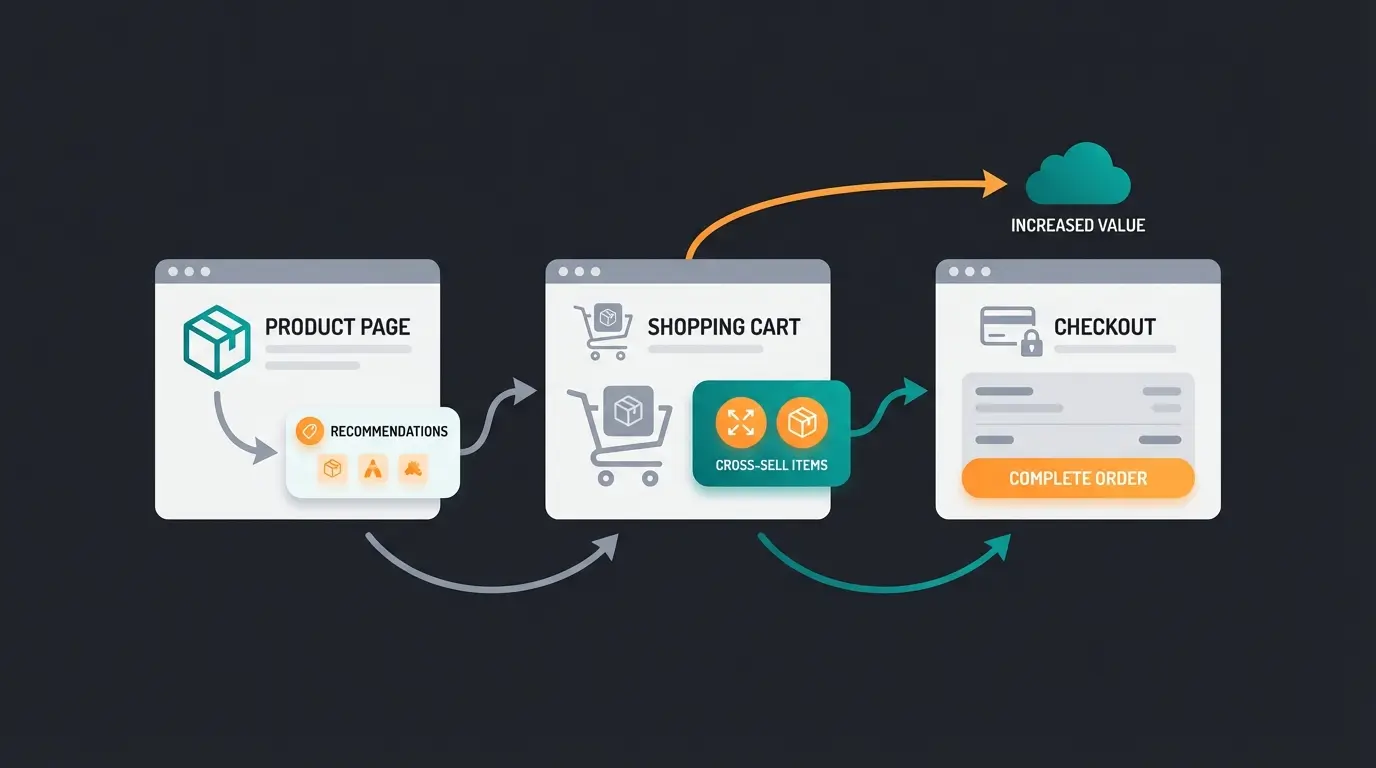
The Strategy Gap: Why Passive Cross-Selling Fails
If Shopware has such powerful tools like the Rule Builder, why are conversion rates for cross-selling often so low? The answer lies in understanding the fundamental limitations of rule-based systems.
The Relevance Problem ("Dumb Rules")
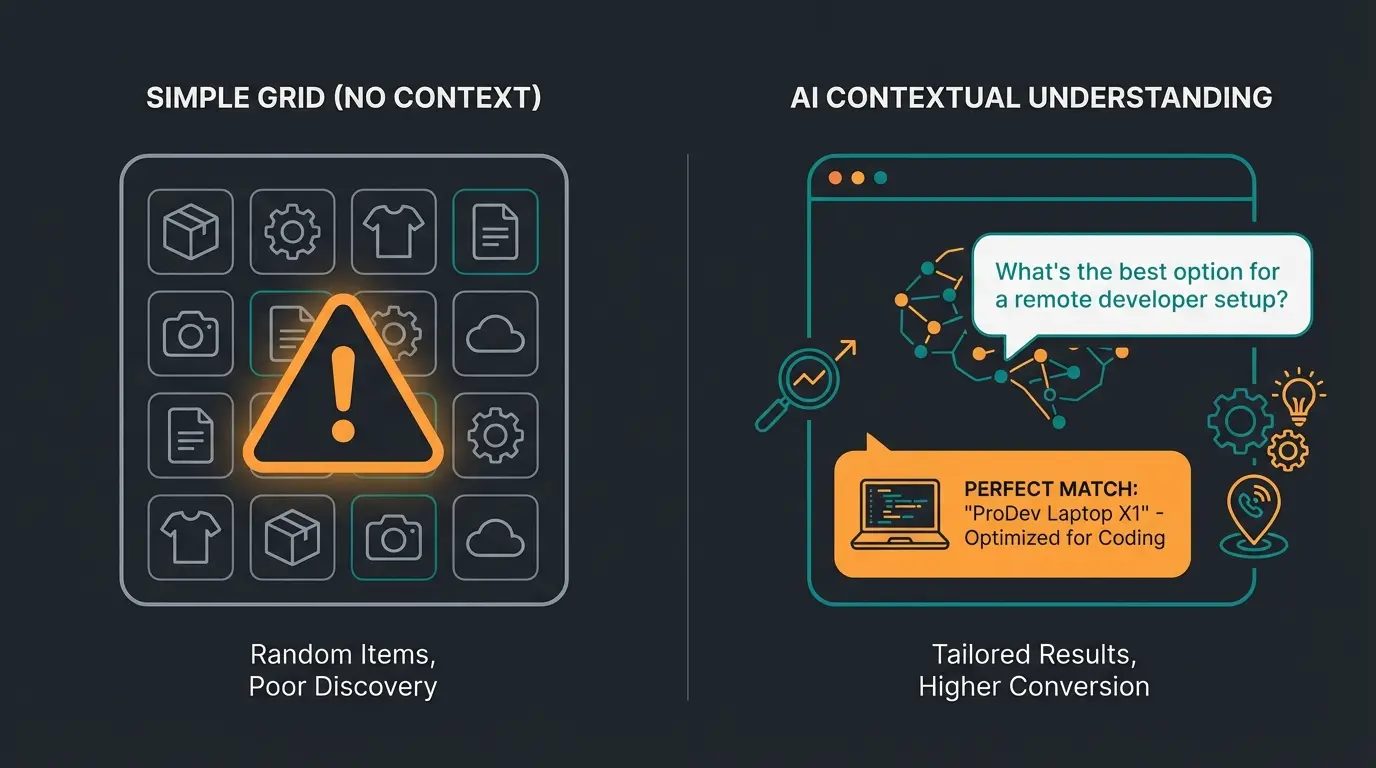
Dynamic Product Groups are logical, but not intelligent. Consider this scenario: You sell a high-end DSLR camera. Your rule: Show products from the "Camera Accessories" category. The result: The customer sees a lens bag that doesn't fit that camera, or a tripod designed for a different weight class.
The consequence: The customer loses trust in the recommendations ("That doesn't even fit") and ignores the section completely. This phenomenon is called Banner Blindness. The problem isn't the technology—it's that rule-based systems cannot understand context, ultimately contributing to shopware cart abandonment.
The Missing Consultation ("Consultation Void")
In brick-and-mortar retail, a salesperson would never just silently point to a shelf full of accessories. They would ask: "Are you planning to also shoot videos with this camera? Then you absolutely need this external microphone." Online, this dialogue is missing.
Understanding the difference matters: While up-selling sells an upgrade (better version), cross-selling sells complementary products. As Nacelle and CSell research shows, customers don't buy cross-sells because they are displayed; they buy them because they solve a problem or complete the experience (Completion Principle).
The gap: Most Shopware stores present products. Successful stores present solutions. This is where intelligent product consultation becomes essential for bridging the consultation void.
Only a fraction of visitors actually add products to cart (2024 global average)
Users ignore irrelevant product recommendations after repeated exposure
A significant portion of returns stem from incompatible cross-sold products
The Future: AI-Driven Product Consultation
Here lies your opportunity to differentiate from the competition. Instead of just defining technical rules, we use AI (Artificial Intelligence) to digitize the "expert advisor." This represents your "Blue Ocean"—the consultative approach that none of the current top-ranking content addresses.
From Display to Dialogue
Imagine if cross-selling wasn't a static slider at the end of the page, but an interactive element. With AI-powered sales consultants, your store can engage customers in meaningful conversations about their needs.
- Standard approach: "Customers also bought: HDMI Cable."
- AI approach: "Since you're buying this 4K TV: Do you have an HDMI 2.1 cable? Only with that can you actually use the 120Hz refresh rate."
This shift from passive display to active dialogue is what separates modern e-commerce leaders from the competition. The concept mirrors the German idea of Fachberatung (expert consultation)—standard Shopware cross-selling is like a shelf label; AI consultation is like having a friendly, knowledgeable shop assistant.
Compatibility Through LLMs (Large Language Models)
Modern AI models can "read" and understand product descriptions, enabling capabilities that rule-based systems simply cannot match.
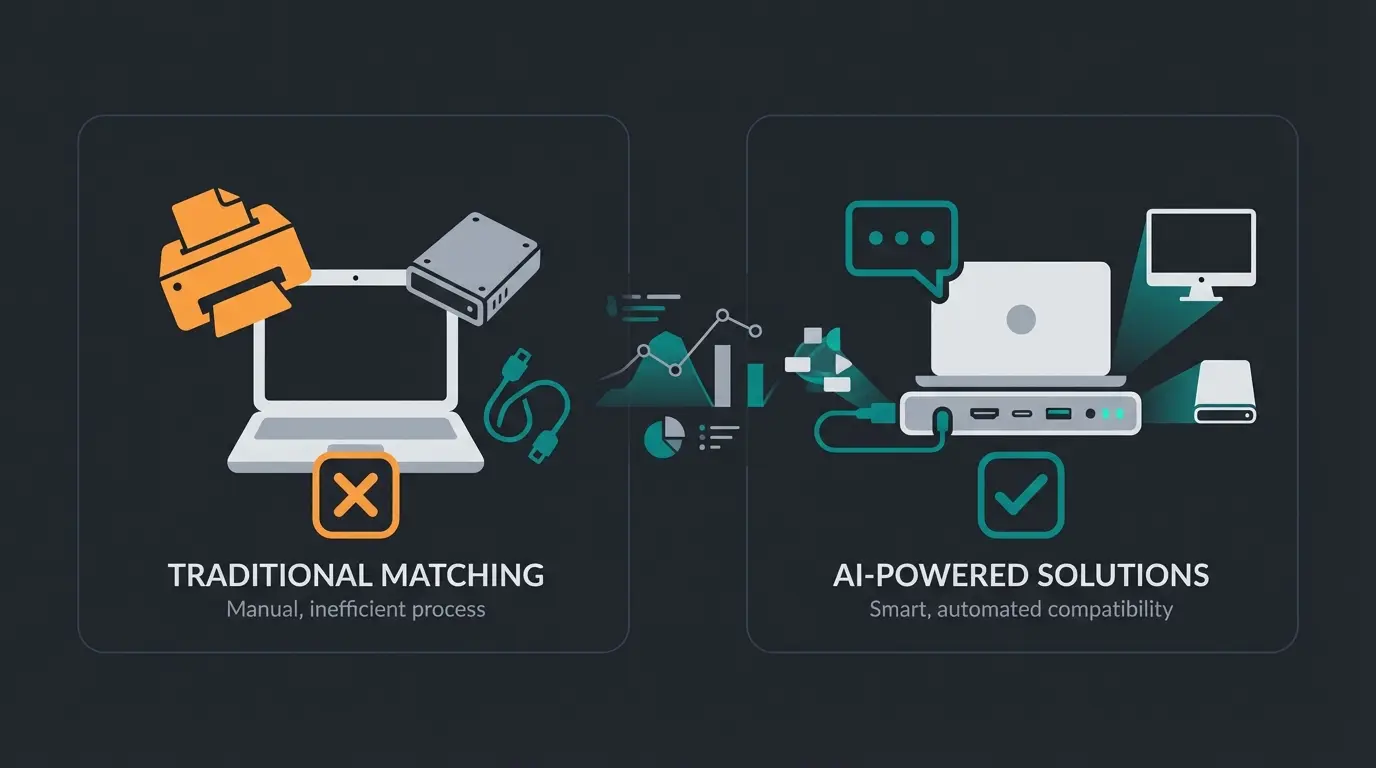
Technical Compatibility: An AI can analyze whether the motherboard (Socket AM5) actually fits the processor. Dynamic Product Groups often fail here due to missing maintained attributes. An AI understands the context from the description text. This is where AI-driven consultation truly shines.
Return Prevention: Wrong accessories are one of the main reasons for returns. AI-powered cross-selling acts as a "gatekeeper" and recommends only technically validated combinations. When you implement AI-powered product consultation, you're not just increasing sales—you're reducing costly returns.
Shopware AI Copilot vs. True Consultation
Shopware has already introduced strong features with the AI Copilot, as documented by Communicode and Shopware's AI capabilities page:
- Checkout Messages: Personalized messages after purchase
- Review Summaries: AI-generated summaries of customer reviews
- Content Generation: Texts for Shopping Experiences and CMS pages
However: Currently, the standard Copilot still lacks the interactive product advisor on the detail page. This is where specialized solutions ("Guided Selling" or external AI plugins) come into play to close this gap. According to the Brainstreamtechnolabs analysis and Shopware's plugin marketplace for Product Advisors and Guided Selling tools, there's significant market demand for these solutions.
Stop leaving revenue on the table with irrelevant product recommendations. Discover how AI-powered cross-selling can boost your AOV and reduce returns.
Start Free TrialPractical Guide: Implementing High-Converting Strategies
How do you implement this in Shopware 6? Here's a 3-stage plan, from "Basic" to "Advanced AI." Each strategy builds on the previous one, allowing you to incrementally improve your cross-selling effectiveness.
Strategy 1: The "Essential Add-on" (The Must-Have)
Goal: Nobody leaves the shop without the necessary accessories. This is the foundation of any effective cross-selling strategy.
- Use case: Batteries for toys, light bulbs for lamps, care products for leather shoes.
- Implementation in Shopware: Use Manual Assignment for these critical items. Don't rely on rules for essentials.
- Rename the cross-selling group. Instead of "Accessories," call it: "Required for Operation" or "Don't Forget!"
- Pro Tip: Place these items prominently directly below the "Add to Cart" button or as a modal popup when clicking the button (may require a plugin).
Strategy 2: The "Bundle" (The Convenience Play)
Goal: Increase average order value (AOV) through sets. This strategy leverages the psychology of convenience and perceived value.
- Use case: "Starter Kit" (Camera + Bag + SD Card).
- Implementation in Shopware: Use Dynamic Product Groups.
- Create a rule in the Rule Builder: `Category = Bag` OR `Category = Memory Card`.
- Link this group to all cameras.
- Psychological Trick: Use strikethrough prices. When the bundle is cheaper than the individual parts, you trigger the reward center in the customer's brain.
As Perceptive Analytics research shows, bundling creates a strong psychological incentive that goes beyond simple discounting.
Strategy 3: The AI Assistant (The Excellence Standard)
Goal: Scale consultation competence and reduce returns. This is where you truly differentiate from competitors. Consider implementing AI sales assistants to transform your customer experience.
Concept: A widget on the Product Detail Page (PDP) that asks questions or provides context-based tips. This creates the dialogue that static cross-selling cannot achieve.
- Guided Selling Plugins: There are extensions in the Shopware Store (e.g., "Guided Selling" or "Product Advisor") that enable question-and-answer paths.
- Integration: These tools often use Dynamic Product Groups logic in the background but present them as a dialogue ("Are you looking for accessories for beginners or professionals?").
- The AI Boost: Advanced plugins use OpenAI interfaces to generate live recommendations based on the cart that go beyond simple filters.
For businesses exploring the broader landscape of KI E-Commerce, AI-powered consultation represents the next frontier in customer engagement and conversion optimization.
Hand-picked products, full control but time-intensive. Best for top sellers and exclusive bundles.
Rule-based automation using filters. Efficient but lacks context understanding—'dumb' rules.
Interactive, intent-based recommendations. Understands context, ensures compatibility, drives revenue.
Comparison: Standard Shopware vs. AI Consultant
To illustrate the added value of the AI strategy, this direct comparison helps. Use these arguments when you need to secure budgets for AI tools. Understanding these differences is crucial for building an AI-powered consultation hub in your organization.
| Feature | Standard Shopware (Manual/Dynamic) | AI Product Consultation |
|---|---|---|
| Setup Effort | High (Manual) to Medium (Define rules) | Low (AI learns from data/texts) |
| Product Relevance | Often inaccurate ("Dumb Rules") | High (Context & Intent-based) |
| Interaction | Passive (Slider waits for click) | Active (Widget asks/advises) |
| Maintenance | Must be adjusted with assortment changes | Automatic adaptation for new products |
| Customer Feeling | "I'm being bombarded with ads" | "I'm being advised" |
| Return Risk | High (Incompatible accessories possible) | Low (AI checks technical data) |
This comparison clearly shows why forward-thinking merchants are investing in AI-powered product advice. For a broader perspective on ecommerce conversion optimization, understanding how cross-selling fits into your overall CRO strategy is essential. For Shopware-specific tactics, see our guide to shopware conversion optimization. The ROI isn't just in increased sales—it's in reduced returns, improved customer satisfaction, and sustainable competitive advantage.
Optimal Cross-Selling Placement Strategy
Where you display cross-selling matters as much as what you display. Statistics and best practices reveal optimal placement strategies for maximum conversion:
- Product Detail Page: Best for accessories requiring explanation. Customers are in research mode and open to learning about complementary products.
- Off-Canvas Cart: Ideal for impulse purchases (low price, high utility). The customer has committed and is psychologically primed for additions.
- Checkout Success Page: Perfect for services (warranty extensions) or "Next Purchase" coupons. Post-purchase is the moment of highest trust.
FAQ: Common Questions About Shopware Cross-Selling
Dynamic Product Groups are based on rigid rules (e.g., "Same Category"). If a product is miscategorized, it appears incorrectly. AI Cross-Selling analyzes the content and user behavior to recognize connections that aren't explicitly defined in rules (e.g., stylistic matching for furniture, technical compatibility for electronics).
Shopware 6 offers features with the AI Copilot such as AI-generated content and checkout messages. However, a fully automatic, dialogue-based product consultation on the detail page is (as of 2025) usually solved through third-party plugins or external services that connect via API.
By switching from "Similar Items" (alternatives) to "Accessories" (complementary) and ensuring compatibility is guaranteed. AI tools can match technical attributes (e.g., diameter, voltage) before making a recommendation, significantly reducing incompatibility-related returns.
Statistics show: 1) Product Detail Page for accessories requiring explanation, 2) Off-Canvas Cart for impulse purchases (low price, high utility), 3) Checkout Success Page for services (warranty extension) or "Next Purchase" coupons.
AI models can analyze product descriptions, specifications, and attributes to understand compatibility requirements that would be impossible to capture in simple rules. For example, an AI can verify that a motherboard socket matches a processor, or that a camera bag's dimensions fit a specific camera body—all by understanding the context from product data.
Conclusion: Transform Your Shop into a Consultant
The market is full of shops that list products. But it's hungry for shops that provide guidance and orientation. This is where the opportunity for AI Selling becomes clear.
Standard Shopware cross-selling with Dynamic Product Groups is a powerful tool for basic automation and should be present in every shop. It's the foundation. But to truly grow in 2025 and significantly increase your conversion rate, you need to take the next step.
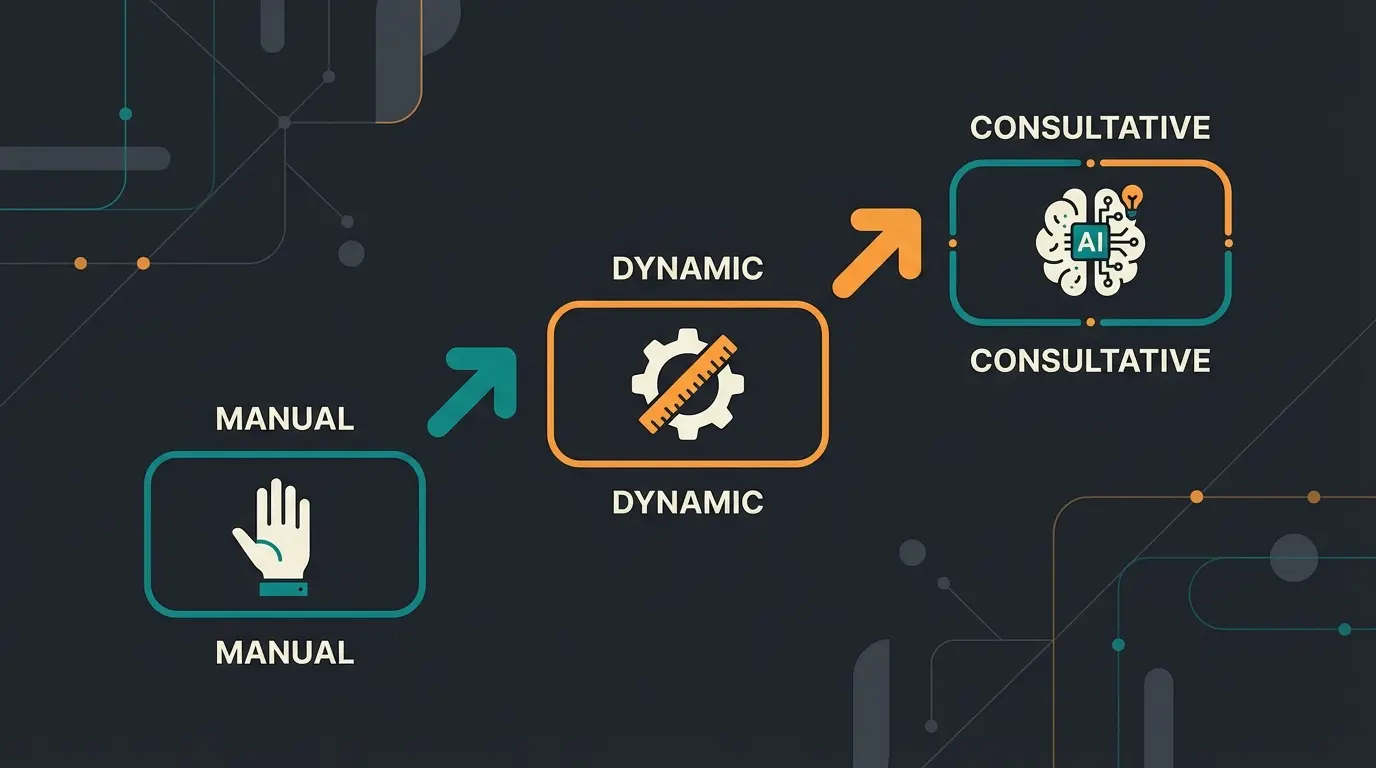
The Evolution of Cross-Selling summarized:
- Yesterday: Manual Assignment (Time-intensive, but precise for small catalogs)
- Today: Rule-based Groups (Efficient, but "dumb"—lacks context understanding)
- Tomorrow: AI-powered Consultation (Interactive, relevant, revenue-driving)
Start today by reviewing your cross-selling strategy. Are your recommendations just "fillers" on the page, or do they actually help the customer? If not, it's time for an upgrade to intelligent product consultation.
The shops that will win in 2025 and beyond are those that transform from passive product displays into active advisors. They're the ones implementing AI to create the online equivalent of that friendly, knowledgeable retail salesperson who knows exactly what accessories you need and why. That transformation starts with understanding the limitations of your current approach and embracing the AI-driven future of e-commerce.
Join leading e-commerce brands using AI-powered consultation to transform browsers into buyers. See how intelligent recommendations can boost your AOV by 25% or more.
Get Started Now
Lasse is CEO and co-founder of Qualimero. After completing his MBA at WHU and scaling a company to seven-figure revenue, he founded Qualimero to build AI-powered digital employees for e-commerce. His focus: helping businesses measurably improve customer interaction through intelligent automation.