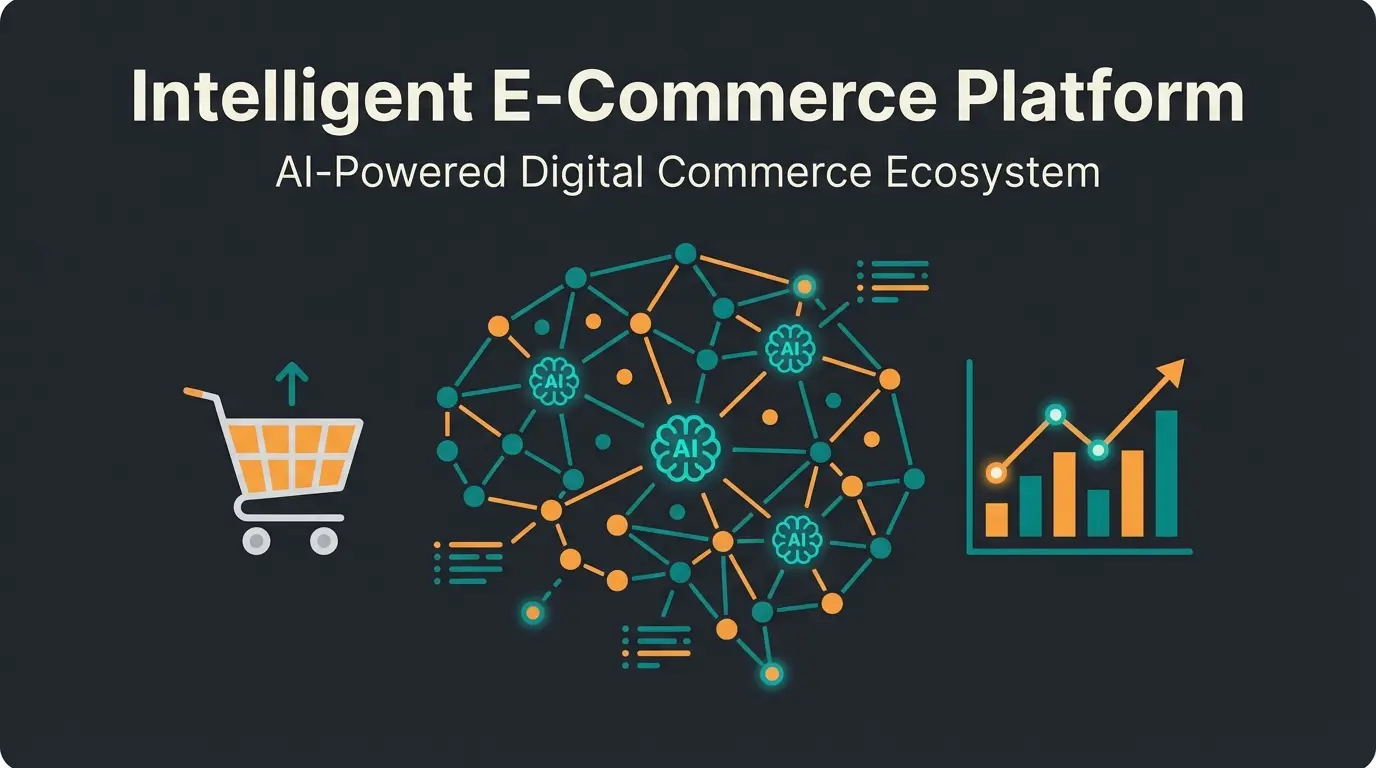
Why Berlin is a top choice for Shopware e-commerce
Berlin combines Germany's largest tech talent pool with competitive agency rates, making it the strongest location for Shopware development. Over 2,500 tech startups operate in the capital, with 500 new ones launching every year according to the Berlin Startup Ecosystem Report 2025. That density creates a Shopware ecosystem you won't find in smaller cities.
I've worked with agencies across Germany. Berlin stands out for three reasons: proximity to e-commerce events like K5 Future Retail Conference and E-Commerce Berlin Expo, access to developers who actually understand headless architecture, and a startup culture that pushes agencies to innovate rather than recycle templates from 2019.
The numbers confirm this. Berlin's tech ecosystem employs 94,000 people and holds a combined startup valuation of EUR 169 billion (Berlin Partner). For Shopware specifically, that translates into a talent pool of frontend developers, ERP integration specialists, and data engineers who can handle complex B2B setups without outsourcing half the project.
- Talent density: 94,000 tech employees in Berlin, compared to roughly half that in Munich's startup scene
- Event access: K5, E-Commerce Berlin Expo, and dozens of Shopware meetups happen locally
- Competitive rates: Berlin agencies charge 10-15% less than Munich equivalents at comparable quality
- In-person collaboration: Complex AI integrations and ERP migrations benefit from face-to-face workshops
If you're comparing cities, we've covered Shopware agency Cologne, Shopware agency Munich, Shopware agency Hamburg, and Shopware agency Düsseldorf. Each city has its strengths. Berlin's is scale. For a broader overview of what to look for in any location, the Shopware agency overview covers the fundamentals.
Core Shopware 6 services a Berlin agency should offer
A competent Shopware agency in Berlin should deliver five core services: Shopware 6 migration, custom theme development, plugin development, headless commerce implementation, and ongoing maintenance with SLA guarantees. If any of these is missing from the portfolio, keep looking.
Shopware leads the German e-commerce platform market. According to Shopware's press release, 11.5% of Germany's top 1,000 revenue-generating online shops run on Shopware, making it the number one platform for four consecutive years as of Q1 2026. PayPal acquiring a 41% stake in the company in October 2025 underlines the platform's trajectory. That market position means the agency you choose should have deep, certified expertise.
| Service | What it includes | Typical timeline |
|---|---|---|
| Shopware 6 migration | Data audit, SW5 to SW6 transfer, plugin mapping, performance testing | 8-12 weeks |
| Custom theme development | Brand-aligned storefront, responsive design, Shopping Experiences setup | 4-8 weeks |
| Plugin and API development | Custom extensions, ERP/CRM integrations, payment and shipping modules | 2-6 weeks per plugin |
| Headless commerce | API-first frontend (PWA/Next.js), CMS decoupling, omnichannel setup | 10-16 weeks |
| Maintenance and SLA | Security patches, Shopware updates, monitoring, guaranteed response times | Ongoing monthly |
| SEO for Shopware | Technical SEO audit, structured data, page speed, content strategy | Ongoing or project-based |
Beyond the technical build, look for agencies that offer Shopware consulting as a standalone service. The best agencies start with a strategy phase before writing a single line of code. And once the shop is live, ongoing Shopware maintenance keeps it secure, fast, and up to date. For search visibility specifically, a Shopware SEO agency can handle the technical optimization that most generalist developers overlook. Check the Shopware partner directory to verify certification levels, or read our Shopware partner guide for a breakdown of what each tier means.
The AI advantage: beyond traditional Shopware development
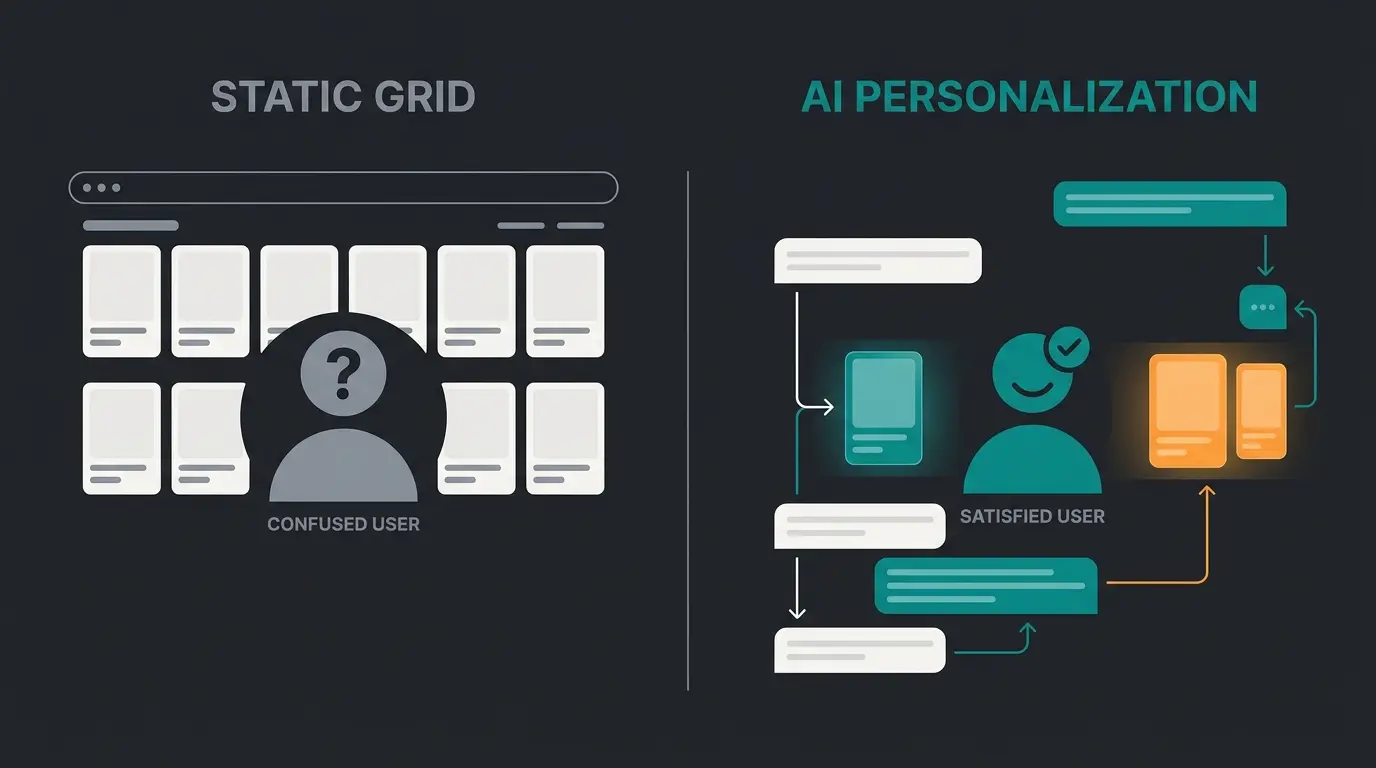
The most impactful upgrade a Shopware agency can deliver in 2026 is AI-powered product consultation. Stores using AI sales assistants see 35% higher cart values and 60% higher checkout rates compared to passive product displays. These aren't projections. These are numbers from live deployments.
Most agencies will tell you they "do AI." Press them and it usually means auto-generated product descriptions or a rule-based support widget. That's backend efficiency. It saves you time but gives the customer nothing new.
The shift that matters is on the frontend. A KI-Mitarbeiter trained on your entire product catalog doesn't just answer "Where is my package?" It asks the customer what they need, understands context, remembers preferences within the session, and recommends products with the kind of specificity a good in-store salesperson would. The difference between a traditional support tool and an AI sales assistant is the difference between a FAQ page and a personal shopper.
Gartner's VP Analyst Sandy Shen put it this way in their 2025 commerce report: "By 2028, 70% of customer interactions in digital commerce will involve conversational AI, up from under 5% in 2023." That's a 14x increase in five years. The Gartenfreunde success story shows what early adoption looks like: a garden and wellness retailer deployed AI product consultation and saw a 7x higher conversion rate, with a 45% click-through rate on AI recommendations. Their ROI hit 6x.
Rasendoktor, a lawn care specialist, took it further. 100% automation of product consultation. 16x ROI. 40% reduction in support costs. The pattern is consistent across verticals.
Globally, AI-assisted shoppers convert at rates 4x higher than unassisted ones (12.3% vs 3.1%), according to Adobe Analytics holiday data from 2025. And 77% of e-commerce professionals now use AI tools daily, up from 69% in 2024, yet only 7% have fully scaled deployments. That gap is the opportunity. Learn more about AI product consultation and how it integrates with Shopware 6.
How to evaluate a Shopware agency in Berlin
Evaluate a Berlin Shopware agency across six dimensions: Shopware certification level, portfolio of live stores, technical stack expertise, communication style, post-launch support terms, and measurable business results from past projects. Skip any agency that can't provide concrete numbers.
Certification matters more than most buyers realize. Shopware has over 1,200 certified agencies globally (Shopware Partner Directory). The tiers range from entry-level to Platinum. A higher tier doesn't automatically mean better work, but it does mean the agency has invested in training and passed Shopware's technical assessments. At minimum, you want a certified partner.
- Shopware certification: Verified partner status (Silver, Gold, or Platinum)
- Live portfolio: At least 4 active Shopware 6 stores you can visit and test
- Technical depth: Experience with headless, API integrations, and ERP connections
- Communication: Dedicated project manager, regular sprint reviews, clear escalation paths
- Post-launch SLA: Defined response times, update schedule, and monitoring setup
- Measurable outcomes: Case studies with specific conversion, revenue, or efficiency numbers
One thing I've learned from years in this industry: the best indicator isn't the pitch deck. It's what happens three months after launch. Ask for references you can actually call. And if you're weighing a Shopware freelancer against a full agency, consider the project complexity. Freelancers work well for plugin tweaks and isolated bug fixes. For a full migration with AI integration and ERP connections, you need a team with parallel capacity in design, backend, frontend, and QA.
One honest caveat: not every shop needs a Berlin agency. If your project is a straightforward B2C store with under 500 SKUs and no custom integrations, a smaller agency outside Berlin can deliver the same result at lower overhead. Berlin's advantages show up most with complex B2B, headless, or AI-integrated projects where the talent density actually makes a difference.
Shopware project costs and timelines in Berlin
A standard Shopware 6 store built by a Berlin agency costs between EUR 15,000 and EUR 80,000, with typical timelines of 8 to 16 weeks depending on complexity. B2B projects with ERP integration sit at the higher end.
Certified Shopware agencies in Germany charge between EUR 100 and EUR 180 net per hour in 2026, with Silver partners tending toward the lower end and Platinum partners toward the upper range (Qualimero cost analysis). Berlin sits in the middle of that range. Be cautious of rates below EUR 80/hour. A senior developer at EUR 150 often solves problems faster than a junior at EUR 80, making the effective project cost lower.
| Project type | Cost range (EUR) | Timeline | Key cost drivers |
|---|---|---|---|
| Basic shop setup | 15,000 - 30,000 | 4-8 weeks | Standard theme, basic product catalog, payment setup |
| Mid-market relaunch | 30,000 - 60,000 | 8-14 weeks | Custom design, ERP integration, data migration from SW5 |
| Enterprise B2B | 60,000 - 150,000+ | 12-24 weeks | Complex pricing logic, multi-warehouse, approval workflows |
| AI integration add-on | 5,000 - 20,000 | 2-4 weeks | Product data indexing, AI consultation layer, cart integration |
Germany's e-commerce market reached USD 113.95 billion in 2026 with a 6.93% CAGR toward USD 159.26 billion by 2031 (Mordor Intelligence). The shops capturing that growth are the ones investing in conversion, not just traffic. As Shopware CEO Sebastian Hamann noted at K5 2025: "The platform is only the foundation. The real value comes from what you build on top of it." An AI integration at EUR 10,000 that lifts cart values by 35% pays for itself within months.
Market trends shaping Berlin e-commerce in 2026
Three trends are reshaping Berlin's e-commerce landscape in 2026: AI-powered personalization replacing static product pages, headless commerce enabling omnichannel experiences, and B2B digital commerce growing at over 15% annually. Agencies that ignore these trends are building shops for yesterday's market.
Growth rate through 2030, driven by procurement digitalization and mandatory e-invoicing (Mordor Intelligence)
E-commerce professionals using AI daily in 2025, up from 69% in 2024
Businesses now operating on headless architecture, a 14% increase from 2021 (Crystallize)
Expected B2B online transaction volume in Germany by 2026
AI personalization is the trend with the most immediate revenue impact. Companies using AI-powered personalization earn 40% more revenue than those without, according to Adobe's 2025 holiday analysis. Yet only 7% of organizations have moved beyond experimentation to fully scaled AI deployments. That gap between adoption interest and actual deployment is where forward-thinking merchants win.
Headless commerce is the architectural shift enabling it. The global headless market grows at 22.4% CAGR, reaching USD 7.16 billion by 2032 (Coherent Market Insights). Shopware 6's API-first architecture was built for this. Decoupling frontend and backend lets you deploy AI consultation interfaces, PWA storefronts, and marketplace integrations without rebuilding the core shop each time.
B2B is where the growth concentrates. B2B e-commerce in Germany tracks a 15.2% CAGR through 2030, driven by mandatory e-invoicing starting 2025 and procurement digitalization. Buyers expect the same convenience they get from consumer shops: instant answers, transparent pricing, fast checkout. An AI customer service layer that handles stock queries, compatibility checks, and individual pricing in real time is a competitive requirement in B2B, not a luxury.
FAQ: Shopware agency Berlin
Certified Shopware agencies in Berlin charge EUR 100-180 per hour (net), with full projects ranging from EUR 15,000 for basic setups to EUR 150,000+ for enterprise B2B builds with ERP integration. Berlin rates are typically 10-15% lower than Munich at comparable quality levels.
A basic Shopware 6 shop takes 4-8 weeks. Mid-market relaunches with custom design and ERP integration require 8-16 weeks. Enterprise projects with complex B2B logic can run 4-12 months. Adding AI product consultation typically adds 2-4 weeks.
Shopware 5 reached end-of-life in July 2024 and no longer receives security updates. Migration isn't optional anymore. It's a GDPR compliance issue. Modern features like AI Copilot, headless capabilities, and the Flow Builder are exclusively available in Shopware 6.
A Shopware freelancer works well for plugin tweaks, small customizations, and isolated fixes at EUR 80-130/hour. For full migrations, ERP integrations, or AI-powered features, you need the multi-disciplinary team an agency provides: project management, QA, design, and backend/frontend specialists working in parallel.
Verified data says yes. Gartenfreunde, a garden retailer, saw a 7x conversion rate increase with AI consultation. Rasendoktor achieved 16x ROI. Adobe Analytics reports that AI-assisted shoppers convert at 12.3% versus 3.1% without AI, a consistent 4x conversion lift across industries.
Check the official Shopware partner directory for verified certification status. Look for Silver, Gold, or Platinum tier. Over 1,200 agencies are certified globally, but tier level and recent project history matter more than the badge alone.
A KI-Mitarbeiter turns your Shopware visitors into buyers. Our clients see 35% higher cart values and 7x conversion rate increases. Book a demo to see it with your own product catalog.
Book your demo
Lasse is CEO and co-founder of Qualimero. After completing his MBA at WHU and scaling a company to seven-figure revenue, he founded Qualimero to build AI-powered digital employees for e-commerce. His focus: helping businesses measurably improve customer interaction through intelligent automation.