Introduction: The Transformation of B2B Purchasing
B2B e-commerce is undergoing a fundamental transformation. For a long time, a simple formula applied: A good B2B shop primarily needs to be efficient. For more details, see our all Shopware B2B Components. Buyers know what they want, know their item numbers, and want to complete the Shopware B2B ordering process as quickly as possible. But this assumption is crumbling.
Current data from McKinsey shows that B2B decision-makers today exhibit behavior we previously only knew from the B2C sector, combined with extremely high transaction values. According to the B2B Pulse Survey from Digital Commerce 360, 39% of B2B buyers are now willing to place orders exceeding $500,000 purely digitally through self-service channels or remote interactions—an increase from 28% just two years ago.
This means the digital channel is no longer just for reordering C-parts. It's becoming the channel for complex capital goods and products requiring explanation. However, this is where classic shop features reach their limits. Standard features like quick order and reorder lists are essential hygiene factors, but they don't solve the problem of selection for complex requirements.
In this article, we analyze the Shopware B2B ordering process in depth. As part of our comprehensive Shopware B2B guide, we examine the indispensable standard components, identify the critical gap in the 'pre-order' phase, and show how you can close this gap and differentiate yourself from competitors through the use of AI-powered consultation (Consultative AI) and Agentic Commerce. Understanding AI in e-commerce is becoming essential for B2B success.
B2B buyers willing to place $500K+ orders digitally
B2B buyers find their purchase process complex or difficult
Same metric was significantly lower just 24 months prior
Part 1: The Foundation – Standard Shopware B2B Process
Before we talk about AI revolutions, the homework must be done. Google and your customers expect certain basic functionalities to work seamlessly. Shopware has invested massively in this area in recent years, and with the switch from the monolithic 'B2B Suite' to the modular 'B2B Components,' they've set the course for the future.
A robust Shopware B2B ordering process today is based on the following pillars, which are available in the Shopware Evolve and Beyond Edition (or through Shopware Commercial), as documented on Shopware's official platform. For businesses operating at scale, Shopware Wholesale capabilities add another critical layer. For businesses looking to maximize their platform, working with a Shopware full service agency can accelerate implementation.
1. Quick Order (Schnellbestellung)
For the classic procurement officer who knows exactly what they need, time is the only currency. Quick Order is the heart of efficiency.
- Functionality: Customers can enter item numbers (SKUs) and quantities directly into a form or—even more importantly—upload a CSV/XLS file
- The Process: Instead of navigating through categories, the shopping cart is filled in seconds. This is particularly relevant for recurring orders of consumables
- Technical Basis: In the new B2B Components, this is integrated as a modular element that can be accessed via API, which significantly improves performance compared to older plugins
According to Shopware's B2B documentation, the quick order functionality supports multiple file formats and batch processing for maximum efficiency.
2. Approval Workflows (Genehmigungsworkflows)
In B2B, rarely does one person buy alone. Budgets and hierarchies determine the process. Without digital mapping of these structures, the Shopware B2B ordering process breaks down because the buyer has to get an offline signature.
- Scenario: An employee adds items to the cart. If the value exceeds a defined limit (e.g., €500), the order is not placed but put into an approval status
- Workflow: The supervisor receives a notification (email or in the portal), reviews the cart, and approves or rejects it
- Advantage: This prevents 'maverick buying' (wild purchasing bypassing the process) and gives companies full cost control directly in the shop
This workflow integration is essential for maintaining compliance, as detailed in Shopware's approval rules documentation. Implementing Shopware automation with the Flow Builder can further streamline these approval processes, including B2B Invoice Purchasing workflows.
Employee adds products to cart and initiates checkout
System automatically checks if order exceeds approval threshold
If threshold exceeded, manager receives email notification
Manager reviews cart, approves or rejects with comments
Approved order is pushed to ERP system for fulfillment
3. Roles & Rights (Employee Management)
A company account in Shopware is not a single account. It's an organizational unit, managed through the B2B Customer Portal.
- Granular Control: The shop operator or administrator on the customer side can specify exactly who is allowed to do what. Can the apprentice see prices? Can the project manager order or only request quotes?
- Company Structure: With the B2B Components, complex hierarchies can be mapped that exactly reflect how the customer company is organized
This level of control is documented in Shopware's enterprise features and represents a significant advancement in B2B e-commerce capabilities. Businesses with external sales networks can extend this further with the Dealer Portal.
4. Quote Management (Angebotswesen)
Not every price is fixed. In B2B, negotiation is part of the business. The ability to Create Quotes in Shopware directly within the platform streamlines this process.
- The Digital Handshake: Instead of taking the cart to checkout, the customer can 'request a quote'
- Interaction: The merchant reviews the request, possibly grants a project discount, and sends the quote back digitally. The customer can then convert this into an order with one click
- Significance: This closes the gap between the impersonal online shop and the classic sales conversation
Quote management bridges traditional sales relationships with digital efficiency, as highlighted by Shopware's commercial features. For complex pricing models, see our guide on B2B Pricing.
Table: B2B Suite vs. B2B Components
Since Shopware is currently completing the transition from the old B2B Suite to the new Components, there's often confusion here. Here's the direct comparison for your planning:
| Feature | Shopware B2B Suite (Legacy) | Shopware B2B Components (Future) |
|---|---|---|
| Architecture | Monolithic plugin, deeply rooted | Modular, API-First, Headless-ready |
| Integration | Added on top of the core | Natively integrated in core, compatible with Flow Builder |
| Future-Proofing | End of Life with Shopware 6.8 (approx. 2026) | Strategic focus of further development |
| Flexibility | 'All or Nothing' package | Individually activatable per customer group |
According to into-commerce.de's analysis, migration planning should begin now to ensure a smooth transition.
Interim Conclusion: These features are technically mature and necessary. But they only solve the problem of the transaction. They assume that the customer already knows which product is the right one. And this is exactly where the untapped potential lies.
Part 2: The Content Gap – Where Standard Processes Fail
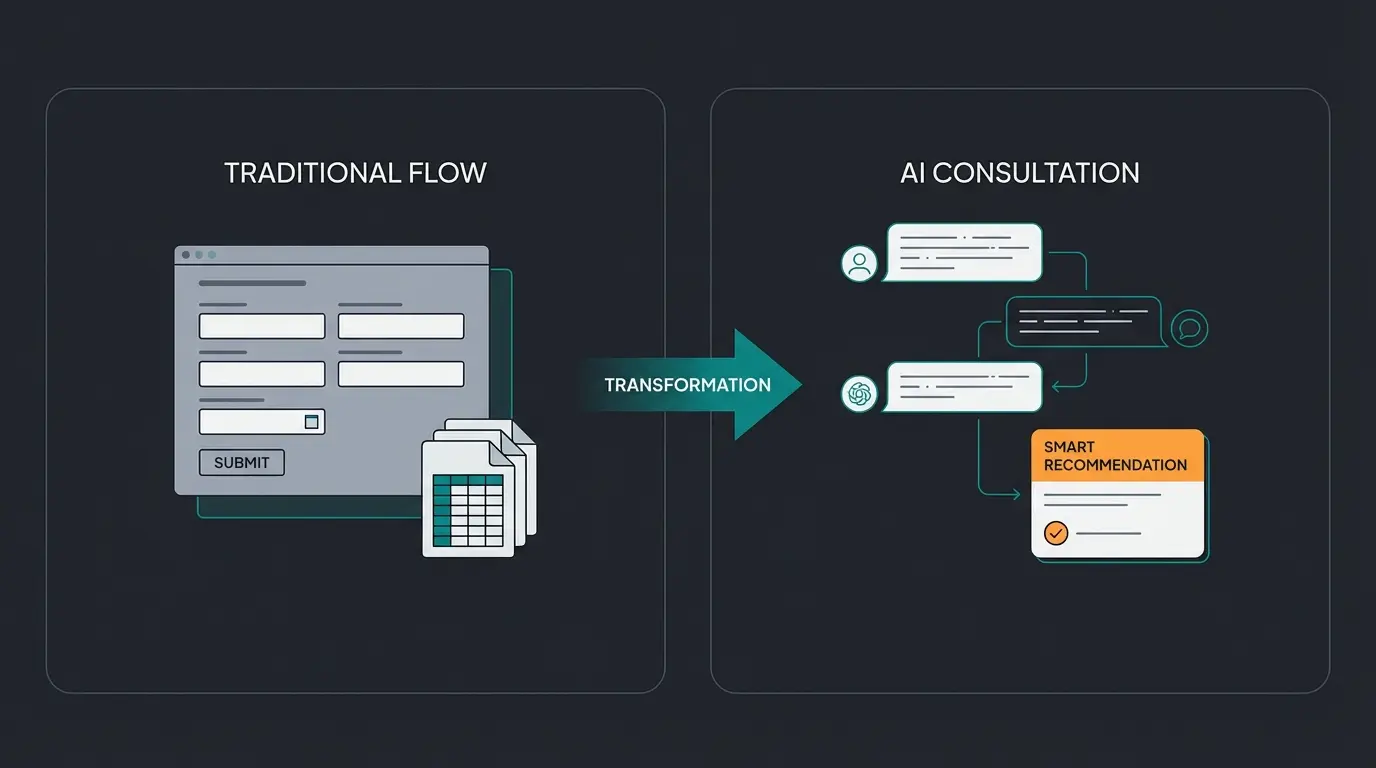
When we look at the search results for 'Shopware B2B ordering process,' we find almost exclusively guides for configuring the features mentioned above. What's missing is the view of the customer before the order.
The Failure Scenario
Imagine an engineer looking for a replacement pump for an industrial plant.
- The Need: The old pump is defective. They have no item number, only the technical specifications (flow rate, pressure, medium)
- The Shop Visit: They use the search. They find 50 pumps that look similar
- The Problem: The 'quick order' doesn't help them because they don't have an SKU. The 'approval workflows' are irrelevant as long as they don't know what to have approved
- The Abandonment: They're uncertain. To avoid a return, they leave the shop and call sales or write an email
The Result: The digital Shopware B2B ordering process is interrupted. The transaction takes place manually, causes high process costs, and ties up sales resources for a standard inquiry. This is precisely where AI chatbots for customer service can make a transformative difference.
The 'Consultation Gap'
Most B2B shops are optimized catalogs, not advisors. They're excellent at taking orders (Order Taking), but poor at selling solutions (Solution Selling).
- Return Rates: In B2B, returns are often more expensive than in B2C because they involve freight goods or configured items. Wrong orders due to lack of consultation are a massive cost driver
- Complexity: According to Bluenoda research, 77% of B2B buyers perceive their last purchase process as 'very complex' or 'difficult'
Here the gap opens up: Customers want self-service (see McKinsey data), but the products are too complex for an unaccompanied purchase. Understanding AI consulting in e-commerce has become essential for addressing this challenge.
| Aspect | Standard Quick Order | Intelligent AI Consultation |
|---|---|---|
| Input Method | SKU/CSV upload required | Natural language description |
| Error Rate | High for complex products | Significantly reduced through guided selection |
| User Support | None - self-service only | 24/7 technical guidance |
| Time to Correct Product | Hours to days (with support calls) | Minutes |
| Return Rate Impact | No prevention mechanism | Proactive compatibility checking |
Part 3: The Game-Changer – AI as Technical Sales Engineer
To truly optimize the Shopware B2B ordering process, we need to expand the term 'ordering process.' It doesn't start in the shopping cart, but with problem-solving. This is where Artificial Intelligence comes into play—but not as it's usually advertised.
Status Quo: Shopware AI Copilot (Backend Focus)
Shopware already offers strong features with the AI Copilot. However, these currently focus heavily on merchant efficiency or simple summaries:
- Creation of product descriptions and images
- Summarization of reviews
- Personalized checkout messages
As documented in Shopware's AI features, these capabilities enhance backend operations significantly. To understand the full scope of what's possible, explore our comprehensive Shopware AI guide.
That's helpful, but it doesn't solve the problem of our engineer looking for the right pump. This is where the evolution toward AI product consultation becomes critical.
The Vision: Consultative AI (Advisory AI)
The future lies in AI agents that act like technical sales advisors. Instead of just generating text, these systems understand technical relationships.
How This Looks in the Shopware Context
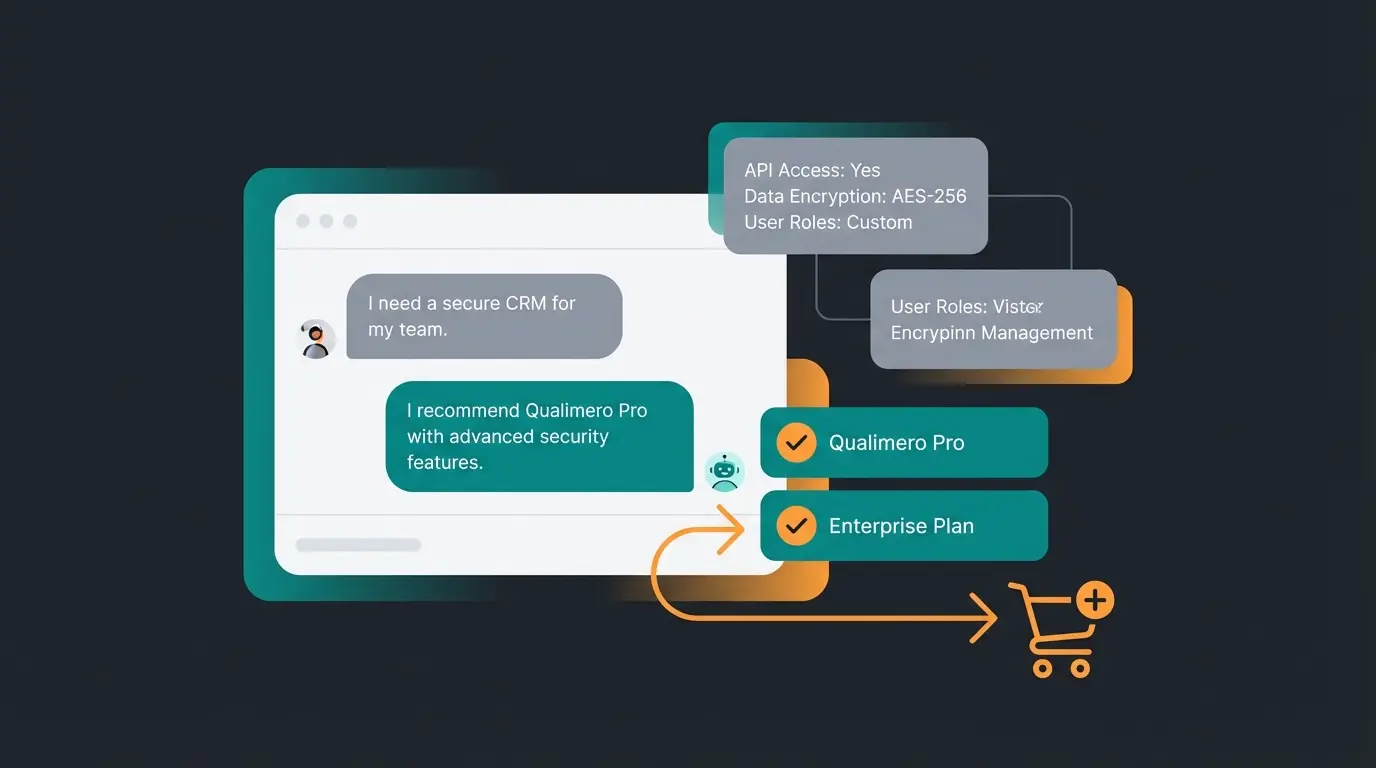
Imagine the engineer comes to the site. Instead of a search bar, they're greeted by a 'Digital Project Engineer' (a specialized AI agent).
1. Dialogue Instead of Search:
- Engineer: 'I need a pump for 5 bar pressure that can handle saltwater.'
- AI: 'For saltwater, we recommend pumps with housings made of titanium or special plastic. What flow rate do you need per hour?'
- Engineer: 'About 20 cubic meters.'
2. Intelligent Filtering:
The AI accesses the Shopware database in the background (via API), filtering not just by keywords but by technical attributes (Properties) that can be very flexibly defined in Shopware 6.
3. Recommendation & Shopping Cart:
- AI: 'Based on your specifications, the X-200 pump is ideal. It's immediately available. Should I add the matching connection set to the cart?'
- Engineer: 'Yes.'
4. Seamless Transition:
The AI fills the Shopware shopping cart. Now the standard features kick in: The engineer clicks 'Order,' the approval workflow starts, and the supervisor approves. This integration exemplifies the AI selling revolution transforming B2B commerce.
The Added Value: Time-to-Correct-Product
Competitors optimize for 'Time-to-Checkout.' With this approach, you optimize for 'Time-to-Correct-Product.'
- Reduction of Wrong Purchases: The AI ensures that technical specifications (compatibility) are checked before the order is placed
- 24/7 Availability: Technical consultation is no longer tied to office hours
- Scalability: An AI agent can advise 100 engineers simultaneously—a human sales rep cannot
Implementing a Shopware chatbot solution provides the foundation for this consultative approach. For businesses seeking to maximize their Shopware customer support capabilities, AI integration is the logical next step.
Discover how AI-powered product consultation can reduce wrong orders by up to 40% while providing 24/7 technical guidance to your customers.
Get Started FreePart 4: Agentic Commerce – The Next Evolution (2025+)
While we're still often talking about chatbots today, the next wave is already on the horizon: Agentic Commerce. This is a central trend for 2025 and beyond, which Shopware is also strategically pursuing.
What is Agentic Commerce?
Agentic Commerce means that autonomous AI agents don't just 'chat' but act. They execute complex tasks across multiple steps, as explained by BigCommerce's analysis.
In the context of the Shopware B2B ordering process, this means:
- Autonomous Procurement: An AI agent on the customer side (e.g., in the customer's ERP system) notices that inventory is low
- Negotiation: This agent contacts the AI agent of your Shopware shop
- Transaction: The agents negotiate a price based on framework contracts, check availability, and place the order—without human intervention
According to Automation Alley's research, this agent-to-agent commerce represents the future of B2B transactions.
Shopware's Roadmap
Shopware has identified 'Agentic Commerce' as a strategic field. At the Shopware Community Day 2025, as reported by PR Newswire, it was emphasized that the platform is ideally prepared for this through its API-first architecture. Future features will enable external AI agents to interact directly with the shop, create quotes, and place orders.
The Paypers also confirms this trend as a major shift in how B2B transactions will be conducted.
Customer searches but gets 50 similar results without guidance
Unable to find exact product, frustration builds
Must contact sales team, wait for response
Days later, order placed manually with high error risk
AI instantly understands technical requirements
Real-time filtering by specifications, not just keywords
Correct product added with compatibility verified
Seamless handoff to standard approval workflow
Part 5: Implementation – Strategy Plan for Shop Operators
How do you now put this vision into practice? Here's a concrete roadmap to modernize your Shopware B2B ordering process. For a comprehensive overview of AI product consultation implementation, check out our complete AI product consultation guide.
Step 1: Migration to B2B Components (Mandatory)
If you're still using the old B2B Suite, plan your migration now.
- Why: The B2B Suite is being discontinued (End of Life with Shopware 6.8). The new Components are more performant and flexible
- To-Do: Use Shopware's migration assistant to transfer data like budgets and order lists. Ensure you're using at least the 'Evolve' plan, as the Components are included there
Step 2: Data Quality as Foundation (Excellence)
No AI can advise if the data is poor.
- Maintain Attributes: Use the 'Properties' in Shopware 6 extensively. A pump shouldn't just be called 'Pump'—it must have attributes like 'Pressure: 5 bar,' 'Material: Titanium' structurally stored
- PIM Integration: For complex assortments, a PIM (Product Information Management) system connected to Shopware is often essential
Step 3: Start AI Integration
Don't wait for the perfect 'agentic' solution. Start today.
- Use Shopware AI Copilot: Activate existing features like 'Search by Context' or 'Image Keyword Assistant' to improve findability, as detailed in Shopware's AI documentation
- Guided Selling Tools: Check extensions or external services that enable 'Guided Selling' (guided consultation) and connect them to the shopping cart via API
Our AI product consultation comparison helps you evaluate different solutions for your specific needs.
Step 4: Visualize the Process
Help your customers understand the process. An often underestimated content lever is visualizations.
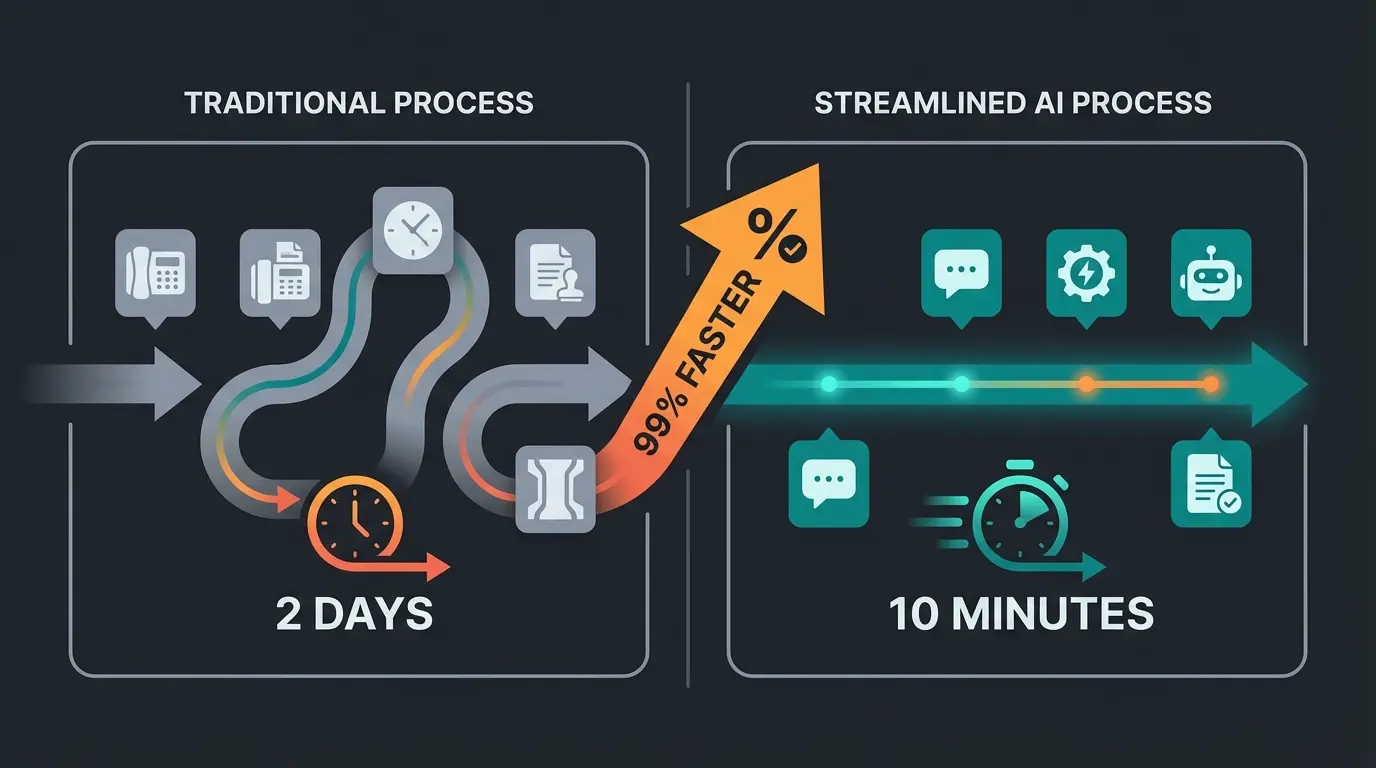
Example of a Process Graphic (Text Description):
- Left (Old): Search -> 0 Results -> Phone Call -> Manual Quote -> Fax Order (Duration: 2 days)
- Right (New): AI Consultation -> Technical Match -> Automatic Quote -> Approval Workflow -> Order (Duration: 10 minutes)
Conclusion: The Future is Consultation-Intensive
The Shopware B2B ordering process of the future is no longer defined solely by the speed of data entry. The 'quick order' via CSV upload will always have its place—for routine orders. But growth lies in complexity.
Those who manage to link Shopware's powerful standard features (approvals, budgets, roles) with an intelligent, AI-supported consultation phase solve the biggest problem in B2B e-commerce: The buyer's uncertainty. Combined with Shopware Field Sales tools, this creates a complete B2B sales ecosystem.
Action Recommendations
- Ensure your Shopware B2B Components are cleanly configured
- Start preparing your product data so that an AI can 'understand' it
- Watch the Agentic Commerce trend closely—this is where the next big wave of automation is emerging
Don't just optimize the checkout. Optimize the decision.
FAQ: Common Questions About Shopware B2B Ordering
The B2B Suite is an older, monolithic extension that will be discontinued with Shopware 6.8 (approximately 2026). The B2B Components are the modern successor: modular, API-based, and directly integrated into the Shopware core. They offer more flexibility and better performance for enterprise B2B operations.
Yes, with the B2B Components (and also the old Suite), approval rules can be defined very granularly. You can specify that, for example, orders over €1,000 must be approved by the department head. This can be configured per customer group or even individually, providing maximum flexibility for different organizational structures.
Currently, the Shopware AI Copilot primarily helps with content creation and summarization. In the future (keyword: Agentic Commerce), AI agents will actively advise on product selection, negotiate quotes, and place orders autonomously. The transition from reactive to proactive AI assistance is the key development.
The 'Quick Order' function is part of the commercial plans (Evolve and Beyond) and is provided through the B2B Components. It enables uploading order lists (CSV/XLS) and quick entry of item numbers for maximum procurement efficiency.
Agentic Commerce refers to autonomous AI agents that can execute complex, multi-step tasks without human intervention. In B2B, this means AI agents can monitor inventory levels, contact supplier systems, negotiate prices based on contracts, and place orders automatically. Shopware has identified this as a strategic focus area for 2025 and beyond.
Join leading B2B businesses using AI-powered product consultation to reduce support costs, eliminate wrong orders, and provide 24/7 technical guidance.
Start Your Free Trial
Lasse is CEO and co-founder of Qualimero. After completing his MBA at WHU and scaling a company to seven-figure revenue, he founded Qualimero to build AI-powered digital employees for e-commerce. His focus: helping businesses measurably improve customer interaction through intelligent automation.