
E-Commerce Has Changed: Logistics Alone Won't Cut It
E-commerce has fundamentally changed. Simply making products available is no longer enough. Those who want to succeed in today's fiercely competitive market—balancing their own Shopware 6 online store with the marketplace giant eBay—must master two disciplines: flawless logistics and exceptional customer communication.
When you search for "Shopware eBay," you'll find dozens of technical guides explaining how to synchronize inventory or update prices. That's important, no question. But it's only the foundation. In this article, we take a decisive step further. We'll show you why technical integration (the "requirement") often falls flat without an intelligent sales strategy (the "excellence")—and how new AI sales agents transform your eBay presence from a silent warehouse into an active sales floor.
The Reality: Current State of Shopware-eBay Integration
Let's take a look at the current landscape. If you're running a Shopware store today and want to expand to eBay, the first step is purely technical. You need to ensure your data flows properly.
The Dominance of Middleware Solutions
Search results and the market are dominated by so-called middleware solutions. These are plugins and software solutions that act as bridges between your Shopware backend and the eBay API. Among the most well-known players are:
- Magnalister: A classic in the Shopware ecosystem. According to Magnalister, it excels through deep integration into the Shopware backend, enabling article uploads, price and inventory synchronization, and order imports.
- Brickfox: A powerful multichannel solution particularly suited for merchants who want to serve many marketplaces beyond eBay (like Otto or Amazon) and need central management with PIM functionality, as detailed on Brickfox.
- Shopware Markets: The native solution (formerly a separate extension) that aims to integrate marketplace connectivity as seamlessly as possible into Shopware administration, according to Shopware.
The Problem: "Silent" Synchronization
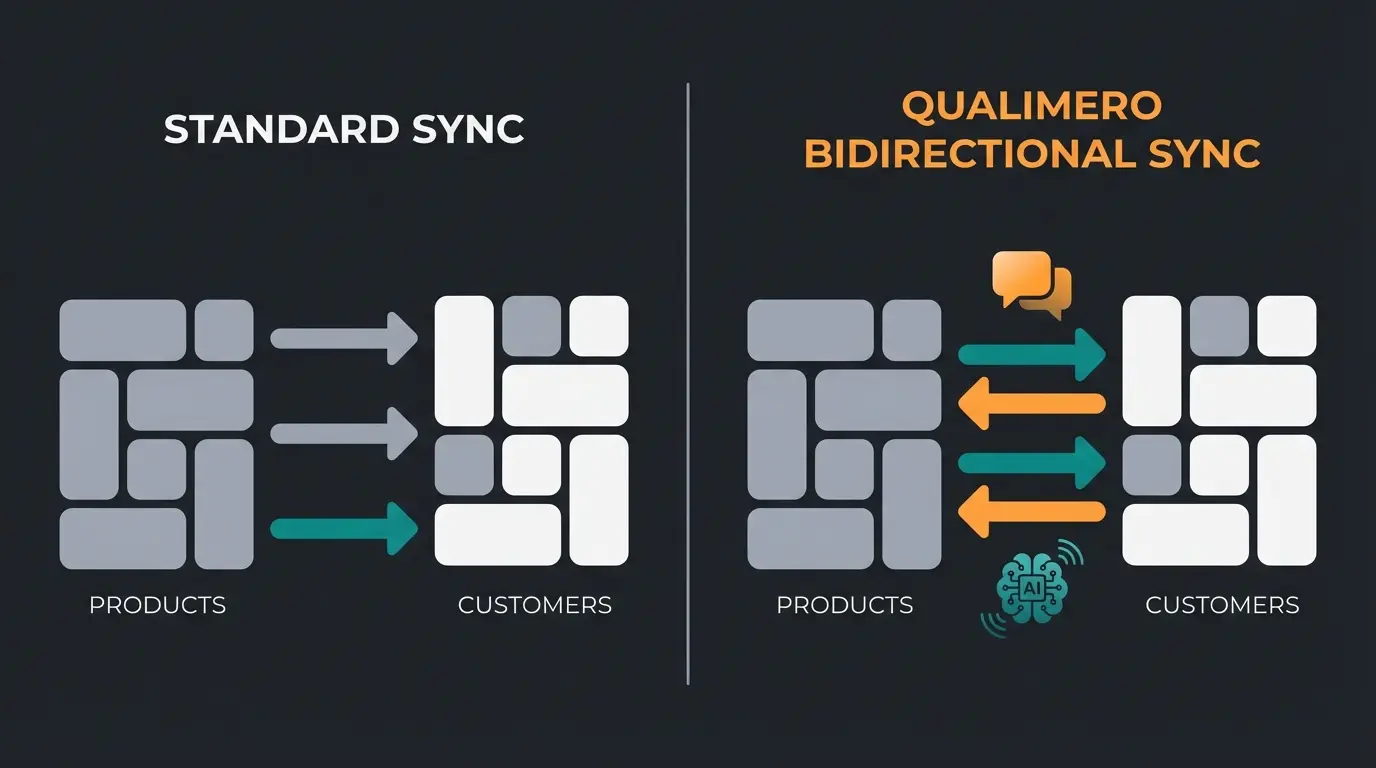
These tools are technological masterpieces for logistics. They answer questions like: "How do I prevent overselling?" (inventory synchronization), "How do I get orders into my ERP?" (order import), and "How do I display different prices?" (price mapping).
But here lies the danger: Many merchants fall into the trap of believing that installing such a plugin completes the job. This is a misconception.
A perfectly synchronized product listed on eBay doesn't sell itself. eBay isn't just a catalog—it's a marketplace where people buy. And people have questions. Current top solutions treat eBay as a logistical problem to solve. However, they almost completely ignore that eBay is a communication channel.
The Foundation: Technical Connection (Must-Have)
Before we get to excellence (the AI strategy), we need to ensure your basics are covered. Without a solid technical foundation, even the best AI can't sell—you'd end up selling products you don't have in stock.
1. Inventory and Price Synchronization
The absolute minimum for every Shopware merchant on eBay is real-time inventory synchronization. When you sell the last item in your Shopware store, the eBay listing must be ended or paused within minutes (preferably seconds).
- Shopware 6 Compatibility: Ensure your middleware is fully compatible with the latest Shopware 6 version. Many older plugins for Shopware 5 are no longer being developed or don't offer the full feature set of the new API structure, as noted by Shopware documentation.
- Price Control: Use the capabilities of tools like Magnalister or Brickfox to create separate price groups for eBay. Due to marketplace fees, it's often necessary to run different prices on eBay than in your own store, according to Magnalister's best practices.
2. Attribute Mapping and Variants
eBay has very specific requirements for item specifics. A "blue t-shirt" in Shopware must be correctly mapped to eBay's category structure and attribute fields (Color: Blue, Material: Cotton).
Why this matters: The eBay search algorithm "Cassini" filters heavily based on these attributes. If your middleware doesn't transfer this data cleanly, your product simply won't be found, as explained in research by Sellsetgo.
3. Order Import and Status Updates
The circle closes when an order is placed on eBay. This must be created as an order in Shopware so your inventory management system can start the shipping process. Once the package is shipped, the tracking number must be sent back to eBay. This is crucial for seller protection and ranking, as confirmed by Shopware's integration guides.
The Missing Link: Product Consultation on eBay
This is where we enter territory that 90% of your competitors neglect. We're moving from the "Red Ocean" (pure price wars and listing volume) into the "Blue Ocean" (service differentiation and conversion optimization).
The Challenge: The Demanding eBay Customer
Contrary to common belief, eBay customers aren't just looking for "cheap." eBay has traditionally been a marketplace for enthusiasts, tinkerers, and hunters of special items.
- Complex Products: Selling auto parts? Bicycles? Electronics? Then you know: customers have compatibility questions ("Will this fit my Golf 7?").
- The "Evening Shoppers": A large portion of purchases happen in the evening or on weekends—exactly when your support team has clocked out.
The "Dumb Bot" Problem
Many merchants rely on simple auto-responders. Customer asks: "Will this RAM stick fit in my 2019 MacBook Pro?" Auto-responder replies: "Thank you for your message. We'll respond within 24 hours."
The result: The customer doesn't wait. They click on the next listing that might be €2 more expensive but where the information is clearly visible or they get a quick response. You've lost the sale, even though your price was better and your logistics would have worked perfectly.
The Solution: AI-Powered Product Consultation
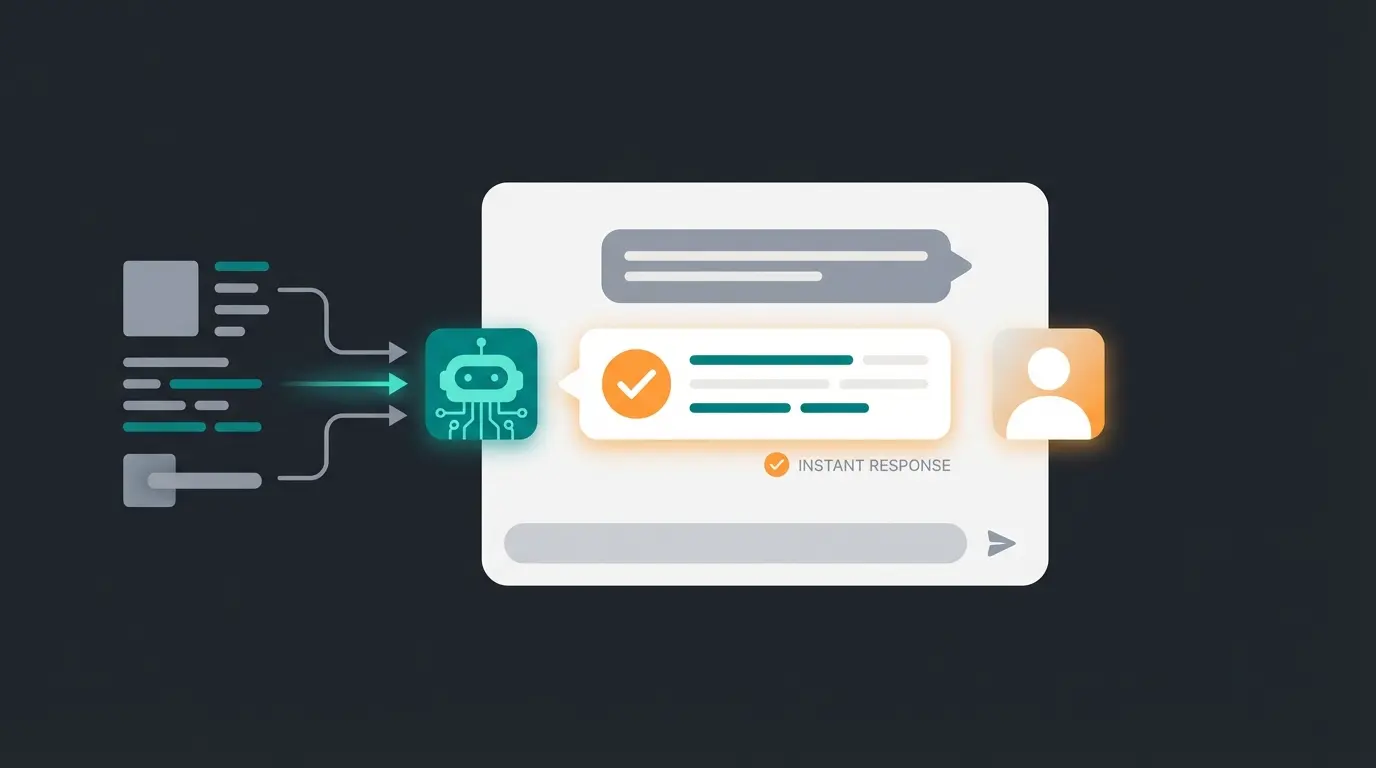
This is where the new generation of AI product consultants comes into play. We're not talking about simple chatbots that recite FAQ texts. We're talking about systems deeply integrated into your Shopware product data.
Imagine your eBay messaging system was directly connected to your Shopware store's "brain":
- Data Understanding: The AI doesn't just read the title—it reads technical attributes, descriptions, and even linked documents (PDFs) in Shopware.
- Context: The AI understands the customer's question ("Will this fit X?").
- Response: The AI generates a precise, human-sounding answer based on facts.
That's not support. That's selling. This approach to AI-powered product consultation transforms passive listings into active sales conversations.
Strategy: Turning eBay Questions Into Shopware Revenue
Why should you invest in this technology? It's not just about saving time. It's about hard-core SEO advantages on eBay.
1. Speed = Rank (The Cassini Factor)
The eBay search algorithm "Cassini" is complex, but one factor is undisputed: response time. eBay precisely measures how quickly you respond to customer inquiries. A fast response time signals to eBay: "This seller is active, reliable, and customer-oriented."
- The Boost: Merchants who answer questions within minutes (instead of hours) are favored in rankings. An AI responds in seconds—24/7, as research from 3DSellers confirms.
- Seller Metrics: Fast responses protect your "Top Rated Seller" status, which in turn brings fee discounts and better visibility, according to Afterbuy.
2. Increasing Conversion Rates
An answered question is often the last step before purchase. Statistics show that customers who have a live-chat-like experience buy with up to 4x higher probability, as highlighted by Qualimero research and supported by Salesgroup.ai.
On eBay, there's no live chat in the classic sense, but the messaging system functions as one. When you reduce response time to "instant," you simulate a live sales conversation. This is where Shopware 6 chatbots become invaluable for marketplace integration.
3. Reducing Returns Through Consultation
A huge problem in e-commerce is returns due to wrong expectations or incompatibility. When a customer is unsure, they might order "on a whim"—and return it later.
An AI agent that clarifies before purchase ("No, this part unfortunately doesn't fit your model, you need Item Y") prevents the return before it happens. This saves shipping costs, processing fees, and protects your eBay ranking (since return rates are also a ranking factor), as documented by Sellsetgo's analysis.
Customers with live-chat experience buy more frequently
AI agents respond in seconds, 24/7
Standard product queries handled without human intervention
Pre-purchase consultation prevents wrong purchases
Stop losing sales to unanswered questions. Our AI sales agents integrate with your Shopware data to provide instant, accurate product consultation on eBay—24/7.
Start Your Free TrialComparison: Standard vs. AI-Enhanced Integration
To illustrate the difference, let's compare the classic middleware solution with the modern, AI-enhanced approach. Understanding this distinction is crucial when evaluating Shopware vs Shopify or any platform decision.
| Feature / Function | Standard Middleware (Magnalister, Brickfox, etc.) | AI-Enhanced Solution (Sales Agent) |
|---|---|---|
| Primary Focus | Logistics & Data Sync | Communication & Sales |
| Inventory Sync | ✅ Yes (Automatic) | ❌ No (Relies on middleware) |
| Price Adjustments | ✅ Yes (Rule-based) | ❌ No |
| Customer Inquiries | ❌ No (or only templates) | ✅ Yes (Individual & Context-aware) |
| Availability | System runs 24/7 | Consultation runs 24/7 |
| Response Time | Depends on staff availability | Instant (< 1 minute) |
| Return Prevention | Passive (through good descriptions) | Active (through pre-purchase consultation) |
| Upselling | Difficult | ✅ Yes (recommending better products) |
| eBay SEO Effect | Indirect (availability) | Direct (response time & interaction) |
Important: The AI solution doesn't replace middleware. It complements it. You need Magnalister or Brickfox for the data, but you need the AI for the customer.
Step-by-Step: Adding Intelligence to Your Setup
How do you implement this concretely? Here's a roadmap for implementation that leverages AI-driven product consultation capabilities.
Shopware → Logistic Plugin → eBay Listing with all attributes and specifications
eBay Customer Question → AI Agent (accessing Shopware data) → Instant, accurate answer
eBay Order → Shopware Backend → Fulfillment & tracking update back to eBay
AI improves responses based on successful conversions and customer feedback
Step 1: Optimize the Foundation (Shopware & Middleware)
Ensure your product data in Shopware 6 is "AI-ready." This foundation is essential for any AI product consultation implementation.
- Maintain Attributes: An AI can only consult if it has data. Carefully fill fields like "Material," "Compatibility," and "Dimensions" in Shopware's custom fields.
- Use Shopware's AI Copilot (Internal): Leverage the native AI functions of Shopware 6.7+ to optimize product descriptions and generate properties. The better the data foundation in the shop, the smarter the agent on eBay, as detailed by D-I-S and Rhiem Intermedia.
Step 2: Configure the Middleware
Use tools like Magnalister or Brickfox to push this optimized data to eBay. Ensure all technical characteristics (Item Specifics) are correctly mapped. This is the "food" for eBay search.
Step 3: Connect the AI Sales Agent
Here we leave the standard path. You need a solution that links the eBay messaging system (eBay Messaging API) with your product knowledge.
- Option A: Helpdesk Integrations with AI. Tools like eDesk, Zendesk, or Gorgias offer integrations for eBay and Shopware. Modern add-ons for these systems use AI to generate response suggestions, as documented by eDesk, Cloudtalk, and Zendesk. Advantage: Central inbox for all channels. Disadvantage: Often more focused on "support tickets" than proactive selling.
- Option B: Specialized E-Commerce AI Agents. Increasingly, specialized AI bots (such as chat solutions based on GPT-4 connected via API) are trained to act like salespeople. These can be connected to Shopware via API to "learn" the product catalog, then answer eBay messages via eBay API.
Step 4: Training and Monitoring
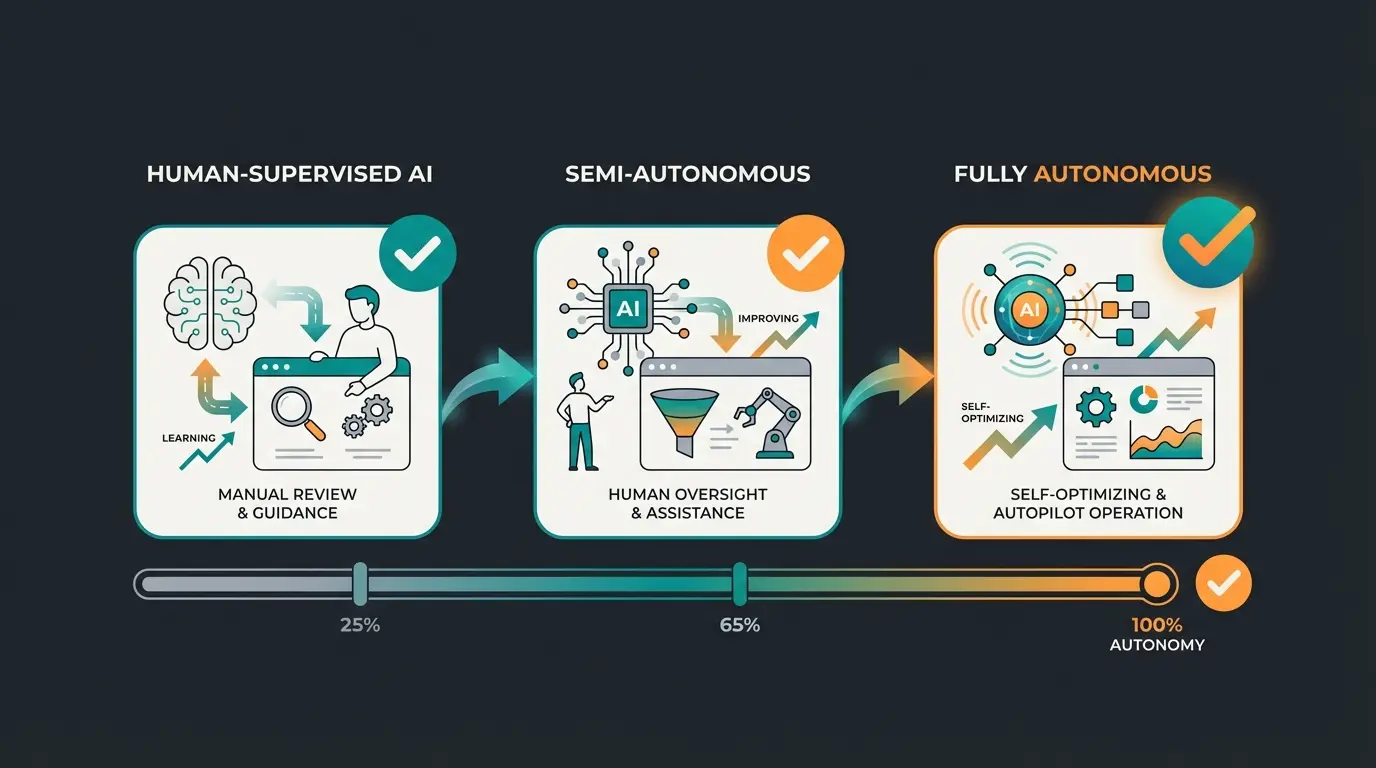
Don't let the AI run "free" immediately. Implementing AI Customer Service requires a phased approach:
- Phase 1 (Draft Mode): The AI creates response suggestions, an employee reviews and sends them. This trains the model.
- Phase 2 (Hybrid Mode): The AI answers standard questions ("Where's my package?", "Will this fit?") autonomously. Complex cases ("Complaint", "Discount negotiation") are escalated to humans.
Deep Dive: Why Shopware's Native AI Copilot Isn't Enough
Perhaps you're wondering: "Doesn't Shopware 6 already have AI built in?" Yes, Shopware has done fantastic work with the AI Copilot (from version 6.5/6.7). But you need to understand what it was built for, as explained by Shopware's official documentation:
- Backend Efficiency: It helps you write product texts, generate images, or analyze customer segments.
- Admin Assistance: It helps you configure the shop.
What it doesn't (yet) do: It's not an external sales agent. The Shopware AI Copilot sits in your admin area. It doesn't sit in your eBay inbox. It cannot autonomously respond to a message from an eBay user asking: "Can you also deliver this in red?"
That's why the combination of Shopware (data foundation) + Middleware (logistics) + External AI Agent (communication) is currently the most powerful strategy on the market. This is the approach that transforms standard AI product consultation into a competitive advantage.
The Hybrid Approach: Best of Both Worlds
Understanding the "hybrid approach" is crucial for success. Standard connectors like Magnalister or Shopware Markets are absolutely necessary for logistics—but they're incomplete without an AI layer for communication.
Think of it this way: Your middleware is like having a perfectly organized warehouse with everything labeled and tracked. But what good is an organized warehouse if customers walk in with questions and there's no one to help them?
The AI layer doesn't replace your warehouse management—it adds the sales staff that can work 24/7, speak to every customer simultaneously, and never forget a product specification. When combined with AI sales assistants, this creates a complete ecosystem.
The eBay Seller Rating Connection
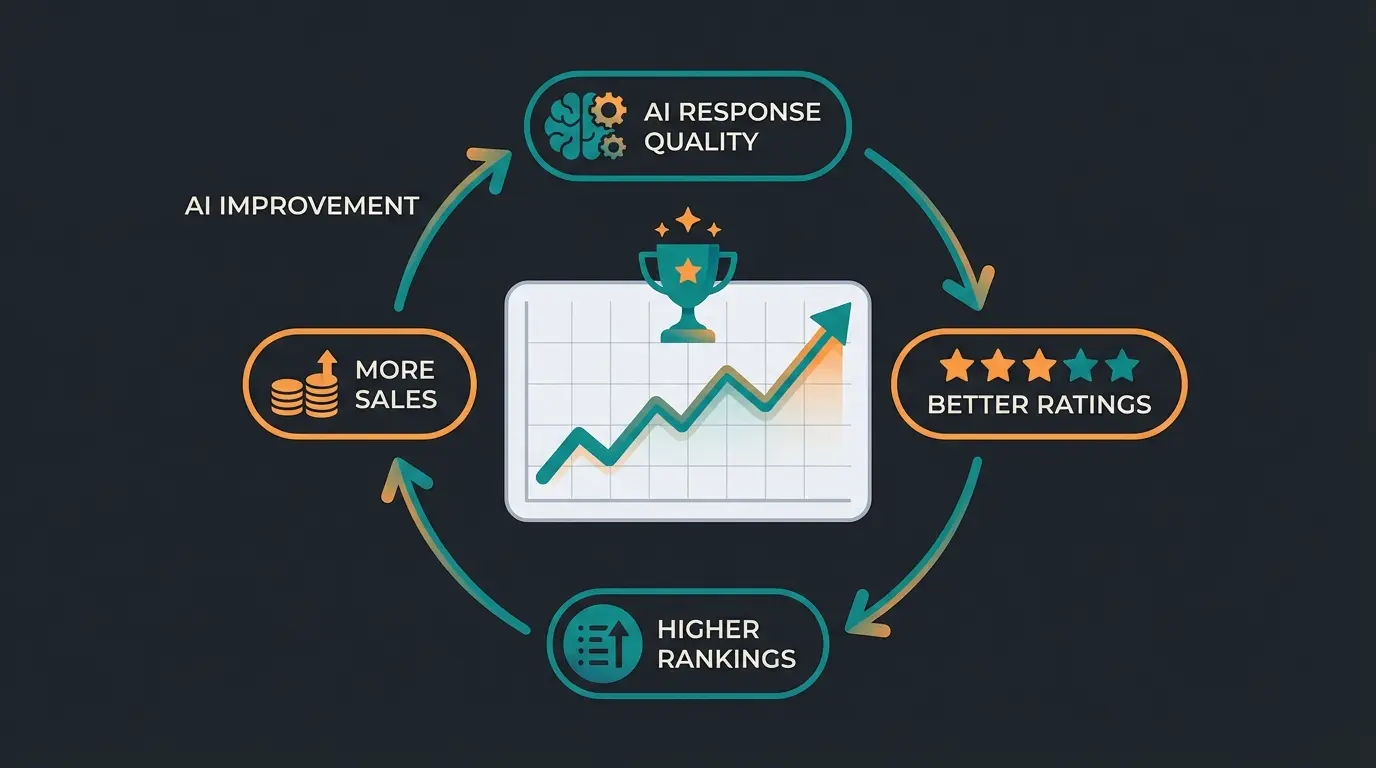
Here's something your competitors aren't thinking about: Connect your AI solution directly to eBay's algorithm benefits. Fast, high-quality answers improve seller metrics like "Item as Described" and "Communication" scores, which directly boost your organic ranking on eBay—something a simple connector plugin cannot achieve.
This creates a virtuous cycle: Better AI responses → Higher seller ratings → Better visibility → More sales → More data to train the AI → Even better responses. This approach to AI product consultation creates compounding returns over time.
Real-World Implementation: A Practical Example
Let's walk through a concrete example of how this works in practice. Imagine you're selling bike accessories through your Shopware store and eBay.
Scenario: A customer on eBay sends a message at 10:47 PM asking: "Does this bike rack fit a carbon frame?"
Without AI (Traditional Approach): Your support team is gone for the day. An auto-responder sends: "Thanks for your message, we'll respond within 24 hours." The customer—who wanted to order tonight so it arrives for their weekend trip—clicks away and buys from a competitor who had the information in their listing or responded faster.
With AI Sales Agent: The AI instantly accesses your Shopware product data, finds that this rack handles up to 20kg but clamps the frame directly. Within 30 seconds, it responds: "Hi! Based on the manufacturer specs in our database, this rack handles up to 20kg but clamps the frame. For carbon frames, we recommend our [Product Link B] instead—it uses a strap system to avoid any pressure damage. Would you like me to send you the link?"
The result: Not only did you save a sale, you potentially upsold to a better product—all while you were asleep. This is the power of AI product consultation in action.
Frequently Asked Questions
Yes, Shopware 6 is fully compatible with major eBay integration solutions like Magnalister, Brickfox, and the native Shopware Markets extension. These middleware solutions support the latest API structure of Shopware 6, enabling real-time inventory sync, price mapping, and order import. When selecting a plugin, verify it explicitly supports your Shopware 6 version, as some legacy Shopware 5 plugins may not offer full functionality.
Traditional chatbots typically respond with pre-written FAQ answers or simple templates. AI sales agents, on the other hand, are deeply integrated with your product data in Shopware. They understand context, read technical specifications, and generate personalized responses based on your actual product attributes. While a chatbot might say "Thanks for your message," an AI sales agent can respond "Yes, this part fits your 2020 Golf TDI model based on our compatibility data."
eBay allows automated responses and AI-assisted communication as long as responses are relevant, helpful, and accurately represent your products. The key is ensuring your AI provides genuine value to customers rather than generic spam. Many successful sellers use AI-enhanced helpdesk solutions that comply with eBay's guidelines. Always verify current eBay policies and ensure GDPR compliance for European customers.
eBay's Cassini algorithm considers seller responsiveness as a ranking factor. Sellers who respond quickly to customer inquiries demonstrate reliability and customer-orientation. This improves your "Communication" score in seller metrics, which can lead to Top Rated Seller status, reduced fees, and better visibility in search results. AI agents that respond in seconds rather than hours can significantly boost these metrics.
Absolutely—this is the recommended approach. Middleware solutions (Magnalister, Brickfox, Shopware Markets) handle logistics: inventory sync, price updates, and order processing. AI solutions handle communication: answering customer questions, providing product consultation, and driving conversions. These two layers complement each other perfectly. You need both for a complete eBay strategy.
Conclusion: From Warehouse Manager to Market Leader
The market for "Shopware eBay integrations" is full of tools that help you become an efficient warehouse manager. That's important, but it's no longer a competitive advantage—it's the standard.
The true competitive advantage in 2024 and beyond lies in the scalability of personal consultation. If you have 10,000 items on eBay, you can't hire an expert for each item who answers questions 24/7. But you can train an AI to do exactly that—based on the data you're already maintaining in Shopware.
Stop treating eBay as just a data dump. Use technology to be present where your customers are—not just with your products, but with your expertise. The merchants who understand this shift will dominate the marketplace while others continue fighting on price alone.
The tools are available. The technology is mature. The question is: Will you be the first in your niche to implement it, or will you wait until your competitors do?
Further Resources & Tools
- Magnalister: For the solid technical foundation of Shopware-eBay integration
- Shopware AI Copilot: To make your data foundation AI-ready (Shopware Docs)
- eBay Seller Center: Information about the Cassini algorithm and seller standards
(Note: This article serves as strategic guidance. When selecting AI tools, always verify data protection compliance (GDPR) and eBay's policies regarding automated communication.)
Join forward-thinking merchants who are already using AI sales agents to outperform competitors. Get instant product consultation that works 24/7, improves your seller ratings, and converts browsers into buyers.
Get Started Free Today