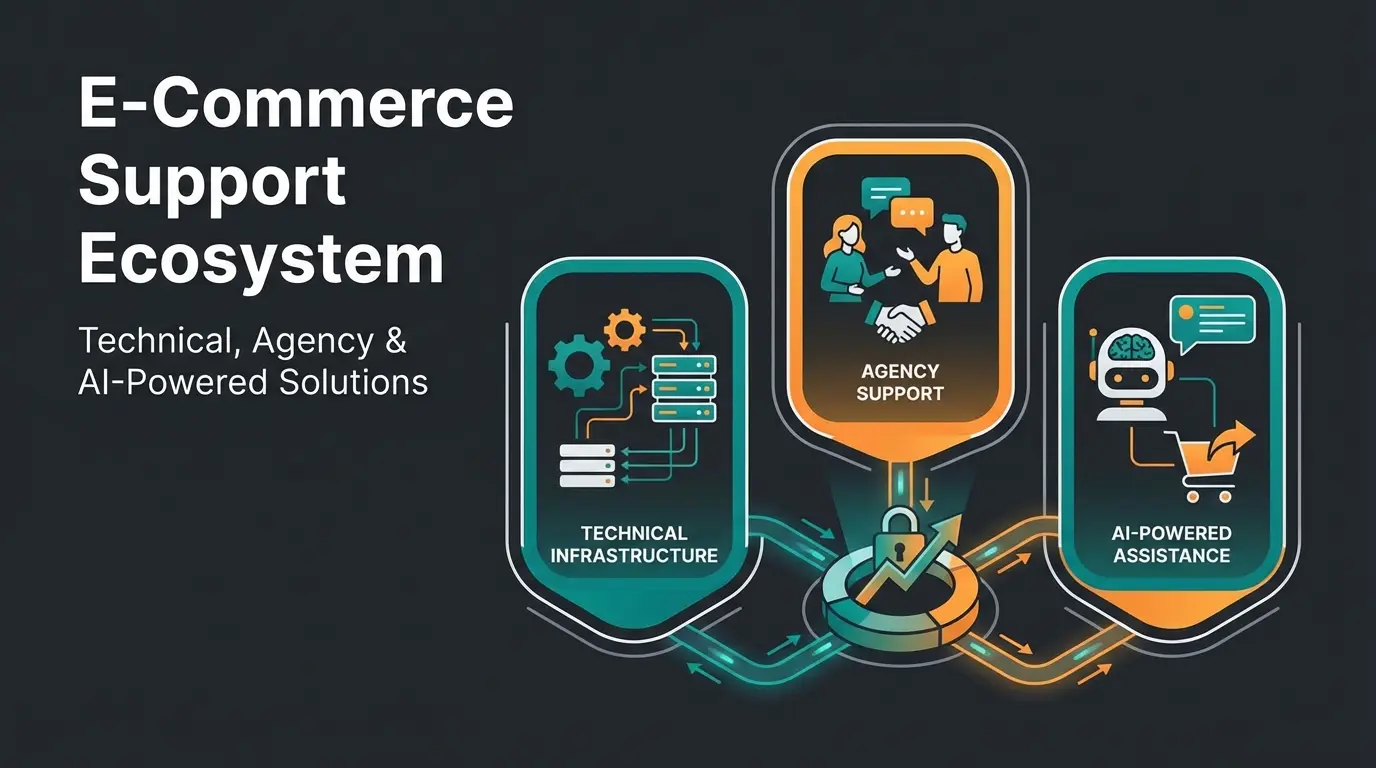
Shopware Training: The Complete Guide to Courses, Certifications and Free Resources
Shopware training in 2026: compare Academy courses, agency workshops, free resources, and certifications. Role-based learning paths for merchants, marketers, and developers.

Last month, a mid-sized fashion retailer asked us to audit their Shopware 6 setup. Three developers, two years of work, and the store still ran on workarounds that any certified Shopware developer would have avoided on day one. The problem was not talent. It was training, or rather the lack of it.
Shopware is the market leader in Germany for the fourth year running, powering 11.5% of the top German online shops as of 2025. With Shopware 5 reaching end of life in July 2024, every team working on the platform now needs solid Shopware 6 skills. That includes understanding the Symfony and Vue.js architecture underneath, plus newer features like AI Copilot, Flow Builder, and Rule Builder.
This guide walks you through every training option available in 2026. From the official Academy to free community resources, from quick-start paths for merchants to deep-dive certifications for developers.
Learning Shopware: what options are available?
There are five main ways to learn Shopware in 2026: the official Shopware Academy, agency-led workshops, open seminars, self-study through documentation and community resources, or structured online courses from third-party platforms. Each path suits different budgets, timelines, and skill levels. The right choice depends on your role and how quickly you need results.
Most teams we work with combine two or three of these options. A developer might start with the free Shopware Documentation, then invest in a certification. A store manager might attend a one-day agency workshop, then rely on YouTube tutorials for ongoing learning. There is no single right path, but there are wrong ones, especially anything still referencing Shopware 5.
Before you invest time or money, it helps to see the options side by side. Our comprehensive Shopware guide covers the platform ecosystem in detail. The table below compares the key differences across all training formats.
| Training Format | Cost | Duration | Best For | Certificate |
|---|---|---|---|---|
| Shopware Academy Pass | EUR 999/year (net) | Self-paced + exams | Developers, agencies | Yes (official) |
| Agency Workshop (in-house) | EUR 1,000-1,800/day | 1-3 days | Teams needing hands-on guidance | Attendance confirmation |
| Open Seminar | EUR 500-800/person/day | 1-2 days | Individuals, small teams | Attendance confirmation |
| Self-study (Docs, YouTube, GitHub) | Free | Ongoing | Self-motivated learners | No |
| Community (Discord, events) | Free | Ongoing | All levels | No |
One thing the table does not show: quality varies enormously between providers. The official Academy content is thorough but sometimes lags behind the latest Shopware releases by a few weeks. Agency workshops are only as good as the trainer delivering them. Free resources require discipline and the ability to filter outdated information.
The most important criterion is not cost or format. It is whether the training covers Shopware 6.6 or later, including AI Copilot, Flow Builder, and Rule Builder. Training that skips these features teaches the platform as it existed in 2022. In the DACH e-commerce market, where Shopware holds the largest market share among shop platforms, staying current is not optional.
Shopware Academy: official training and certifications
The Official Shopware Academy is the primary source for structured Shopware education and the only path to official certifications. As of 2026, the Academy Pass costs EUR 999 per year (net) and includes access to all learning paths, course materials, and certification exams. It is the gold standard for anyone serious about Shopware expertise.
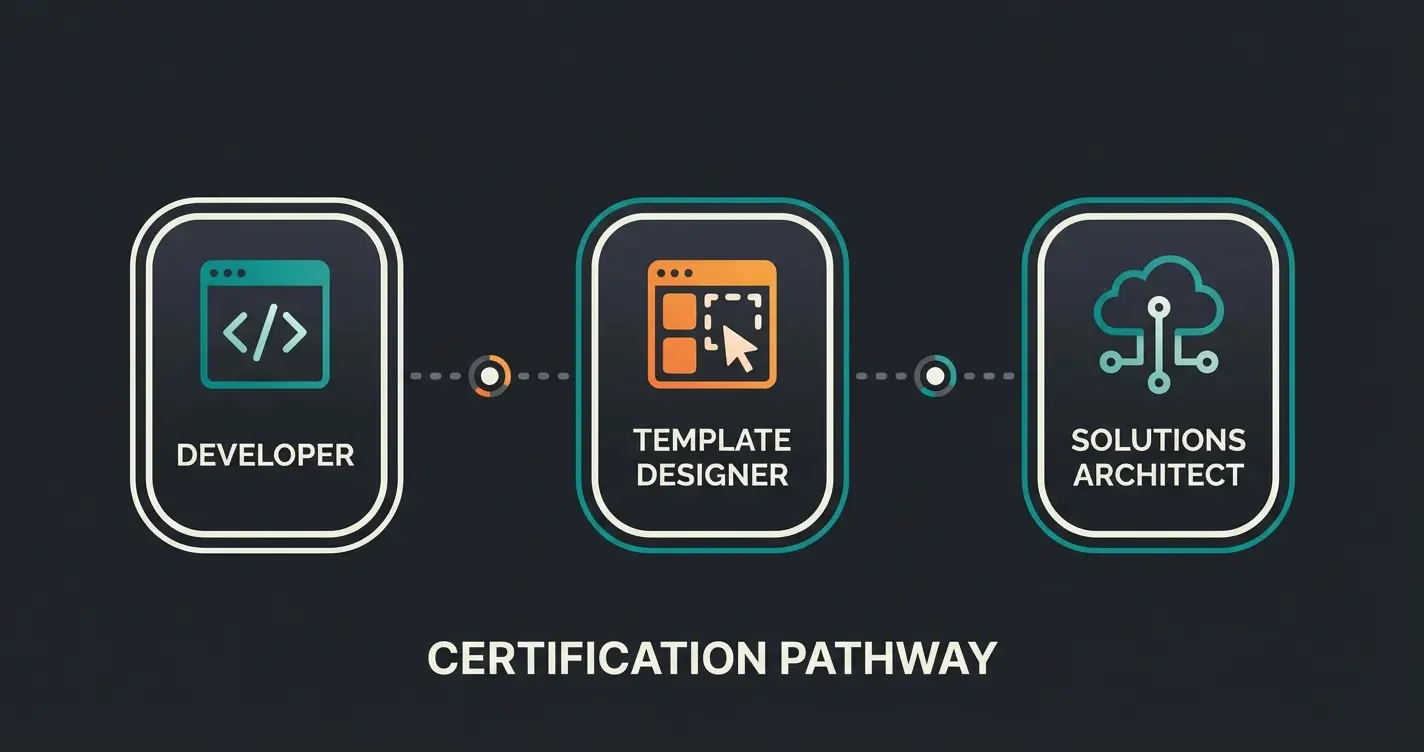
The Shopware Online Academy platform offers three certification tracks: Certified Developer, Certified Template Designer, and Certified Solutions Architect. Each certification is valid for two years, after which re-certification is required. You get one exam attempt per year per certification included in the pass.
What the Academy Pass includes
- Structured learning paths: Video courses covering Shopware 6 administration, plugin development, theme customization, and newer features like Flow Builder and Rule Builder
- Certification exams: Official exams for Certified Developer, Certified Template Designer, and Certified Solutions Architect, one attempt per year included
- AI Copilot curriculum: Added since 2025, covering content generation, product data automation, and workflow optimization
- Regular updates: New modules when major Shopware versions ship, keeping content current with 6.6 and 6.7 features
Here is the honest limitation: the Academy works best for people who already have a technical foundation. If you have never worked with PHP, Symfony, or Vue.js, the developer tracks will feel steep. The merchant-focused content is more accessible but also thinner. You will not learn advanced store management from the Academy alone.
Why certifications matter for agencies
Shopware's partner program ties directly to certifications. Partner tiers range from Bronze to Silver, Gold, and Platinum, and each tier requires a minimum number of certified employees. For agencies, this is not optional. Higher tiers mean better lead referrals, earlier access to features, and stronger positioning in the Shopware partner directory.
For more detail on the available Shopware 6 Training Courses, we maintain a dedicated comparison. The full Shopware Academy article goes deeper into curriculum structure and scheduling.
Agency training: customized Shopware workshops
Agency-led workshops offer something the official Academy cannot: training tailored to your specific store, your team's skill gaps, and your business goals. Prices range from EUR 500 to EUR 800 per person per day for open seminars, and EUR 1,000 to EUR 1,800 per day for in-house training. The premium is real, but so is the focus.
Two providers stand out in the European Shopware training space. Yireo, based in the Netherlands, offers both backend and frontend developer courses as public and in-house training across Europe. Custom training becomes more economical when three or more developers attend. ZweiPunkt focuses on customized practical Shopware 6 training, often built around a client's actual shop data and workflows.
| Format | Cost | Duration | Content | Customization |
|---|---|---|---|---|
| In-house workshop (on-site) | EUR 1,200-1,800/day | 1-3 days | Tailored to your team | High |
| Remote workshop | EUR 1,000-1,500/day | 1-2 days | Flexible, no travel costs | High |
| Open seminar | EUR 500-800/person/day | 1-2 days | Standard curriculum | Medium |
| Monthly coaching | EUR 500-1,500/month | Ongoing | Regular sessions | Very high |
The advantage of agency training is speed. A two-day in-house workshop can bring an entire team up to speed on Flow Builder, Rule Builder, and AI Copilot in ways that would take weeks of self-study. The downside is cost, and the fact that quality depends entirely on the individual trainer. Always ask for references and a detailed agenda before booking.
For teams running the free version, our guide to the Shopware Community Edition explains what is included and where the limits are. Understanding your edition helps you choose training content that actually applies to your setup.
Learn Shopware for free: docs, YouTube and community
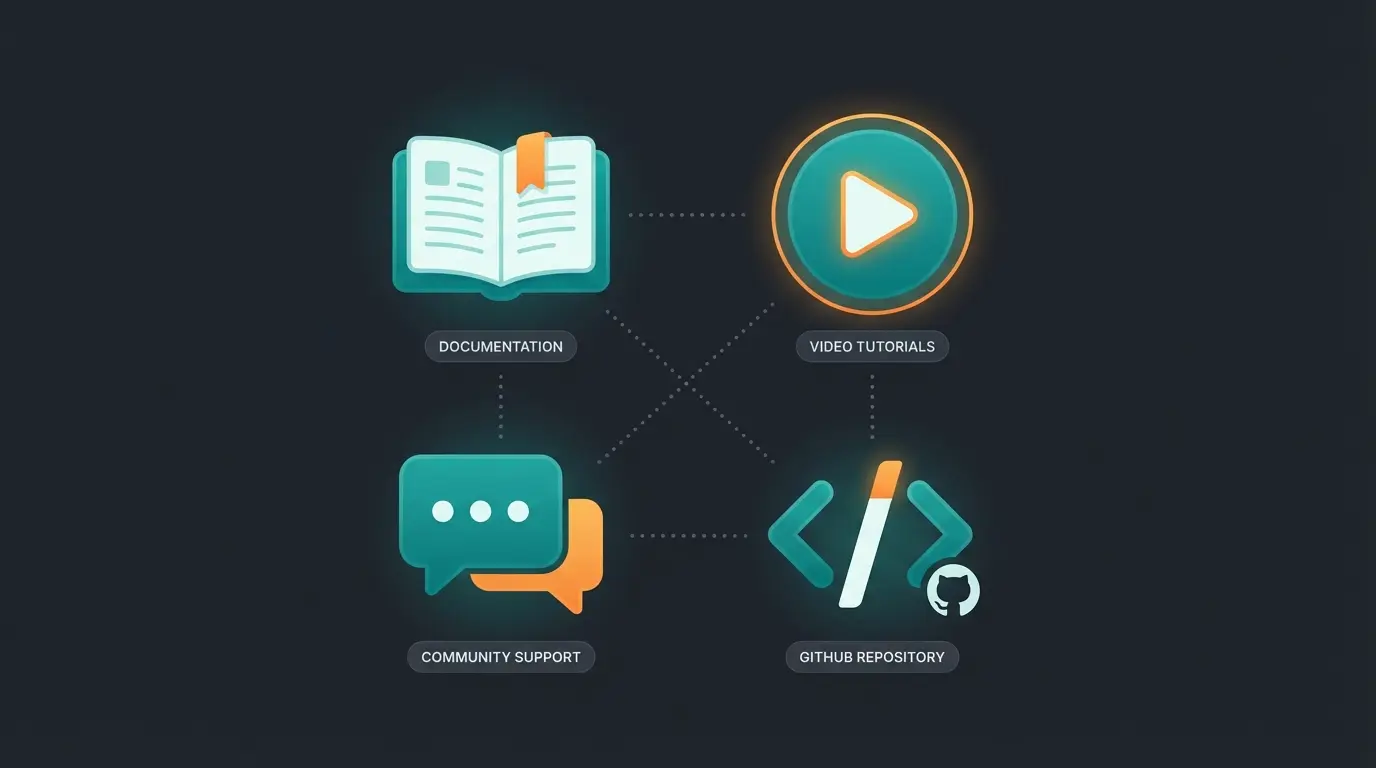
You can learn a remarkable amount about Shopware without spending a cent. The Shopware Developer Documentation is comprehensive, regularly updated, and covers everything from plugin basics to advanced API usage. Combined with community resources, free learning is a viable path for disciplined learners.
The Shopware community moved from Slack to Discord after Slack's sunset in July 2025. The Discord server now hosts over 8,000 developers who share solutions, debug issues, and discuss best practices daily. It is one of the most underrated learning resources in the ecosystem.
Best free resources in 2026
Developer documentation (developer.shopware.com): The official docs cover installation, plugin development, storefront customization, and API integration. Writing is clear and assumes basic PHP and JavaScript knowledge. For developers, this is where you start.
YouTube: Shopware's own channel publishes tutorials, feature demos, and event recordings. Agency channels add practical walkthroughs and migration guides. Filter by upload date: anything from 2025 or 2026 is current, anything older risks teaching deprecated patterns.
GitHub: The Shopware repository and over 3,100 community extensions are a goldmine for developers. Reading plugin source code is one of the fastest ways to learn real-world patterns that documentation alone does not teach. Clone a well-rated extension, study its structure, and try modifying it locally.
Discord community: Over 8,000 developers, organized by topic channels, with monthly Open Stage sessions every third Thursday. Real-time answers accelerate learning enormously. The Shopware Community Hub complements Discord with a searchable knowledge base.
Shopware Community Day and local meetups: The annual Shopware Community Day is the largest event in the ecosystem, with technical sessions, networking, and roadmap previews. Local meetups happen in cities across Germany, Austria, and the Netherlands, and they are free to attend. These events are where you learn things no documentation teaches: which plugins cause trouble in production, which hosting setups perform best, and what the Shopware team is planning next.
Our Shopware Documentation overview helps you navigate the official docs efficiently. For hands-on learners, the Shopware Tutorial collection provides step-by-step guides for common tasks. And for a deeper look at forums, Discord channels, and meetups, our Shopware Community guide covers the full ecosystem.
Learning paths by role: merchant, marketing, developer
Not everyone needs the same Shopware knowledge. A store owner configuring products needs different skills than a developer building custom plugins. As of 2026, Shopware training makes the most sense when it follows role-specific paths rather than a one-size-fits-all curriculum. Here are three clear learning tracks based on the roles we see most often across our client base.
Path 1: Merchant and store manager
Your goal is to manage products, orders, and customers efficiently. You do not need to write code, but you need to understand how Flow Builder and Rule Builder work to automate your operations. The Shopware Getting Started Guide is your ideal starting point.
Recommended timeline: two to three weeks of part-time learning. Focus on product management, category structures, customer groups, and basic SEO settings. A one-day agency workshop can compress this into an intensive hands-on session if budget allows.
One of our retail clients had a marketing manager who completed this path in 18 days using only free resources. She went from zero Shopware knowledge to independently managing a 4,000-product catalog. The key was focusing only on what her role required and ignoring the developer-oriented content entirely.
Path 2: Marketing and content manager
Marketing teams need to understand Shopping Experiences (the CMS), SEO configuration, cross-selling rules, and AI Copilot for content generation. This path overlaps with the merchant path but goes deeper into content creation and customer journey optimization.
Start with Shopping Experiences documentation, then learn how Rule Builder segments customers for targeted content. AI Copilot training is essential here, as it generates product descriptions and category texts at scale. Allow three to four weeks of part-time learning for solid proficiency.
A practical tip from our work with retail clients: have your marketing team shadow a one-day merchant training first. Understanding the admin interface and product data structure makes the marketing-specific content far easier to absorb. Too many marketing teams try to learn Shopware from the top down and struggle with basics that a single day of admin training would have covered.
Path 3: Developer
Developers face the steepest learning curve but also have the richest resources. You need to understand Symfony (PHP), Vue.js, the Shopware plugin system, and the Admin API. The official developer documentation is your primary resource, supplemented by the Academy's Certified Developer track.
Before starting Shopware-specific training, ensure you are comfortable with Symfony basics, Composer, and modern JavaScript. Without this foundation, Shopware's architecture will feel unnecessarily complex. Budget six to eight weeks for a developer with PHP experience, longer if you are coming from a different stack.
The Certified Developer exam covers plugin lifecycle, custom entities, storefront extensions, and Admin API integration. Passing it signals real competence to employers and clients. Many agencies require it for senior developer roles. If you plan to build apps for the Shopware Marketplace, the App System documentation is essential reading, as it replaces the traditional plugin approach for cloud-compatible development.
Admin basics, product management, Flow Builder, Rule Builder, AI Copilot (2-3 weeks part-time)
Shopping Experiences, SEO config, cross-selling rules, AI content generation, analytics (3-4 weeks part-time)
Symfony/Vue.js foundations, plugin architecture, API integration, App System, testing (6-8 weeks full commitment)
Shopware certification: is it worth it?
For agencies, yes, without question. For individual developers, it depends on your career goals. Shopware certifications are not cheap at EUR 999 per year for the Academy Pass, and they require re-certification every two years. But they carry real weight in the DACH e-commerce market, where Shopware powers the majority of mid-market online shops.
The honest truth: a certification alone does not make you a good Shopware developer. I have seen certified developers write terrible code, and uncertified freelancers build outstanding shops. The exam tests knowledge, not judgment. Still, when clients compare two agencies side by side, the one with more certified staff usually wins the project.
- Certified Developer: Validates knowledge of plugin development, API usage, and Shopware architecture. The most common certification for backend developers and the baseline requirement for most Shopware partner agencies.
- Certified Template Designer: Focuses on frontend development: Twig templates, SCSS, theme inheritance, and Storefront customization. Required for agencies offering design and frontend services.
- Certified Solutions Architect: The highest-level certification. Covers architecture decisions, performance optimization, complex project planning, and multi-system integration. Targets senior developers and technical leads.
When certification pays off
Certification makes clear financial sense in three scenarios. First, if your agency needs to reach or maintain a Shopware partner tier (Bronze, Silver, Gold, or Platinum), certified employees are mandatory. Second, if you are a freelancer competing for Shopware projects, certification differentiates you from the crowd. Third, if you are switching into the Shopware ecosystem from another platform, certification accelerates your credibility.
Where it makes less sense: if you are a merchant managing your own store, or if you work for an in-house team that does not interact with the Shopware partner ecosystem. In those cases, spend the EUR 999 on an agency workshop instead. You will learn more that is directly applicable to your daily work.
Includes all courses and certification exams
Re-certification required after expiry
Online exam with multiple choice and practical tasks
One attempt per certification per year included in the pass
One practical detail that catches people off guard: you only get one exam attempt per certification per year. Fail the Certified Developer exam in March, and you wait until next year. Prepare thoroughly. The community Discord is a good place to find study partners and ask about exam content.
Getting started with Shopware: quick start
If you want to start learning Shopware today, here is a practical sequence that works regardless of your role. This quick-start path uses only free resources and can be completed in a single weekend. It gives you enough hands-on experience to decide which deeper training path to pursue.
- Install Shopware 6 locally using the development template from GitHub. The official installation docs walk you through this in about 30 minutes. Alternatively, use the free cloud trial to skip local setup entirely.
- Complete the First Steps section of the administration documentation. Create a product, set up a category tree, configure a shipping method, and process a test order. This takes roughly two hours.
- Build a Shopping Experience layout for your storefront. Drag in CMS blocks, add product listings, and preview the result. This teaches you the content system central to daily store management.
- Join the Shopware Discord and introduce yourself. Ask a question about something you found confusing during the first three steps. The community is welcoming to newcomers.
After completing these four steps, you will have a working mental model of how Shopware 6 operates. From here, the decision is straightforward: merchants continue with admin and automation training, marketers dive into Shopping Experiences and SEO, and developers move to the plugin architecture and API documentation.
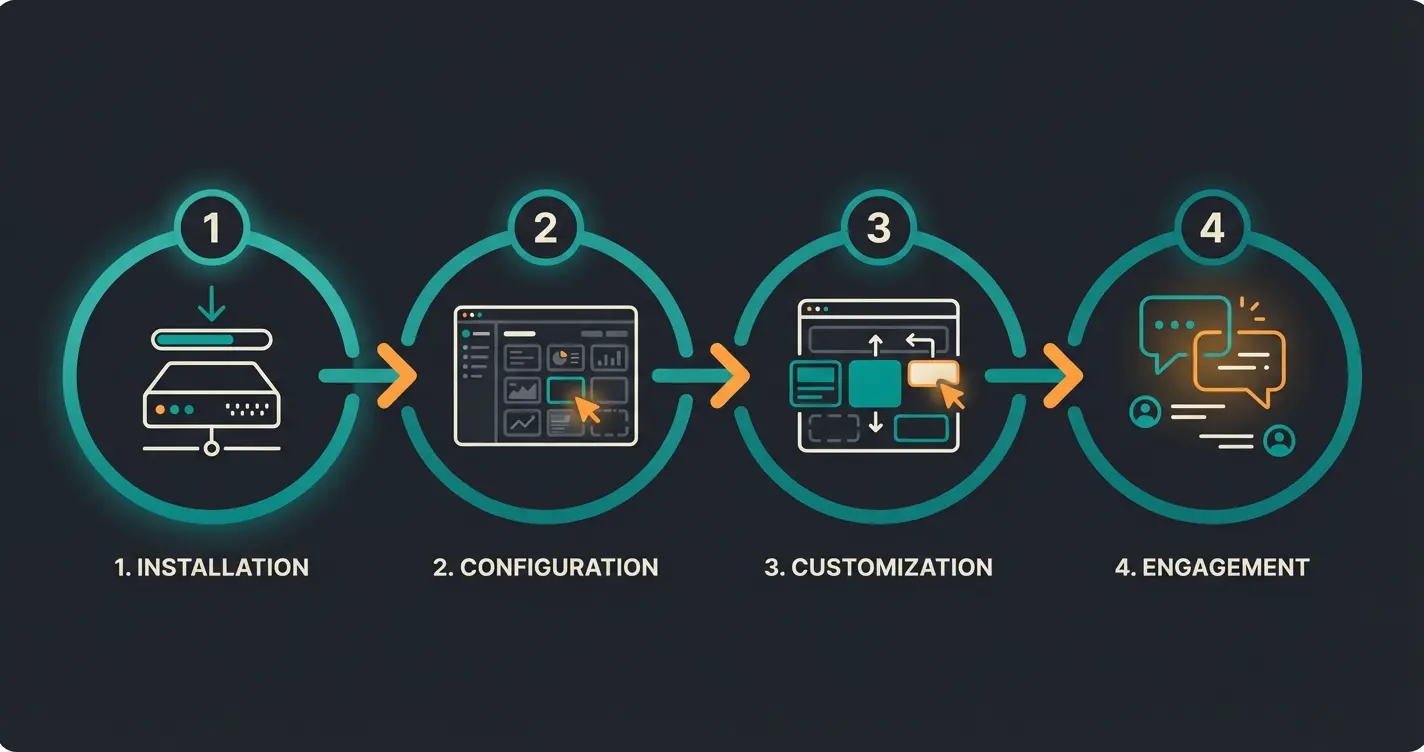
After this weekend, you will know whether to pursue the merchant path, the marketing path, or the developer path. For step-by-step instructions, our Shopware Getting Started Guide walks you through the setup process, and the Shopware Tutorial collection covers each of these steps in detail.
While you train your team on Shopware, an AI employee from Qualimero handles product advisory around the clock. Our clients see +35% higher cart values within 30 days.
Book a free demoFrequently asked questions about Shopware training
The official Shopware Academy Pass costs EUR 999 per year (net) and includes all learning paths and certification exams. Agency-led workshops range from EUR 500 to EUR 1,800 per day depending on format. Free alternatives like the developer documentation, YouTube, and the Discord community cover most beginner to intermediate topics.
For merchants and store managers, two to three weeks of part-time study is enough for daily operations. Developers with PHP and Symfony experience typically need six to eight weeks to become productive. Complete beginners without programming background should expect three to four months for developer-level proficiency.
For agencies pursuing Shopware partner tiers (Bronze through Platinum), certification is mandatory since each tier requires certified employees. For individual freelancers, it provides a competitive edge in the DACH market. Merchants managing their own stores will get more value from a focused agency workshop.
Shopware 5 reached end of life in July 2024, so all training should focus exclusively on Shopware 6. Any course or tutorial still teaching Shopware 5 patterns is outdated. If you are migrating from 5 to 6, focus on understanding the architectural shift to Symfony and Vue.js.
Shopware 6 is built on Symfony (PHP) for the backend and Vue.js for the administration panel. Storefront theming uses Twig templates and SCSS. You need solid PHP skills and familiarity with Symfony conventions. JavaScript and Vue.js knowledge is required for admin customization.
Shopware migrated its community from Slack to Discord after Slack's sunset in July 2025. The Discord server has over 8,000 active developers and hosts monthly Open Stage sessions. You can join for free and find channels organized by topic, including dedicated support channels.
Conclusion: the right learning path for you
Shopware training in 2026 comes down to a clear set of choices. The official Academy and its certifications are the standard for agencies and career developers. Agency workshops deliver fast, focused results for teams. Free resources, particularly the developer docs and Discord community, make self-directed learning entirely feasible.
Pick the path that matches your role, your budget, and your timeline. Do not try to learn everything. A merchant who masters Flow Builder and product management will run a better shop than one who half-learns plugin development. Focus beats breadth.
Whatever path you choose, make sure your training includes the tools that matter in 2026: AI Copilot for content automation, Flow Builder for process automation, and Rule Builder for business logic. These three features are what separate a shop that merely functions from one that scales efficiently. Our Shopware pillar article gives you the full picture of the platform before you commit to a learning path.
One thing training cannot solve quickly: the gap between having knowledge and having capacity. Even a fully trained team faces limits when handling every customer inquiry, every product question, every pre-sales conversation across channels. Training your team takes weeks. An AI employee from Qualimero handles product advisory from day one, with +35% higher cart values and 16x ROI for our e-commerce clients.
Qualimero's AI employees integrate directly with Shopware, know your entire product catalog, and advise customers around the clock. No training period required.
Book a demo
Lasse is CEO and co-founder of Qualimero. After completing his MBA at WHU and scaling a company to seven-figure revenue, he founded Qualimero to build AI-powered digital employees for e-commerce. His focus: helping businesses measurably improve customer interaction through intelligent automation.