Introduction: Why Saving Time Is No Longer Enough
Imagine having an employee who never sleeps, never gets sick, checks every order in milliseconds, and personally advises every customer—all simultaneously. Sounds like a utopia? In 2025, this is the reality for successful e-commerce brands.
Most merchants think of Shopify automation (often referred to as Shopify Automation in international contexts) immediately in terms of the back-office: invoices automatically sent to accounting, or shipping labels that print as if by magic. That's important, no question. For more details, see our Shopify API. It's the foundation. But those who stand still in 2025 will fall behind.
The true competitive advantage today no longer lies just in saving costs (efficiency), but in generating revenue (growth). While your competition is still busy setting up FAQ chatbots that frustrate customers with standard responses, a new era is beginning: The automation of sales consultation. This represents the next frontier where AI Selling is revolutionizing how online stores interact with customers.
In this comprehensive guide, we don't just cover the essential basics of Shopify Flow and the integration of German tools like Billbee and Lexoffice. We also show you how to bridge the gap between technical process optimization and genuine, revenue-boosting AI consultation.
Percentage of e-commerce processes that can be automated according to industry research
Current content focuses on operations, leaving pre-sales automation wide open
AI sales consultants work around the clock without breaks or sick days
Part 1: The Basics – How Shopify Automation Works
Before we dive into complex AI scenarios, we need to understand the tool that makes Shopify the most powerful e-commerce platform in the world: Shopify Flow.
For a long time, this tool was reserved only for the expensive "Shopify Plus" plans. But the rules have changed. Recently, Shopify Flow became available on the Basic Plan as well, as confirmed by Shopify's official changelog. This represents a game-changer for small and medium-sized merchants in Germany, as professional automation is now possible without an expensive upgrade. For those familiar with other platforms, you can learn about similar capabilities in the Shopware Flow Builder guide.
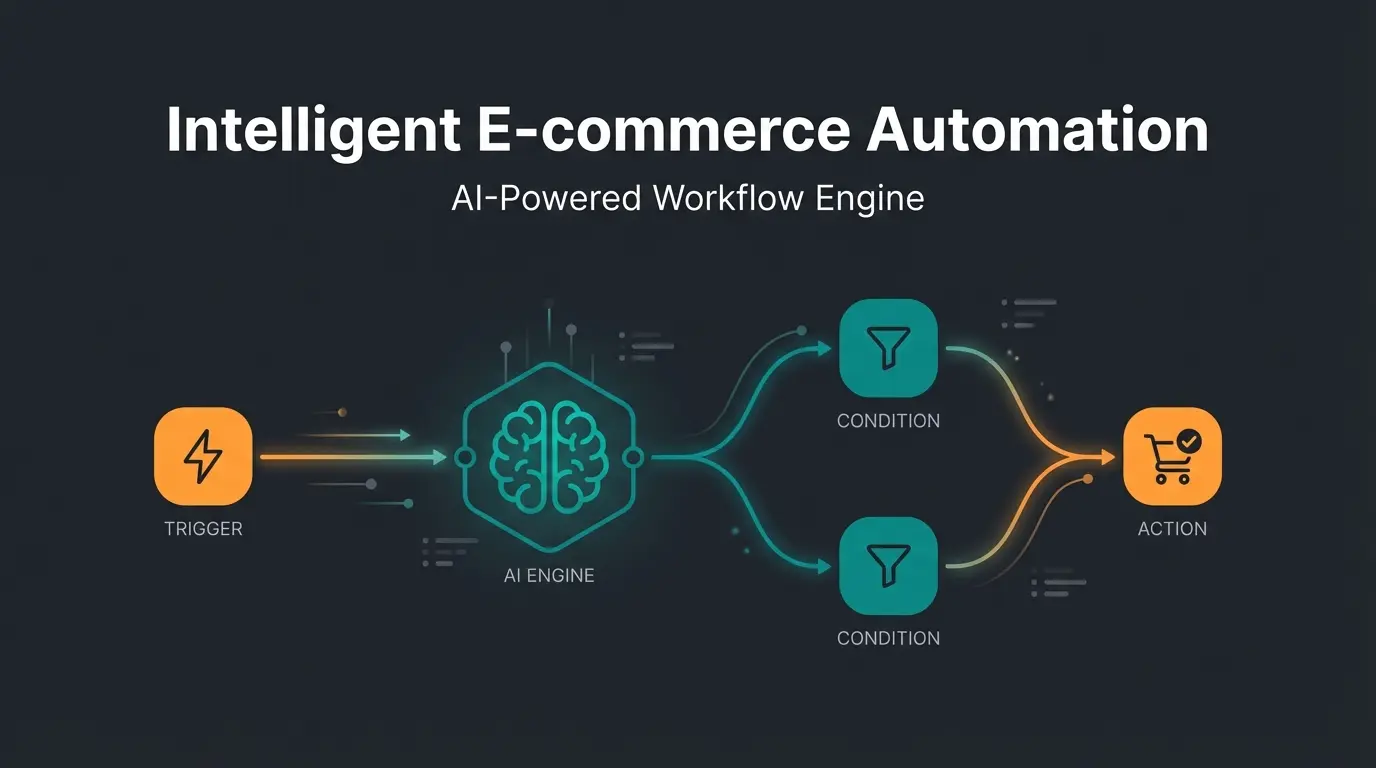
The Logic Model: Trigger, Condition, Action
Every automation in Shopify, no matter how complex, is based on a simple three-step process. Once you internalize this principle, you can automate almost any process:
- Trigger (Initiator): An event occurs. Example: An order is placed (`Order created`) or inventory drops (`Inventory quantity changed`).
- Condition (Filter): A "switch" that checks whether certain criteria are met. Example: Is the order value over €100? Is the customer from Germany?
- Action (Response): What should happen? Example: Add the "VIP" tag to the customer or send an email to the warehouse.

Part 2: Level 1 – Operational Automation (The Must-Haves)
This is where the journey begins. These automations represent the absolute minimum for automating Shopify processes and freeing your team from tedious manual work. Similar principles apply across platforms, as we explore in our Shopware API automation guide.
1. Inventory Management: No More 'Out of Stock' Surprises
Nothing is worse than a customer purchasing when the warehouse is empty. Or a bestseller selling out without you noticing. According to AdNabu's research, automated inventory management can prevent significant revenue losses.
The Workflow:
- Trigger: Inventory quantity changes
- Condition: Inventory for product variant X is less than 5
- Action 1: Send a Slack message or email to the buyer ("Reorder needed!")
- Action 2: (Optional) Hide the product in the shop or mark it as "Almost sold out"
This simple flow prevents revenue losses from overselling and ensures bestsellers always remain available. As noted by Shopify's product documentation, proactive inventory alerts are one of the most impactful automations for growing stores.
2. Risk Management: Automatically Detect Fraud
Especially in international shipping or with expensive products, fraud is a real problem. Shopify offers integrated risk analysis, but you need to make it actionable. Research from GetVerdict shows that automated fraud detection can save merchants thousands in chargebacks.
The Workflow:
- Trigger: Order risk analysis completed
- Condition: Risk level is "High"
- Action 1: Add "Fraud-Check" tag to the order
- Action 2: Send an internal warning email to support
- Action 3: (Aggressive option) Automatically cancel the order and restock the items
According to Shopify's Help Center documentation on Flow triggers, you can build sophisticated fraud detection workflows that integrate with your existing support systems.
3. The DACH Stack: Accounting and Legal Compliance
This is where most US-centric guides fail. In Germany, it's not enough to just have an order; you need a GoBD-compliant invoice, correct tax rates (OSS procedure), and a clean handoff to accounting. As Pathway Solutions explains, German e-commerce has specific legal requirements that international tools often overlook.
Shopify alone is often insufficient here. The solution for the German market is typically "middleware" like Billbee, which sits between Shopify and accounting software (e.g., Lexoffice or DATEV).
Why This Integration Is Essential:
- Invoice Numbers: Shopify assigns order numbers, but not sequential invoice numbers according to German standards. Billbee generates these automatically
- Full Automation Chain: Customer orders in Shopify → Billbee imports the order (Trigger) → Billbee creates the invoice and sends it via email to the customer (Action) → Billbee transfers the data set to Lexoffice for the tax advisor (Action)
The Billbee integration with Lexoffice is well-documented and specifically designed for German compliance requirements. Without this step, Shopify automation in Germany is incomplete and poses accounting risks. You can learn more about the Billbee ecosystem through their official tutorials on YouTube.
Order is placed and payment confirmed in your Shopify store
Middleware captures order details and generates compliant invoice numbers
GoBD-compliant invoice automatically emailed to customer
Accounting data transferred to tax software for your Steuerberater
Part 3: Level 2 – Marketing & Retention Automation
Once operations are running smoothly, we use automation to increase Customer Lifetime Value (CLV). This is where many merchants miss opportunities that AI-powered sales strategies can unlock.
1. VIP Segmentation
Don't treat all customers the same. A customer ordering for the fifth time deserves a different approach than a first-time buyer. According to HulkApps research, personalized segmentation can significantly boost repeat purchase rates.
The Workflow:
- Trigger: Order paid
- Condition: Customer's order count > 3 OR total spending > €500
- Action: Add customer tag "VIP"
What Does This Achieve? This tag can now be used in your email marketing tool (e.g., Klaviyo) to send this segment exclusive access to new collections or special discounts. As Craftberry's analysis shows, VIP programs driven by automation see significantly higher engagement rates.
2. Reviews and Social Proof
Reviews are the currency of e-commerce. But manually following up costs time. Effective AI customer service systems can handle this automatically.
The Workflow:
- Trigger: Order fulfilled
- Action: Wait 14 days (Wait Step)
- Action: Send email "How do you like your product?" (via Shopify Email or review app)
Extension for Support: When a negative review comes in (e.g., 1-2 stars), Shopify Flow can automatically create a ticket in your support system (e.g., Gorgias or Zendesk) so your team can react immediately and win back the customer. Industry research from Medium's e-commerce analysis confirms that rapid response to negative reviews significantly improves customer retention.
Start with the basics and scale to AI-powered sales consultation. Our experts can help you build the perfect automation stack for the German market.
Get Started FreePart 4: Level 3 – The New Frontier: AI Product Consultation
This is where the wheat separates from the chaff. The previous steps were "required." Now comes the "advanced course" that will set you apart from the competition in 2025. This represents a fundamental shift toward AI-driven product consultation that transforms how customers make purchasing decisions.
The Problem: The Support Trap
Most merchants only use chatbots for support: "Where is my package?", "How do I return this?" That's important, but it's reactive. It solves problems that have already occurred.
The much bigger problem, however, is Analysis Paralysis (decision paralysis). A customer comes to your shop, sees 50 different running shoes or 20 skincare sets, is overwhelmed, and leaves. No support bot in the world saves this sale, because the customer doesn't even have a "question"—they're simply undecided. Modern AI Chatbots are evolving to address this exact challenge.
The Solution: Proactive Sales Automation
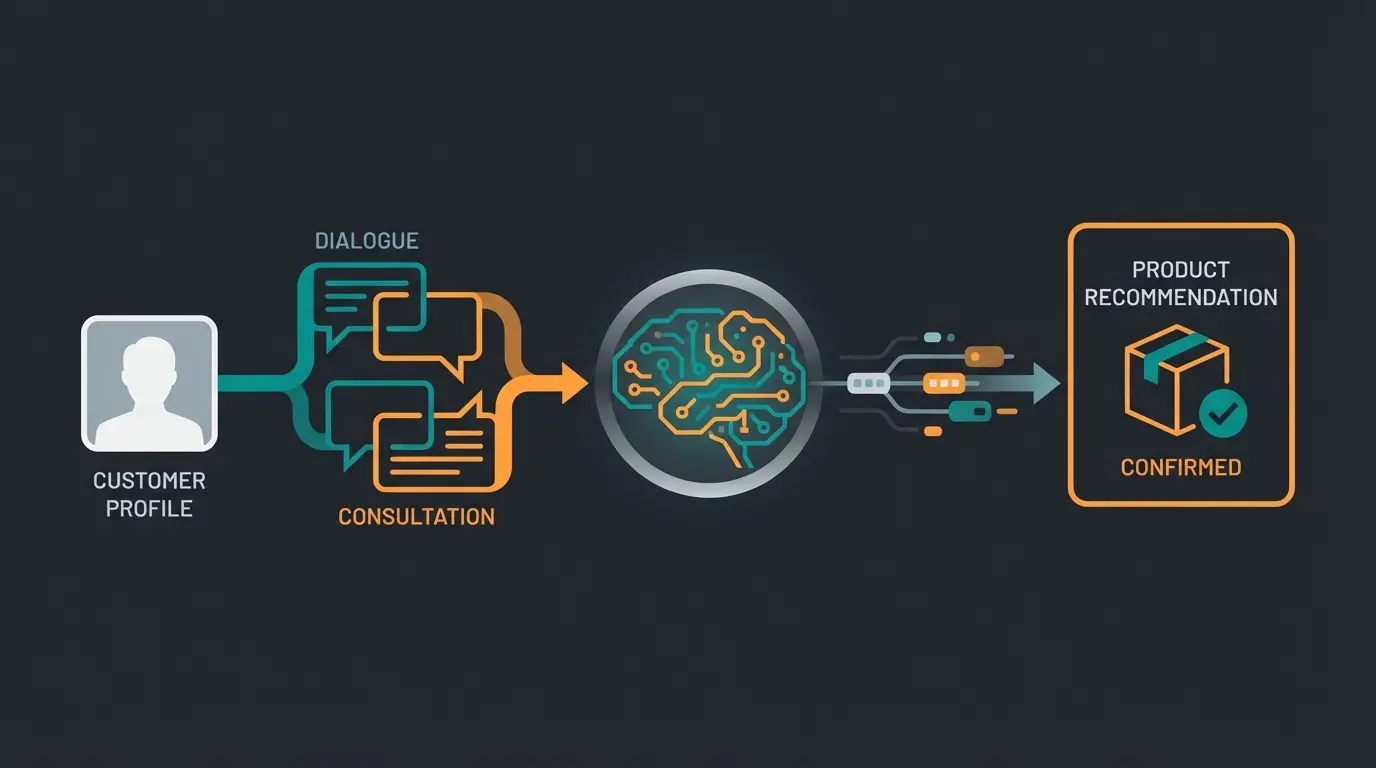
Instead of dumb FAQ bots, innovative merchants are deploying AI sales consultants. These act like an experienced salesperson in retail. You can see this approach in action with AI Employee Flora, which demonstrates how personalized consultation drives conversions.
| Feature | Classic Support Bot (Old) | AI Sales Consultant (New/USP) |
|---|---|---|
| Goal | Solve problems (reduce costs) | Generate revenue (growth) |
| Interaction | Reactive ("How can I help?") | Proactive ("Looking for X or Y?") |
| Knowledge | Static FAQs / Text modules | Deep product knowledge & combinations |
| Technology | Decision tree (If/Then) | LLM / Generative AI (Understands context) |
Practical Example: The Digital Sommelier
Imagine you sell wine.
- Without AI: The customer filters for "red wine" and sees 100 bottles. They're overwhelmed.
- With AI Automation: The customer browses the red wine category for 30+ seconds → An AI popup asks: "Planning a dinner? What's on the menu?" → Customer: "Yes, we're having beef steak." → The AI analyzes your inventory and recommends not just any red wine, but: "Our 2019 Cabernet Sauvignon pairs excellently with beef steak, as its tannins balance the fat of the meat. Here it is:" [Product Link]
This isn't science fiction. Tools like Shopify Sidekick (for merchant insights) and specialized sales AI apps are rapidly developing in this direction. According to CXM Today's coverage, AI-driven commerce is seeing explosive growth in adoption rates.
Sidekick is expanding massively in Europe in 2025 and now supports German, lowering the barrier for local merchants. As Retail Tech Innovation Hub reports, this represents a significant shift in making AI commerce accessible to smaller retailers. Additionally, Retail Times confirms that Shopify Sidekick is now available in 20 languages, making AI-enabled commerce accessible to entrepreneurs worldwide.
Part 5: The Tools Landscape (DACH Focus)
To implement this strategy, you need the right tech stack. Here's a recommendation for German merchants looking to ensure AI-readiness for their e-commerce operations:
1. The Brain: Shopify Flow
- Purpose: Connects all apps together. Free from the Basic Plan.
- Use: Inventory warnings, tagging, internal logic.
2. The Accounting: Billbee + Lexoffice/sevDesk
- Purpose: Legally compliant invoicing and accounting.
- Use: Automatic invoice emails, tax export. According to Lexware's documentation, Billbee is the "gold standard" for multichannel merchants in Germany.
3. The Marketing: Klaviyo
- Purpose: Email & SMS automation.
- Use: Uses the tags from Shopify Flow for segmented campaigns.
4. The Sales: AI Consultation Tools
- Purpose: On-site conversion optimization.
- Use: Guides the customer through the catalog, similar to a salesperson in a physical store. Learn more about implementing this approach in our comprehensive AI product consultation guide.
Invoices via Billbee, inventory via Flow – essential for scaling
Klaviyo flows, review management – brings customers back
Increases conversion rate of existing visitors – maximum ROI
Part 6: Best Practices & GDPR (Critical for Germany)
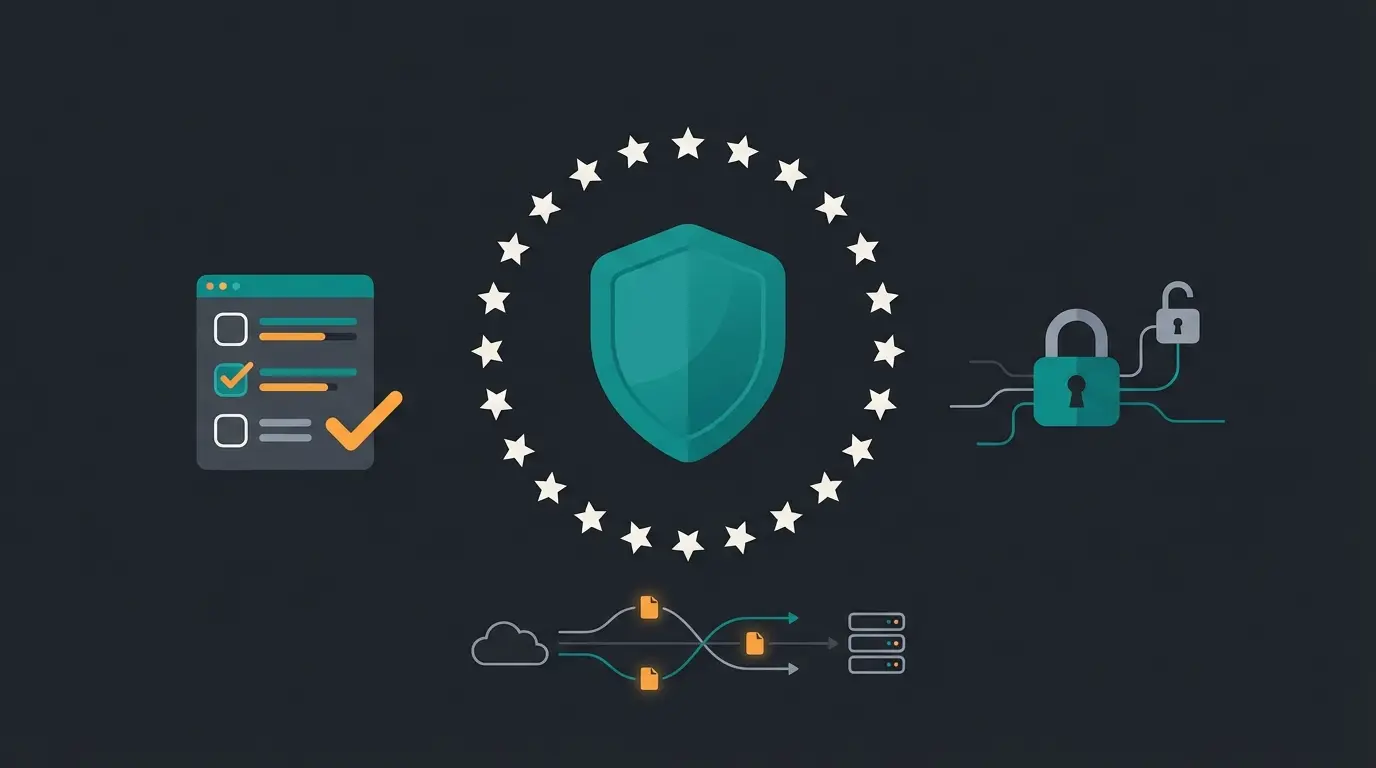
Anyone automating in Germany must consider data protection. A fully automated shop that gets a cease-and-desist letter brings no profit. This is particularly important when implementing AI consultation solutions.
- Server Location: When choosing your automation apps (especially AI tools), pay attention to where data is processed. Servers in the EU are always preferable.
- Cookie Consent: If you use AI bots or tracking for automations, these must be correctly declared in the cookie banner (e.g., via Usercentrics or Cookiebot).
- Transparency: When an AI speaks with the customer, this should be labeled. Customers appreciate honesty ("I'm your virtual assistant").
- Data Processing Agreements: Sign a data processing agreement (Auftragsverarbeitungsvertrag) with every tool provider (Billbee, Klaviyo, etc.). This is usually possible with a few clicks in the backend of the respective software.
Conclusion: The Pyramid of Automation
In summary, Shopify automation can be viewed as a pyramid:
- Base (Foundation): Operational processes (invoices via Billbee, inventory via Flow). Without this, the business collapses when scaling.
- Middle (Growth): Marketing automation (Klaviyo flows, review management). This brings customers back.
- Top (Scaling & Innovation): AI sales consultation. This increases the conversion rate of visitors you already have.
My Advice for 2025: Start at the bottom. Make sure your invoices and inventory are running automatically. But don't stop there. The market is full of shops that "work." The winners will be the shops that take their customers by the hand and advise them—and thanks to AI, this is now scalable for everyone.
Are you ready to put your shop on autopilot while simultaneously making sales more personal? Start today with your first Shopify Flow workflow.
Frequently Asked Questions About Shopify Automation
Yes, as of recent updates, Shopify Flow is now available on the Basic Plan and above. This was previously only available to Shopify Plus merchants, making professional automation accessible to small and medium-sized businesses without expensive upgrades.
The most popular German accounting integration stack is Billbee as middleware connected to Lexoffice or sevDesk. Billbee handles proper German invoice numbering (GoBD-compliant), while Lexoffice or sevDesk manages the actual bookkeeping and tax preparation for your Steuerberater.
Traditional chatbots are reactive—they answer questions like 'Where is my order?' AI sales consultants are proactive—they engage customers before they leave, ask qualifying questions, and recommend specific products based on customer needs. This shifts the focus from cost-saving (support) to revenue-generating (sales).
Key considerations include: ensuring data processing tools have EU-based servers, properly declaring all tracking and AI tools in your cookie consent banner, labeling AI interactions transparently, and signing data processing agreements (Auftragsverarbeitungsverträge) with all third-party providers.
Absolutely. Shopify Flow uses a visual no-code interface with the Trigger-Condition-Action model. You can build sophisticated automations by simply selecting options from dropdowns and connecting them logically. For more complex integrations, apps like Billbee also offer no-code setup.
Move beyond basic automation to intelligent sales consultation. Join forward-thinking merchants who are already using AI to increase conversions and revenue.
Start Your Free Trial
Lasse is CEO and co-founder of Qualimero. After completing his MBA at WHU and scaling a company to seven-figure revenue, he founded Qualimero to build AI-powered digital employees for e-commerce. His focus: helping businesses measurably improve customer interaction through intelligent automation.