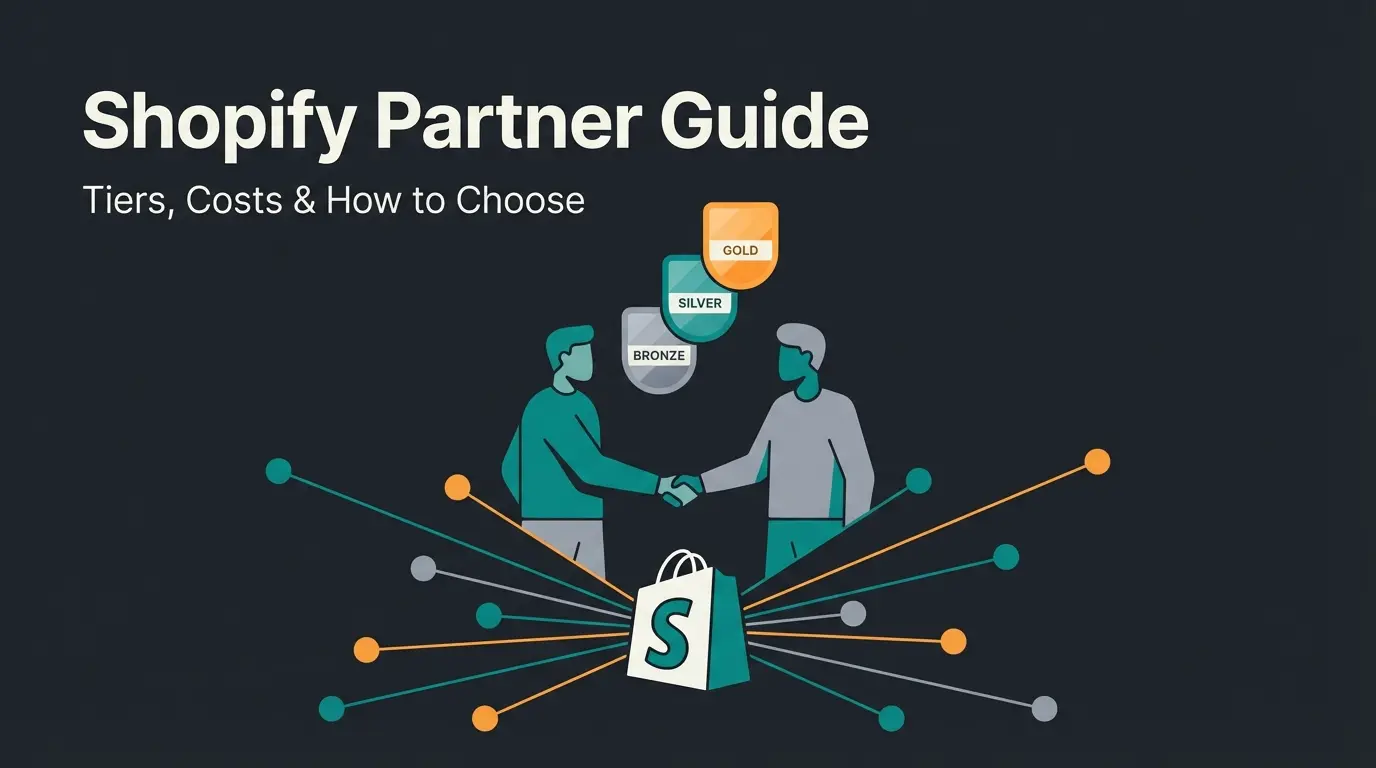
Top Shopify agencies in Munich
Open the Shopify Partner Directory for Munich and you will find over a dozen certified agencies. Scroll through Sortlist, OMR Reviews, and Google Maps, and the number grows. The real question is not whether Munich has enough Shopify talent. It is whether you can tell the difference between a partner who will build your store and one who will grow your business.
After working with e-commerce businesses across the DACH region, I have seen firsthand how the right agency choice shapes everything from launch speed to long-term revenue. If you are still getting your bearings on the platform itself, our Shopify overview covers how the ecosystem fits together. Below is an honest comparison of seven Munich agencies worth evaluating, based on their specialization, certification level, and track record.
| Agency | Specialization | Shopify Plus | Tier | Standout |
|---|---|---|---|---|
| schalk&friends | B2B, SME, Migration | Certified Plus Partner | Mid-High | Käfer case: +21% visits, +34% orders |
| Moving Primates | AI, Headless Commerce | Plus | High | Enterprise-grade Next.js/Sanity stack, 20+ years |
| Tante-E | Full-Service, CRO | Premier Partner | Mid-High | 400+ projects, reisenthel 10x revenue increase |
| WeLikeWeb | Conversion Optimization | Partner since 2018 | Mid | Built shop from zero to 7-figure annual revenue |
| UNHYDE | Design, Plus Migration | Plus Partner | Mid-High | Munich-native, exclusive Shopify focus |
| Golden Web Age | Shopify SEO | Certified Expert | Entry-Mid | 5.0/5.0 Google rating across 60+ reviews |
| thinkideas | Consulting, UI/UX | Certified Partner | Entry-Mid | Migration and custom development specialists |
Certification level matters because it determines which Shopify features and support tiers an agency can access. A Shopify Plus Premier Partner like Tante-E has completed a rigorous vetting process that includes revenue thresholds, client satisfaction scores, and a minimum number of successful Plus implementations. A standard certified partner may deliver equally strong work for smaller projects but lacks the infrastructure for complex Plus migrations.
Two patterns stand out across these agencies. The first is a move toward headless architecture, with Moving Primates leading this shift in Munich through their decoupled frontend stack built on Next.js, Sanity, and Vercel. The second is growing demand for AI capabilities in e-commerce, something most agencies are only beginning to explore.
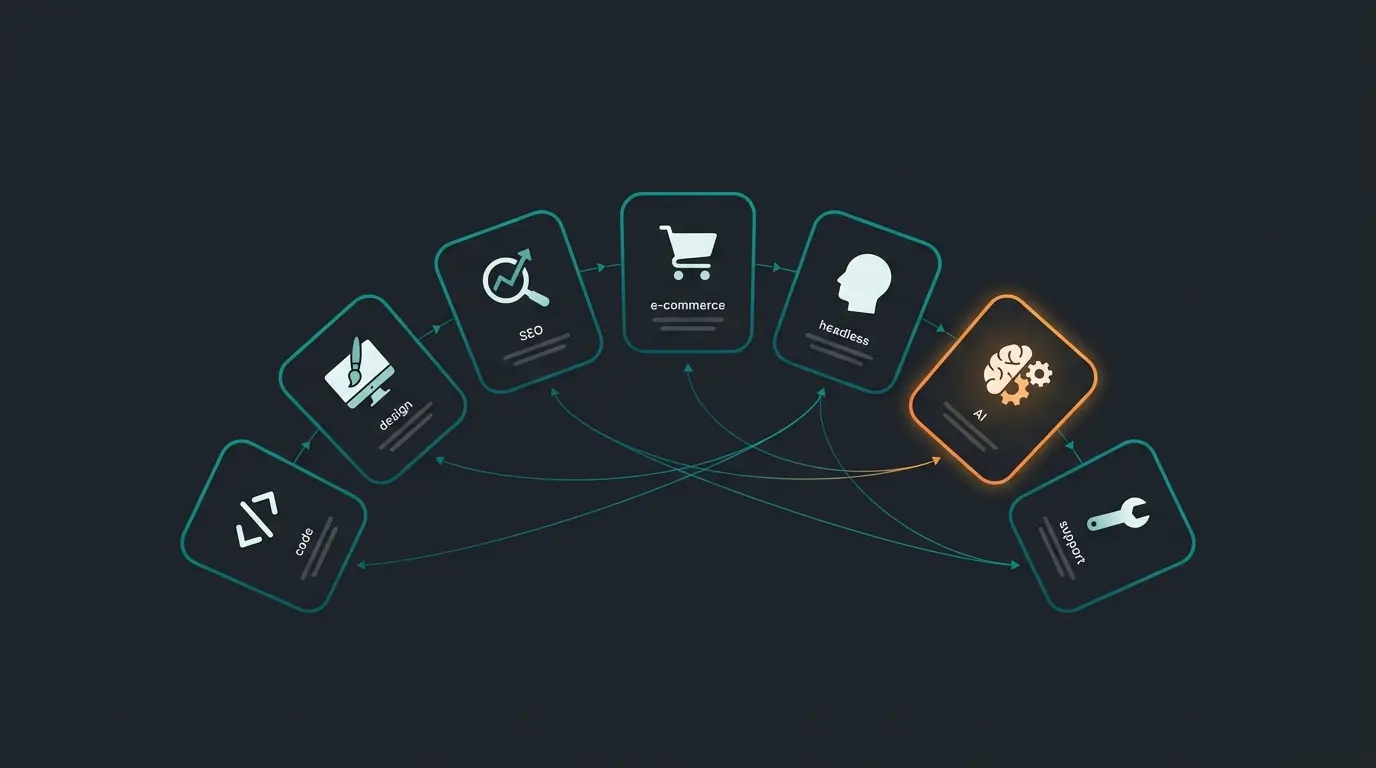
A note on what this list does not include: Munich also has strong freelancers and smaller studios, and for a tightly scoped brief a single Shopify expert often beats a full agency team. Agencies like Dual Citizen (active since 2015) and 3oneseven (115 reviews, 5.0 rating on Shopify) deserve mention for smaller projects. The seven agencies above were selected because they have the deepest public track records for mid-to-large Shopify implementations.
What makes a great Shopify agency?
Certification alone does not make a great agency. I have seen certified partners deliver mediocre work and uncertified studios produce outstanding stores. The difference comes down to six factors worth evaluating before you sign anything.
- [Shopify Partner](/blog/shopify-partner) certification level. Three tiers exist: Partner, Plus Partner, and Premier Partner. Higher tiers mean more access to Shopify's enterprise tools and priority support, but also higher project minimums. Knowing what an agency had to do to become a Shopify Partner makes it easier to read those badges accurately. For a standard store build, a certified Partner is sufficient. For Shopify Plus migrations or multi-market setups, look for Plus or Premier status.
- Portfolio depth in your industry. A great portfolio shows range, but what matters more is whether the agency has built stores in your specific vertical. A fashion e-commerce agency may struggle with a B2B industrial parts catalog. Ask for case studies in your industry, not just their best-looking project.
- Post-launch support model. The real test of an agency starts after go-live. Ask whether they offer retainer-based support, how quickly they respond to production issues, and whether their team handles ongoing optimization or just bug fixes.
- Technical architecture capability. If your store needs custom integrations with ERP, PIM, or CRM systems, the agency must have developers who understand API-first architecture. This is especially relevant for headless setups where the frontend is decoupled from Shopify's backend.
- Pricing transparency. Agencies that cannot give you a ballpark range before a discovery call are either disorganized or deliberately opaque. Both are bad signs. You should know within the first conversation whether your budget fits their typical project range.
- AI and automation readiness. This is the newest criterion, and the one most agencies have not caught up with. E-commerce stores that integrate AI for product advisory, customer service, or personalization are seeing measurable conversion lifts. Ask whether the agency has implemented any AI tools and what the results were.
Munich's business ecosystem supports this evaluation process. The IHK Munich maintains a directory of local digital service providers, and the city's concentration of e-commerce companies creates a competitive agency market that benefits buyers.
How much does a Shopify agency in Munich cost?
Munich is Germany's most expensive city for agency services, and Shopify projects are no exception. Rates run roughly 15-25% higher than in Berlin or Hamburg. But the pricing structure follows the same tiers everywhere, and knowing the ranges prevents sticker shock during discovery calls.
| Project type | Typical range | Timeline | Best for |
|---|---|---|---|
| Basic store setup | EUR 5,000-15,000 | 4-8 weeks | First-time Shopify stores with standard themes |
| Custom theme + development | EUR 15,000-30,000 | 8-14 weeks | Brands needing unique design and custom features |
| Shopify Plus migration | EUR 30,000-80,000+ | 12-24 weeks | Enterprise stores migrating from Magento, Shopware, or custom systems |
| Ongoing maintenance retainer | EUR 500-2,000/month | Continuous | Post-launch optimization, bug fixes, feature additions |
One pattern I have noticed across Munich projects: founders who invest EUR 15,000-30,000 upfront in strong foundations tend to spend less on fixes and rebuilds over the following 18 months than those who choose the cheapest option. The initial savings rarely survive the first year.
For context, Shopify's own platform costs add to the agency fee. Shopify Basic starts at USD 39/month, while Shopify Plus begins at USD 2,300/month for enterprise-grade features. Factor both platform and agency costs into your total budget before shortlisting partners.
Freelancer vs. agency: which is right for you?
Not every Shopify project needs a full-service agency. For simpler builds, a skilled Shopify freelancer can deliver the same result at 40-60% of the cost. The decision depends on three variables: budget, project complexity, and your tolerance for risk.
| Factor | Freelancer | Agency |
|---|---|---|
| Budget | EUR 2,000-10,000 | EUR 10,000-80,000+ |
| Timeline | 2-6 weeks | 6-24 weeks |
| Best for | Standard theme setups, single integrations | Plus migrations, headless builds, multi-market rollouts |
| Ongoing support | Limited, depends on availability | Structured retainers with team backup |
| Risk profile | Single point of failure | Team continuity, QA processes |
Choose a freelancer if your store runs on a standard Shopify theme, needs fewer than three integrations, and your budget is under EUR 10,000. You get faster communication, lower overhead, and a direct relationship with the person writing your code. The vetting questions are different in that case, and our guide on how to hire a Shopify developer covers what to ask before you sign.
Choose an agency if you need Shopify Plus, headless architecture, ERP integration, or multi-language support. The overhead is higher, but you get project management, QA processes, a bench of Shopify developers instead of one, and a team that does not disappear if one person gets sick.
The hybrid approach works too. Start with a freelancer for the MVP, then bring in an agency for scaling. Several Munich e-commerce businesses I have worked with took exactly this path, and it let them validate their product-market fit before committing to a larger investment.
Shopify agencies with AI integration
Most Munich Shopify agencies are still building stores the way they did in 2020. Clean design, solid performance, standard apps: that is table stakes. The agencies pulling ahead are the ones integrating AI into the actual customer experience, not as a buzzword but as a measurable revenue driver, and the ones who can put it on the channels customers actually use, WhatsApp Business included.
Signed, an online retailer for custom and decorative signs, integrated an AI employee into their Shopify-powered social commerce channels. The results: 18x return on investment, 70% of customer inquiries automated on Instagram and TikTok, and a 30% increase in upselling. The AI did not just answer questions. It guided customers to the right product variant and turned social media interactions into targeted purchases. The full Signed Case Study covers the implementation details.
Measured across all AI-assisted customer interactions
Customer inquiries handled without human intervention
Through AI-guided product recommendations on social channels
This kind of integration goes beyond what most Shopify agencies currently offer. When evaluating an agency, ask specifically whether they have experience with AI Product Consultation, conversational commerce, or automated product advisory. There is a real difference between reselling a managed AI service platform and building an assistant that actually knows your product catalog. These capabilities are rapidly becoming the dividing line between agencies that build stores and agencies that build revenue engines.
A great Shopify agency builds your store. An AI employee makes sure every visitor gets expert-level product advice. Qualimero clients see up to 18x ROI on customer interactions.
See it in actionShopify agencies in other German cities
Munich is strong, but it is not your only option. Depending on your location, budget, or industry focus, agencies in other German cities may be a better fit. Remote collaboration has made geography less important for most Shopify projects.
- Berlin has Germany's largest concentration of Shopify agencies, driven by the city's startup ecosystem and strong D2C brand culture.
- Hamburg combines deep e-commerce expertise with a traditional retail heritage, making it a strong choice for established brands moving online.
- Cologne is home to several specialized Shopify studios with a focus on lifestyle and consumer brands.
- Dusseldorf offers a growing Shopify scene, particularly strong for fashion and B2B commerce.
- Frankfurt brings financial-sector discipline to e-commerce projects, with agencies experienced in regulated industries and international payment infrastructure.
Several of the Munich agencies listed above serve clients across Germany and Austria regardless of location. The decision between a local and a remote agency should come down to project complexity and working style preference, not proximity.
Frequently asked questions
Basic store setups start around EUR 5,000-15,000. Custom theme development runs EUR 15,000-30,000, and Shopify Plus migrations range from EUR 30,000-80,000+. Munich agencies typically charge 15-25% more than the German average due to higher operating costs.
Start with the Shopify Partner Directory and filter by certification level and location. Evaluate based on portfolio depth in your industry, post-launch support model, and pricing transparency. Request at least three proposals before committing.
A basic store setup takes 4-8 weeks. Custom theme development runs 8-14 weeks. Full Shopify Plus migrations with complex integrations can take 12-24 weeks, depending on the number of integrations and clarity of requirements.
Shopify Plus is the enterprise tier, starting at USD 2,300/month. It offers checkout customization, B2B functionality, advanced automation via Shopify Flow, dedicated support, and lower transaction fees. Standard Shopify plans cover most SME needs at USD 39-399/month.
Remote collaboration works well for most Shopify projects since the platform is entirely cloud-based. Local agencies offer advantages for complex projects requiring frequent workshops or on-site integrations. Most Munich agencies serve clients across Germany regardless of location.
Conclusion
Munich's Shopify agency market is mature, competitive, and well-suited for projects of any scale. Whether you need a EUR 5,000 store setup or an EUR 80,000 Plus migration with headless architecture, the talent exists locally.
The agencies that will matter most over the next two years are the ones combining solid Shopify fundamentals with AI-powered customer experiences. That is where the measurable ROI gains are happening. For a broader perspective on the Shopify agency landscape beyond Munich, our overview covers the full ecosystem.
An AI employee works alongside your Shopify store, advising customers, handling inquiries, and increasing cart values. See how it works in a live demo.
Book a free demo
Lasse is CEO and co-founder of Qualimero. After completing his MBA at WHU and scaling a company to seven-figure revenue, he founded Qualimero to build AI-powered digital employees for e-commerce. His focus: helping businesses measurably improve customer interaction through intelligent automation.