What Exactly Is Shopify POS?
Before diving into technical details and costs, let's establish the foundation. Shopify POS (Point of Sale) is Shopify's cash register app that enables merchants to sell products in person—whether in a brick-and-mortar store, at markets, or in pop-up locations. For more details, see our Connect Shopify with Amazon. For more details, see our full POS cost breakdown.
What makes it special is the architecture: Unlike traditional cash register systems that often need to be laboriously connected to an online shop through interfaces, Shopify POS is natively integrated. This seamless connection represents a fundamental shift in how retailers can approach unified commerce.
The Single Backend Principle
Imagine having one central brain for your entire business operation. Your Online Store serves as your public face on the web. Shopify POS becomes your public face in the physical store. And the Shopify Admin functions as the central brain running everything in the background.
When you sell a t-shirt in your store, the inventory updates in the online shop within milliseconds. This prevents the dreaded "overselling" scenario—where someone purchases the last item online while it simultaneously crosses the counter in your physical store. According to hyghstreet.com, this real-time synchronization saves retailers hours of manual data maintenance every evening.
Who Is Shopify POS For?
- Pure online players taking their first steps into offline retail through pop-up shops and temporary locations
- Established retailers wanting to replace outdated cash register systems with modern, iPad-based solutions that integrate with AI product consultation
- Omnichannel brands looking to offer Click & Collect or Endless Aisle services where customers can order in-store and have items delivered home
Customers who research products online before purchasing in physical stores
Shoppers who browse in-store but complete purchases via smartphone
Retailers reporting customer frustration with inventory discrepancies
Legal Compliance in Germany: TSE, KassenSichV & GoBD
This is the most critical section for German retailers. The fear of the tax office runs deep, and the question "Is Shopify POS legal in Germany?" comes up in almost every consultation meeting.
The short answer: Yes, but you must set it up correctly.
Since the introduction of the Kassensicherungsverordnung (KassenSichV), electronic cash register systems in Germany must have a Technical Security Device (TSE). This prevents sales from being manipulated or deleted after the fact, ensuring complete transaction integrity for tax authorities.
How Shopify Solves the TSE Challenge
Shopify doesn't offer a fixed hardware TSE (like a USB stick on the printer) but instead relies on a Cloud TSE. This is significantly more convenient for you as a merchant since you don't need to swap physical sticks when certificates expire.
Step-by-Step Path to Compliance
You need an active Shopify Basic plan or higher to use POS functionality
Shopify offers its own TSE solution, but many DACH experts recommend partner apps like OpenFiskal or fiskaly TSE App
These apps digitally sign every transaction and store data in audit-proof format according to openfiskal.com requirements
Since 2025, reporting requirements have become stricter. Apps like Meldefluss help register your cash registers with authorities in just a few clicks
Don't forget GoBD compliance—you must document how you use your cash register system. Most TSE providers offer templates
Shopify POS Lite vs. POS Pro: Complete Comparison
One of the most common questions is: "Is the free version enough, or do I need Pro?" Shopify offers two variants, and the decision depends heavily on your staff structure and operational processes.
The Pricing Structure (2025 Rates)
| Feature | Shopify POS Lite | Shopify POS Pro |
|---|---|---|
| Cost | €0 (Included in every Shopify plan) | Approximately €79/month per location |
| Hardware Support | Basic (Card reader, Tablet) | Extended (Receipt printers, Scanners, etc.) |
| Staff Management | PIN login only | Detailed roles & permissions (Manager, Part-time) |
| Inventory | Basic tracking | Intelligent stock management (Transfers, Stocky) |
| Omnichannel | Basic | Click & Collect, Ship to Customer, In-store returns for online purchases |
| Analytics | Basic reports | Detailed retail reports (Revenue per employee) |
According to klinkode.com, the distinction between Lite and Pro becomes crucial when you're managing a team rather than running a solo operation.
When You Absolutely Need POS Pro
- You have employees: With Lite, every staff member can see and do everything. With Pro, you can prevent part-time workers from giving discounts or accessing sensitive revenue data, creating proper operational controls.
- You have multiple locations: If you need to transfer goods from Location A to Location B, you'll need Pro's inventory functions for seamless stock management.
- You want genuine omnichannel service: Features like "Buy Online, Pick Up In Store" or "Buy In Store, Ship to Home" are exclusively Pro features that modern customers increasingly expect.
Hardware Requirements: What Do You Actually Need?
The market for Shopify point of sale hardware has evolved significantly. While improvised setups were once common, professional standards now exist that ensure reliability and customer confidence.
The Core Device: iPad or Android?
Although Shopify POS runs on Android, the iPad remains the gold standard in retail. The app generally runs smoother on iOS, and the selection of compatible stands (Heckler, WindFall) is significantly larger and more aesthetically pleasing for iPads.
The Card Reader (Payment Terminal)
In Germany, the WisePad 3 is the most common device for Shopify Payments. It connects via Bluetooth to the iPad and accepts Girocard (EC card), Visa, Mastercard, American Express, Apple Pay, and Google Pay—covering virtually all payment methods your customers might prefer.
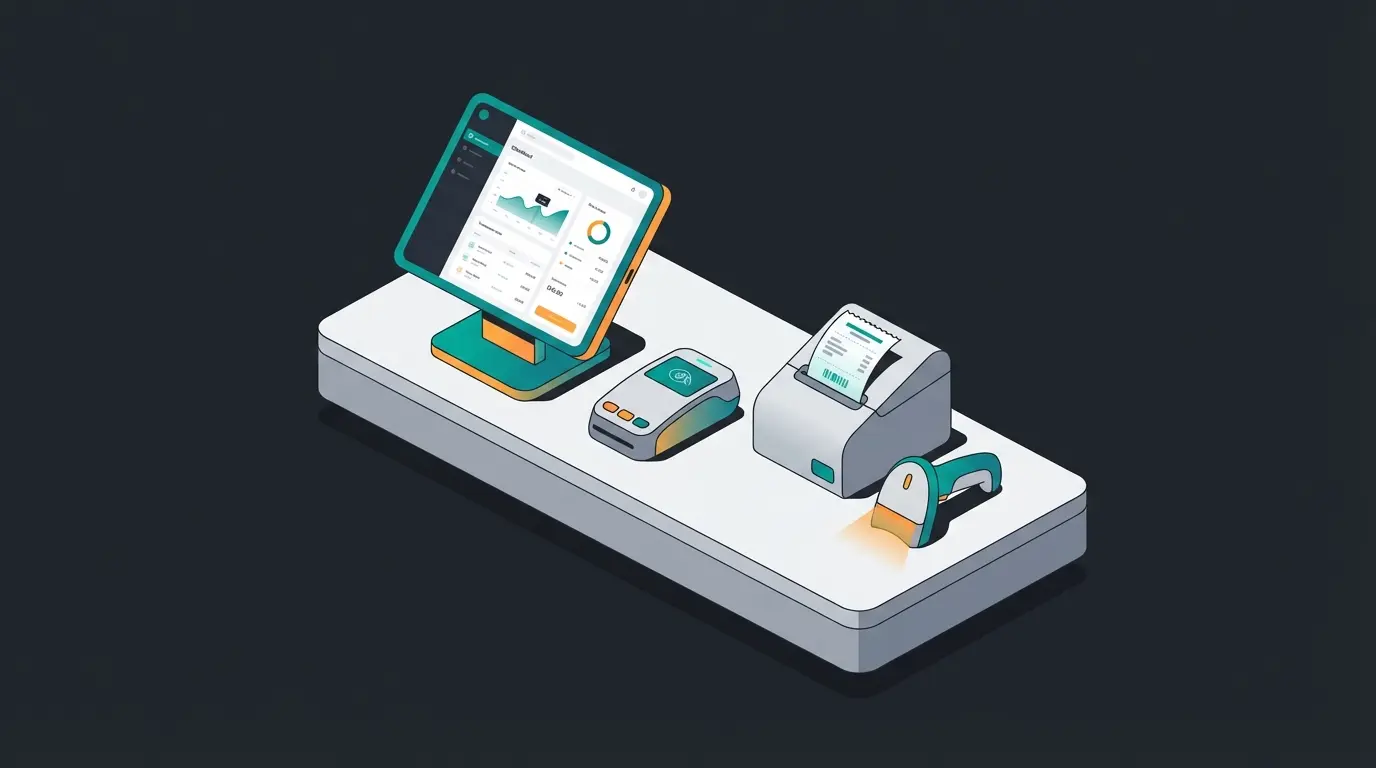
Recommended Setup for German Stores
- Tablet: iPad (current generation, doesn't need to be Pro model)
- Stand: Shopify Retail Stand or Heckler Design (for theft protection)
- Printer: Star Micronics mC-Print3 (fast, reliable, Bluetooth/LAN connectivity)
- Scanner: Socket Mobile S700 (for rapid barcode scanning)
- TSE: Cloud solution (no hardware required)
From Checkout to Consultation: The AI Revolution
Here we leave the territory of standard guides. Most merchants see the POS system only as a tool for processing payments. In times of skilled worker shortages and demanding customers, this limited view represents a critical strategic error.
The Problem: The Knowledge Gap
Customers who enter your store today have often already spent hours researching online. They know the technical specifications, the reviews, and the competitor prices down to the last detail.
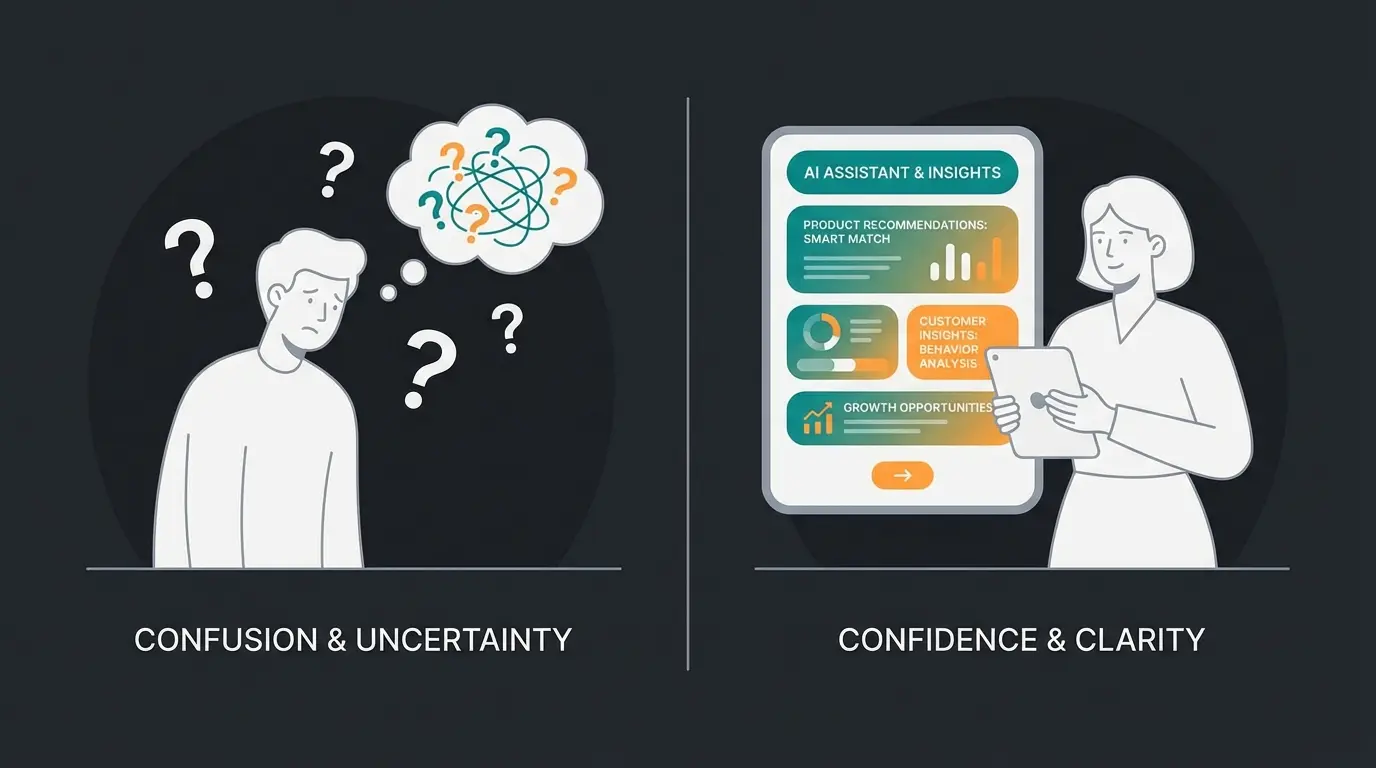
Your part-time employee who's only been there for two weeks often doesn't have this knowledge. The result: Poor consultation, disappointed customers, abandoned purchases. This knowledge gap represents one of the biggest missed opportunities in modern retail—and it's exactly where intelligent sales consultants can make a transformative difference.
The Solution: Shopify POS as a Sales Assistant
Through deep integration of Shopify POS with your online data and the use of new AI tools (like Shopify Magic or integrated AI apps), the iPad transforms from a cash register into a consultation powerhouse. This approach aligns perfectly with modern AI E-Commerce strategies that forward-thinking retailers are implementing.
Scenario: The Endless Aisle in Practice
A customer asks: "Is this outdoor jacket waterproof enough for a Norway hiking trip, and do you have it in green?"
Without Smart POS: The employee searches the label, finds nothing, runs to the warehouse, comes back: "We don't have green, sorry." Customer leaves.
With Shopify POS & AI Support: The employee scans the jacket. They immediately see the online inventory: "Not here, but I can have it delivered to your home in green by tomorrow." They tap on the AI-powered product description or use an integrated app that summarizes product reviews: "Yes, according to the manufacturer, 20,000mm water column, and here we see three customer reviews specifically recommending it for Scandinavian tours."
Addressing the Skilled Worker Shortage
You no longer need to train your employees for months on every product detail. The knowledge is in the system. This represents a fundamental shift in how retailers can approach the "Fachkräftemangel" (skill shortage) that German retailers constantly struggle with.
- Onboarding: New employees are productive from day one, capable of handling complex product questions immediately
- Upselling: The system automatically suggests matching add-on products based on online data ("Customers who bought this jacket often added this waterproofing spray")
- Consistency: Every customer receives expert-level consultation regardless of which staff member assists them
Strategic Advantage: You leverage the data power of your online shop to elevate in-store consultation to a level that Amazon can never offer: Personal empathy paired with perfect information. This is where AI-powered sales consultants truly shine, bridging the gap between digital knowledge and human connection.
Reduction in training time for new retail staff with AI assistance
Increase in purchase completion when staff use AI-powered product tools
Shoppers who rate AI-assisted consultations as helpful or very helpful
Omnichannel Strategies: Beyond Inventory Sync
Many merchants activate Shopify POS and celebrate that their inventory finally matches. But you're leaving money on the table if you don't actively use the omnichannel features to their full potential.
Click & Collect (BOPIS)
Buy Online, Pick Up In Store. This saves shipping costs and brings customers into the store, creating additional touchpoints for engagement and upselling opportunities.
Ship to Customer (Endless Aisle)
Your store has limited floor space. Your central warehouse is massive. When a size is unavailable in the store, sell it through the POS and have it shipped directly to the customer from your distribution center.
Advantage: You save the sale ("Save the Sale") that you would otherwise have lost. This approach works exceptionally well when combined with AI product consultation that can instantly identify alternatives or complementary products.
Local Returns for Online Purchases
Allow customers to return online orders in the store. This seemingly simple feature delivers three powerful benefits:
- It lowers the barrier for online purchases ("I can just drop it off at the store if it doesn't fit")
- It drives traffic into your physical location where staff can engage with customers
- The refund often goes directly back into the register because the customer selects something else on-site—turning a return into a new sale
These omnichannel capabilities become even more powerful when combined with AI-powered prevention strategies that help reduce returns in the first place while maximizing the conversion of unavoidable returns into exchanges.
Don't just settle for a cash register. Discover how AI-powered product consultation can turn every staff member into a top performer and dramatically improve customer experience.
Start Your Free TrialCost Calculation: What Does Getting Started Really Cost?
Let's get down to brass tacks. What do you need to invest for a professional start in Germany? Here's a sample calculation for a small store with one register.
One-Time Costs (Hardware)
| Item | Approximate Cost |
|---|---|
| iPad (10th Generation) | €350 |
| High-Quality Stand (e.g., Heckler) | €150 |
| Card Reader (WisePad 3) | €59 (often cheaper in bundles) |
| Receipt Printer (Star Micronics) | €300 |
| Barcode Scanner (Socket Mobile) | €250 |
| Total Hardware | Approximately €1,100 one-time |
Ongoing Costs (Monthly)
According to coding9.de, the monthly subscription costs break down as follows:
| Item | Monthly Cost |
|---|---|
| Shopify Plan (e.g., Basic) | Approximately €36 |
| Shopify POS Pro (per location) | Approximately €79 |
| TSE App (e.g., OpenFiskal) | €10-15 |
| Total Fixed Costs | Approximately €125/month |
Variable Costs (Transactions)
This is where Shopify earns its revenue share. When you use Shopify Payments, you don't pay external transaction fees, but you do pay credit card processing fees.
According to latori.com, Girocard/Debit transactions are often cheaper, while credit cards (Visa/Mastercard) typically run around 1.5% + €0.00 with POS Pro—the rates are often more favorable for in-person transactions than online.
Comparing POS Types: Traditional vs Smart vs AI
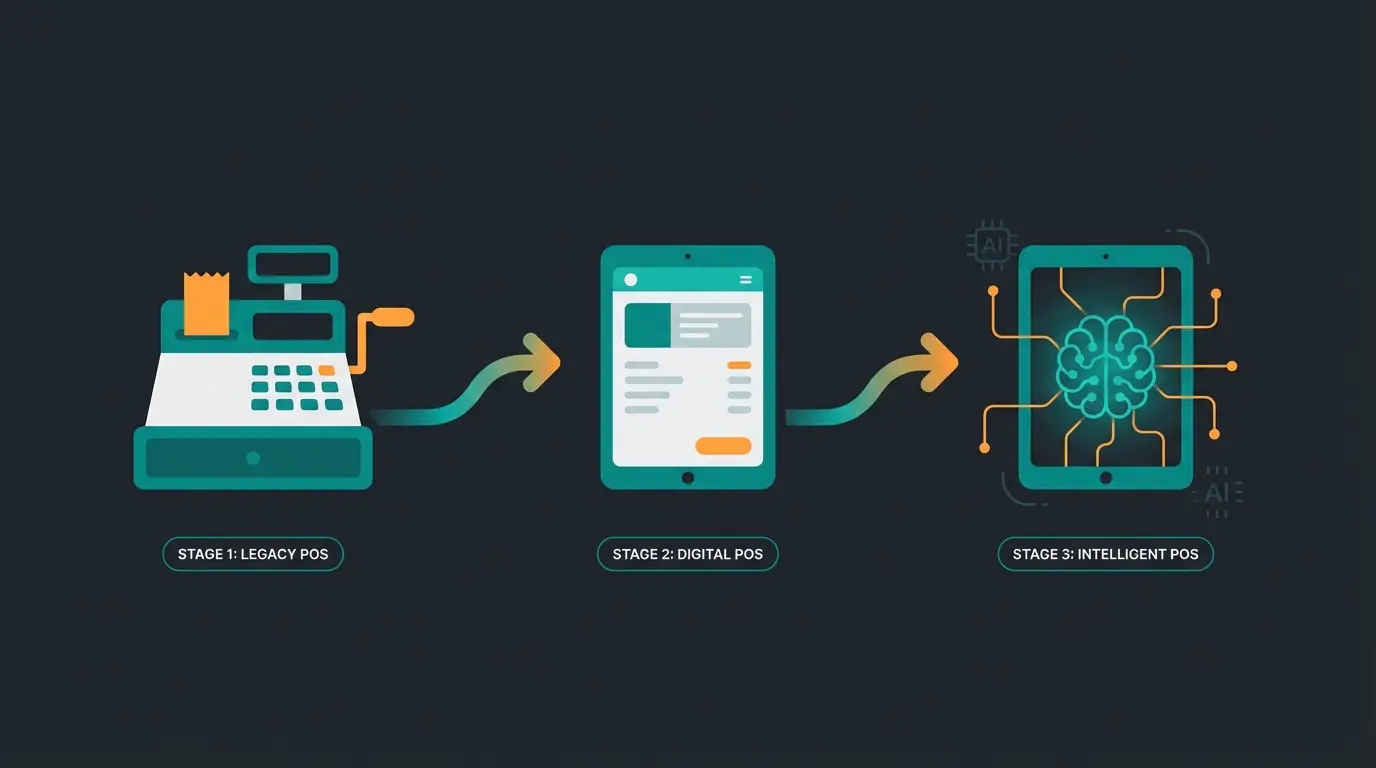
To truly understand where the market is heading and where your competitive advantage lies, consider this comparison across three generations of point-of-sale technology. This framework helps illustrate why AI integration represents the future of retail.
| Capability | Traditional Register | Standard Shopify POS | Shopify POS + AI |
|---|---|---|---|
| Inventory Sync | No real-time updates | Yes, automatic | Yes, with predictive insights |
| Staff Knowledge | Memory-based only | Search-based lookup | AI-Assisted with instant answers |
| Customer Profiling | None available | Basic purchase history | Predictive recommendations |
| Product Recommendations | Manual suggestion | Browse catalog | Intelligent cross-sell suggestions |
| Training Required | Weeks to months | Days to weeks | Hours to days |
| Consultation Quality | Varies by experience | Consistent basics | Expert-level for all staff |
This evolution represents a fundamental shift in retail capability. While traditional systems focused purely on transaction processing, and standard POS added convenience, the AI product consultants of today create genuine competitive differentiation through superior customer experience.
Implementation Best Practices for Success
Successfully deploying Shopify POS requires more than just purchasing hardware and installing apps. Based on experience from hundreds of retail implementations, here are the critical success factors.
Pre-Launch Preparation
- Audit Your Product Data: Ensure all products have complete descriptions, images, and specifications—the AI consultation features depend on this data quality
- Map Your Workflows: Document how staff currently handle common scenarios (returns, exchanges, special orders) and design POS workflows to match or improve them
- Test TSE Integration Thoroughly: Run test transactions and verify that digital signatures are being properly recorded before going live
- Train Staff on the AI Features: The biggest ROI comes from staff who actively use the consultation tools, not just the checkout functions
Launch Day Checklist
Having proper AI consultation readiness means ensuring your team understands not just the mechanical aspects of the system, but how to leverage its intelligence for better customer interactions.
- Backup internet connection ready (mobile hotspot as failover)
- All staff PINs created and tested with appropriate permission levels
- Receipt printer loaded with paper and test receipt printed
- TSE app showing active status with valid certificate
- Product catalog fully synced and searchable
Future Trends: Where Retail AI Is Heading
The integration of AI into retail POS systems is just beginning. Forward-thinking retailers are already exploring capabilities that will become standard within the next few years.
Predictive Inventory and Staffing
AI systems are learning to predict not just what products will sell, but when peak consultation periods will occur. This enables smarter scheduling and ensures your most knowledgeable staff (or the best AI-equipped stations) are available during high-value selling windows.
Personalized In-Store Experiences
When active product consultation combines with customer identification (through loyalty apps or payment history), the POS can surface personalized recommendations the moment a returning customer approaches the counter.
Voice-Activated Consultation
The next frontier involves staff asking questions verbally while handling products, with the AI providing answers through earpieces or on secondary displays. This keeps the human interaction natural while ensuring access to complete product knowledge.
Conclusion: The Cash Register Is Dead, Long Live the Consultant
The decision for Shopify POS in 2025 isn't a decision for a "new cash register." It's a decision for a new operating system for your entire retail business.
The days when online and offline were separate worlds are over. Your customers expect you to know what they bought online. They expect you to have access to all information in the store. And they expect a seamless process regardless of channel.
Summary of Key Benefits
- Legal Security: With cloud TSE apps like OpenFiskal, you master German bureaucracy without hardware dongles
- Efficiency: A central inventory finally ends the chaos of disparate systems
- Revenue Growth: Through omnichannel features like "Ship to Customer," you never lose another sale just because a size is missing
- Future-Proofing: With AI tool integration through AI-powered sales capabilities, you equip your staff against skilled worker shortages and offer expert-level consultation
The complete Shopware 6 guide provides additional context on how these POS capabilities integrate within broader e-commerce ecosystems.
Our Recommendation
Don't start blind. Use Shopify's free trial period, install the POS app on an existing iPad, and play "store" for a day. When you see how seamlessly the products from your online shop appear on the display, you'll never want to go back to a traditional cash register system again.
FAQ: Common Questions About Shopify POS in Germany
Theoretically yes, as an "external terminal." However, you must manually enter the amount on the terminal and confirm it in the app. This is error-prone. The integrated solution (WisePad 3) is significantly faster and prevents typing errors, making it the recommended approach for professional retail operations.
Yes, with limitations. You can continue to accept cash payments and make sales. However, card payments and inventory synchronization require a connection. As soon as the internet returns, everything synchronizes automatically. Consider having a mobile hotspot as backup for mission-critical selling periods.
No. With POS Pro, you can create unlimited employee PINs. Multiple employees can share one device, and the system precisely tracks who made which sale—important for commissions and performance reviews. The role-based permissions ensure each staff member only accesses appropriate functions.
No, the TSE apps (like OpenFiskal or fiskaly) usually cost a small additional monthly fee since certificates must be managed with authorities and trust centers. Budget approximately €10-15 per month per location for this compliance requirement.
This is where AI integration becomes invaluable. Rather than scrolling through endless product lists, staff can use natural language search and AI-powered recommendations to instantly find products matching customer requirements. The system can surface relevant alternatives, compatible accessories, and detailed specifications within seconds.
Join thousands of retailers who have upgraded from simple checkout to intelligent consultation. Our AI-powered solution integrates seamlessly with Shopify POS to turn every transaction into an opportunity for exceptional customer service.
Get Started Today
Lasse is CEO and co-founder of Qualimero. After completing his MBA at WHU and scaling a company to seven-figure revenue, he founded Qualimero to build AI-powered digital employees for e-commerce. His focus: helping businesses measurably improve customer interaction through intelligent automation.