
Introduction: The End of 'Dumb' Online Stores
There's a gold rush mentality in German e-commerce when it comes to Shopware Headless. Agencies and tech partners have been preaching the same mantra for months: 'You need to go headless so your shop loads faster.' And they're right—partially.
Page speed is crucial. According to ecommerceage.co.uk, Google penalizes slow stores, and customers abandon their carts when checkout takes longer than three seconds. Research from Crystallize confirms this behavior pattern. But let's be honest: a fast shop that leaves customers alone with 5,000 products and a complex filter bar is just a fast way to confuse them.
We're standing at a turning point. The era of monolithic 'storefront windows' isn't ending just because of performance requirements. It's ending because customers expect consultation. The German consumer is information-hungry and risk-averse. They don't just want to know that you have a power drill—they want to know which one is suitable for their reinforced concrete wall.
In this article, we argue that Shopware Headless isn't primarily a frontend technology—it's a logic technology. It's the key to liberating your product data from the rigid constraints of HTML templates and making it accessible to an Artificial Intelligence that does what only your best in-store salesperson could do before: consult, understand, and sell. This is where AI product consultation becomes the game-changer for modern e-commerce.
What Is Shopware Headless Actually? (The SEO Basics)
Before we dive into the AI strategy, we need to clarify the foundation. What does Shopware Headless technically mean?
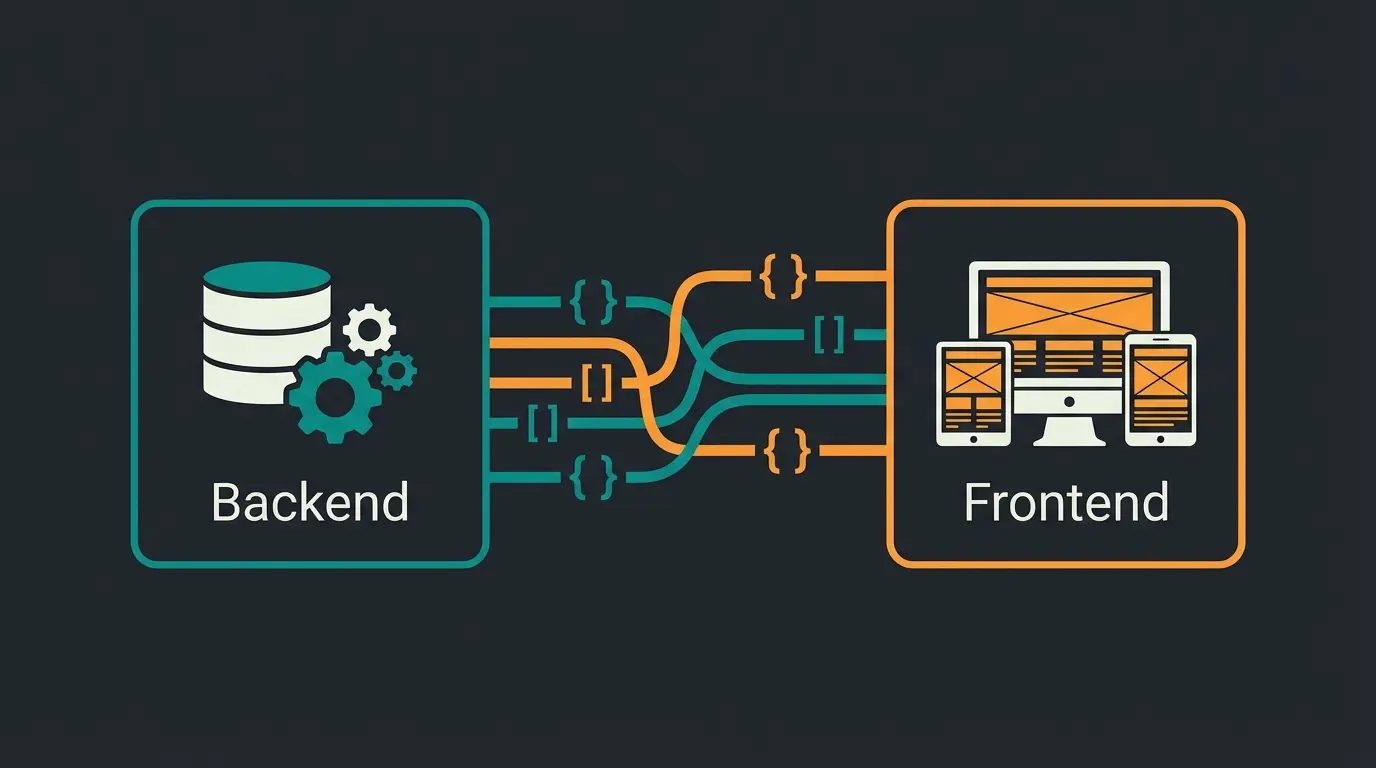
Traditionally, shop systems (like Shopware 5 or the standard storefront of Shopware 6) are based on a monolithic architecture. This means the Backend (database, logic, price calculation) and Frontend (what the customer sees, HTML/CSS/Twig) are tightly fused together. The backend 'dictates' how the frontend looks.
The Decoupling Principle
With a headless approach, we separate the 'head' (frontend) from the 'body' (backend). Shopware 6 functions solely as an engine. It manages products, shopping carts, and orders but no longer delivers finished HTML pages. Instead, it sends raw data (usually in JSON format) via an API (interface). The Frontend becomes a standalone application (often a PWA – Progressive Web App), built with modern frameworks like Vue.js, Nuxt.js, or React.
This architecture is often called API-First. According to Shopware's official documentation, Shopware was designed from the ground up in version 6 so that every function is accessible via the API.
The Standard Argument: Speed, SEO & Omnichannel
If you ask an agency about the benefits of Shopware Headless today, they'll typically present three arguments. These are valid and important ('table stakes'), but they're no longer the unique selling proposition.
Core Web Vitals & SEO Dominance
Google evaluates websites based on Core Web Vitals (LCP, FID, CLS). Headless setups enable techniques like Server-Side Rendering (SSR) and Static Site Generation (SSG). This means the browser doesn't have to load massive JavaScript packages before the user sees anything.
- Result: Lightning-fast loading times, often under 1 second
- SEO Impact: Google rewards this performance with better rankings
Studies from WPSteroids and Digital4Design confirm these performance improvements directly correlate with improved search visibility.
Omnichannel: Sell Everywhere
Since the backend only delivers data, it doesn't matter who receives that data. It can be the webshop, but also a native mobile app, a smart mirror in the retail store, a voice assistant (Alexa/Siri), or an Instagram shop feed. All channels access the same Shopware instance. That's true omnichannel capability, as confirmed by Shopware's platform documentation.
Developer Experience & Flexibility
Developers love headless because they're no longer bound to Shopware's rigid Twig templates. They can use modern tools like Shopware Composable Frontends to build highly interactive user interfaces without fearing they'll break the backend with every update. The Shopware Composable Frontends documentation provides comprehensive guidance for this approach.
Headless shops with SSR achieve sub-second loading times
Faster mobile experience significantly reduces abandonment
Core Web Vitals optimization directly impacts search visibility
The Hidden Advantage: Data Liberation for AI
Here we leave the path of standard argumentation. Why is headless the essential prerequisite for an AI strategy in 2025? Understanding this connection is crucial for building AI-ready infrastructure.
The Monolith Problem: Data Trapped in 'HTML Prison'
In a classic Shopware storefront setup, product data (name, description, attributes) is directly 'baked' into HTML code. If you want to integrate an AI (like an LLM such as GPT-4) into your shop to advise customers, the monolith has a problem: The AI must laboriously wade through HTML structures (scraping) to understand what a product actually is. This is slow, error-prone, and hardly feasible in real-time.
The Solution: API as AI Food
In a Shopware Headless Architecture, data is already available as structured objects (JSON) at the API. Consider the difference:
- Monolith: `<div><h1>Mountain Bike X500</h1><p>Suitable for terrain...</p></div>`
- Headless API: `{ "product": "Mountain Bike X500", "category": "Offroad", "specs": { "suspension": "full", "terrain": "rocky" } }`
This is the game-changer: Your AI solution can directly 'hook into' the Shopware Store-API. It reads the entire catalog in milliseconds, understands relationships between attributes, and can use this information to respond intelligently instead of just matching keywords. Research from Contentstack confirms this architectural advantage for AI integration.
We call this 'Data Liberation.' You're freeing your data so it can be not just displayed, but understood. This enables sophisticated Shopware AI chatbots that truly comprehend your product catalog.
Shopware Headless + AI: The 'Consultative Storefront'
Imagine you sell products requiring explanation—high-quality bicycles, medical devices, or complex building materials. This is typical for German mid-market companies (Mittelstand).
The Scenario: 'Consultation Theft'
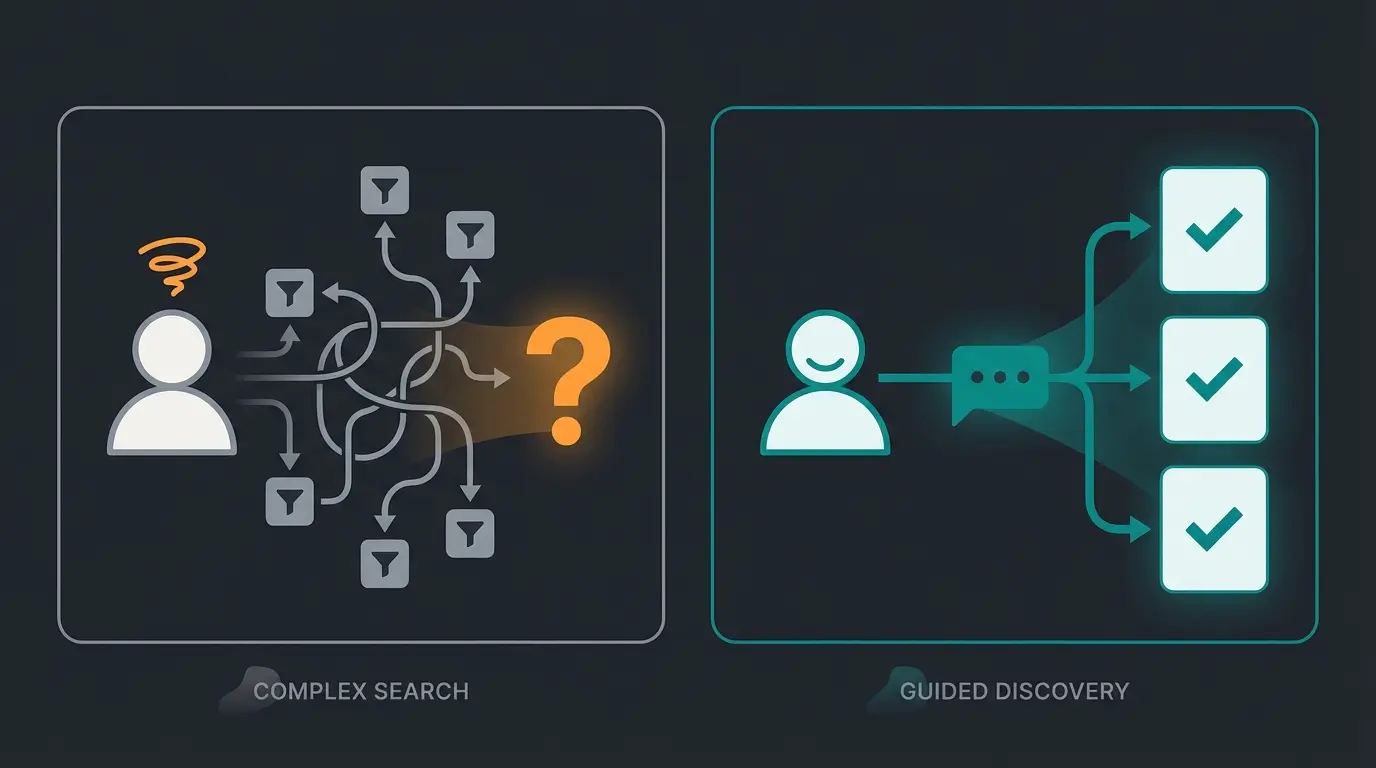
A customer comes to your standard Shopware shop. They're looking for a bike for their back, which is sensitive after a herniated disc.
- Standard Search: They type 'back.' Result: 0 matches or accessories.
- Filters: They filter by 'Full Suspension' or 'Hardtail,' but don't know which is better for their back.
- Consequence: They leave the shop, google in forums, get advice there—and then often buy from Amazon or the cheapest provider. This is digital consultation theft.
German consumers are known for being information-hungry and risk-averse. They need quality advice before purchasing complex products. This is where AI-powered product consultation becomes essential.
The Solution: Intelligent Headless
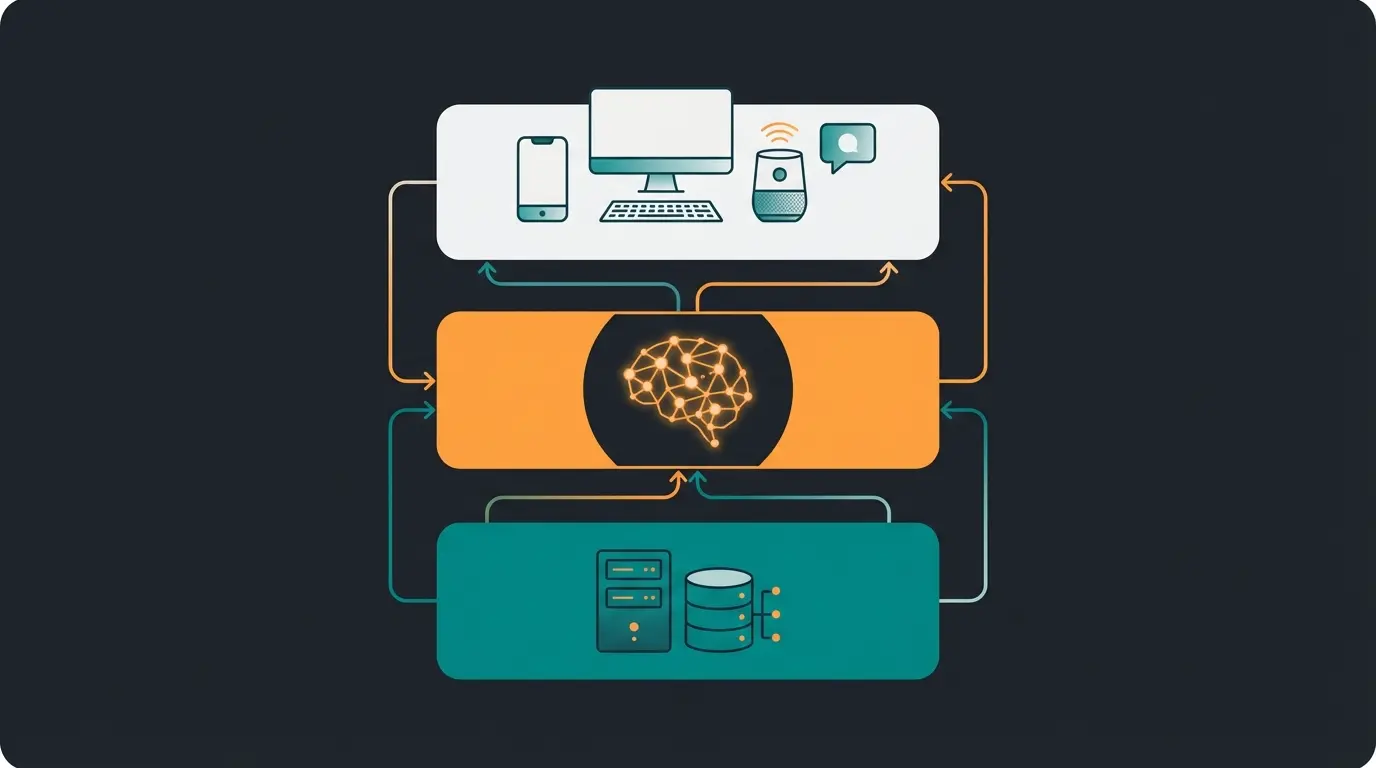
In your new architecture, an Intelligence Layer (AI layer) sits between the Shopware backend and the Vue.js frontend.
- The customer asks: 'I had a herniated disc, I'm 1.85m tall, and I'm looking for a bike for forest trails.'
- The AI analyzes: It understands the context (health problem + body height + terrain).
- API query: The AI doesn't ask the Shopware API for keywords, but for properties (full suspension for cushioning, frame size L/XL, upright seating position).
- The result: The shop doesn't just display 3 bikes, but dynamically generates advisory text: 'Based on your back condition, we recommend Model X, as the full suspension absorbs shocks and the geometry promotes an upright posture.'
This isn't science fiction. With Shopware Composable Frontends and modern AI agents, this is achievable today. According to Sellbery and Feedonomics, AI-enhanced e-commerce is already transforming customer experiences globally.
Comparison: Monolith vs. Headless vs. Intelligent Headless
To clarify the strategic significance, let's compare the three evolutionary stages. This comparison helps you understand where your shop currently stands and where it could be.
| Feature | Shopware Monolith (Standard) | Standard Headless (Agency Solution) | Intelligent Headless (AI-First) |
|---|---|---|---|
| Architecture | Frontend & Backend fused (Twig) | Decoupled (Vue.js / React) | Decoupled + Intelligence Layer |
| Performance | Medium (Server-Heavy) | High (Core Web Vitals optimized) | High (plus efficient search) |
| User Experience | Static, generic | Fast, fluid (App-Like) | Personalized & Consultative |
| Product Search | Keyword-Matching | Fast filtering (Algolia etc.) | Semantic Understanding & Dialog |
| Customer Guidance | 'Take it or leave it' (Self-Service) | Optimized UX paths | Active Sales Consultation |
| Data Usage | Display only | Display on many channels | Understanding & Recommendation |
| Ideal For | Simple products, small budgets | Performance-focused, lifestyle brands | Products requiring explanation (B2B/B2C) |
Understanding these distinctions is crucial when evaluating Shopware alternatives and making informed platform decisions.
Stop losing customers to consultation theft. Our AI-powered product consultation integrates seamlessly with Shopware Headless to provide 24/7 expert advice.
Start Your AI JourneyImplementation Guide for the German Mid-Market
How do you implement this concretely? Here's a roadmap for a future-proof architecture that's GDPR-compliant and scalable.
Step 1: The Technical Foundation (Shopware 6.6+)
Ensure your backend is up to date. According to Shopware's release notes, Shopware 6.6 (and soon 6.7) requires PHP 8.2 and offers improved API performance.
Hosting: Choose specialized hosting providers (like maxcluster) that have experience with headless setups (Node.js server for the frontend). For comprehensive hosting guidance, check out our Shopware hosting AI commerce guide.
Step 2: Decouple the Frontend (Composable Frontends)
Use Shopware Composable Frontends. This is the official, Shopware-supported toolkit based on Vue.js 3 and Nuxt 3. According to Kiwee, this approach significantly reduces development complexity.
- Why Nuxt? It offers 'out of the box' Server-Side Rendering (important for SEO) and a clean structure for your components.
- Avoid custom builds: Don't build a frontend completely from scratch. Use Shopware's blueprints to reduce maintenance costs.
The GitHub repository provides extensive resources for getting started.
Step 3: Integrate the Intelligence Layer
This is where you differentiate yourself. Instead of just displaying products, integrate an AI agent (via API integrations like those available on AI Agent Store or custom solutions) that accesses the Store-API. For a deeper understanding of implementation approaches, explore our Shopware AI guide.
- Architecture: The AI sits as middleware between frontend and backend.
- Flow: Frontend -> AI Request -> AI Analyzes -> AI Queries Shopware API -> AI Formulates Response -> Frontend Displays Product + Text.
Upgrade to Shopware 6.6+ with PHP 8.2 and choose specialized headless hosting
Implement Composable Frontends with Vue.js 3 and Nuxt 3 for SSR capabilities
Connect intelligent middleware that queries the Store-API for semantic product understanding
Implement consent management with dedicated headless SDKs for German market requirements
Step 4: GDPR and Consent Management (Crucial for Germany)
A headless shop often loads data from various sources. In Germany, the topic of consent (cookie banners) is critical.
Challenge: Classic Shopware plugins for cookie banners often don't work in headless frontends because they rely on Twig events.
Solution: Use Consent Management Platforms (CMPs) like Usercentrics or Consentmanager that offer dedicated SDKs for Headless/React/Vue. According to Consentmanager and Usercentrics, these modern CMPs are designed specifically for decoupled architectures.
Server-Side Tracking: To avoid data loss through ad blockers while ensuring privacy compliance, tracking pixels should ideally be fired server-side (via the Node.js server), not in the customer's browser.
Visual Architecture: The 'Sandwich Model'
To sell this concept internally, the image of a sandwich helps. Most competitors build only 'bread with butter' (Backend + Frontend). We build a 'club sandwich.'
The Three-Layer Architecture
- Top Layer (Frontend): Mobile PWA, Desktop Web, Social Feeds. Technology: Nuxt.js / Vue.js. Focus: Display, Animation, Speed.
- Middle Layer (Intelligence): The 'AI Salesperson.' Function: Translates customer intent ('My back hurts') into technical filters ('Full-Suspension'). Technology: LLM (Large Language Model) + Vector Database.
- Bottom Layer (Backend): Shopware 6. Function: Product data, Checkout logic, Pricing, Inventory. Technology: PHP, MySQL, Elasticsearch.
This architecture enables what we call Consultative AI—AI systems that don't just answer questions but actively guide customers through complex purchase decisions. Understanding different Chatbot AI approaches helps you choose the right implementation for your needs.
The Consultation Gap: Why Standard Headless Falls Short
Here's where the real differentiation lies. Competitors talk about connecting frontends (mobile, web, watch) but nobody talks about connecting intelligence (AI agents). They view headless purely as a display technology, not a logic technology.
Filter vs. Consultation: A Side-by-Side Journey
Consider how the customer experience differs fundamentally between approaches:
| Aspect | Standard Shop (Filter-Based) | AI Headless (Consultation-Based) |
|---|---|---|
| Starting Point | User must know what to search for | User describes their situation/need |
| Interaction | Apply 4-5 filters manually | Ask one natural language question |
| Processing | Keyword matching on product fields | Semantic analysis of intent + API query |
| Result | 20+ products, user must decide alone | 3 curated products with explanations |
| Outcome | High bounce rate, potential 'consultation theft' | Guided purchase with confidence |
This approach aligns with modern AI guided selling principles that are transforming e-commerce conversion rates.
The Evolution: From Monolith to AI-Composable
Understanding the evolutionary path helps contextualize where the industry is heading:
Stage 1: Shopware 5 (Monolith Era)
Traditional architecture with tightly coupled frontend and backend. Limited flexibility, slower performance, but simpler to manage for basic use cases.
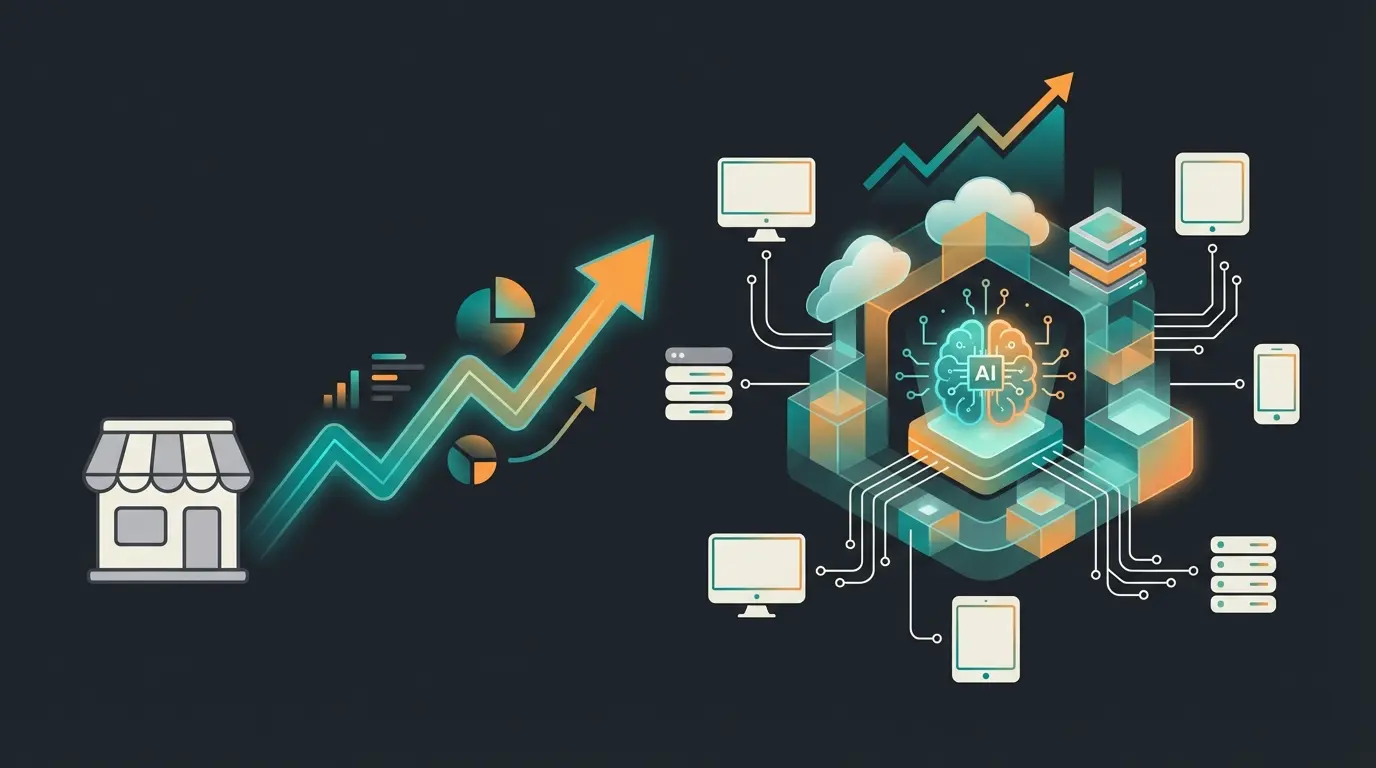
Stage 2: Shopware 6 Headless (Fast but Passive)
Decoupled architecture enables speed and omnichannel capabilities. However, the customer experience remains self-service. According to Stefan Pilz, this stage represents where most agencies stop—missing the larger opportunity.
Stage 3: AI-Composable (Fast & Active)
The intelligence layer transforms passive storefronts into active sales advisors. The Future of Commerce reports that hyper-personalization via AI represents the next major e-commerce trend for 2025 and beyond.
Real-World Applications for German Retailers
The German market presents unique opportunities for intelligent headless commerce. German consumers are known for demanding 'Beratungsqualität' (quality of advice) before purchasing, especially for 'erklärungsbedürftige Produkte' (products requiring explanation).
Use Case: Mid-Market Machinery Retailer
A German Mittelstand company selling industrial equipment implements AI consultation. Instead of customers navigating complex technical specifications alone, the AI asks qualifying questions: 'What materials will you be working with? What's your production volume? Do you have existing equipment this needs to integrate with?'
The result: 40% reduction in pre-sales support calls, 25% increase in conversion for high-ticket items, and significantly improved customer satisfaction scores.
Use Case: Specialty Outdoor Retailer
A premium outdoor equipment shop faces the 'consultation theft' problem directly. Customers research extensively on their site, then purchase elsewhere. By implementing AI chatbots connected to their headless Shopware backend, they provide immediate expert advice that keeps customers on-site through purchase.
For agencies looking to offer these solutions, our Hamburg-based AI product consultation showcases successful implementation approaches.
Cost-Benefit Analysis: Is AI-First Headless Worth It?
The transition to Shopware Headless is an investment—often with higher initial development costs than a standard shop. But if you only take this path to gain 0.5 seconds of loading time, you're wasting the real potential.
For products requiring explanation, AI consultation dramatically improves purchase rates
AI handles routine product questions, freeing human agents for complex issues
Expert-level product advice available around the clock without staffing costs
Customers report higher satisfaction with guided AI product recommendations
Understanding different AI product consultation approaches helps you make informed investment decisions for your specific business context.
Frequently Asked Questions
Traditional Shopware uses a monolithic architecture where the frontend (what customers see) and backend (data, logic) are tightly coupled. Shopware Headless separates these layers, with the backend providing data via API to independent frontend applications. This enables better performance, omnichannel capabilities, and—crucially—makes your product data accessible to AI systems for intelligent consultation.
Initial development costs are typically higher because you're building a separate frontend application. However, the long-term benefits include reduced maintenance complexity, better performance (improving SEO and conversion), and the ability to add AI capabilities that significantly boost revenue. For products requiring explanation, the ROI from AI consultation often exceeds traditional setups within 12-18 months.
Yes, but headless architecture makes it significantly easier and more effective. With a monolithic setup, AI must 'scrape' product data from HTML—slow and error-prone. With headless, the AI connects directly to structured API data, enabling real-time, accurate product recommendations. Many businesses use AI implementation as the catalyst for their headless migration.
Headless requires different consent management approaches since traditional Shopware plugins don't work. Use dedicated Consent Management Platforms (like Usercentrics or Consentmanager) that offer JavaScript SDKs for Vue/React applications. For AI features, ensure your provider processes data in compliance with EU regulations—preferably with EU-based infrastructure.
You'll need expertise in: Shopware 6 backend development, Vue.js/Nuxt.js for the frontend, API integration for the AI layer, and potentially Python or similar for custom AI implementations. Many businesses partner with specialized agencies that combine e-commerce and AI expertise rather than building everything in-house.
Conclusion: Don't Build a Shop, Build an Advisor
The future of e-commerce doesn't belong to the shops that load fastest, but to those that understand customers best.
- Headless is the tool.
- AI is the craftsman.
- Consultation quality is the product.
Use the flexibility of Shopware's API-First architecture to end 'consultation theft.' Bring the expertise of your best salespeople into the digital space. That's Intelligent Headless Commerce.
The German market is particularly suited for this approach. With consumers demanding quality advice before purchasing, and a strong Mittelstand tradition of product expertise, AI-first headless commerce represents a genuine competitive advantage—not just a technology upgrade.
Stop leaving customers alone with filters. Start providing the expert consultation they expect—24/7, at scale. Our AI solutions integrate seamlessly with Shopware Headless.
Get Started Today