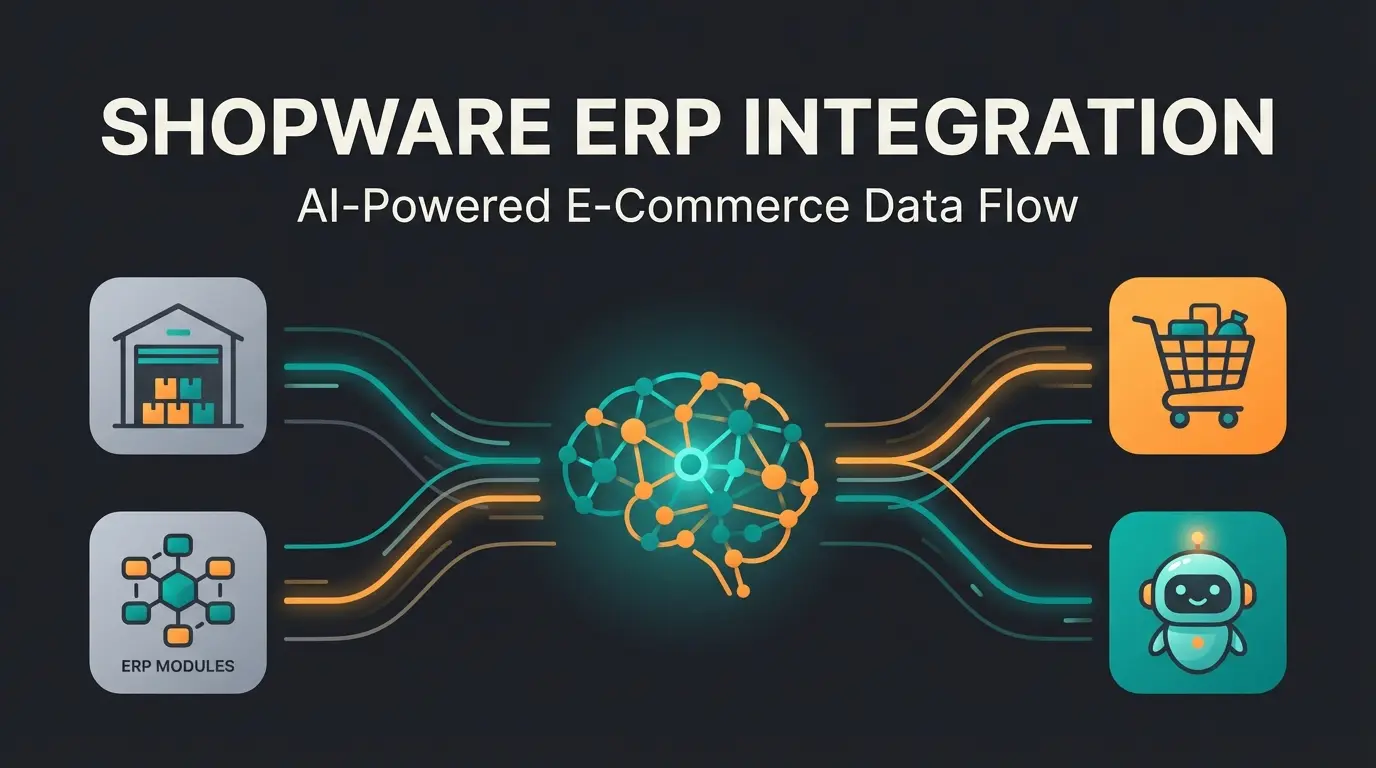
Shopware POS Guide 2025: From Simple Checkout to AI Consultation
Complete Shopware POS guide for 2025: Compare top systems, learn German compliance rules, and discover how AI transforms your checkout into a consultation hub.

Introduction: Why Your Cash Register Can't Be a 'Dumb' Terminal
Brick-and-mortar retail isn't dead—it has simply transformed its purpose. While customers once visited stores because they were the only place to purchase products, today they come for the experience and consultation. Yet the reality in many retail locations tells a different story: while the Shopware online store is highly optimized, delivers personalized recommendations, and tracks every click, the in-store checkout often remains an isolated island.
The problem? When your customer knows more about your products from online research than the associate at the register, you have a serious competitive disadvantage. When inventory levels in the store don't sync in real-time with your online shop, you risk overselling and frustrated customers who encounter 'out of stock' surprises.
According to Shopware, the platform continues to dominate the German e-commerce landscape in 2025, making the integration of a powerful POS system not a luxury for omnichannel retailers—it's a survival strategy. In this comprehensive guide, we analyze not just the current state of Shopware POS systems but reveal where the industry is heading. We compare market leaders, illuminate critical legal changes effective July 2025, and show you how Artificial Intelligence (AI) can transform your checkout from a mere 'payment point' to a true 'Point of Service.'
What Makes an Excellent Shopware POS System? The Essentials
Before we discuss AI and future innovations, the fundamentals must be solid. A Shopware POS system in 2025 must meet specific technical and legal minimum requirements to remain competitive in the German market.
Real-Time Synchronization: Eliminating 'Out of Stock' Errors
The most critical function of any Shopware POS integration is real-time synchronization. This encompasses two essential components that work together seamlessly:
- Inventory Sync: When an associate sells the last red sweater in-store, it must immediately be marked as 'sold out' in the online shop. Conversely, an online customer cannot reserve merchandise (Click & Collect) that's simultaneously being sold physically in the store.
- Central Data Management: Product master data, prices, and customer information should never require duplicate maintenance. A robust system uses the Shopware database as the 'Single Source of Truth,' eliminating data discrepancies and manual reconciliation work.
This real-time synchronization becomes even more powerful when combined with AI-powered product consultation, which can suggest alternatives when items are unavailable and keep customers engaged rather than walking away empty-handed.
Legal Compliance in Germany: TSE and the New 2025 Reporting Rules
Germany is renowned for its stringent fiscal regulations. A POS system without GoBD compliance and TSE (Technical Security Element) is effectively illegal for commercial use.
According to Steuertipps.de, retailers implementing a new Shopware POS must ensure their provider (whether Pickware or flour.io) supports the data exports required for this registration—typically through 'Mein ELSTER' or ERiC interfaces. As noted by Sage, non-compliance can result in significant fines and business disruptions.
Usability and Hardware Requirements
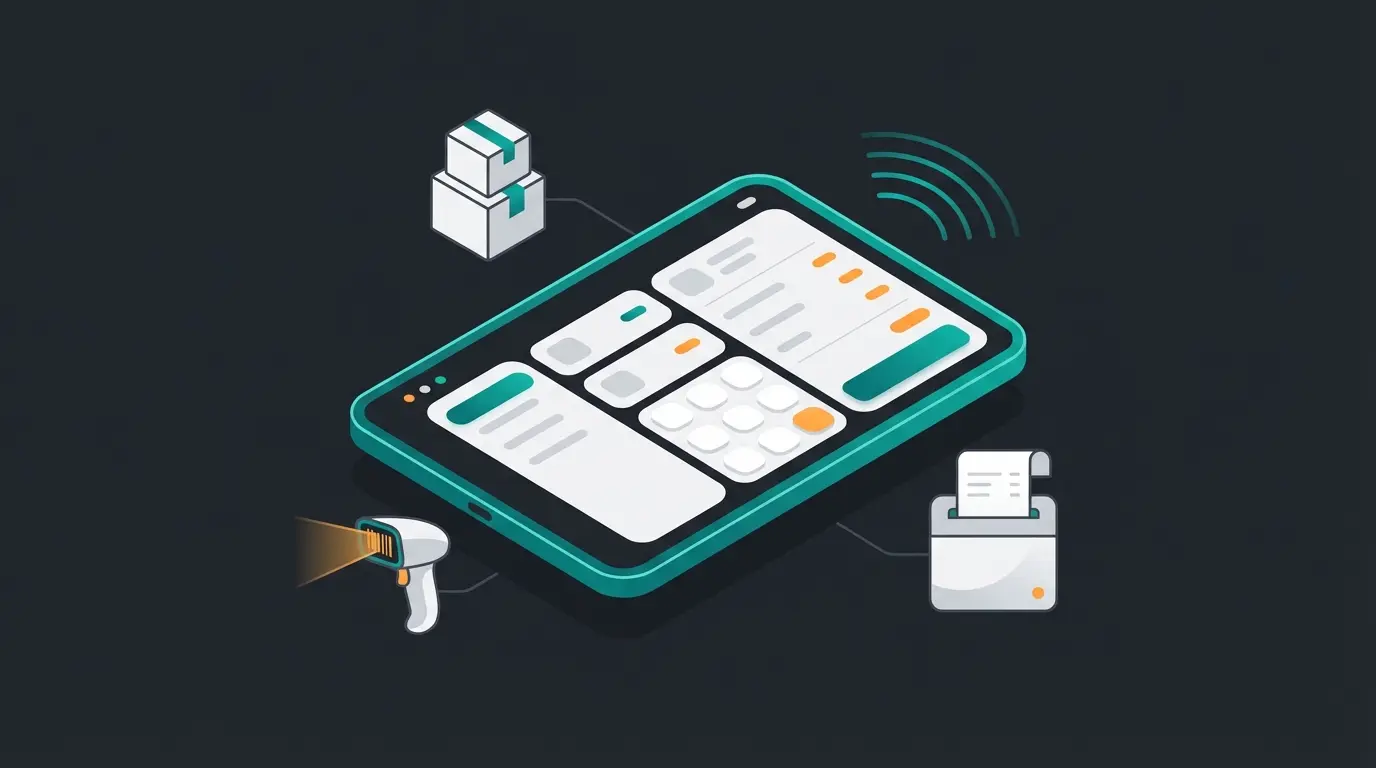
The era of bulky gray terminals is over. Modern Shopware POS systems preferentially run on iPads or tablets, offering distinct advantages:
- Mobility: Associates can bring the checkout to the customer, enabling consultation directly at the shelf
- Design: An iPad integrates far better into modern store concepts than outdated PC monitors
- Peripherals: Connection to barcode scanners (often via Bluetooth) and receipt printers must work 'plug and play' without technical headaches
Top Shopware POS Providers: Market Overview 2025
The market for Shopware integrations has consolidated around two dominant philosophies: native integration and cloud connection. Here's an objective comparison of the market leaders to help you make an informed decision.
Pickware: The Native All-in-One Solution
Pickware is the classic choice within the Shopware ecosystem, following the philosophy that ERP (inventory management) should run directly within Shopware. According to Pickware, there's no external database—everything happens directly in your Shopware backend.
- Data Integrity: Since there's no interface to a third-party system, synchronization errors are extremely rare
- Omnichannel Features: Capabilities like 'Click & Collect' or 'Ship from Store' are natively integrated without additional configuration
- Hardware Focus: Strong emphasis on Apple/iPad hardware ensures high app stability and consistent user experience
However, Pickware does have limitations. You're fully dependent on Shopware—if Shopware experiences issues, your register does too. Additionally, as Kassensystemevergleich notes, while buffer functions exist for brief outages, extended offline operation is less robust than dedicated offline cash registers since Pickware is deeply integrated into Shopware.
flour.io: The Cloud Specialist
flour.io represents a standalone POS system connected to Shopware through a high-performance interface. According to flour.io, it's cloud software that runs on any device with a browser—PC, Mac, tablet, or smartphone—synchronizing with Shopware while maintaining independence.
- Device Independence: You can often continue using existing hardware like Windows PCs, reducing implementation costs
- Branch Management: Particularly strong for retailers with multiple locations and complex warehouse structures that exceed Shopware's standard logic
- Failover Capability: As an independent cloud solution, flour.io can continue operating even during Shopware backend maintenance windows
The tradeoff? Despite excellent integration, it remains an interface. Data must be exchanged between two systems (flour and Shopware), introducing potential complexity.
Additional Alternatives Worth Considering
Beyond these two market leaders, solutions like ready2order or SumUp exist. According to Für-Gründer.de, these are often more affordable and well-suited for very small shops or pop-up stores. However, as Tradingtwins reports, they typically lack the deep integration into Shopware processes—such as voucher synchronization and complex variant articles—that Pickware or flour.io deliver.
Retailers requiring instant inventory synchronization between online and offline channels
New German tax registration requirements for all electronic cash systems take effect
Retailers now preferring iPad/tablet-based POS over traditional terminal hardware
AI-assisted POS systems reduce new employee training time compared to traditional systems
The Missing Link: Why Transactional POS Falls Short
When you examine the providers above, you'll notice they excel at processing transactions. They scan, calculate taxes correctly, and print receipts flawlessly.
But do they actively help you sell more?
Here lies a significant gap in the market. Most POS systems are reactive—they wait for customers to bring products to the checkout. In 2025, when online retail shines with AI-driven personalization, brick-and-mortar often appears 'unintelligent' by comparison. This is where AI sales assistants can transform the in-store experience.
The Endless Aisle Problem
Today's customers are often better informed than store personnel. A customer has read online reviews, compared variants, and checked availability before ever stepping into your store. Meanwhile, the associate at the register often only has access to price and inventory status.
This scenario illustrates why we must redefine POS (Point of Sale) as POS (Point of Service). The difference between merely processing transactions and actually serving customers determines who wins in modern retail. With AI product consultation, associates can instantly access alternatives, suggest solutions, and keep the customer engaged.
Transforming Checkout with AI-Powered Product Consultation
Shopware has introduced powerful tools with the AI Copilot and Shopware AI, primarily utilized for online shops according to Shopware. The significant opportunity for 2025 lies in bringing this intelligence to the sales associate's tablet on the shop floor.
Knowledge at Your Fingertips
Imagine your POS tablet displaying not just article numbers and prices, but leveraging AI-generated product descriptions and review summaries. As reported by Brainstreamtechnolabs, the Shopware AI Copilot can condense lengthy product reviews into concise summaries like 'Customers praise durability but note the shoe runs small.'
In-Store Application: The associate can immediately tell the customer: 'I'd recommend going up a size—many customers have reported this model runs small.' This builds trust and reduces returns. For complex products, AI Product Consultation becomes indispensable for empowering staff.
Intelligent Customer Classification (Clienteling)
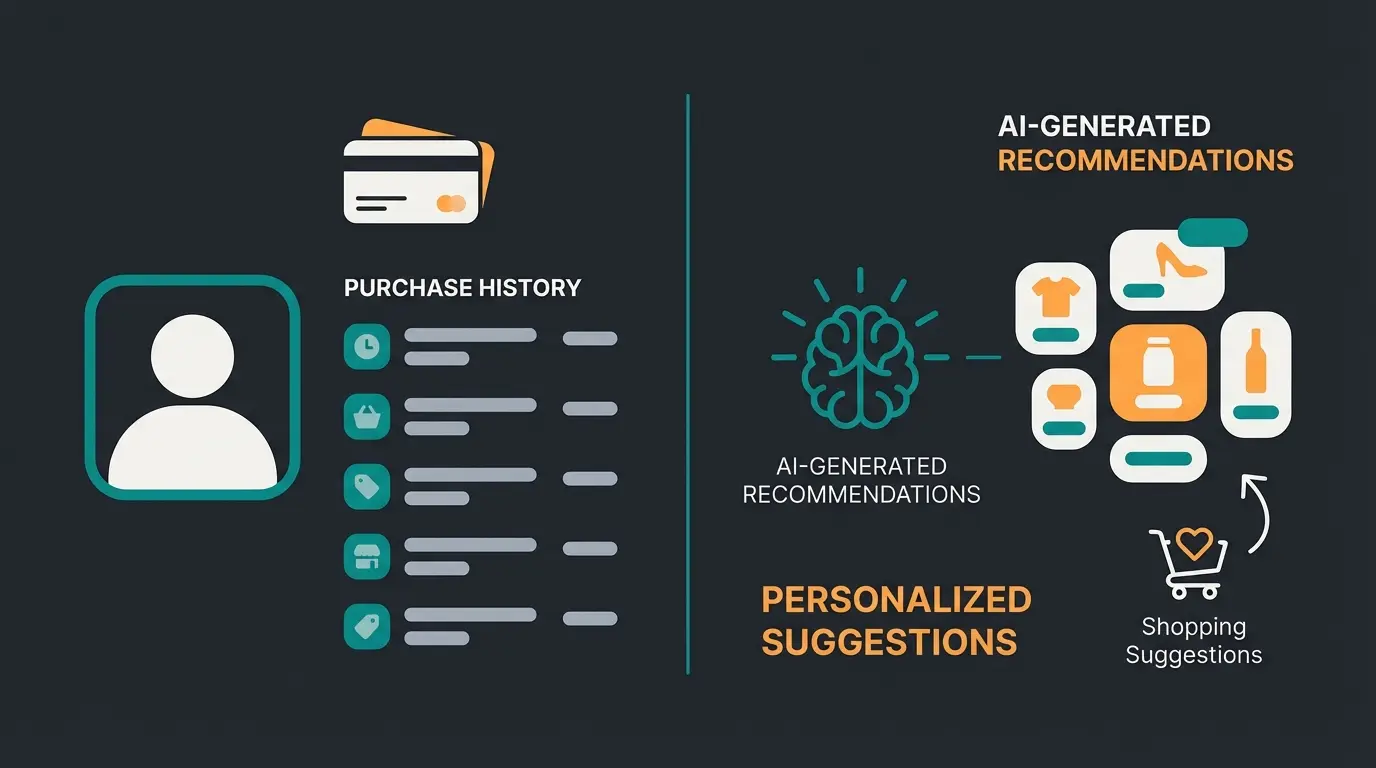
According to Scope01, Shopware AI can classify customers based on purchasing behavior—identifying patterns like 'bargain hunter,' 'VIP,' or 'brand loyalist.'
Real-World Scenario: A customer scans their loyalty card (or app) at checkout. The system discretely signals to the associate: 'This is a VIP customer who frequently purchases premium outdoor equipment. They bought a tent three months ago.'
Action Opportunity: The associate can specifically ask: 'How was your trip with the new tent? We just received matching sleeping bags that would complement your setup.' This level of personalized service, powered by AI-driven consultation, creates memorable customer experiences.
Digital Sales Rooms at the Point of Sale
Shopware offers Digital Sales Rooms as a tool for interactive sales consultation. According to Shopware, while originally designed for B2B video calls, this becomes a powerful weapon on an iPad in-store.
Endless Aisle Solution: When a product isn't available in the store, the associate can collaborate with the customer in the Digital Sales Room to assemble a curated selection. The customer orders directly and receives home delivery—no lost sale, complete satisfaction.
Discover how AI can turn every sales associate into a product expert, boosting conversions and customer satisfaction while reducing training time.
Start Your Free TrialComparison: Standard POS vs. AI-Enhanced POS
To clarify the distinction between traditional and modern approaches, let's compare the classic transaction-focused method with the AI-powered consultation approach. This comparison reveals why AI-powered sales consultation represents the future of retail.
| Feature | Standard Shopware POS | AI-Enhanced POS Solution |
|---|---|---|
| Primary Focus | Transaction (checkout & receipt) | Interaction (consultation & selling) |
| Inventory Data | Shows 'Available: Yes/No' | Shows alternatives & delivery times when unavailable |
| Product Knowledge | Depends on associate's memory | AI summaries of reviews & USPs |
| Customer Knowledge | Shows name & address only | Displays purchase history & AI classification (e.g., 'VIP') |
| Upselling | Random / Manual attempts | Data-driven recommendations ('Customers also bought...') |
| Staff Training | Weeks of product training required | On-the-job training via AI assistance |
The table above demonstrates why AI eliminates waiting times and frustration—both for customers seeking information and associates searching for answers. When staff have instant access to comprehensive product knowledge, every interaction becomes an opportunity rather than a challenge.
Meet Sarah: A Day with AI-Enhanced POS
To humanize these technological advantages, consider Sarah—a 19-year-old part-time worker at an outdoor equipment retailer. With a standard POS system, Sarah struggles to answer technical questions about hiking boot materials, tent waterproofing ratings, or sleeping bag temperature ratings. Customers often know more than she does from their online research.
With an AI-enhanced POS, Sarah becomes a confident advisor. When a customer asks about the difference between two hiking boot models, the AI instantly provides: 'Model A features Vibram soles preferred by experienced hikers for rocky terrain, while Model B offers extra cushioning ideal for beginners on moderate trails. Based on reviews, Model A runs half a size small.'
Sarah relays this expertly, adds her own observation about the fit, and successfully helps the customer choose. The sale closes, the customer leaves satisfied, and Sarah feels empowered rather than embarrassed. This is what AI-powered sales consultants enable across your entire workforce.
Customer browses products, reads reviews, compares options on Shopware store
Customer enters physical location seeking hands-on experience and expert advice
Staff uses tablet with AI to answer questions, show alternatives, provide personalized recommendations
Seamless checkout with synchronized inventory, customer data captured for future personalization
Purchase history, preferences, and interactions flow back to central database for omnichannel continuity
How to Choose the Right Setup for Your Shop
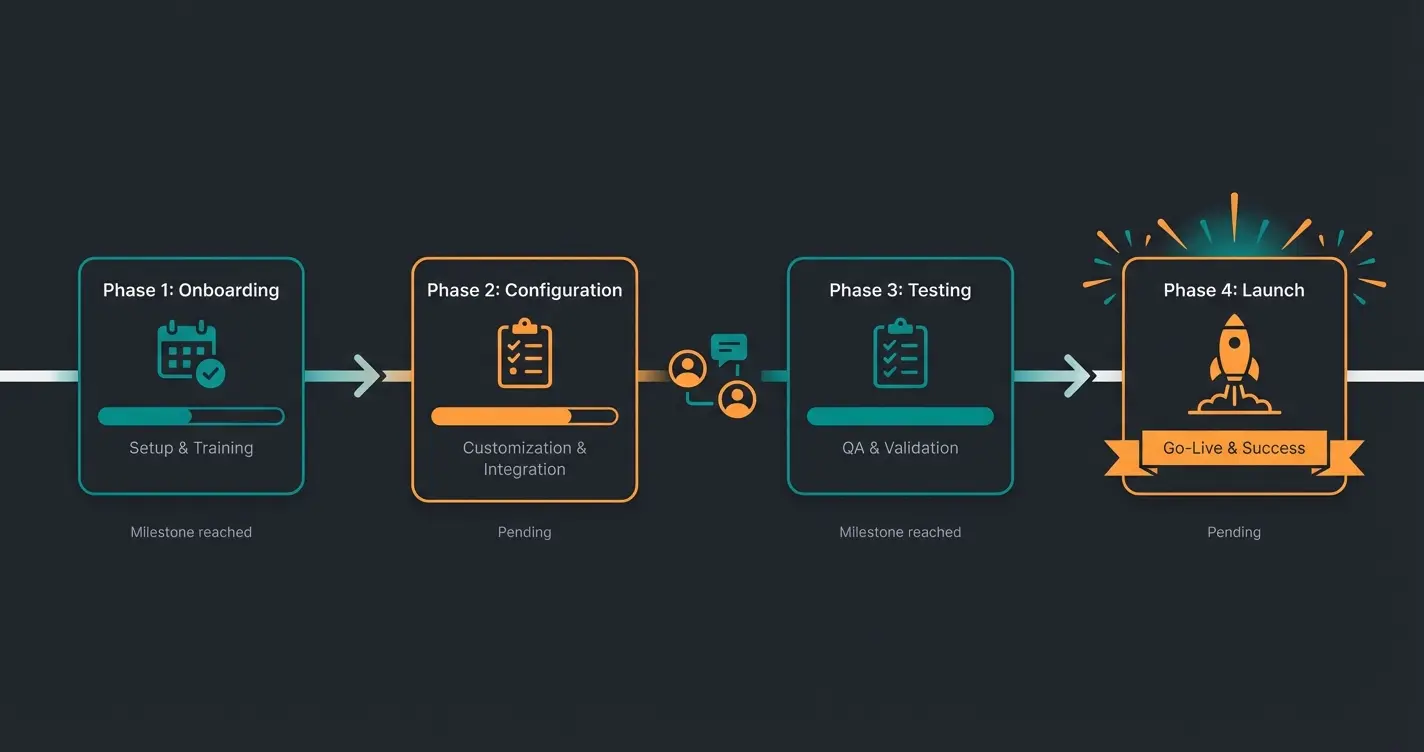
The right system depends on your specific situation. Use this comprehensive checklist for your 2025 decision, ensuring you balance immediate needs with future scalability.
Step 1: Evaluate Technical Infrastructure
- Shopware Version: Are you running Shopware 6? (Shopware 5 has reached end-of-life and presents security risks according to Pickware)
- Internet Connectivity: Do you have stable WiFi throughout your store? (Critical for Pickware and cloud solutions)
- Hardware Preference: Do you want to use iPads (→ consider Pickware) or continue using existing PCs (→ consider flour.io)?
Step 2: Analyze Your Business Processes
- Warehouse Complexity: Do you have complex warehouse structures with multiple locations that shouldn't be mapped as separate 'sales channels' in Shopware? (→ consider flour.io)
- Omnichannel Requirements: Do you want seamless 'Click & Collect' and voucher redemption without interface configuration? (→ consider Pickware)
- Consultation Intensity: Do you sell complex products requiring explanation? Consider how KI E-Commerce solutions can enhance your staff capabilities.
Step 3: Assess the AI Factor for Future-Proofing
- Do you plan to deploy tablets for on-floor consultation?
- Are you already using Shopware AI features in your online shop (e.g., product descriptions)?
- Can your POS provider display AI-generated fields on the checkout interface?
- Would your business benefit from AI visibility across all customer touchpoints?
Step 4: Verify Legal Compliance (July 2025 Deadline)
Implementation Best Practices for Shopware POS
Successfully deploying a Shopware POS system requires careful planning beyond just selecting software. Consider these implementation insights to ensure smooth adoption:
- Pilot Testing: Start with one location or checkout station before full rollout. This identifies integration issues without disrupting entire operations.
- Staff Training: Even with AI assistance reducing training time, ensure associates understand both the technology and the consultation philosophy behind it.
- Data Migration: Clean your product data before integration. AI recommendations are only as good as the underlying product information.
- Customer Communication: Inform loyal customers about enhanced services. Many will appreciate knowing your staff now has expert-level product knowledge at their fingertips.
When implementing AI-powered product consultation, remember that technology serves the human interaction—it doesn't replace it. The goal is empowering your team, not automating them away.
Conclusion: The Sales Associate as Super-User
The market for Shopware POS systems is mature and technologically advanced. Solutions like Pickware and flour.io provide a solid foundation that complies with German regulations and solves inventory synchronization challenges effectively.
But in 2025, 'solid' is no longer sufficient. Competition no longer centers on the product itself—it's available everywhere—but on consultation quality. Retailers who win will be those who view their POS systems not merely as cash registers but as cockpits for their associates.
By bringing Shopware's AI capabilities—customer classifications, smart product information, review summaries—into the physical store, you elevate your sales staff's role. The 19-year-old part-time worker becomes a competent advisor thanks to AI support. That's the true value of 'Shopware POS' in the future: technology that doesn't replace the human factor but amplifies it.
The transformation from Point of Sale to Point of Service isn't just a clever rebranding—it's a fundamental shift in how retail creates value. Those who embrace AI product consultants today position themselves as the retail leaders of tomorrow.
FAQ: Common Questions About Shopware POS
There's no universal answer, but for deep Shopware integration, Pickware leads the market. For complex branch structures and hardware independence, flour.io is often the better choice. Both fully comply with German tax laws (TSE/GoBD). The best choice depends on your specific infrastructure and business requirements.
Yes, reputable providers like Pickware and flour.io integrate certified TSE solutions (either cloud-TSE or hardware-TSE) and fulfill GoBD requirements. However, pay close attention to the new registration requirements effective July 2025—all electronic cash systems must be reported to tax authorities.
Absolutely. By utilizing Shopware AI features (such as review summaries or customer classifications), this information can be displayed on tablets in-store to enhance sales conversations through 'clienteling.' AI provides instant product knowledge and personalized customer insights.
Starting July 1, 2025, all electronic cash systems must be registered with tax authorities. Existing systems have until July 31, 2025, to complete registration. This is done electronically through 'Mein ELSTER' or similar official channels. Non-compliance risks significant penalties.
Traditional POS requires weeks of product training so staff can answer customer questions. AI-enhanced systems provide instant access to product specifications, customer reviews, and comparison data—enabling 'training on the job' where associates learn while helping customers, with AI filling knowledge gaps in real-time.
Join forward-thinking retailers who are already using AI to empower their sales teams. Turn every checkout into a consultation opportunity and watch your conversion rates soar.
Get Started Free Today
Lasse is CEO and co-founder of Qualimero. After completing his MBA at WHU and scaling a company to seven-figure revenue, he founded Qualimero to build AI-powered digital employees for e-commerce. His focus: helping businesses measurably improve customer interaction through intelligent automation.