What is a B2B ecommerce platform?
A B2B ecommerce platform is software that enables businesses to sell products or services to other businesses through digital channels. Unlike B2C platforms built for individual consumers, B2B platforms must handle multi-user accounts with role-based permissions, customer-specific pricing, approval workflows, bulk ordering, net payment terms, and quote management.
The distinction matters more than most vendors admit. According to Grand View Research, the global B2B ecommerce market reached $32.1 trillion in 2025 and is projected to grow at a CAGR of 18.2% through 2030. That is roughly 400% larger than the entire B2C ecommerce market.
What is driving this growth? Buyer expectations have shifted permanently. A 2025 Gartner survey found that 61% of B2B buyers now prefer a completely rep-free buying experience. McKinsey's B2B Pulse data shows that 73% of B2B buyers are willing to place orders exceeding $50,000 through digital self-service channels. The generation shift reinforces this: millennials and Gen Z now make up 71% of B2B purchasing decision-makers (Digital Commerce 360, 2025).
B2B requirements diverge from B2C at the operational level, not the cosmetic one. Most general-purpose platforms start from the consumer model: our Shopify guide covers what that baseline handles well, and where B2B teams run into its limits.
Types of B2B ecommerce platforms
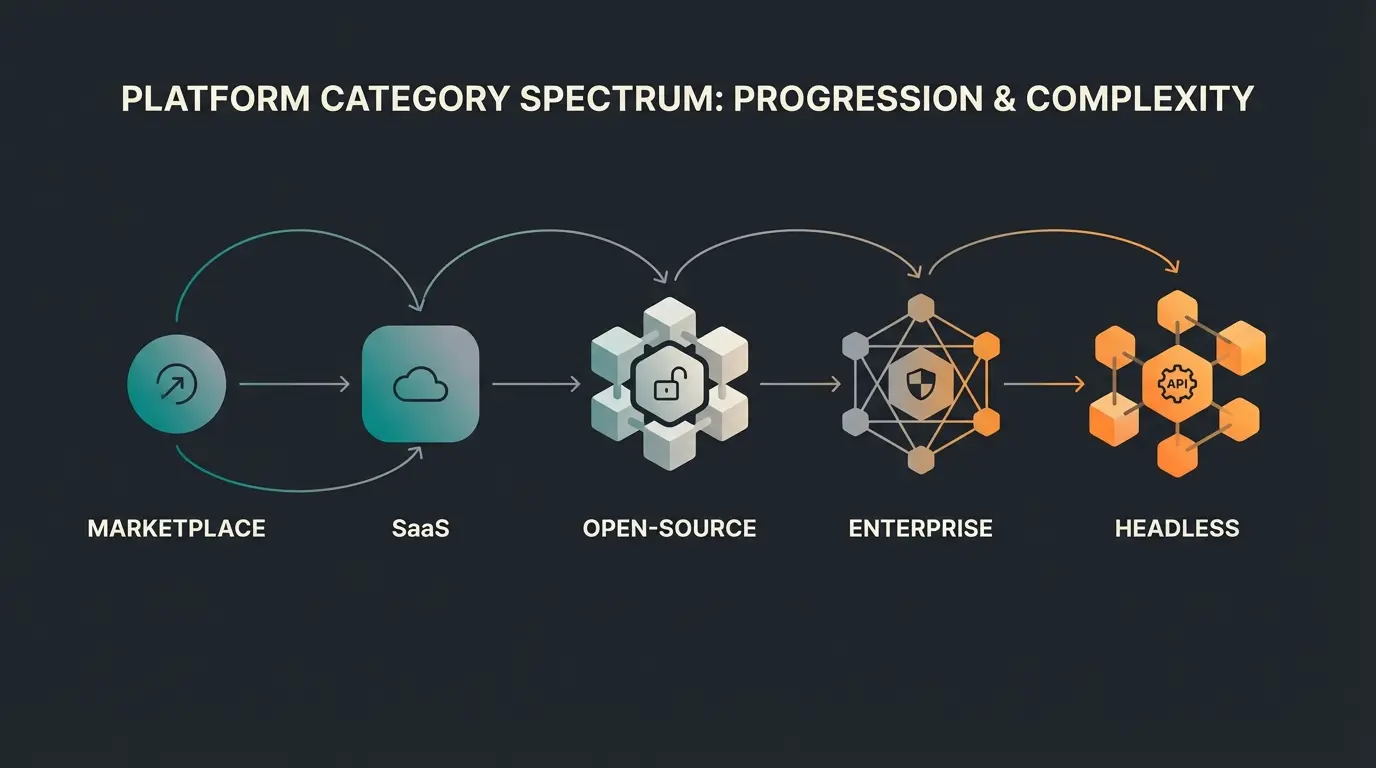
Before comparing individual platforms, understand the five categories. Each serves a different business model and technical maturity level.
| Category | Examples | Ideal for | Price range | Key tradeoff |
|---|---|---|---|---|
| B2B Marketplaces | Alibaba, Amazon Business, ThomasNet | Manufacturers seeking distribution | Commission-based (5-15%) | High reach, zero brand control |
| SaaS Platforms | Shopify Plus, BigCommerce | D2C brands adding B2B | $2,000-$5,000/mo | Fast launch, limited customization |
| Open-Source / Self-Hosted | Shopware, WooCommerce, Adobe Commerce | Mid-market with technical resources | $0-$6,500/mo license | Full control, higher maintenance |
| Enterprise Suites | SAP Commerce, Salesforce Commerce | Large enterprises (500+ employees) | $150,000-$500,000+/yr | Deep ERP integration, long implementation |
| Headless / Composable | commercetools, Elastic Path | Companies with strong dev teams | $50,000+/yr | Maximum flexibility, maximum complexity |
Marketplaces give you instant access to buyers but zero control over the customer relationship. You are renting shelf space. SaaS platforms get you live in weeks, but when your B2B processes outgrow the template, customization gets expensive fast.
Open-source platforms offer the best balance for mid-market B2B. You own the code, control the data, and can customize every workflow. The cost is operational: you need hosting, maintenance, and development resources.
Enterprise suites make sense when your ERP is already SAP or Salesforce and you need deep native integration. For everyone else, the implementation timelines (12-18 months) and costs ($300K-$500K setup) are prohibitive. Headless/composable is the architect's dream and the CFO's nightmare: maximum technical flexibility, but you are building the frontend from scratch.
Best B2B ecommerce platforms compared
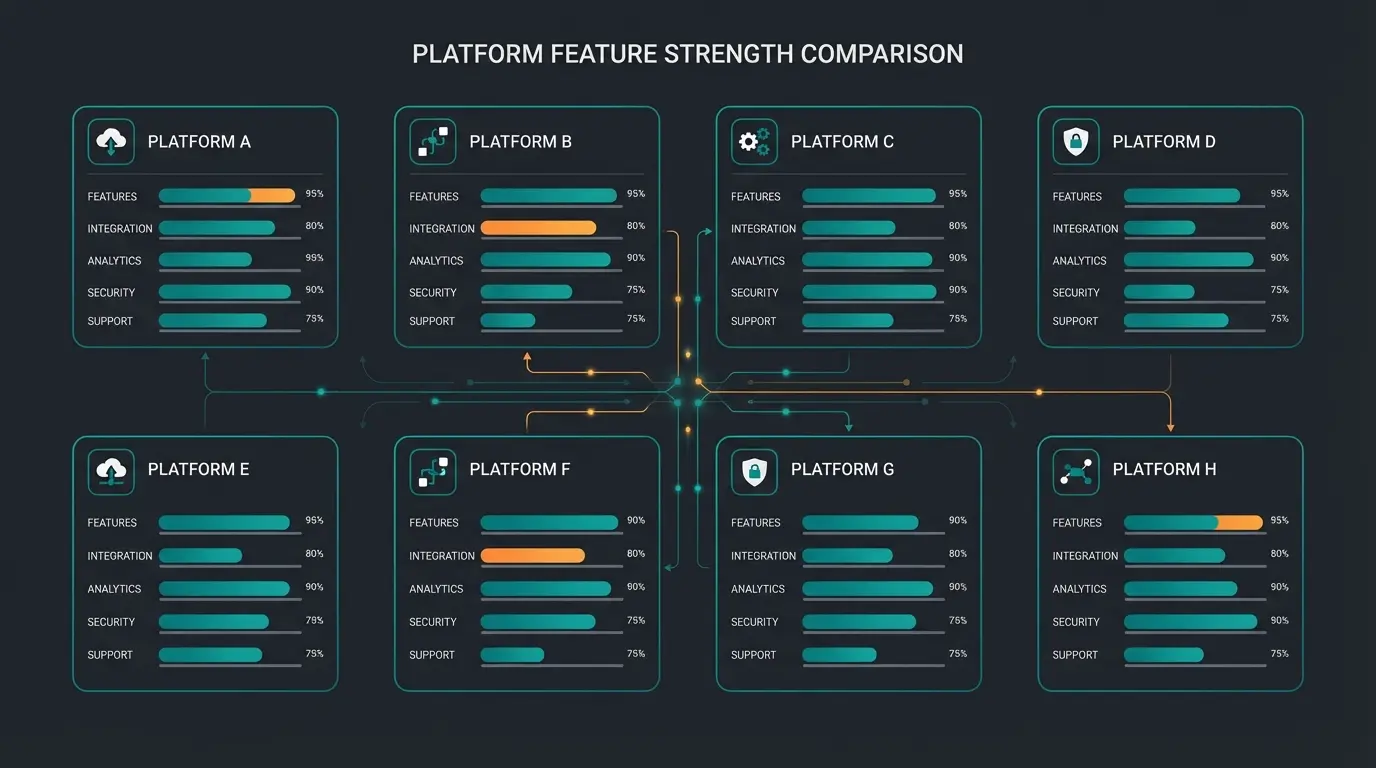
Eight platforms, evaluated across ten criteria that actually matter for B2B operations. No vendor is paying for placement here.
| Feature | Shopware | Shopify Plus | BigCommerce | WooCommerce | Adobe Commerce | OroCommerce | Salesforce | Sana Commerce |
|---|---|---|---|---|---|---|---|---|
| B2B features (native) | Strong | Limited | Moderate | Plugin-dependent | Strong | Excellent | Excellent | Excellent |
| Customer-specific pricing | Yes (Evolve+) | Yes (limited) | Yes | Plugin | Yes | Yes | Yes | Yes (ERP-driven) |
| Approval workflows | Yes (B2B Components) | No (apps needed) | No (apps needed) | No | Yes | Yes | Yes | Yes |
| API / Headless | Full API-first | REST + GraphQL | REST + GraphQL | REST | REST + GraphQL | REST + GraphQL | Full API | Limited |
| Hosting model | Self-hosted or Cloud | SaaS only | SaaS only | Self-hosted | Self-hosted or Cloud | Self-hosted or Cloud | Cloud only | Cloud only |
| AI / Automation | AI Copilot (backend) | Sidekick (backend) | Basic | Plugin-dependent | Sensei | Limited | Einstein | Limited |
| GDPR-native | Yes (EU-based) | No (US-based) | No (US-based) | Self-managed | Self-managed | Yes (EU-based) | No (US-based) | Yes (EU-based) |
| Starting price | $0 (CE) / $650/mo | $2,300/mo | $299/mo | Free (CE) | ~$22,000/yr | Custom | Custom ($150K+/yr) | Custom |
| Best for | European B2B mid-market | B2B-light brands | Growing B2B/B2C | Budget B2B | Large enterprise | B2B-specialized | Salesforce ecosystem | ERP-first B2B |
Platform-by-platform analysis
Shopware stands out for European B2B operations. GDPR compliance is built in, not bolted on. The B2B Components (Evolve and Beyond plans) include customer-specific pricing, role-based access, budget management, and quick-order capabilities natively. The API-first architecture makes it the most flexible open-source option for complex B2B workflows. Weakness: smaller app ecosystem compared to Shopify, and brand recognition outside the DACH region is still growing.
Shopify Plus is the speed champion. You can have a B2B storefront running in weeks, not months. The 2025 B2B additions (company profiles, price lists, payment terms) closed some gaps. But complex approval workflows and deep ERP integration still require expensive third-party apps, often costing $500-$2,000/month collectively. As Shopify Plus B2B documentation shows, the platform targets B2B brands that prioritize speed over customization depth. Our Shopify B2B Guide covers this in detail, and our Shopify Wholesale breakdown compares the four ways to run wholesale pricing on the platform.
BigCommerce occupies an interesting middle ground. More B2B features than Shopify out of the box, lower price point than enterprise solutions. Its headless capabilities are solid. The limitation: it lacks the deep B2B-native functionality of Shopware or OroCommerce for complex ordering scenarios.
Adobe Commerce (Magento) was the enterprise standard for a decade. It remains powerful but expensive to maintain. Development talent is scarce and costly. New implementations are declining in favor of cloud-native alternatives.
OroCommerce deserves attention for pure B2B. Built from the ground up for B2B workflows (the team behind it also created OroCRM). Approval workflows, RFQ management, and multi-organization support are native. Tradeoff: smaller ecosystem and limited B2C capability if you need both channels.
Salesforce Commerce Cloud is the logical choice if your organization already runs on Salesforce CRM. Einstein AI provides personalization. The cost and complexity make it enterprise-only territory. Sana Commerce takes a unique ERP-first approach: the storefront is built directly on top of your SAP or Microsoft Dynamics instance. If ERP data accuracy is your top priority, this is compelling, but you are deeply locked into the ERP vendor's ecosystem.
Shopware for B2B ecommerce
I should declare a perspective here: Qualimero integrates with Shopware, among other platforms. That said, we see the data across all our clients, and Shopware's B2B architecture genuinely stands out for European mid-market companies.
Shopware's advantage starts with its DNA. As a German company, GDPR compliance is not an afterthought. You can host on European servers with full data sovereignty. For our Shopware B2B Guide, we documented how the Shopware B2B Components in the Evolve plan handle the core requirements.
- Customer-specific pricing: individual price lists per customer, customer group, or contract
- Role-based purchasing: configurable approval chains (e.g. orders above $500 require department head sign-off)
- Budget management: spending limits per user, department, or time period
- Quick reorder: one-click reordering from purchase history
- Flow Builder automation: trigger workflows based on any business event without code
The API-first architecture is what makes Shopware particularly interesting for companies that need to connect their shop to ERP systems, PIM tools, or AI-powered product consultation. Everything is accessible via API, which means integrations do not require core modifications. For a detailed look at the B2B feature set, our Shopware B2B Suite Deep Dive covers every component.
As Shopware's B2B Solutions page documents, the platform handles complex catalog structures with thousands of variants without performance degradation. One of our clients runs 8,000+ SKUs with configurable products in the four- to five-figure price range, achieving a 7x higher conversion rate after adding AI-powered product consultation on top of their Shopware instance.
The honest limitation: Shopware's brand recognition outside Europe is still growing. If your primary market is North America with no European presence, Shopify Plus or BigCommerce may offer better local ecosystem support.
Key features to look for
When evaluating a B2B ecommerce platform, these eight capabilities separate platforms that handle B2B natively from those that bolt it on as an afterthought.
- Customer-specific pricing: individual prices per customer, group, or contract. Shopware (Evolve+), OroCommerce, Salesforce, and Sana Commerce excel here. Shopify Plus and BigCommerce require workarounds.
- Multi-user accounts with roles: B2B buyers are teams. Can a procurement officer browse, a budget holder approve, and an admin manage, all under one company account?
- Quote management (RFQ): for high-value or custom orders, buyers expect to request quotes. OroCommerce and Salesforce handle this natively. Shopware via extensions like Shopware Create Quote. Shopify Plus does not.
- Quick reorder: B2B buyers reorder the same products regularly. One-click reordering from purchase history is table stakes.
- Net payment terms: Net 30, Net 60, custom terms per customer. Essential for B2B cash flow management.
- ERP/CRM integration: native connectors to SAP, Microsoft Dynamics, or WeClapp save months of development. Check before committing.
- Self-service portal: a place where buyers manage orders, download invoices, track shipments, and handle returns without contacting support.
- AI-powered product recommendations: 71% of B2B ecommerce companies are using AI in operations (Digital Commerce 360, 2026). Most platform-native AI focuses on backend efficiency, not customer-facing consultation. This is the gap worth closing.
Pricing comparison
B2B platform pricing is deliberately opaque. Here are real numbers for a mid-market B2B company (100-500 employees, $5M-$50M revenue).
| Cost component | Shopware (Evolve) | Shopify Plus | BigCommerce Enterprise | Adobe Commerce | OroCommerce | Salesforce |
|---|---|---|---|---|---|---|
| License/Subscription | ~$2,600/mo | ~$2,300/mo | Custom ($1,000+/mo) | ~$22,000/yr | Custom | Custom ($150K+/yr) |
| Transaction fees | 0% | 0.15-0.6% | 0% | 0% | 0% | 0% |
| Hosting | $150-500/mo | Included | Included | $500-2,000/mo | $300-1,000/mo | Included |
| B2B extensions | ~$100/mo | $500-2,000/mo | $200-800/mo | $500+/mo | Minimal (native) | AppExchange varies |
| Implementation | $40,000-80,000 | $15,000-40,000 | $20,000-60,000 | $100,000-500,000 | $50,000-150,000 | $200,000-500,000+ |
| Annual maintenance | $6,000-24,000 | ~$0 (managed) | ~$0 (managed) | $20,000-60,000 | $10,000-30,000 | Included |
| First-year TCO | $85,000-140,000 | $55,000-85,000 | $50,000-100,000 | $175,000-600,000 | $100,000-250,000 | $400,000-800,000+ |
For detailed Shopware pricing, note the 2025 Fair Usage Policy changes that made the Community Edition effectively paid above 1M EUR GMV.
Fastest-growing digital commerce segment
Source: Gartner Sales Survey (2025)
Source: Digital Commerce 360 (2026)
How to choose the right B2B platform
Five steps, in order.
List every B2B-specific workflow: approval chains, customer pricing, quote management, reordering patterns. If your list has more than three items, eliminate SaaS platforms without native B2B support.
Do you have developers who can maintain a self-hosted platform? If not, SaaS or PaaS is your lane. If yes, open-source gives you the most leverage.
Map your existing tech stack: ERP, CRM, PIM, warehouse management. The platform with the best native connectors to your stack wins, because custom integrations are where budgets explode.
Not year one. Year one is misleading because implementation costs dominate. By year three, licensing, maintenance, and extension costs reveal the true picture.
47% of organizations plan to invest $1M+ in AI commerce initiatives in the next 12 months (Envive AI, 2026). Your platform must support API-based integration of AI tools for product consultation and customer service.
For a step-by-step implementation guide, see How to Build a B2B Online Store.
The platform is your foundation. But the competitive edge comes from what you build on top of it. Our clients see 7x higher conversion rates and 16x ROI when they add AI-powered product consultation to their ecommerce stack, regardless of which platform they run and regardless of whether the buyer arrives through the storefront or through WhatsApp Business. The platform sells products. An AI employee sells the right product to the right buyer.
More traffic is only half the equation. Qualimero's AI employees turn visitors into buyers with real-time product consultation, across Shopware, Shopify, and every platform in this guide. Our clients average +35% cart value and 16x ROI.
Book a demoFrequently asked questions
There is no universal best. Shopware is strongest for European mid-market B2B with complex requirements. Shopify Plus wins for speed and simplicity. OroCommerce is the most B2B-native. Salesforce fits existing Salesforce ecosystems. Match the platform to your specific B2B workflows, not to a ranking.
B2B platforms must handle multi-user accounts, role-based permissions, customer-specific pricing, approval workflows, bulk ordering, net payment terms, and quote management. B2C platforms are built for individual consumers with fixed pricing and simple checkout. Using a B2C platform for B2B typically increases costs by 20-35%.
First-year total cost of ownership ranges from $50,000-$100,000 for SaaS platforms (Shopify Plus, BigCommerce) to $400,000-$800,000+ for enterprise solutions (Salesforce). Mid-market open-source platforms like Shopware land at $85,000-$140,000. These figures include implementation, licensing, hosting, and maintenance.
Yes. Shopware's B2B Components (Evolve plan and above) include native customer-specific pricing, role-based purchasing, budget management, and approval workflows. The API-first architecture supports deep ERP integration. As a German company, GDPR compliance is built in. It is particularly strong for European B2B mid-market companies.
Marketplaces (Amazon Business, Alibaba) offer instant reach but zero brand control and high commission fees (5-15%). Your own store gives you full control over customer relationships, pricing, and data. Most B2B companies benefit from a hybrid: own store as the primary channel, marketplace presence for discovery.
The eight essentials: customer-specific pricing, multi-user accounts with roles, quote management, quick reorder, net payment terms, ERP/CRM integration, self-service portal, and AI-powered product recommendations. Platforms that handle at least six of these natively (without paid add-ons) are genuinely B2B-ready.
Shopify Plus added B2B features in 2024-2025: company profiles, wholesale price lists, and payment terms. For basic B2B (simple pricing tiers, small buyer teams), it works. For complex B2B (approval workflows, budget management, deep ERP integration), you will need $500-$2,000/month in third-party apps. Consider Shopware or OroCommerce for complex scenarios.
Our team has implemented AI solutions across Shopware, Shopify, and WooCommerce stores. We can show you how AI-powered product consultation works on your platform of choice.
Talk to our team
Lasse is CEO and co-founder of Qualimero. After completing his MBA at WHU and scaling a company to seven-figure revenue, he founded Qualimero to build AI-powered digital employees for e-commerce. His focus: helping businesses measurably improve customer interaction through intelligent automation.